SSZ-13 (CHA): structure, Cu-SSZ-13 and uses
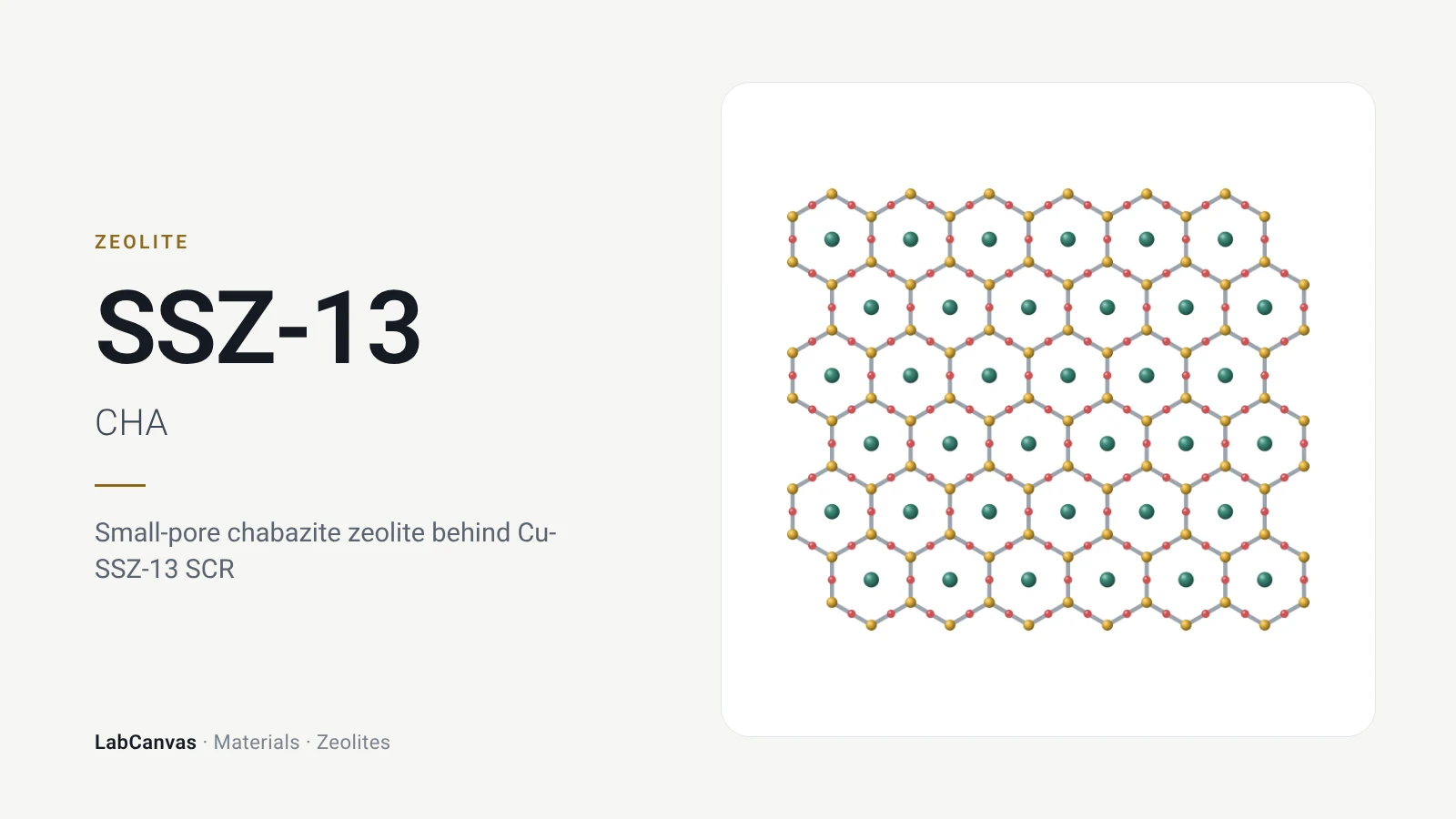
SSZ-13 is a high-silica aluminosilicate zeolite with the chabazite (CHA) framework: double six-rings stacked in an ABC sequence enclose large CHA cages joined by 8-ring windows about 3.8 × 3.8 Å (Shan et al. 2021). Exchanged with copper, Cu-SSZ-13 is the commercial catalyst for the selective catalytic reduction of NOₓ with ammonia (NH₃-SCR) in diesel exhaust, prized for its wide temperature window and hydrothermal stability (Li P. et al. 2022; Beale et al. 2015). SSZ-13 is usually crystallised with N,N,N-trimethyl-1-adamantylammonium (TMAda⁺) as the organic template (Shan et al. 2021), and SAPO-34, the silicoaluminophosphate with the same CHA framework, is the commercial methanol-to-olefins catalyst (Yang et al. 2021).
Contents
SSZ-13 (CHA) at a glance
| Framework type | CHA (chabazite) (Shan et al. 2021) |
|---|---|
| Building unit | Double six-membered rings (D6R) stacked in an ABC sequence (Shan et al. 2021) |
| T sites | One crystallographically distinct T site (Shan et al. 2021) |
| Pores | Large CHA cages connected by 8-ring windows about 3.8 × 3.8 Å (Shan et al. 2021) |
| Pore class | Small-pore zeolite (8-rings, ≈ 4.0 Å class) (Shan et al. 2021) |
| Si/Al | Typically 10–54; up to 182 by dry-gel conversion (Li J. et al. 2022) |
| Template | N,N,N-trimethyl-1-adamantammonium hydroxide (TMAdaOH), conventionally at 160 °C for 90–120 h (Shan et al. 2021) |
| Commercial Cu-SSZ-13 | Si/Al about 12 with 2.1% Cu in the commercial sample compared by Shan et al.; Si/Al optimised down from 17.5 to about 12 since 2010 (Shan et al. 2021) |
| Main use | Cu-SSZ-13: NH₃-SCR of NOₓ in diesel exhaust, commercialised (Li P. et al. 2022) |
| Operating window | Diesel SCR catalysts see 200–600 °C and above 650 °C during filter regeneration (Shan et al. 2021) |
| First SCR report | Excellent NH₃-SCR activity and hydrothermal stability of Cu-SSZ-13 reported in 2010 (patent 2009) (Shan et al. 2021) |
| Same framework | SAPO-34, a silicoaluminophosphate CHA, used commercially for methanol to olefins (Yang et al. 2021; Beale et al. 2015) |
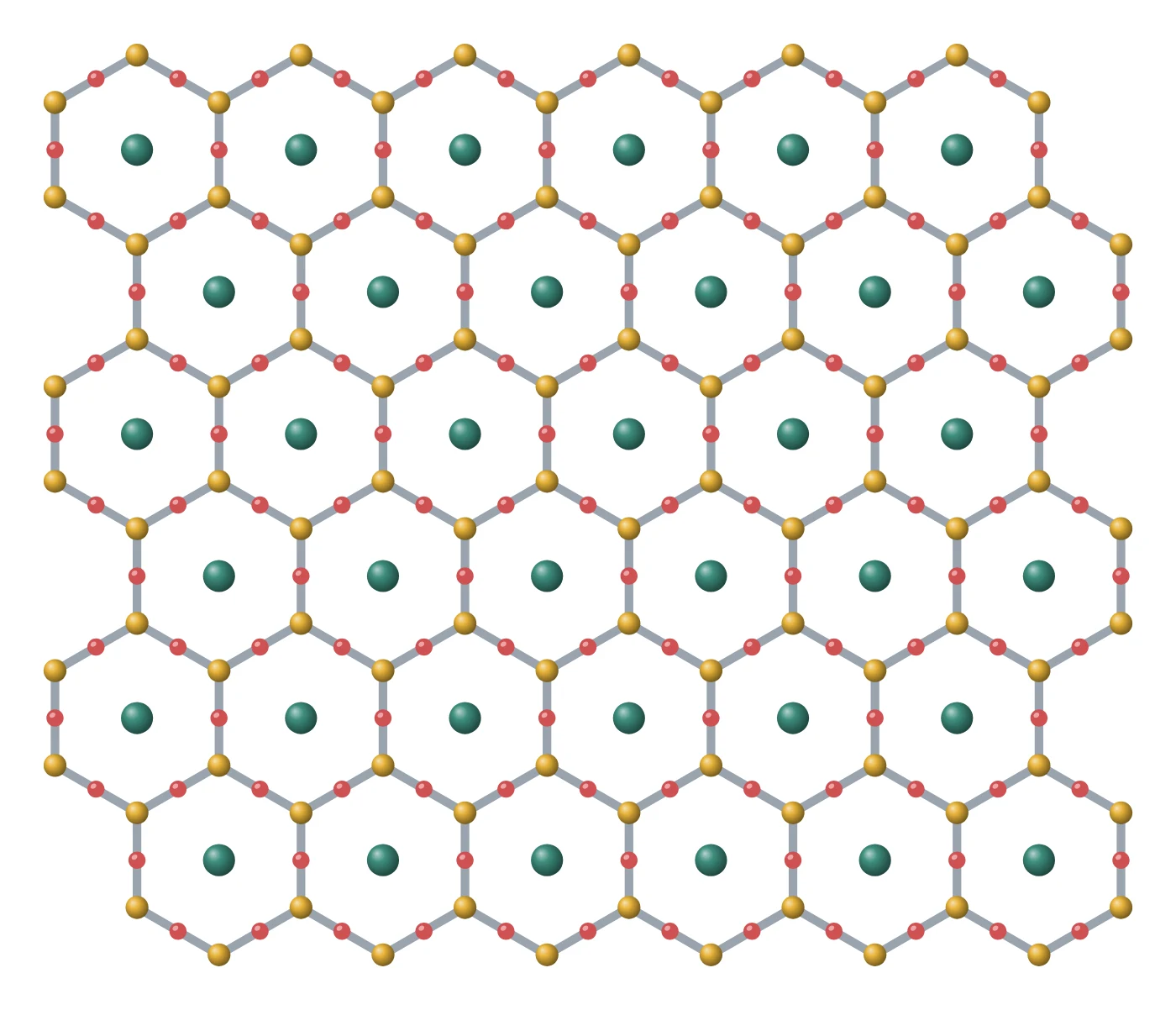
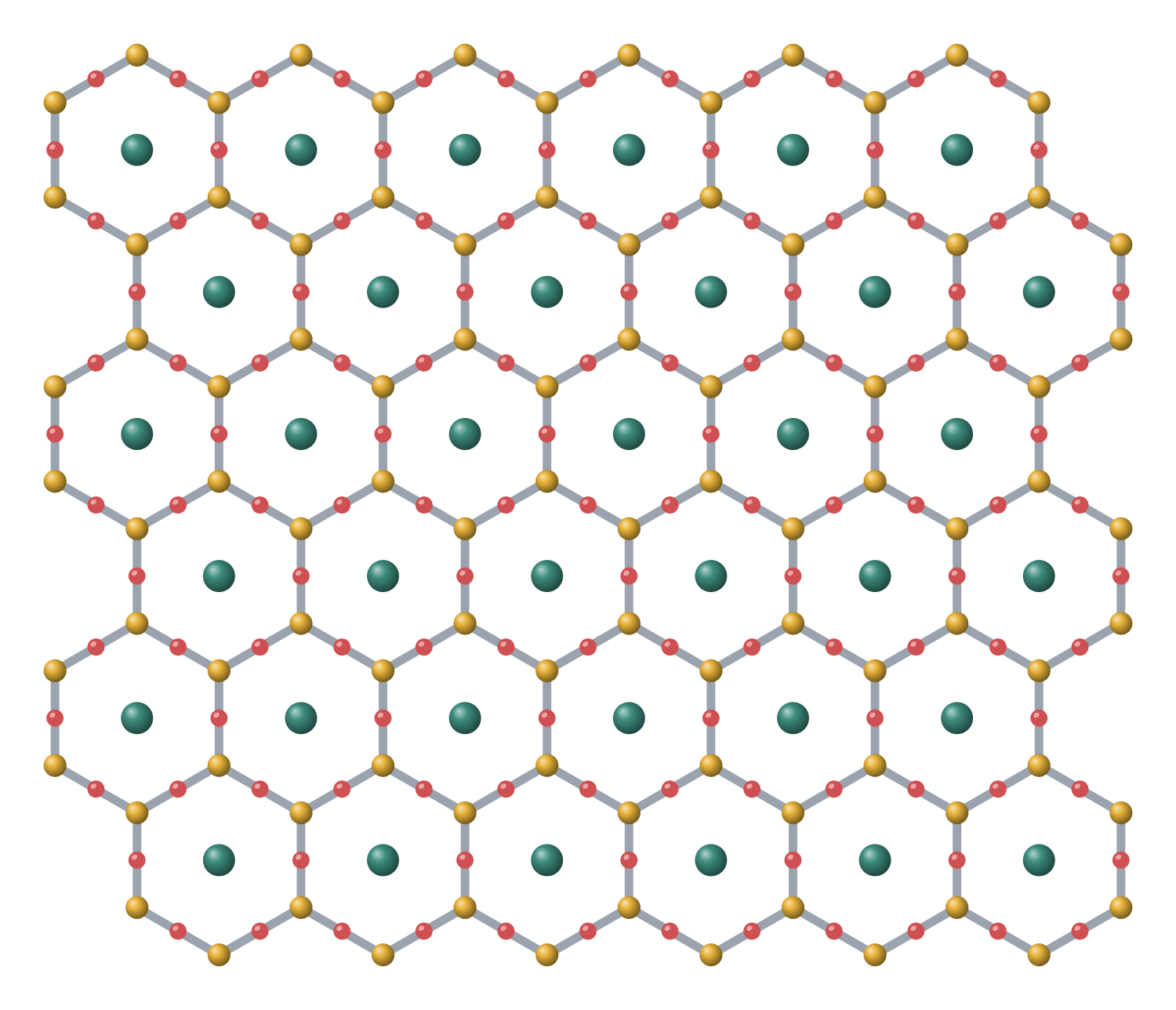
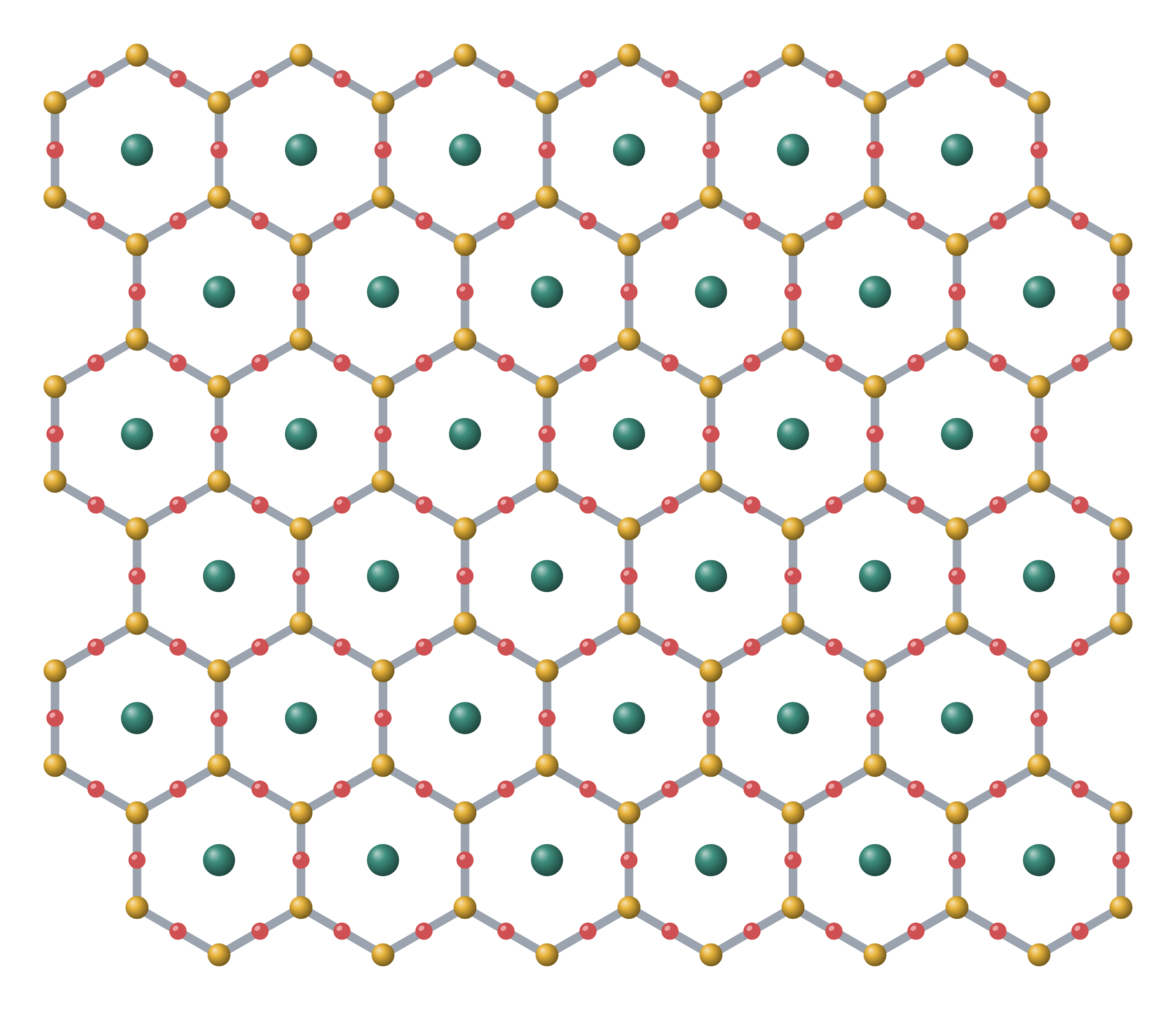
SSZ-13 (CHA) structure drawing (high-resolution SVG)
SSZ-13 structure explained
SSZ-13 is an aluminosilicate member of the zeolites with the chabazite framework, IZA code CHA. The framework is built by stacking double six-membered rings (D6R) in an ABC sequence; between the prisms open large CHA cages, and the cages connect through 8-ring windows about 3.8 × 3.8 Å (Shan et al. 2021). That makes SSZ-13 a small-pore zeolite: big cages, narrow doors.
The framework is simple. It has only one crystallographically distinct T site (Shan et al. 2021), which is why Cu-SSZ-13 is used as the model system for working out how Cu-exchanged zeolites function (Shan et al. 2021). Al in place of Si gives the framework its exchange sites and Brønsted acid sites, and the Si/Al ratio of SSZ-13 is typically 10–54 (Li J. et al. 2022; Shan et al. 2021).
Cu-SSZ-13 and NH₃-SCR of NOₓ
Diesel engines run lean, with oxygen in excess, so the three-way catalyst of a petrol car cannot remove their NOₓ. Instead ammonia reduces NOₓ to N₂ over a catalyst downstream of the oxidation catalyst and particulate filter: selective catalytic reduction with ammonia (NH₃-SCR) (Shan et al. 2021). Cu-SSZ-13 has become the commercial catalyst for this step thanks to its wide working temperature window and its hydrothermal stability (Li P. et al. 2022), and it gives very high NOₓ conversion and N₂ selectivity (Beale et al. 2015). The duty is harsh: 200–600 °C in normal driving, below 200 °C at cold start, and above 650 °C when the upstream filter is regenerated (Shan et al. 2021).
The small pores explain much of its success (Shan et al. 2021):
- Stability. The 3.8 Å windows trap the Al(OH)₃ released by hydrolysis, about 5 Å in kinetic diameter, so it re-inserts rather than leaving, which slows dealumination during hydrothermal ageing.
- Poison resistance. Long-chain hydrocarbons in exhaust are too big to enter the 8-rings.
- Mobile copper. Under reaction conditions Cu ions solvated by ammonia move within about 9 Å of their anchoring Al and pass through the 8-ring windows to pair up in the CHA cages.
Those mobile pairs are part of the mechanism: Paolucci and co-workers showed that mobilised Cu ions travel through zeolite windows and form transient ion pairs that carry out an O₂-mediated redox step essential to SCR, with electrostatic tethering to framework Al limiting how far each ion can roam (Paolucci et al. 2017).
How SSZ-13 is made
- Hydrothermal synthesis with TMAda⁺. SSZ-13 is conventionally crystallised with N,N,N-trimethyl-1-adamantammonium hydroxide (TMAdaOH) as the organic structure-directing agent, at 160 °C for 90–120 h (Shan et al. 2021).
- Cheaper or faster routes. Because TMAdaOH is costly, SSZ-13 has also been made with N,N-dimethylethylcyclohexylammonium bromide (solvent-free) or choline chloride, by seed-assisted transformation of FAU zeolite in about a day, and in only 1.5 h at 240 °C under solvent-free conditions (Shan et al. 2021). Dry-gel conversion raises the Si/Al ratio up to 182 (Li J. et al. 2022).
- Copper loading. Cu-SSZ-13 is usually made by ion exchange of the SSZ-13 zeolite, or in one pot with a Cu–tetraethylenepentamine complex as the template (Shan et al. 2021).
SAPO-34 and methanol to olefins
The CHA framework is not only aluminosilicate. SAPO-34 is a silicoaluminophosphate with the same CHA structure (Yang et al. 2021), and Cu-SAPO-34 is isostructural with Cu-SSZ-13 as an SCR catalyst (Beale et al. 2015). SAPO-34 is the commercial catalyst for methanol to olefins (MTO): more than 20 MTO units in China, with an olefin capacity above 10 Mt a year, use it, and lower-olefin yields above 85% are reached (Yang et al. 2021). More generally, the pore and cavity size of the zeolite or zeotype catalyst steers methanol conversion toward olefins or gasoline (Olsbye et al. 2012). High-silica SSZ-13 itself (Si/Al above 30) has also performed well in MTO (Li J. et al. 2022).
How to draw the SSZ-13 structure
For a paper, slide or poster, draw SSZ-13 as layers of double six-rings stacked ABC, with one CHA cage outlined and an 8-ring window marked 3.8 Å; for an SCR figure, put a Cu ion beside an Al site in the cage and NH₃ and NO molecules at the window. The LabCanvas figure editor Library has a zeolite object that draws a ring framework (choose 6-rings, or 4- and 8-rings) with Si/Al and O atoms and cations in the pores, which you can recolour and label. The LabCanvas 3D Studio has zeolite models you can rotate and export as high-resolution images.
SSZ-13 and other small-pore Cu-zeolite and CHA catalysts
| Material | Framework | Structural note | Known for |
|---|---|---|---|
| Cu-SSZ-13 | CHA (aluminosilicate) | D6R stacked ABC; 8-ring 3.8 × 3.8 Å; CHA cage | Commercial NH₃-SCR of diesel NOₓ |
| SAPO-34 / Cu-SAPO-34 | CHA (silicoaluminophosphate) | Same framework as SSZ-13 | Commercial MTO catalyst; Cu form an SCR catalyst |
| Cu-SSZ-39 | AEI | D6Rs related by mirror symmetry instead of lying parallel as in CHA | SCR with outstanding hydrothermal stability |
| High-silica Cu-LTA | LTA | Small-pore; Cu in single six-rings | Kept good NOₓ conversion after ageing at 900 °C, where Cu-SSZ-13 collapsed |
Related materials
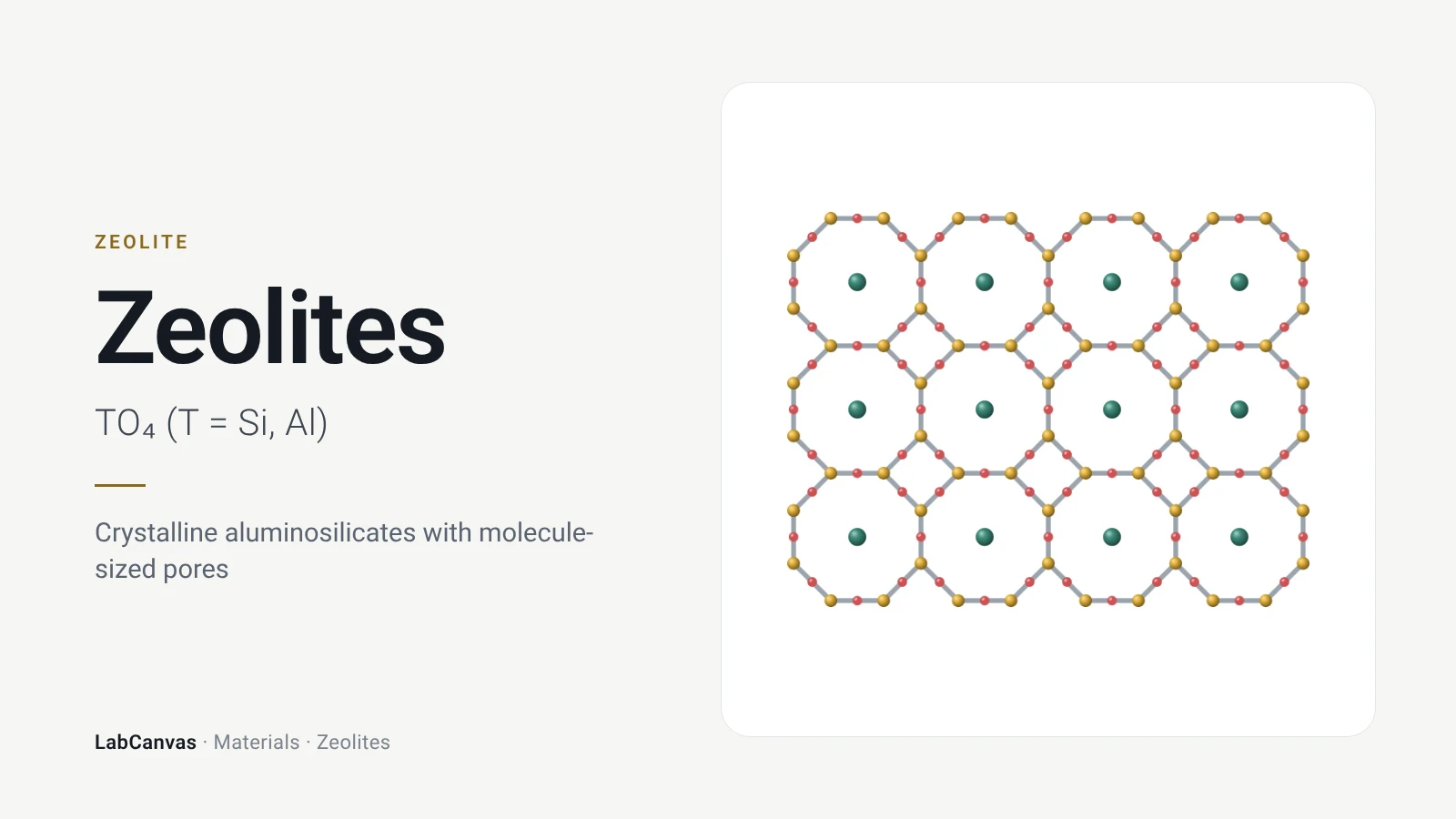
Zeolites
What zeolites are: TO₄ frameworks, 8-, 10- and 12-ring pores, IZA codes (MFI, FAU, LTA, CHA), Si/Al ratio, acid sites, synthesis and uses, with sources.
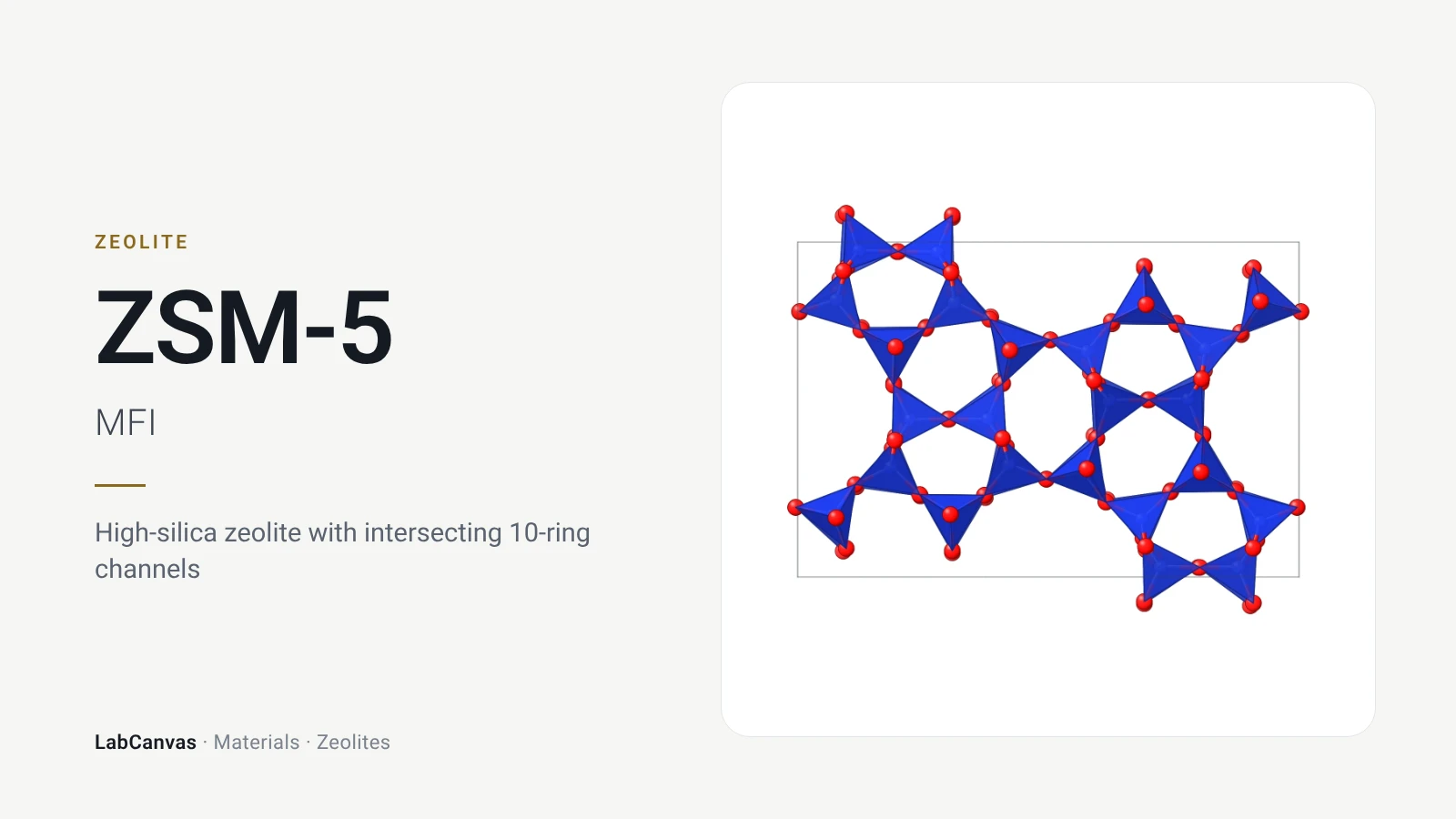
ZSM-5 (MFI)
ZSM-5 zeolite (MFI): 10-ring straight and sinusoidal channels of 5.1–5.6 Å, Si/Al, silicalite-1, FCC additives, methanol to gasoline and xylene isomerisation.
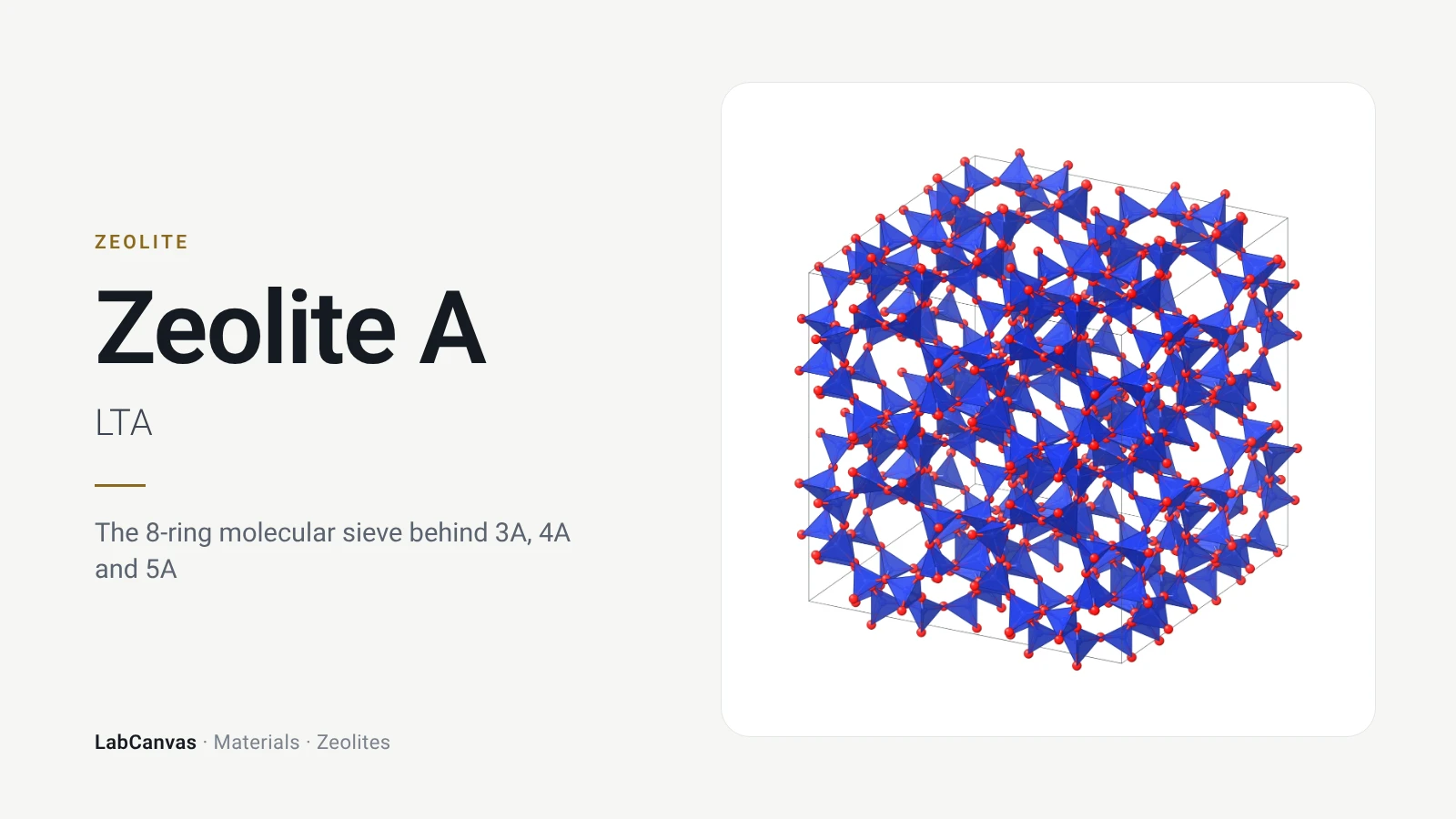
Zeolite A (LTA)
Zeolite A (LTA) structure: sodalite and α cages, 4.1 Å 8-ring windows, Si/Al = 1, the 3A, 4A and 5A molecular sieves, detergents and drying, with sources.
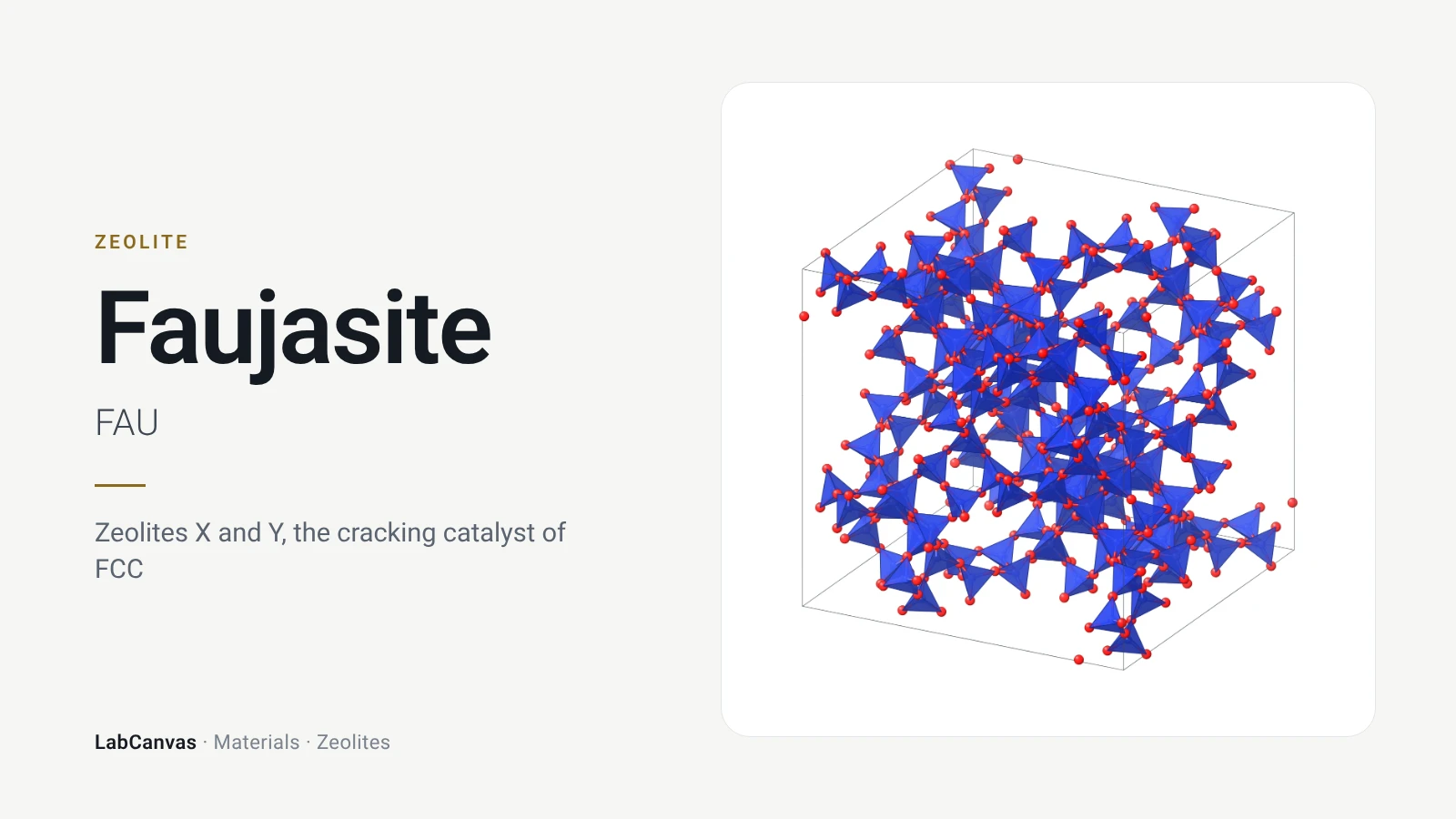
Faujasite (zeolite X and Y)
Faujasite (FAU): sodalite cages, double 6-rings and 12-ring supercages; zeolite X vs Y by Si/Al; ultrastable Y and why zeolite Y is the FCC catalyst.
More on LabCanvas
- Crystal structure figure software compared: VESTA, Mercury, CrystalMaker, Avogadro and LabCanvas
- XRD Scherrer crystallite size calculator: Free tool
- Molar mass calculator: Free tool
- Journal figure size guide: Column widths and resolutions for 38 journals
- 3D models gallery: Turn MOFs, COFs, perovskites and more in 3D
Frequently asked questions
What is SSZ-13?
A high-silica aluminosilicate zeolite with the chabazite (CHA) framework: large CHA cages linked by 8-ring windows about 3.8 × 3.8 Å. Exchanged with copper it is Cu-SSZ-13, the NH₃-SCR catalyst for diesel exhaust (Shan et al., Natl. Sci. Rev. 2021).
What is the structure of SSZ-13?
Double six-membered rings stacked in an ABC sequence, which creates large CHA cages connected by 8-ring windows. There is only one distinct T site (Shan et al. 2021).
What is the pore size of SSZ-13?
Its 8-ring windows are about 3.8 × 3.8 Å, which makes it a small-pore zeolite; the CHA cages behind them are larger (Shan et al. 2021).
What is chabazite?
Chabazite is the zeolite framework type CHA. SSZ-13 is its high-silica aluminosilicate form, and SAPO-34 is a silicoaluminophosphate with the same framework (Yang et al., Nat. Commun. 2021; Beale et al., Chem. Soc. Rev. 2015).
Why is Cu-SSZ-13 used for SCR?
It reduces NOₓ with ammonia over a wide temperature window with high N₂ selectivity and survives hydrothermal ageing; its small pores slow dealumination and keep large hydrocarbon poisons out (Li P. et al., Front. Chem. 2022; Beale et al. 2015; Shan et al. 2021).
How does Cu-SSZ-13 work in NH₃-SCR?
Ammonia-solvated Cu ions move through the 8-ring windows and form transient Cu pairs that activate O₂ in the redox cycle of SCR; their tether to framework Al limits how far they move (Paolucci et al., Science 2017).
How is SSZ-13 synthesized?
Hydrothermally, with N,N,N-trimethyl-1-adamantammonium hydroxide (TMAdaOH) as the structure-directing agent, conventionally at 160 °C for 90–120 h; cheaper templates, FAU conversion and solvent-free routes are alternatives. Copper is added by ion exchange or with a Cu–amine template (Shan et al. 2021).
What is the difference between SSZ-13 and SAPO-34?
Both have the CHA framework. SSZ-13 is an aluminosilicate (Si, Al), SAPO-34 a silicoaluminophosphate (Si, Al, P). Cu-SSZ-13 is the diesel SCR catalyst, and SAPO-34 the commercial methanol-to-olefins catalyst (Beale et al. 2015; Yang et al. 2021).
References
- Y. Shan, J. Du, Y. Zhang, W. Shan, X. Shi, Y. Yu, R. Zhang, X. Meng, F.-S. Xiao, H. He. Selective catalytic reduction of NOx with NH3: opportunities and challenges of Cu-based small-pore zeolites. Natl. Sci. Rev. 2021, 8, nwab010. doi:10.1093/nsr/nwab010
- C. Paolucci et al.. Dynamic multinuclear sites formed by mobilized copper ions in NOx selective catalytic reduction. Science 2017, 357, 898–903. doi:10.1126/science.aan5630
- A. M. Beale, F. Gao, I. Lezcano-Gonzalez, C. H. F. Peden, J. Szanyi. Recent advances in automotive catalysis for NOx emission control by small-pore microporous materials. Chem. Soc. Rev. 2015, 44, 7371–7405. doi:10.1039/c5cs00108k
- P. Li et al.. Recent progress in performance optimization of Cu-SSZ-13 catalyst for selective catalytic reduction of NOx. Front. Chem. 2022, 10, 1033255. doi:10.3389/fchem.2022.1033255
- J. Li, M. Gao, W. Yan, J. Yu. Regulation of the Si/Al ratios and Al distributions of zeolites and their impact on properties. Chem. Sci. 2022, 14, 1935–1959. doi:10.1039/d2sc06010h
- L. Yang et al.. Stabilizing the framework of SAPO-34 zeolite toward long-term methanol-to-olefins conversion. Nat. Commun. 2021, 12, 4661. doi:10.1038/s41467-021-24403-2
- U. Olsbye et al.. Conversion of methanol to hydrocarbons: how zeolite cavity and pore size controls product selectivity. Angew. Chem. Int. Ed. 2012, 51, 5810–5831. doi:10.1002/anie.201103657
Draw SSZ-13 (CHA) for your paper or slides
LabCanvas is a browser workspace for scientific figures: framework clusters, linkers and nets, crystal structures in 2D and 3D, graphs and posters, all editable.
Draw SSZ-13 (CHA) in LabCanvas