Zeolite A (LTA): structure, molecular sieves and uses
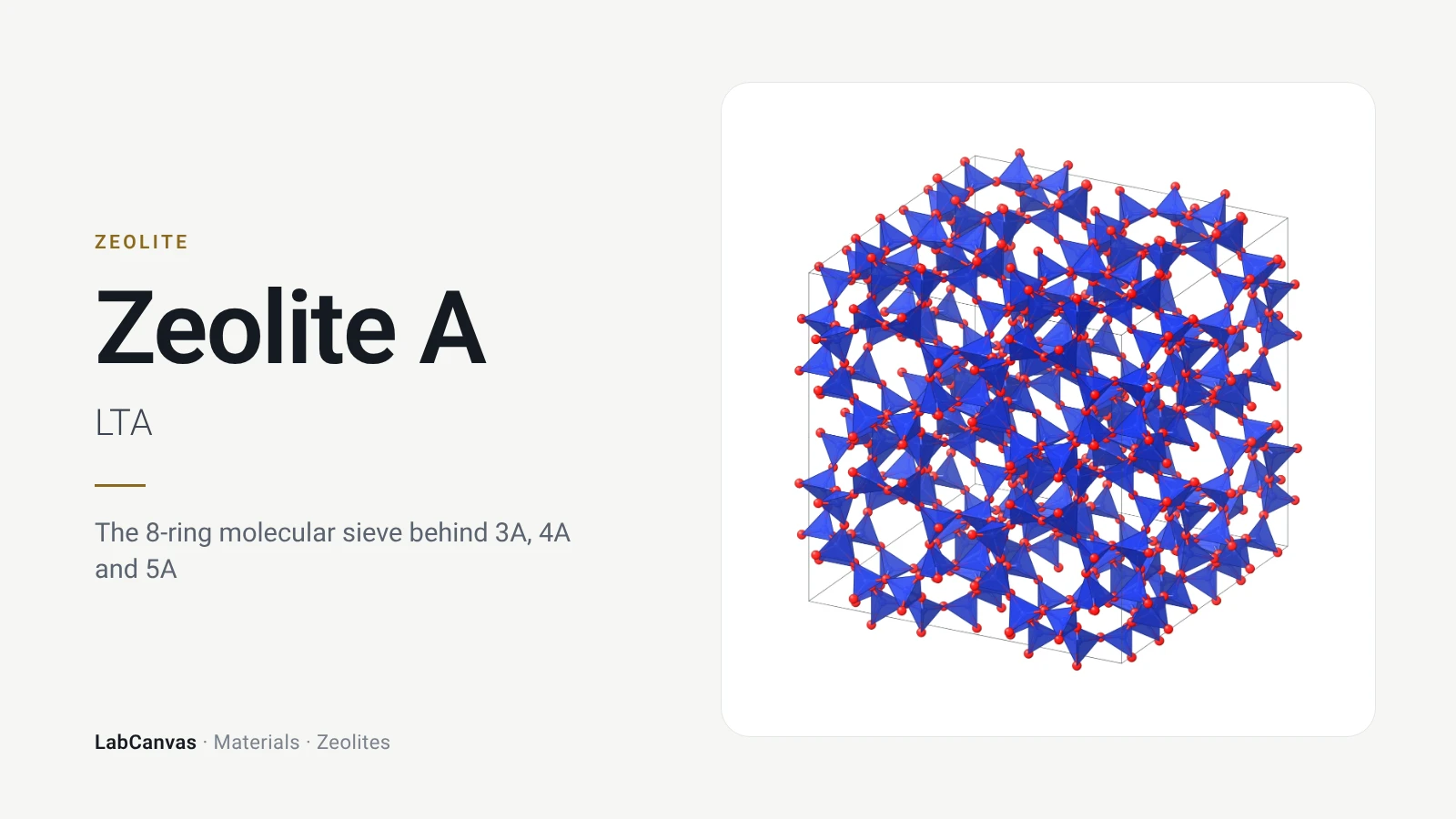
Zeolite A, framework type LTA (Linde Type A), is a synthetic aluminosilicate with Si/Al = 1, built from double four-ring units into small sodalite (β) cages and large α cages in a cubic arrangement (Chen et al. 2025; Ooe et al. 2023; Ren et al. 2011). The only way into the large cages is through eight-ring windows 4.1 × 4.1 Å across, and the cations that sit in them set what gets in: the sodium form is the 4A molecular sieve, the potassium-containing form 3A and the calcium-exchanged form 5A (Chen et al. 2025; Wu et al. 2019). It is used as a phosphate-free detergent builder, as a drying agent and for gas separation (Fruijtier-Pölloth 2009; Jović et al. 2017).
Contents
Zeolite A (LTA) at a glance
| Formula | Sodium form (4A): NaA with 12 Na⁺ per unit cell and Si/Al = 1 (Chen et al. 2025); framework Na₁₂[Al₁₂Si₁₂O₄₈] (calculated from 12 Na⁺ per cell, charge balance and Si/Al = 1) |
|---|---|
| Framework type | LTA, Linde Type A (Chen et al. 2025) |
| Si/Al ratio | 1, the highest aluminium content a zeolite framework takes (Ooe et al. 2023) |
| Building units | Double four-rings (D4R) as the main secondary building unit (Wang et al. 2021); the D4R-rich gel assembles into α and β (sodalite) cages as it crystallises (Ren et al. 2011) |
| Cages | Large α (lta) cages and small β (sodalite) cages in a body-centred cubic arrangement (Chen et al. 2025; Ooe et al. 2023) |
| Windows | Eight-membered rings 4.1 × 4.1 Å, the only entrances to the large cavities (Chen et al. 2025) |
| Cell | Cubic, a = 24.555 Å for Na-LTA (Ooe et al. 2023) |
| Cation sites | Site I at the six-rings, site II in the eight-rings, site III at the four-rings (Chen et al. 2025) |
| Framework density | 12.9 T atoms per 1000 ų (Liguori et al. 2019) |
| Cation exchange capacity | 5.14 meq g⁻¹ measured, against 5.48 meq g⁻¹ in the literature (Aprea et al. 2011) |
| Water uptake | 26.5% at 16 torr and 298 K, against 27.6% in the literature (Aprea et al. 2011) |
| 3A molecular sieve | K/Na form, Si/Al ≈ 1 (Wu et al. 2019); 3 Å micropores that exclude dichloromethane (Jović et al. 2017) |
| 4A molecular sieve | The sodium form NaA, with Na⁺ in the eight-ring windows (Chen et al. 2025) |
| 5A molecular sieve | Calcium-exchanged LTA (Chen et al. 2025) |
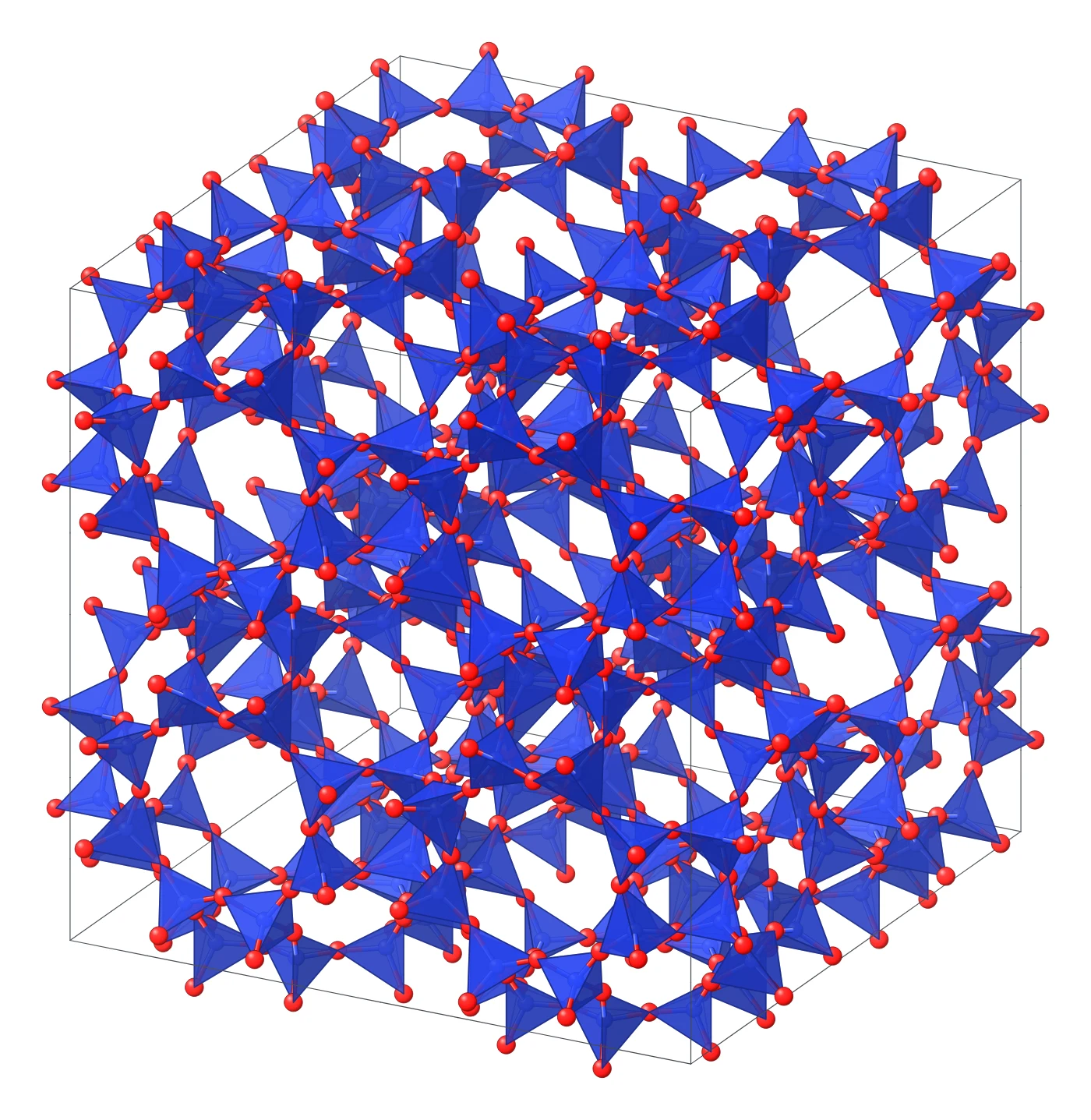
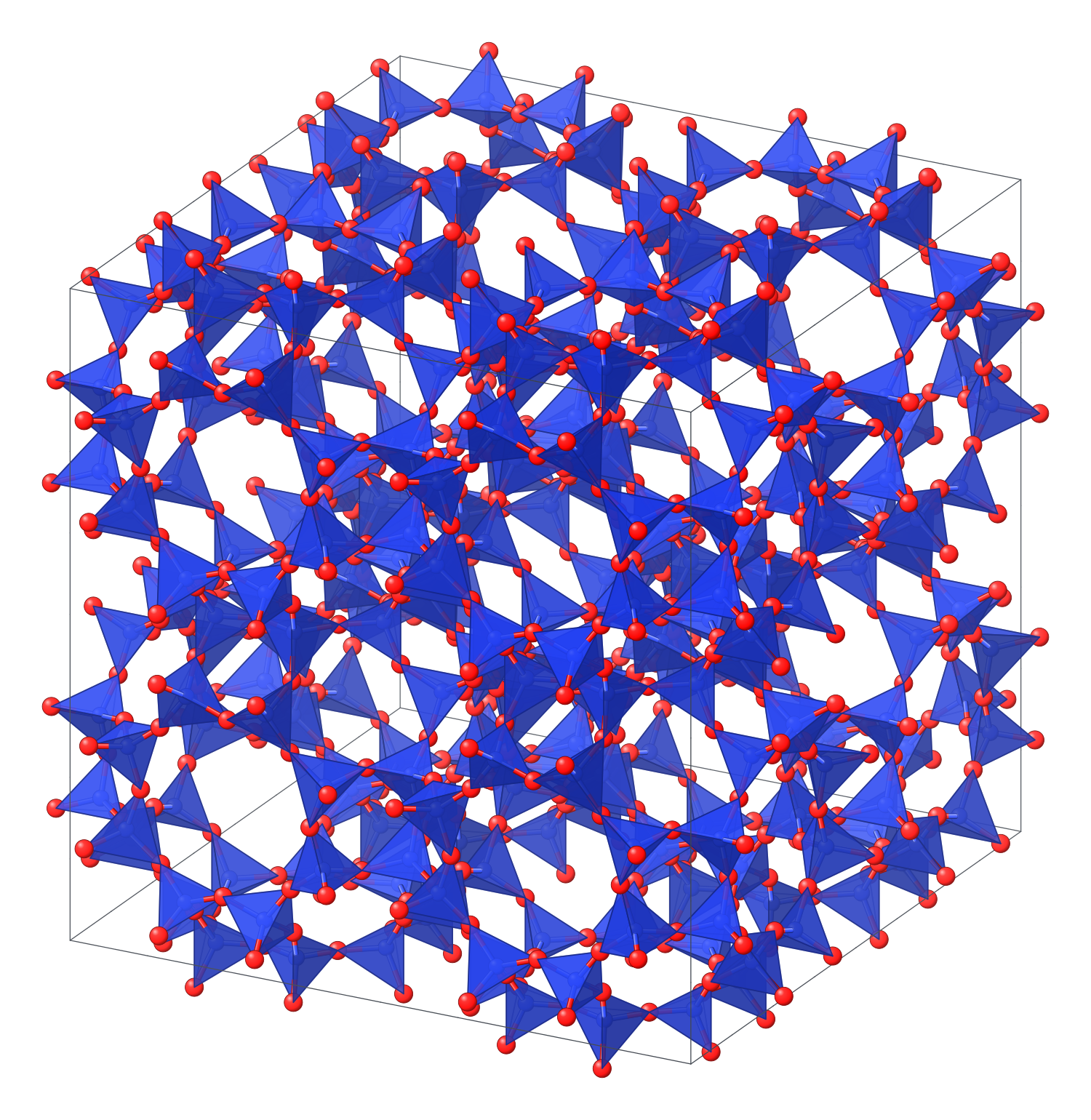
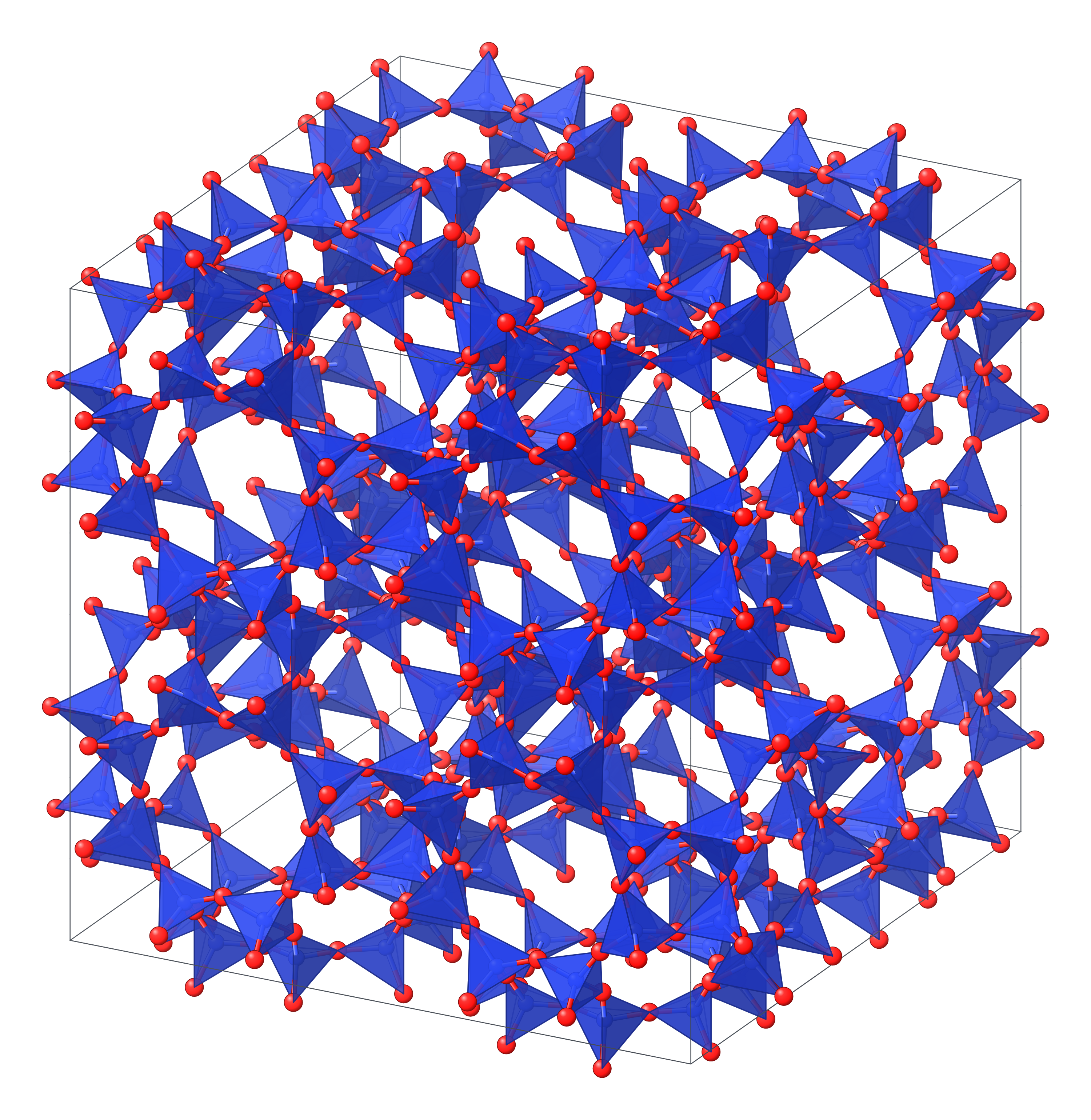
Zeolite A (LTA) crystal structure (high-resolution SVG)
Zeolite A (LTA) in 3D (interactive)
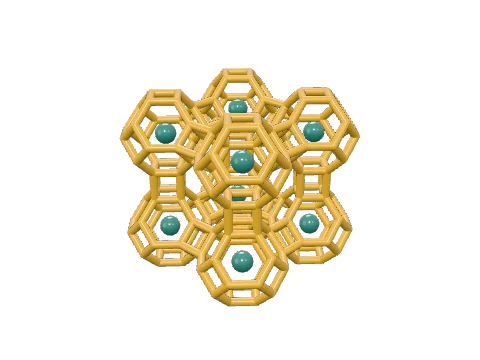
Loading the 3D model…
Zeolite A structure explained
Zeolite A is one of the zeolites, crystalline aluminosilicates whose SiO₄ and AlO₄ tetrahedra share corners to enclose cages and channels holding water and loosely bound cations that balance the charge of the AlO₄ units (Liguori et al. 2019). Its framework type is LTA, for Linde Type A.
The framework is built from double four-rings (D4R), its main secondary building unit (Wang et al. 2021). Spectroscopy during synthesis shows a gel rich in D4R units from which both kinds of cage appear as the crystals form (Ren et al. 2011): small β (sodalite) cages and large α (lta) cages, arranged on a body-centred cubic pattern (Chen et al. 2025; Ooe et al. 2023). Zeolite A shares its polyhedral building units with zeolite X of the faujasite family (Liguori et al. 2019).
The α cages connect through eight-membered rings 4.1 × 4.1 Å across, the only way into the large cavities (Chen et al. 2025). With Si/Al = 1, the maximum aluminium content (Ooe et al. 2023), the framework carries a high negative charge and many cations. In the sodium form there are 12 Na⁺ per unit cell (Chen et al. 2025), spread over three sites: at the six-rings (site I), in the eight-rings (site II) and at the four-rings (site III). Na-LTA is cubic with a = 24.555 Å (Ooe et al. 2023).
Zeolite 3A, 4A and 5A: how the cation sets the pore
Because every eight-ring window has a cation sitting in it, exchanging the cation changes what can pass. The three commercial molecular sieves are forms of the same LTA framework:
- 4A is the sodium form, NaA. Its Na⁺ ions sit in the plane of the eight-rings and act as door-keepers: a gas molecule gets in only when it pushes the cation aside, and NaA admits small krypton more readily than larger xenon (Chen et al. 2025).
- 3A is a potassium-containing (K/Na) form with Si/Al ≈ 1 (Wu et al. 2019). Its micropores are about 3 Å, small enough to keep out dichloromethane (kinetic diameter 3.3 Å) while taking up water (Jović et al. 2017).
- 5A is calcium-exchanged LTA (Chen et al. 2025). Divalent Ca²⁺ means fewer cations are needed to balance the framework, leaving cation sites vacant, and Ca²⁺ prefers the six-ring sites over the eight-rings. In silver–calcium LTA, exchanging half the cation sites for Ca²⁺ unblocked the windows enough for nitrogen to enter at 77 K (Chen et al. 2025).
The same door-keeper idea can be tuned further: replacing Na⁺ by Ag⁺ reverses the selectivity so that larger xenon is admitted while krypton is kept out, with an IAST Xe/Kr selectivity over 1600 (Chen et al. 2025).
Uses of zeolite A
- Detergent builder. Synthetic zeolites have been replacing phosphates as builders in laundry detergents; they are hygroscopic ion exchangers, and the intact zeolite is not bioavailable by mouth, skin or inhalation (Fruijtier-Pölloth 2009). Zeolite 4A removes calcium ions from the wash water during the washing cycle (Hui and Chao 2006), and a 4A made from coal fly ash reached a cation exchange capacity of 4.5 meq Ca²⁺ g⁻¹ (Cardoso et al. 2015).
- Drying solvents and gases. Molecular sieve 3A dries dichloromethane to ppm levels in a packed bed: the solvent is excluded from the micropores, so water adsorbs as it would from pure water vapour (Jović et al. 2017). A good zeolite A takes up about 26–28% of its weight in water at 16 torr and 298 K (Aprea et al. 2011).
- Gas separation and CO₂ capture. The 4.1 Å opening admits CO₂ (3.3 Å); LTA made from kaolin clay adsorbed 5.2 mmol g⁻¹ CO₂ at 273 K and kept its capacity over 50 adsorption–desorption cycles (Li et al. 2026). Cation-exchanged LTA separates xenon from krypton (Chen et al. 2025).
How to draw the zeolite A structure
For a paper, slide or poster, show three levels: a single double four-ring (a cube of eight tetrahedral atoms), a sodalite (β) cage, and the cubic cell with the large α cage in the middle and its eight-ring windows facing each neighbour. Draw the framework as T–T sticks or as SiO₄/AlO₄ tetrahedra, and add the cations in the windows when the molecular-sieve action matters. In the LabCanvas figure editor the Library has a zeolite object and an LTA crystal file that draws the framework as a high-resolution SVG; the LabCanvas 3D Studio has an LTA model you can turn, cut and export as an image.
Zeolite A molecular sieves compared
| Sieve | Cation | What it does | Typical use | Source |
|---|---|---|---|---|
| 3A | K⁺ with Na⁺ | ≈3 Å micropores; keeps out dichloromethane (3.3 Å) but takes up water | Drying solvents | Wu et al. 2019; Jović et al. 2017 |
| 4A | Na⁺ (12 per cell) | Na⁺ door-keepers in the 4.1 Å eight-rings | Detergent builder; gas separation | Chen et al. 2025; Hui and Chao 2006 |
| 5A | Ca²⁺ | Fewer cations; Ca²⁺ prefers the six-ring sites, so eight-rings are less blocked | Gas separation | Chen et al. 2025 |
Related materials
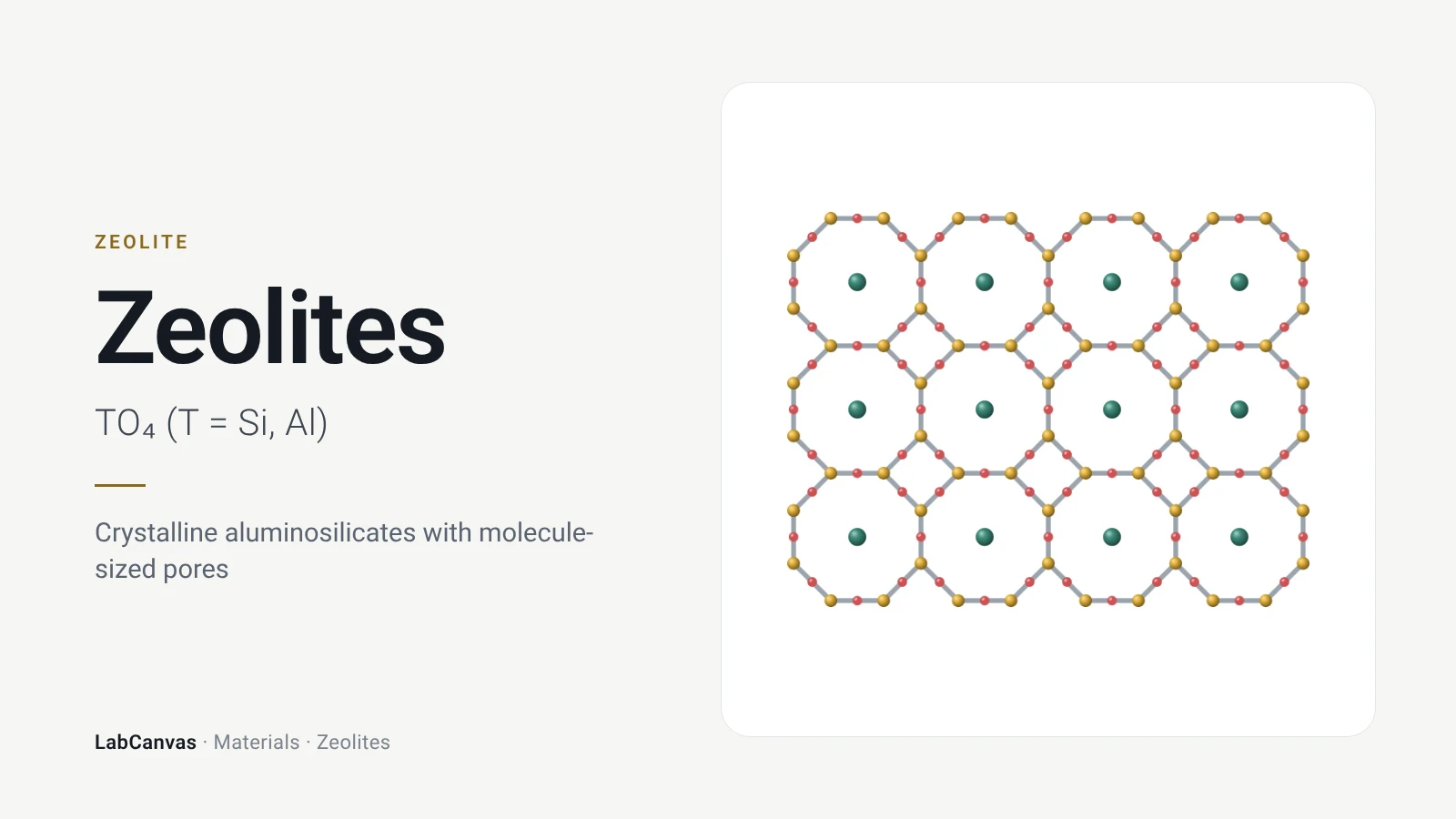
Zeolites
What zeolites are: TO₄ frameworks, 8-, 10- and 12-ring pores, IZA codes (MFI, FAU, LTA, CHA), Si/Al ratio, acid sites, synthesis and uses, with sources.
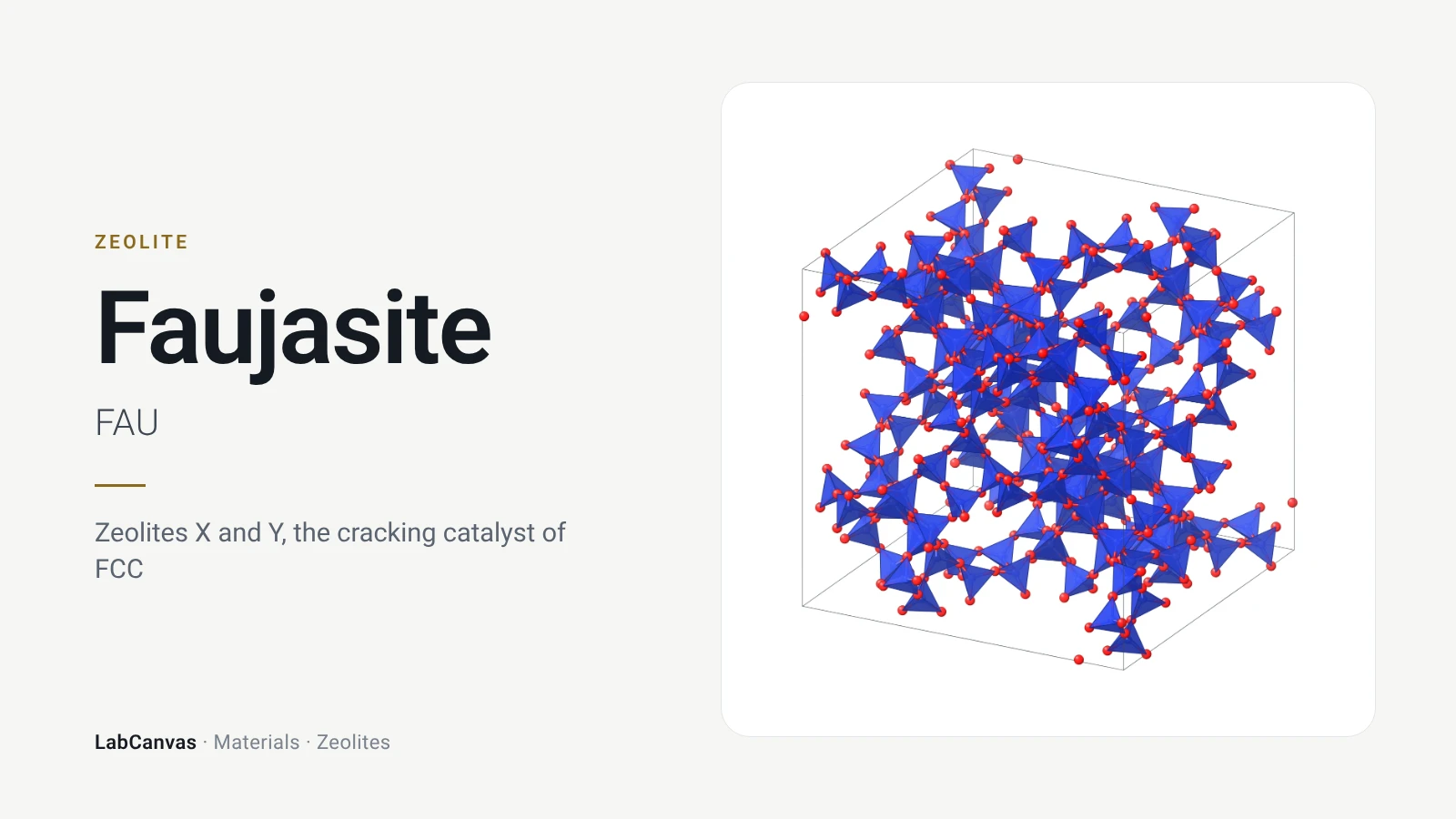
Faujasite (zeolite X and Y)
Faujasite (FAU): sodalite cages, double 6-rings and 12-ring supercages; zeolite X vs Y by Si/Al; ultrastable Y and why zeolite Y is the FCC catalyst.
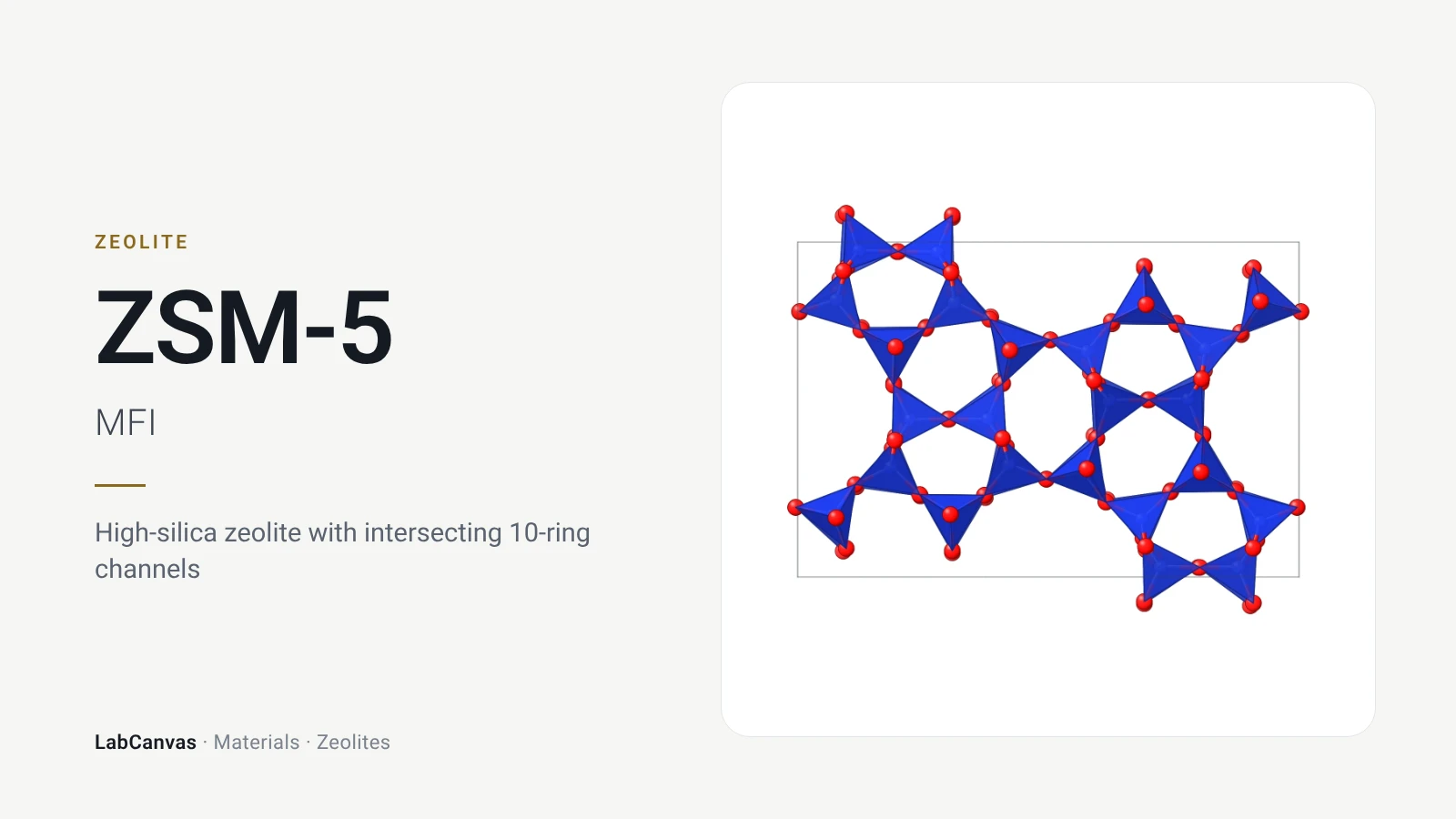
ZSM-5 (MFI)
ZSM-5 zeolite (MFI): 10-ring straight and sinusoidal channels of 5.1–5.6 Å, Si/Al, silicalite-1, FCC additives, methanol to gasoline and xylene isomerisation.
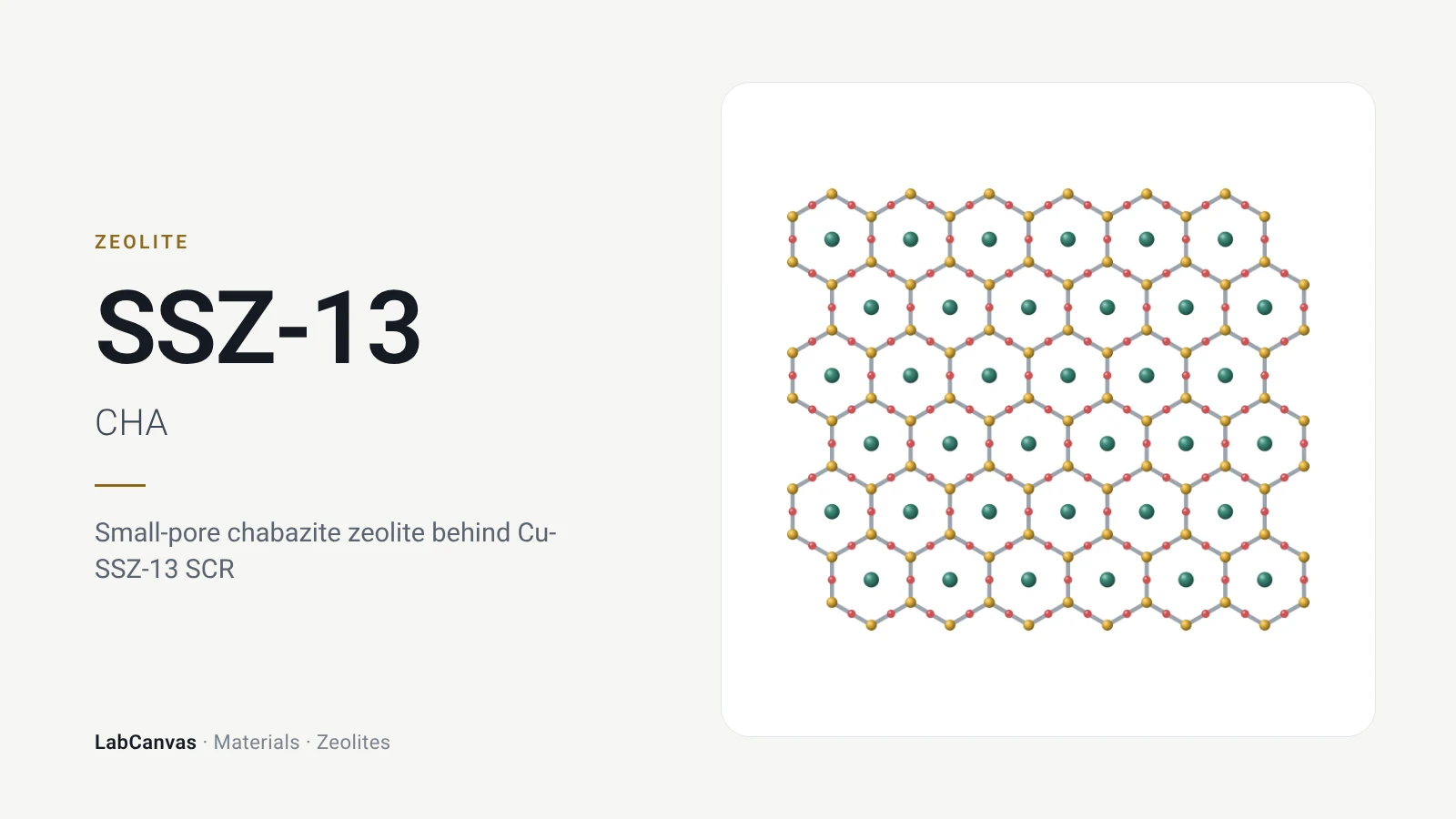
SSZ-13 (CHA)
SSZ-13, the chabazite (CHA) zeolite: 8-ring windows of 3.8 Å and CHA cages, TMAda⁺ synthesis, Cu-SSZ-13 for NH₃-SCR of diesel NOₓ, and SAPO-34 for MTO.
More on LabCanvas
- Crystal structure figure software compared: VESTA, Mercury, CrystalMaker, Avogadro and LabCanvas
- XRD Scherrer crystallite size calculator: Free tool
- Molar mass calculator: Free tool
- Journal figure size guide: Column widths and resolutions for 38 journals
- 3D models gallery: Turn MOFs, COFs, perovskites and more in 3D
Frequently asked questions
What is zeolite A?
Zeolite A (Linde Type A, framework code LTA) is a synthetic aluminosilicate zeolite with Si/Al = 1, made of sodalite (β) cages and large α cages connected by eight-ring windows 4.1 Å across (Chen et al. 2025; Ooe et al. 2023).
What is the structure of LTA zeolite?
A cubic framework built from double four-ring units, with small sodalite (β) cages and large α cages arranged body-centred cubic. The α cages are reached only through eight-membered rings of 4.1 × 4.1 Å (Chen et al. 2025; Wang et al. 2021; Ren et al. 2011).
What is the difference between 3A, 4A and 5A molecular sieves?
They are the same LTA zeolite with different cations. 4A is the sodium form, 3A a potassium-containing form with about 3 Å pores, and 5A the calcium-exchanged form, which needs fewer cations so its windows are less blocked (Chen et al. 2025; Wu et al. 2019; Jović et al. 2017).
What is the pore size of zeolite 4A?
The eight-ring windows of LTA are 4.1 × 4.1 Å (Chen et al. 2025; Li et al. 2026). In NaA each window holds a Na⁺ ion that must move aside for a molecule to pass.
What is the Si/Al ratio of zeolite A?
Si/Al = 1, the highest aluminium content a zeolite framework takes (Ooe et al. 2023; Chen et al. 2025). That is why it has many exchangeable cations and a high ion-exchange capacity.
Why is zeolite A used in detergents?
It is an ion exchanger that takes calcium out of the wash water, and synthetic zeolites have been replacing phosphates as detergent builders (Fruijtier-Pölloth 2009; Hui and Chao 2006).
Which molecular sieve is best for drying solvents?
Molecular sieve 3A is the usual choice when the solvent molecules are larger than its 3 Å pores: it dried dichloromethane to ppm levels without adsorbing the solvent (Jović et al. 2017).
How can I draw the zeolite A structure for a paper?
Use the zeolite object or the LTA crystal file in the LabCanvas figure editor Library, which draws the framework as an editable high-resolution SVG, or open the LTA model in the LabCanvas 3D Studio and export a render.
References
- D. Chen, T. Zhang, X. Yin et al.. Size-inverse molecular sieving xenon/krypton separation through cation-tuned gating effect within Linde Type A zeolites. Nat. Commun. 2025, 16, 9849. doi:10.1038/s41467-025-64823-y
- K. Ooe, T. Seki, K. Yoshida, Y. Kohno, Y. Ikuhara, N. Shibata. Direct imaging of local atomic structures in zeolite using optimum bright-field scanning transmission electron microscopy. Sci. Adv. 2023, 9, eadf6865. doi:10.1126/sciadv.adf6865
- L. Ren, C. Li, F. Fan et al.. UV-Raman and NMR spectroscopic studies on the crystallization of zeolite A and a new synthetic route. Chem. Eur. J. 2011, 17, 6162–6169. doi:10.1002/chem.201100098
- P. Wang, J. Cao, Y. Zhang, Q. Sun. Controllable preparation of cubic zeolite A and application of Langmuir model in carbon dioxide adsorption. Nanomaterials 2021, 11, 3375. doi:10.3390/nano11123375
- B. Liguori, P. Aprea, B. de Gennaro, F. Iucolano, A. Colella, D. Caputo. Pozzolanic activity of zeolites: the role of Si/Al ratio. Materials 2019, 12, 4231. doi:10.3390/ma12244231
- S. Jović, Y. Laxminarayan, J. Keurentjes, J. Schouten, J. van der Schaaf. Adsorptive water removal from dichloromethane and vapor-phase regeneration of a molecular sieve 3A packed bed. Ind. Eng. Chem. Res. 2017, 56, 5042–5054. doi:10.1021/acs.iecr.7b00433
- H. Wu, G. T. Fei, X. L. Ma et al.. Eu²⁺-activated green-emitting phosphor obtained from Eu³⁺ ions doping zeolite-3A in air surroundings and its efficient green light-emitting diodes. Nanoscale Res. Lett. 2019, 14, 298. doi:10.1186/s11671-019-3130-8
- J. Li, J. Li, S. Fang et al.. Kaolin-derived zeolite enables high-performance carbon capture with gigaton-scale potential. Natl. Sci. Rev. 2026, 13, nwag064. doi:10.1093/nsr/nwag064
- C. Fruijtier-Pölloth. The safety of synthetic zeolites used in detergents. Arch. Toxicol. 2009, 83, 23–35. doi:10.1007/s00204-008-0327-5
- K. S. Hui, C. Y. H. Chao. Pure, single phase, high crystalline, chamfered-edge zeolite 4A synthesized from coal fly ash for use as a builder in detergents. J. Hazard. Mater. 2006, 137, 401–409. doi:10.1016/j.jhazmat.2006.02.014
- A. M. Cardoso, M. B. Horn, L. S. Ferret, C. M. N. Azevedo, M. Pires. Integrated synthesis of zeolites 4A and Na-P1 using coal fly ash for application in the formulation of detergents and swine wastewater treatment. J. Hazard. Mater. 2015, 287, 69–77. doi:10.1016/j.jhazmat.2015.01.042
- P. Aprea, B. de Gennaro, C. Colella. An unconventional method for the recovery of caustic soda from spent Al-rich pickling solutions. J. Environ. Manage. 2011, 92, 1821–1827. doi:10.1016/j.jenvman.2011.03.012
Draw Zeolite A (LTA) for your paper or slides
LabCanvas is a browser workspace for scientific figures: framework clusters, linkers and nets, crystal structures in 2D and 3D, graphs and posters, all editable.
Draw Zeolite A (LTA) in LabCanvas