Materials
Famous materials explained, every fact cited to the original papers: metal–organic frameworks (MOFs), covalent organic frameworks (COFs) and 2D materials such as graphene and MoS₂, with editable figures, high-resolution crystal structures and interactive 3D models you can open in LabCanvas.
Metal–organic frameworks (MOFs)
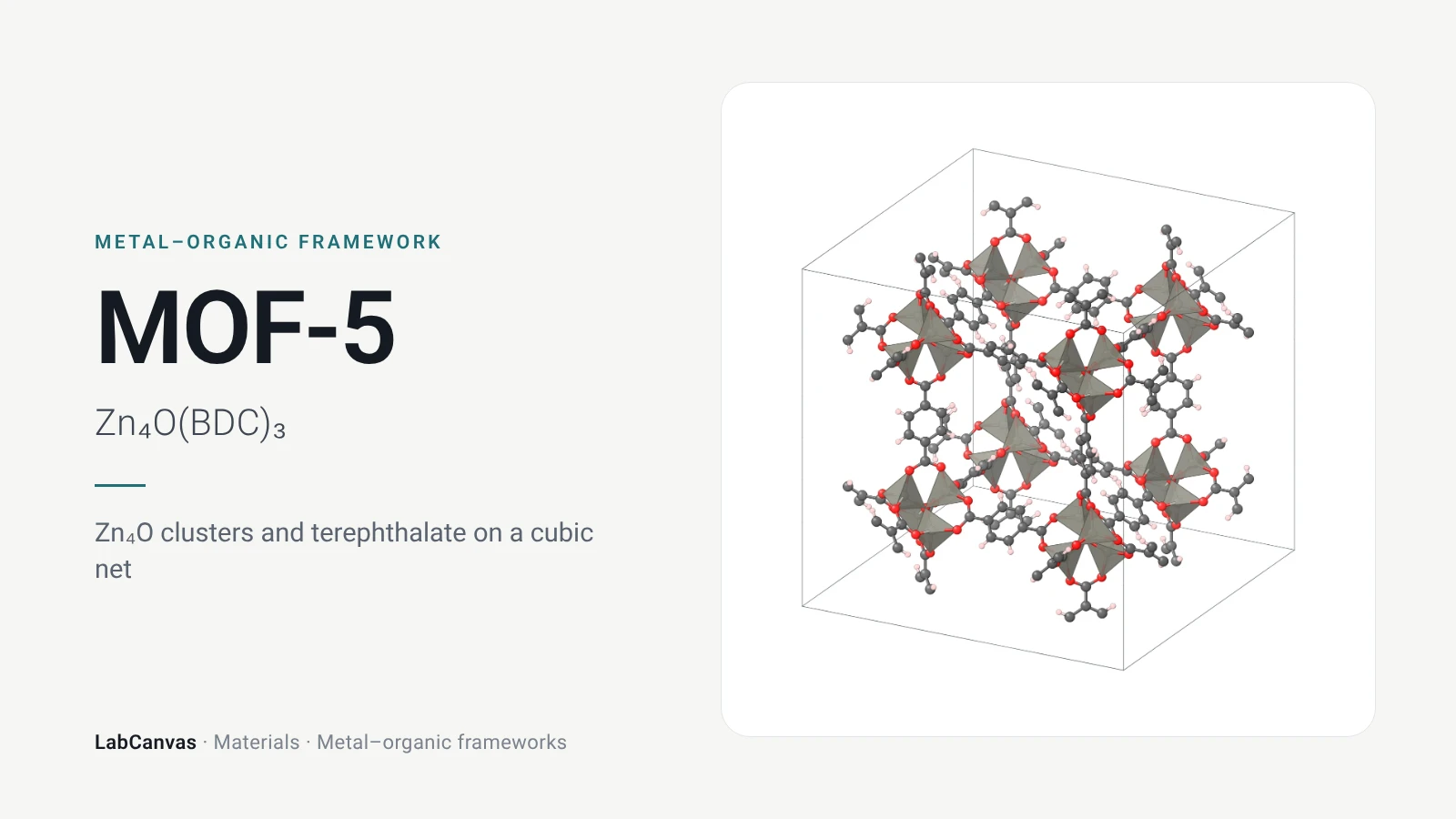
MOF-5
MOF-5, Zn₄O(BDC)₃: its cubic structure in 2D and interactive 3D, how it is made, surface area, stability and uses, with the original papers. Edit the figures free.
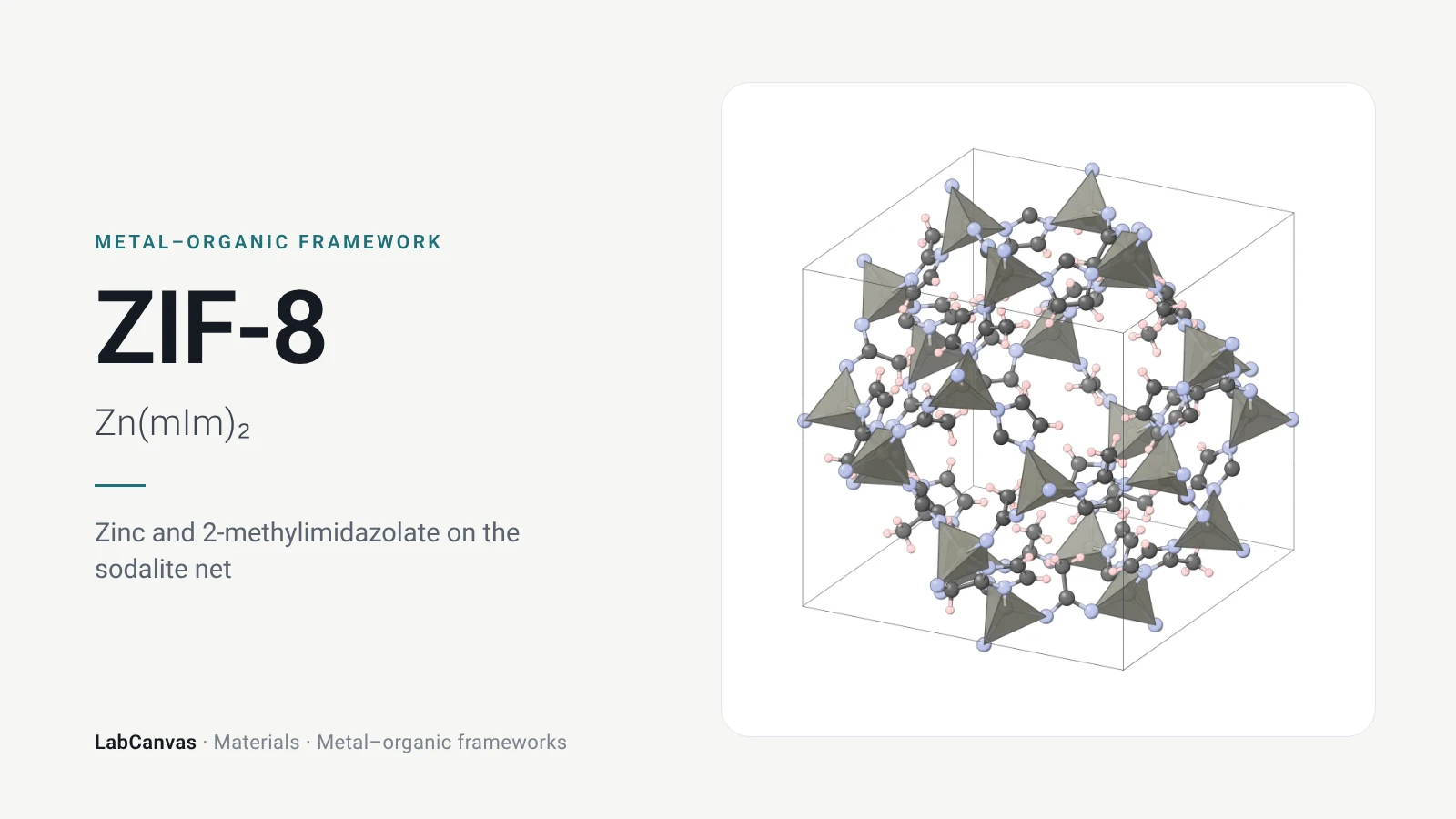
ZIF-8
ZIF-8, Zn(mIm)₂: its sodalite structure in 2D and 3D, how it is made, pore size, surface area and stability, with the original papers. Edit the figures free.
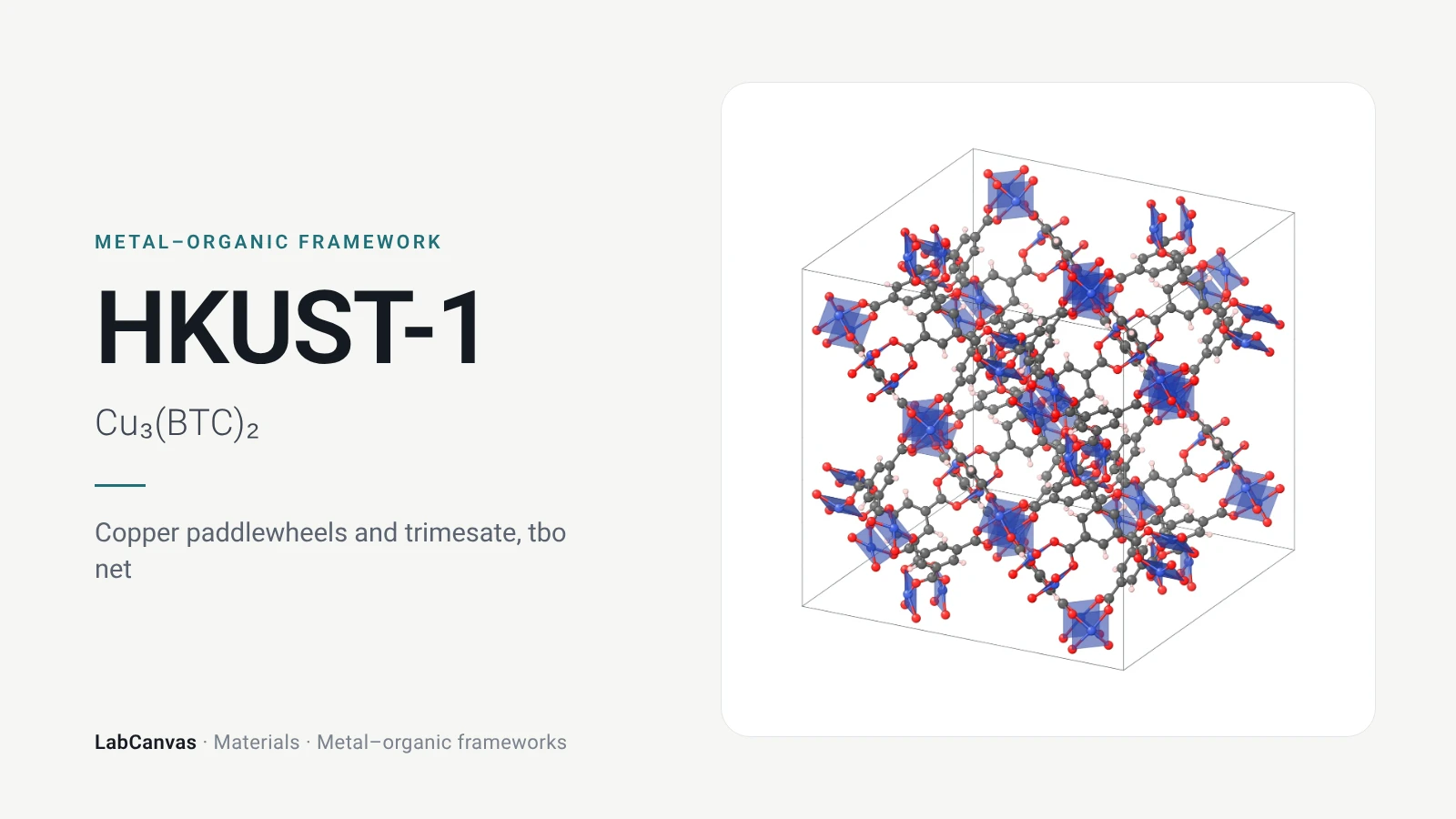
HKUST-1
HKUST-1 (Cu-BTC), Cu₃(BTC)₂: its paddlewheel structure in 2D and 3D, how it is made, pore size, open copper sites and stability, with the original papers.
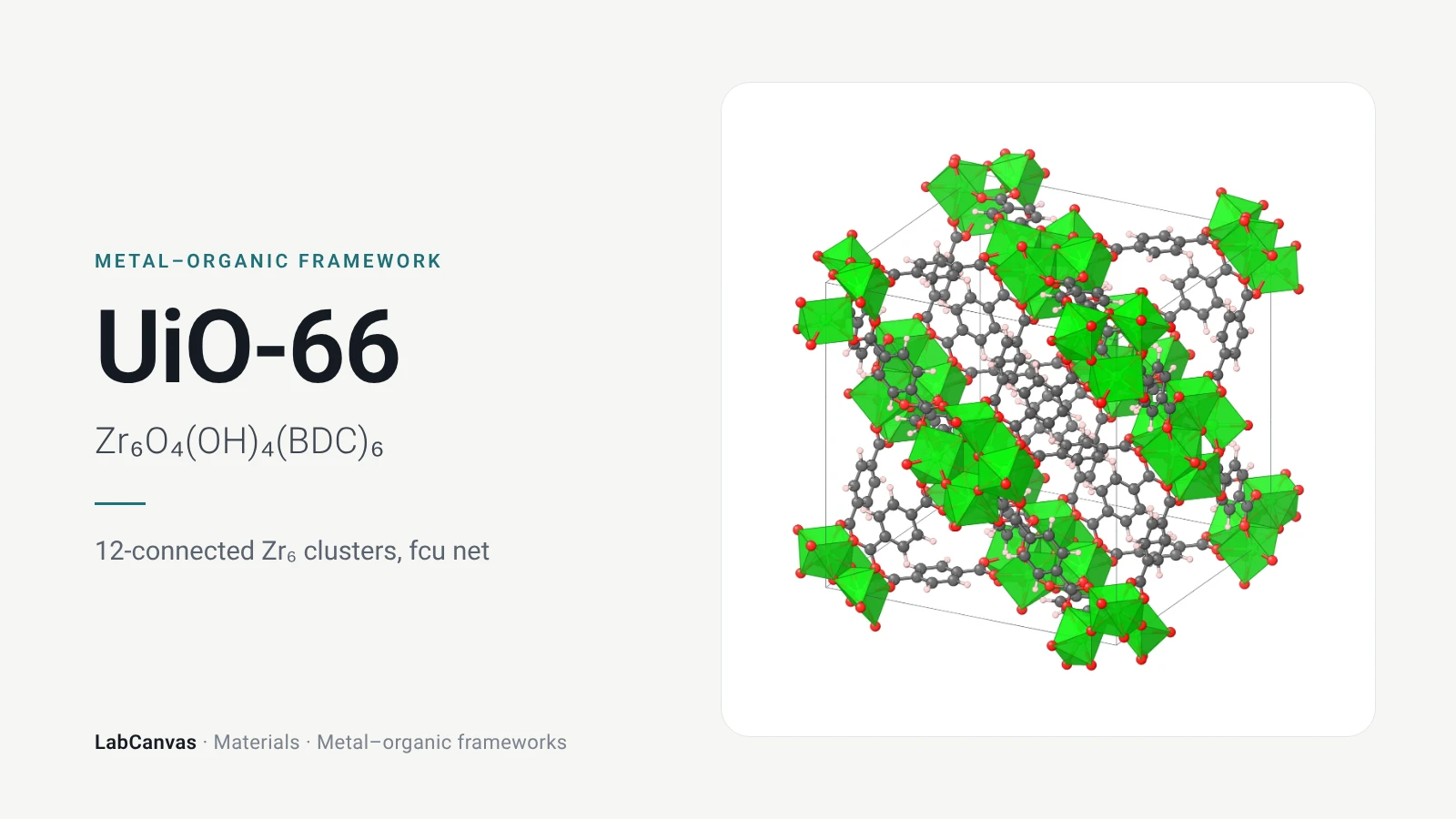
UiO-66
UiO-66, Zr₆O₄(OH)₄(BDC)₆: its fcu structure in 2D and 3D, how it is made, missing-linker defects, pore size, surface area and stability, with the papers.
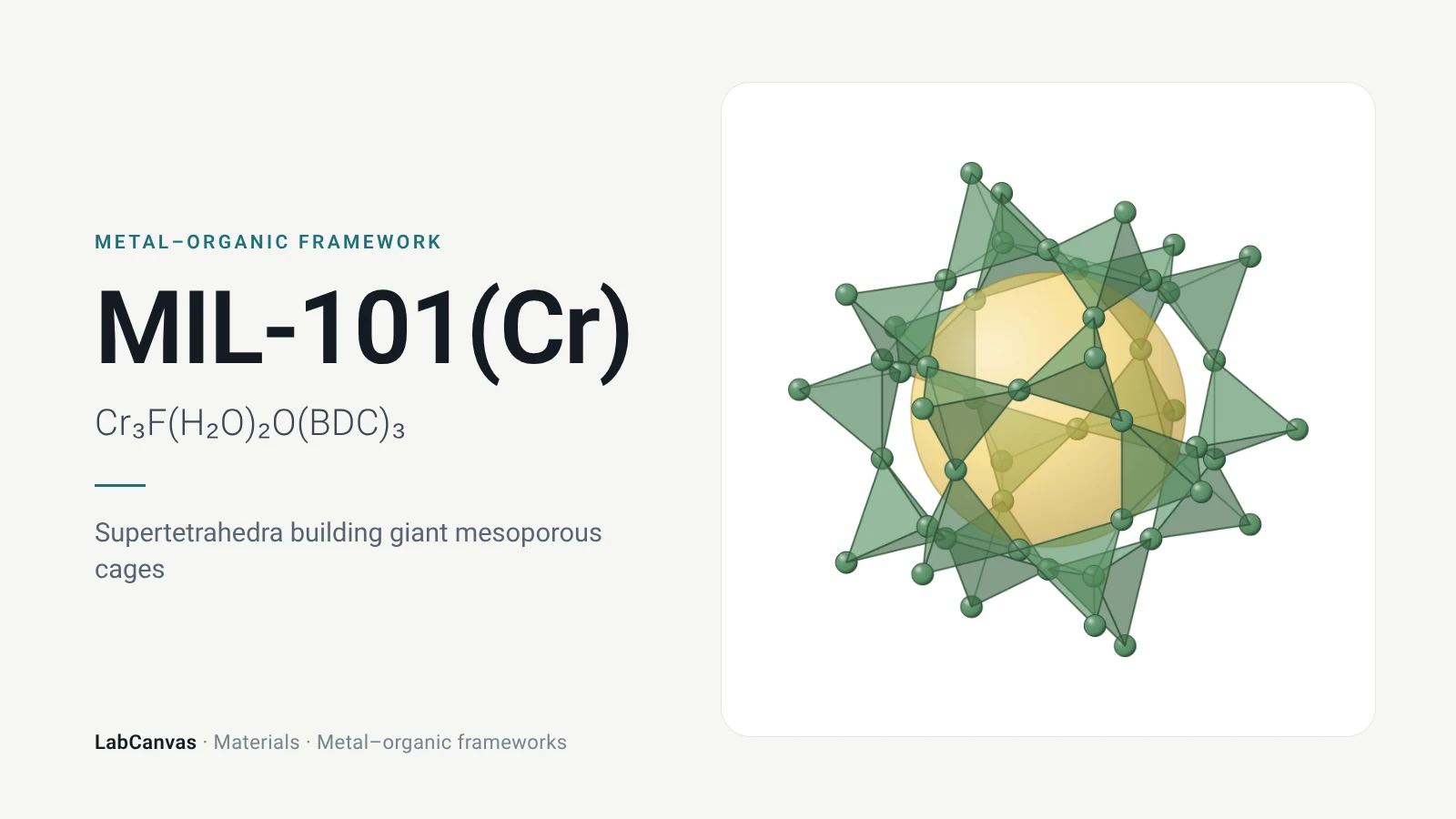
MIL-101(Cr)
MIL-101(Cr), a chromium terephthalate MOF: its giant 30–34 Å cages, MTN structure, synthesis, surface area, water stability and uses, with the original papers.
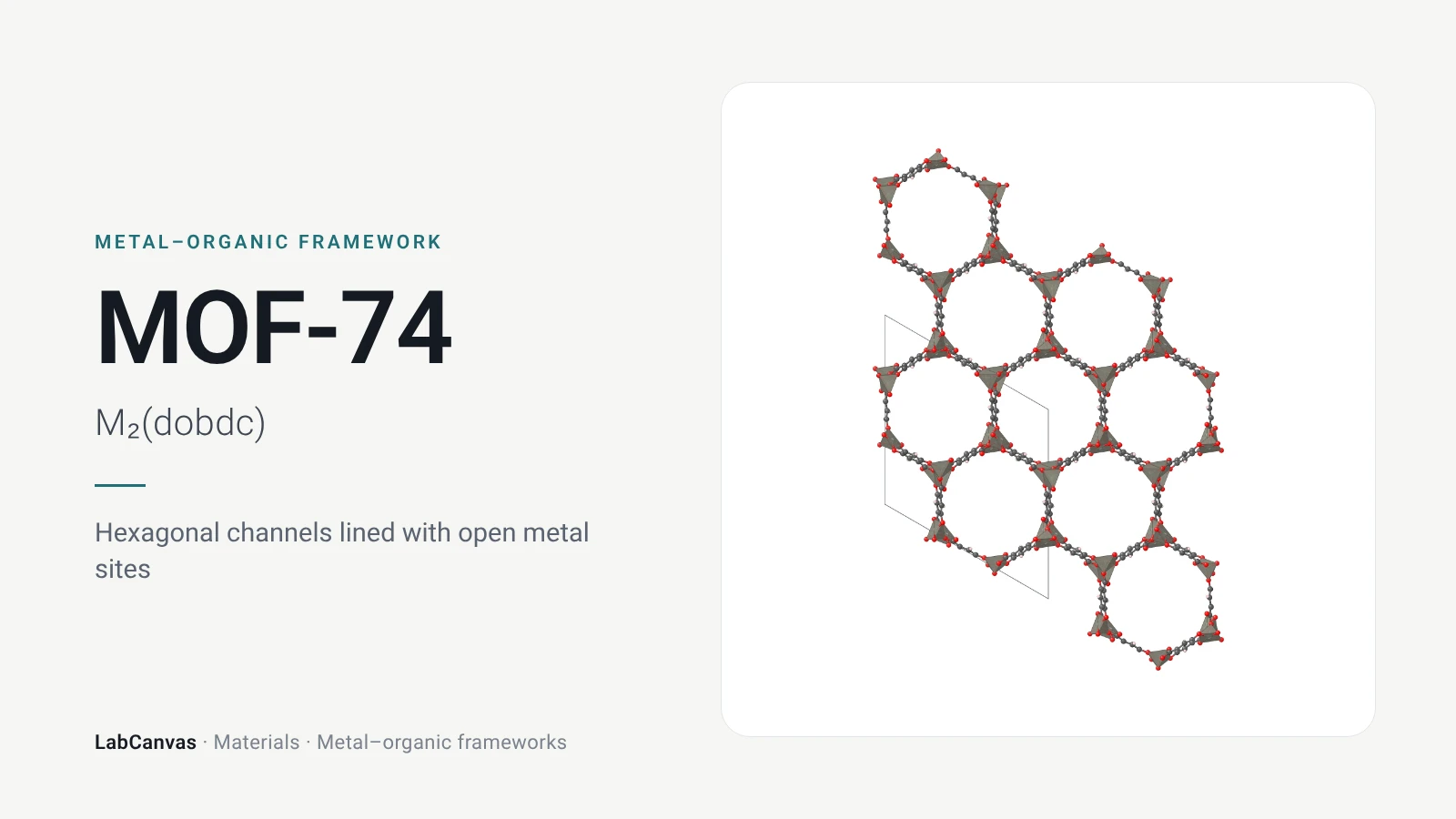
MOF-74
MOF-74 (CPO-27), M₂(dobdc): its honeycomb channels and open metal sites, Mg-MOF-74 for CO₂ capture, Zn-MOF-74, synthesis and pore size, with the papers.
Covalent organic frameworks (COFs)
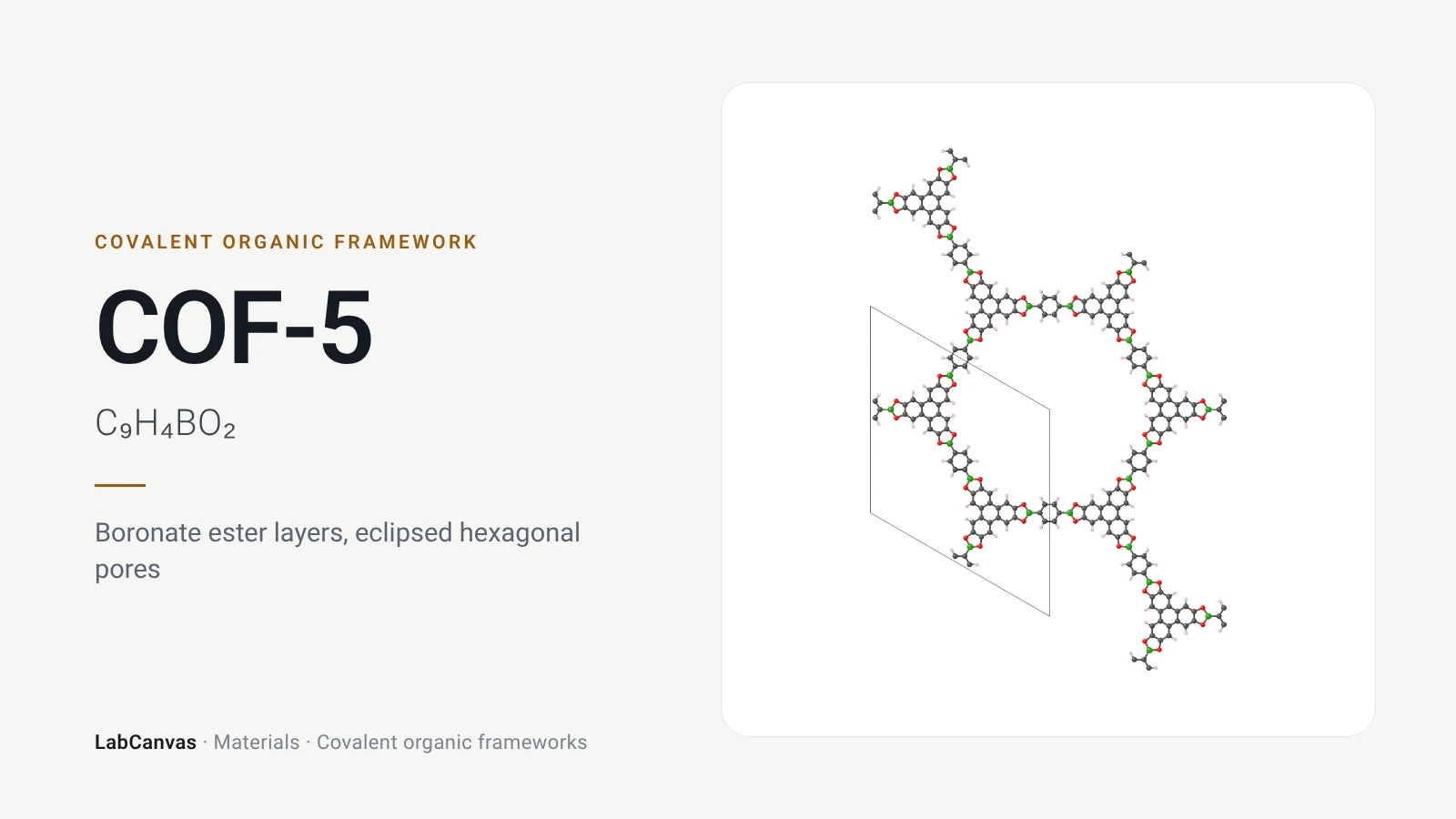
COF-5
COF-5, the boronate ester COF from HHTP and BDBA: eclipsed layers, 27 Å channels, 1,590 m² g⁻¹, synthesis and stability, with 2D and 3D figures to edit.
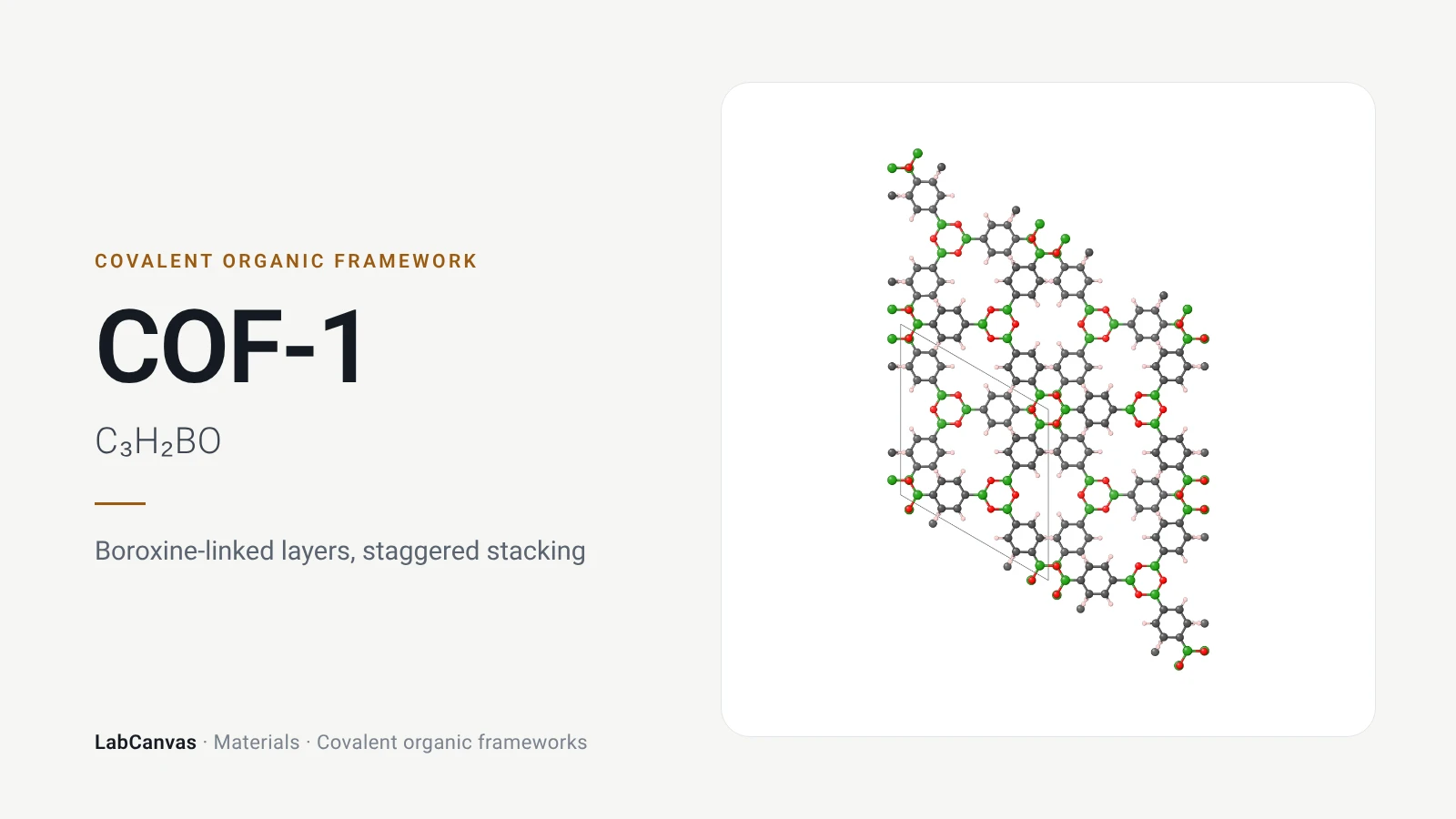
COF-1
COF-1, the first covalent organic framework: boroxine-linked layers from one boronic acid, staggered stacking, 711 m² g⁻¹, synthesis and stability, cited.
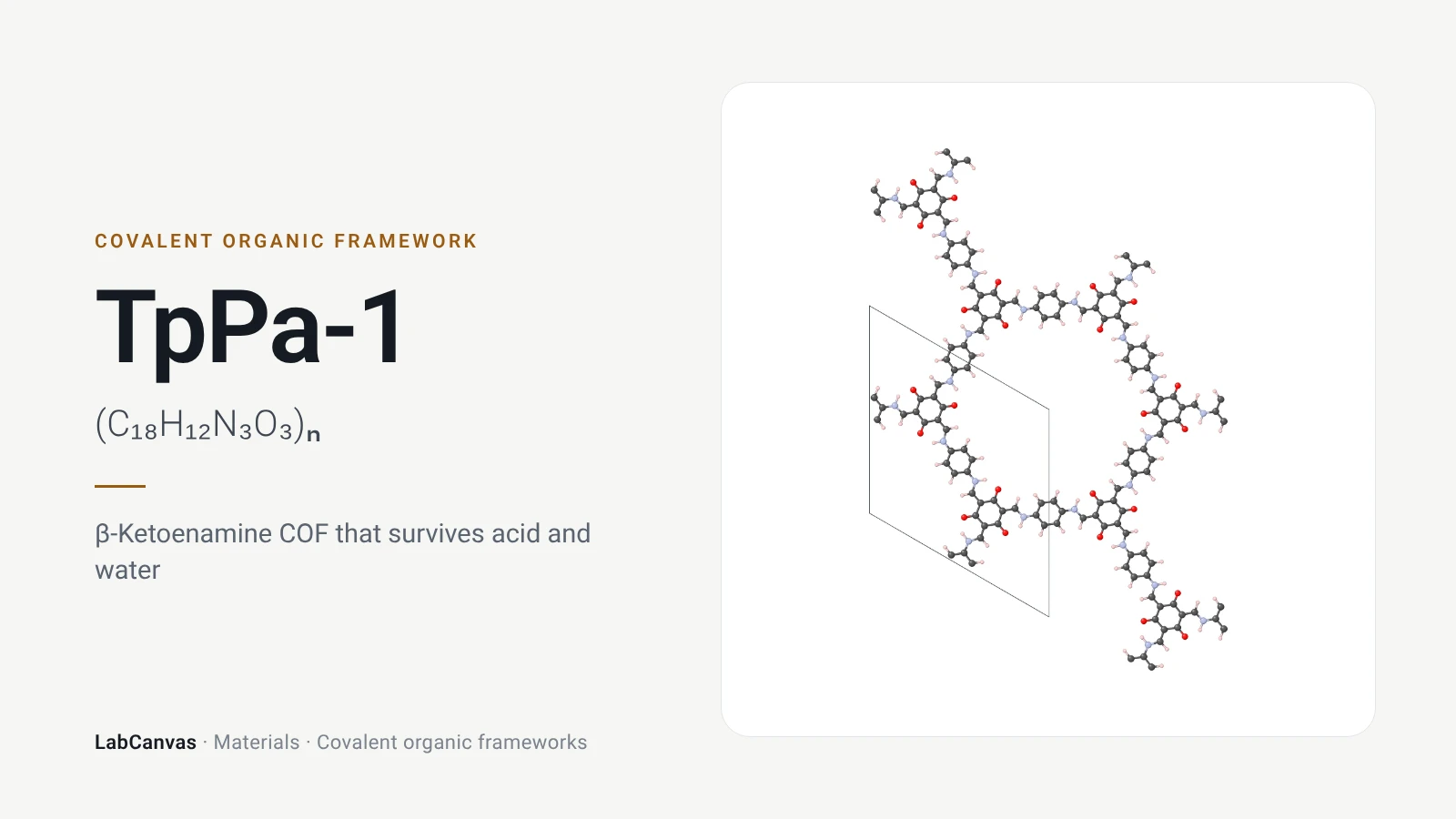
TpPa-1
TpPa-1, the β-ketoenamine COF from Tp and p-phenylenediamine: why it survives acid and boiling water, its structure, synthesis and surface area, cited.
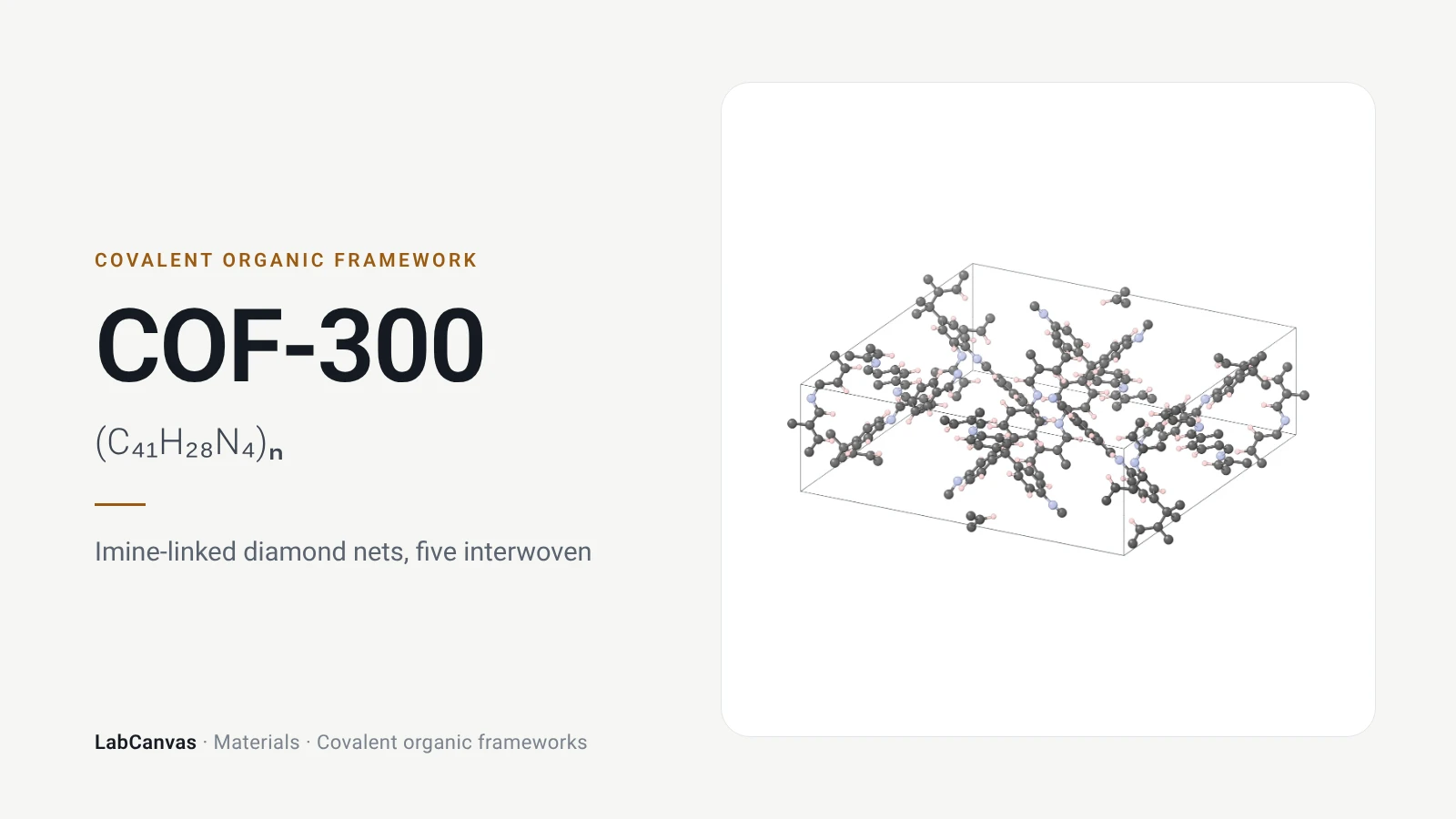
COF-300
COF-300, the first imine-linked 3D COF: five interwoven diamond nets, 7.2 Å pores, 1,360 m² g⁻¹, stable to 490 °C. Structure, synthesis and papers.
2D materials
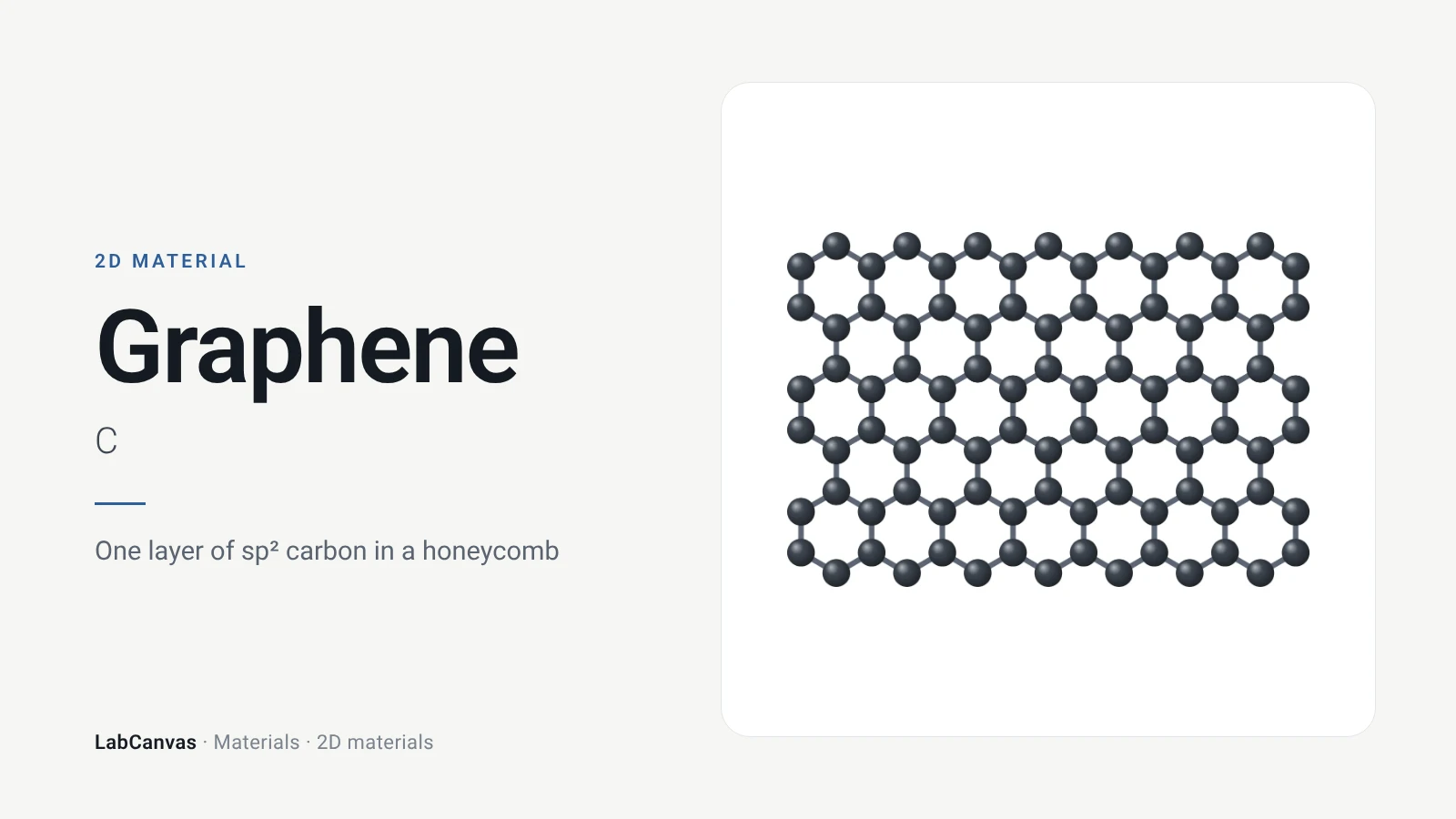
Graphene
Graphene structure explained: the one-atom-thick honeycomb of sp² carbon, its Dirac bands, strength and conductivity, how it is made and used. Cited facts.
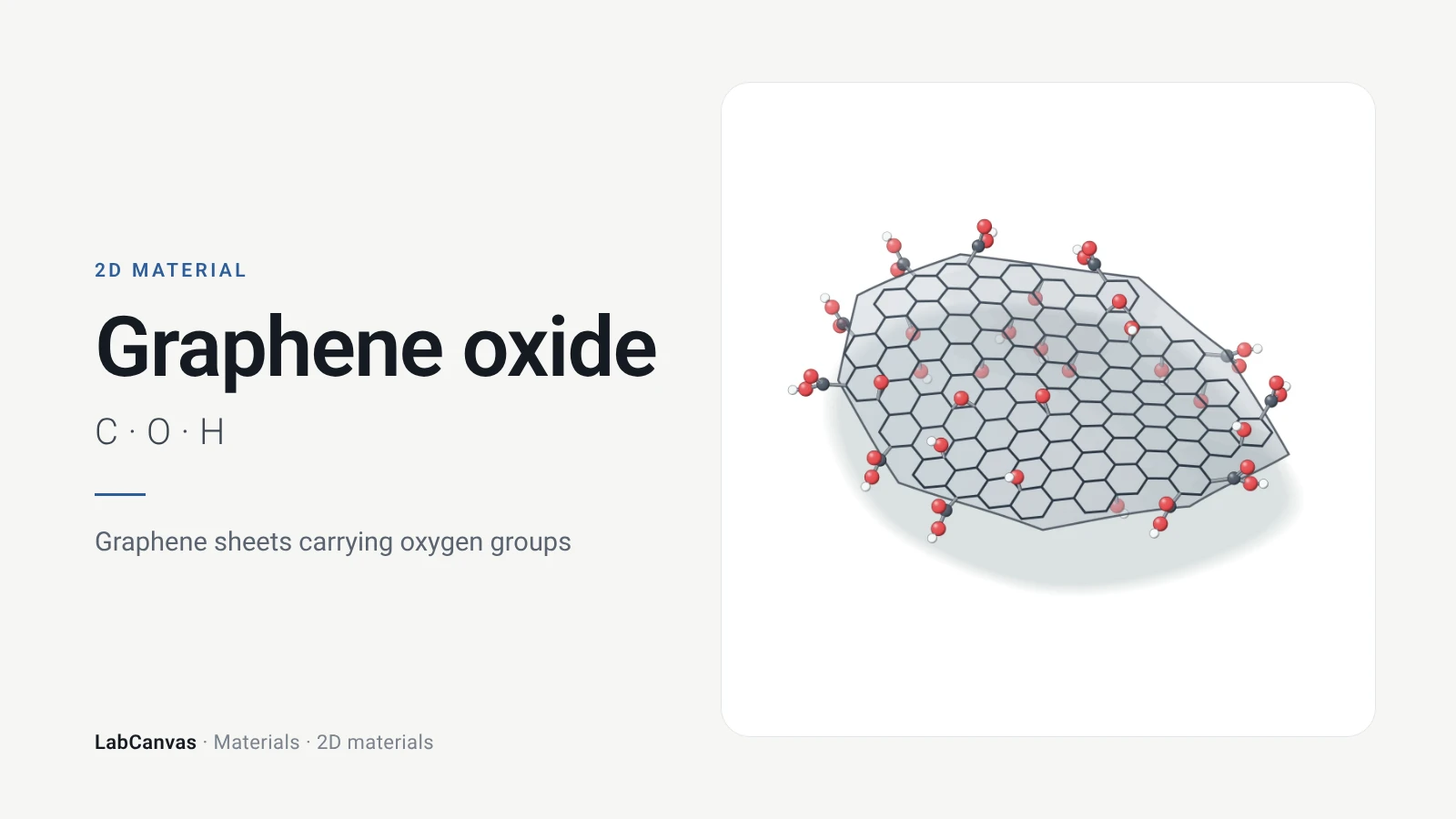
Graphene oxide
Graphene oxide structure explained: graphene with epoxide, hydroxyl and carboxyl groups, made by the Hummers method and reduced to rGO. Cited facts, figures.
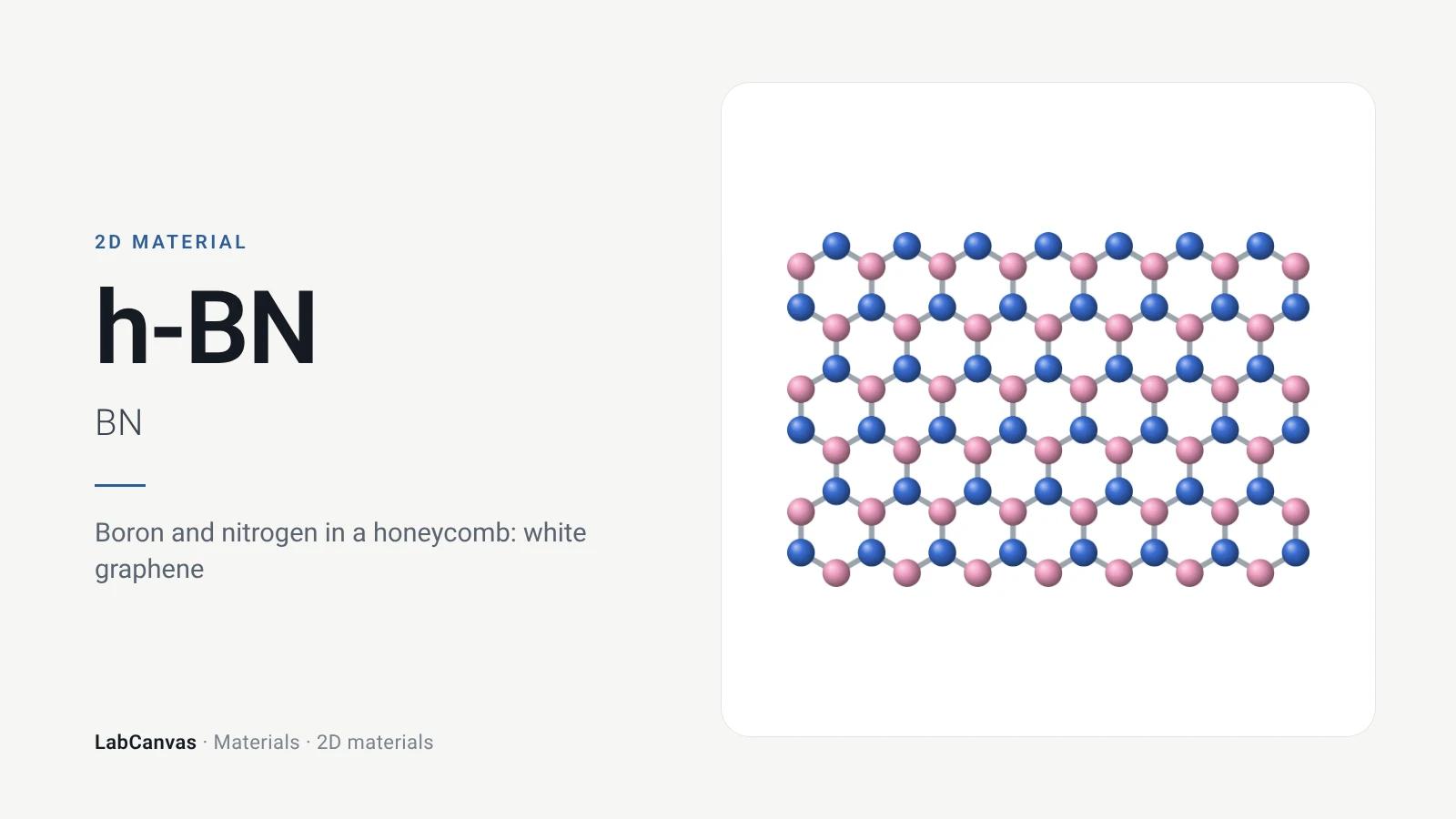
Hexagonal boron nitride (h-BN)
Hexagonal boron nitride (h-BN), “white graphene”: its B–N honeycomb structure, ~6 eV band gap, how it is made and why 2D devices sit on it. Editable figures.
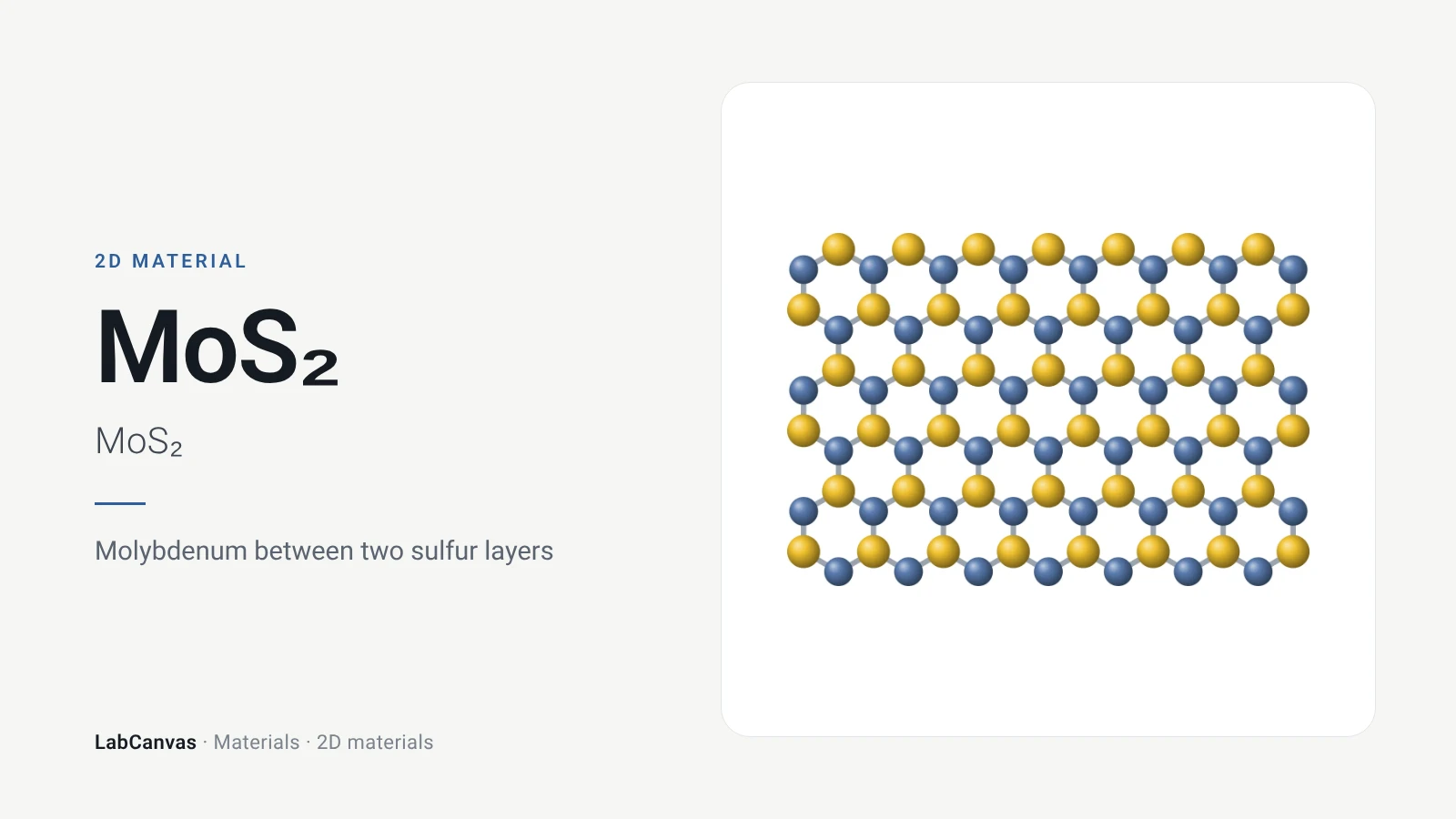
MoS₂ (molybdenum disulfide)
MoS₂ structure and band gap: the S–Mo–S layer, 2H and 1T phases, the 1.8 eV direct gap of monolayer MoS₂, transistors and HER catalysis. Editable figures.
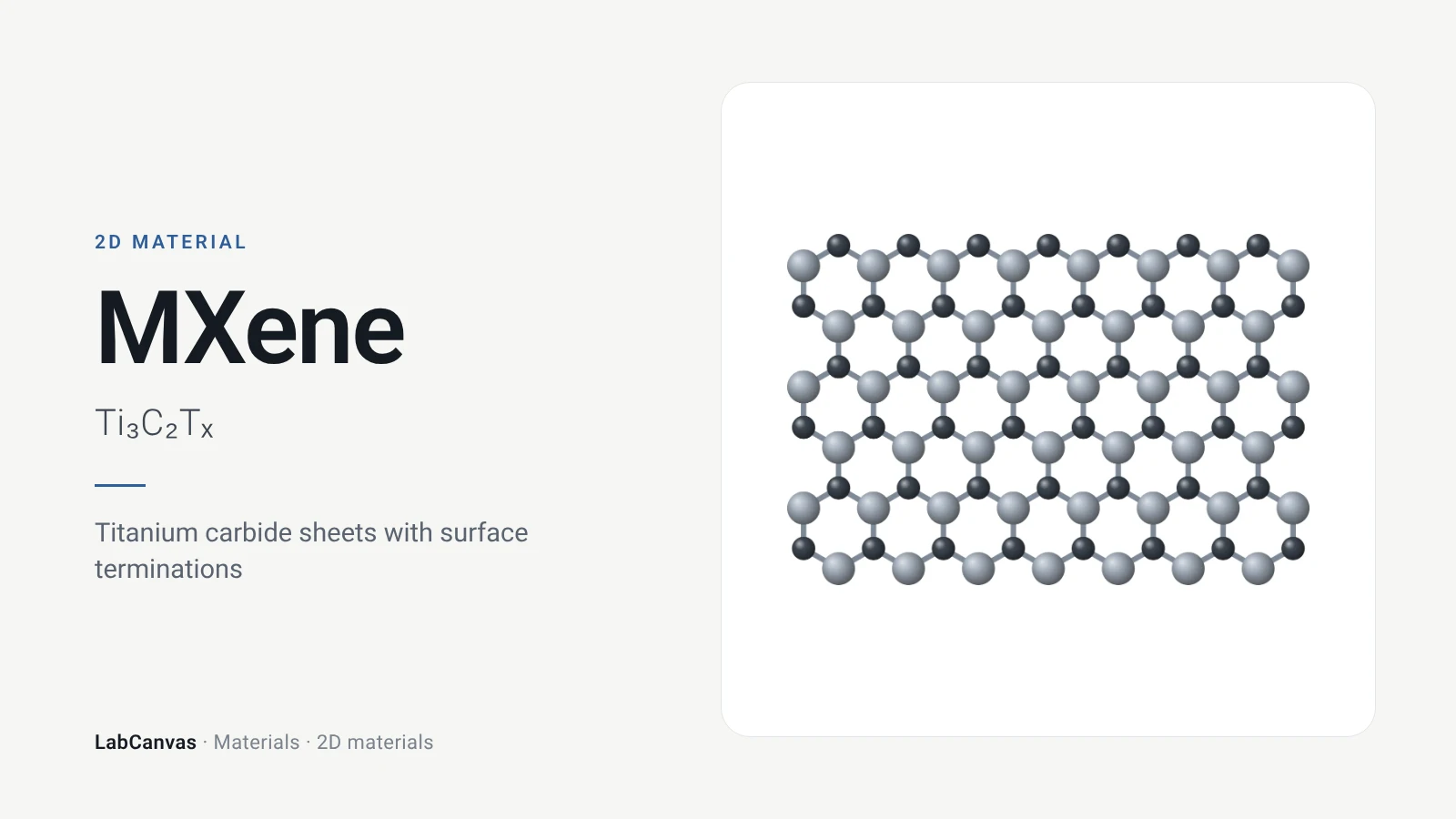
MXene (Ti₃C₂Tₓ)
MXene Ti₃C₂Tₓ explained: 2D titanium carbide etched from the MAX phase Ti₃AlC₂, its surface terminations, synthesis, conductivity and uses. Editable figures.
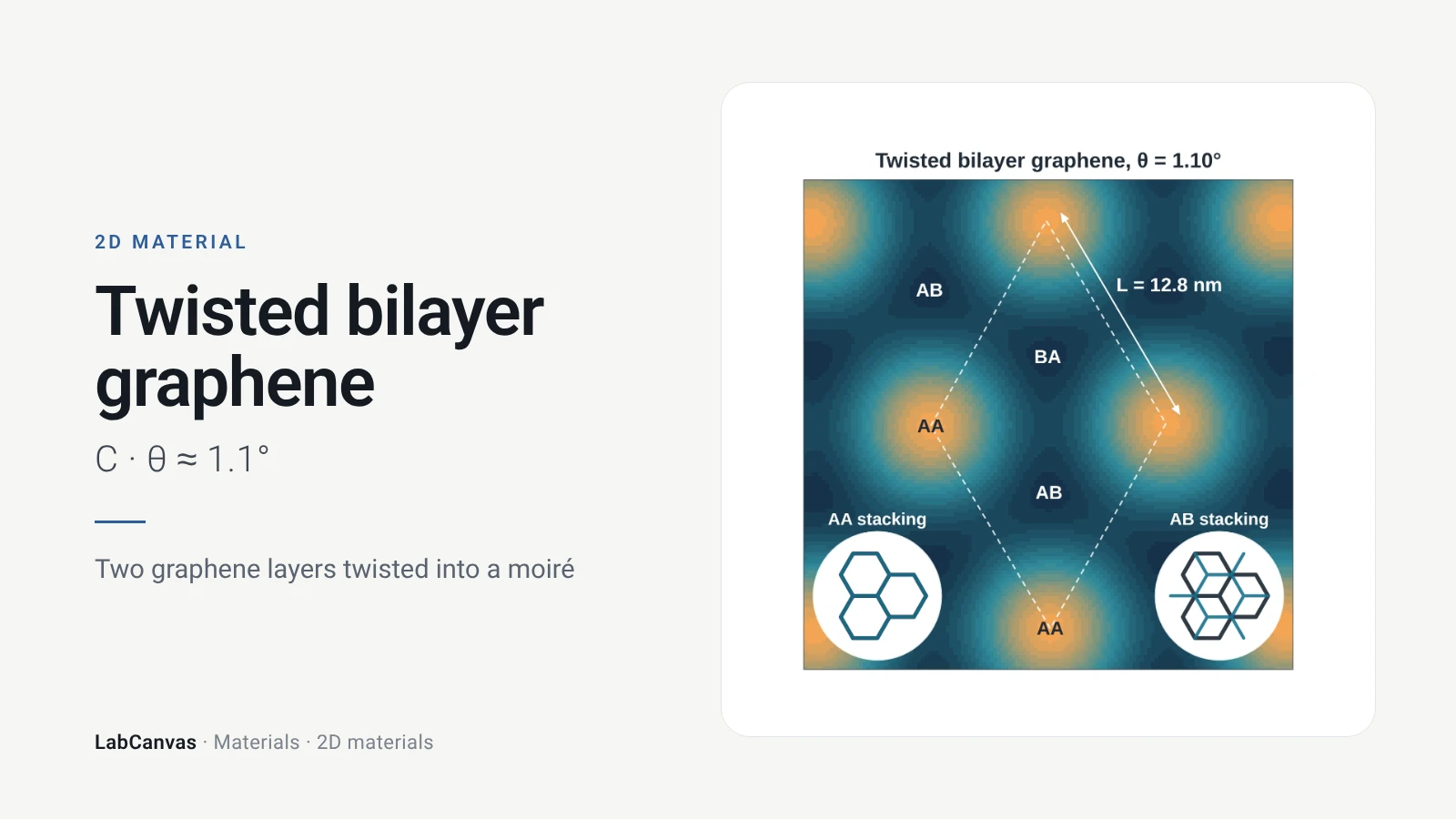
Twisted bilayer graphene
Twisted bilayer graphene explained: two layers turned by a small angle, the moiré, the 1.1° magic angle, flat bands and superconductivity. Cited papers.