Graphical abstract sizes for chemistry and materials journals
A graphical abstract (a TOC graphic at ACS and Wiley) is one image that sums up a paper in the journal’s table of contents. Each publisher sets its own size: ACS 3.25 × 1.75 in, ACS Nano 9 × 4 cm, Wiley Advanced journals 55 × 50 mm, Angewandte Chemie 5.5 × 5 cm, RSC 8 × 4 cm, Elsevier 1328 × 531 px, Cell Press 1200 × 1200 px and MDPI 1100 × 560 px. Open any of them in LabCanvas at the exact size and start from a materials or nano template.
Contents
Graphical abstract sizes by publisher
| Publisher and format | Size | Pixels at 300 dpi | Journals | |
|---|---|---|---|---|
| ACS · TOC graphic | 3.25 × 1.75 in | 3.25 × 1.75 in · 975 × 525 px at 300 dpi | JACS, Nano Letters, Chem. Mater., ACS Appl. Mater. Interfaces, J. Org. Chem. and other ACS journals | Open at this size |
| ACS Nano · TOC | 9 × 4 cm | 9 × 4 cm · 1063 × 472 px at 300 dpi | ACS Nano Articles and Reviews | Open at this size |
| ACS Catalysis · ACS Sustain. Chem. Eng. | 3.33 × 1.875 in | 3.33 × 1.875 in · 1000 × 563 px at 300 dpi | ACS Catalysis and ACS Sustainable Chemistry & Engineering | Open at this size |
| ACS Energy Letters · TOC | 3 × 2 in | 3 × 2 in · 900 × 600 px at 300 dpi | ACS Energy Letters | Open at this size |
| Wiley · Adv. Mater., AFM, Small · ToC | 55 × 50 mm | 55 × 50 mm · 650 × 591 px at 300 dpi | Advanced Materials, Advanced Functional Materials, Small (Advanced journals) | Open at this size |
| Wiley · Adv. Mater., AFM, Small · ToC wide | 110 × 20 mm | 110 × 20 mm · 1300 × 238 px at 300 dpi | Advanced Materials, Advanced Functional Materials, Small | Open at this size |
| Angew. Chem. · Chem. Eur. J. · ToC | 5.5 × 5 cm | 5.5 × 5 cm · 647 × 588 px at 300 dpi | Angewandte Chemie and Chemistry Europe journals (Chem. Eur. J., ChemSusChem…) | Open at this size |
| Angew. Chem. · Chem. Eur. J. · ToC wide | 11.5 × 2.5 cm | 11.5 × 2.5 cm · 1356 × 294 px at 300 dpi | Angewandte Chemie and Chemistry Europe journals | Open at this size |
| RSC · graphical abstract | 8 × 4 cm | 8 × 4 cm · 944 × 472 px at 300 dpi | Royal Society of Chemistry journals (J. Mater. Chem. A/B/C, Nanoscale, Materials Advances…) | Open at this size |
| Elsevier · graphical abstract | 1328 × 531 px | 1328 × 531 px at 300 dpi | Nano Energy, Carbon, Chem. Eng. J., Appl. Catal. B, Materials Today, J. Colloid Interface Sci. and other Elsevier journals | Open at this size |
| Cell Press · graphical abstract | 1200 × 1200 px | 1200 × 1200 px at 300 dpi | Chem, Matter, Joule, Cell Reports Physical Science, iScience | Open at this size |
| MDPI · graphical abstract | 1100 × 560 px | 1100 × 560 px at 300 dpi | Nanomaterials, Materials, Molecules, Catalysts and other MDPI journals | Open at this size |
| Nano Research · TOC | 80 × 50 mm | 80 × 50 mm · 947 × 591 px at 300 dpi | Nano Research | Open at this size |
Nature Portfolio journals (Nature, Nature Materials, Nature Nanotechnology, Nature Chemistry, Nature Communications) ask for no graphical abstract; their figures are 89 mm or 183 mm wide (see the journal figure size guide).
Guides by publisher
- ACS TOC graphic: sizes, rules and a template: JACS, ACS Nano, Nano Letters, Chem. Mater., ACS AMI, ACS Catalysis, ACS Energy Letters
- Advanced Materials, AFM and Small: ToC image size and template: Advanced Materials, Advanced Functional Materials, Small
- Angewandte Chemie and Chemistry Europe: ToC graphic size and template: Angew. Chem., Chem. Eur. J., ChemSusChem and other Chemistry Europe journals
- RSC graphical abstract: size, resolution and a template: J. Mater. Chem. A, B and C, Nanoscale, Materials Advances and other RSC journals
- Elsevier graphical abstract: size, ratio and a template: Nano Energy, Carbon, Chem. Eng. J., Appl. Catal. B, Materials Today, J. Colloid Interface Sci.
- Cell Press graphical abstract: size and template for Joule, Matter and Chem: Chem, Matter, Joule, Cell Reports Physical Science, iScience
- MDPI graphical abstract: size and a template: Nanomaterials, Materials, Molecules, Catalysts and other MDPI journals
- Nano Research TOC graphic: size, resolution and a template: Nano Research (Tsinghua University Press and Springer)
How to make a graphical abstract
- Open LabCanvas on an artboard at your journal’s size: every size on this page has an “Open at this size” link.
- Start from a template or the Library: crystals and MOFs, nanoparticles, battery cells, catalysts, instruments and plots are editable objects, not flat clip art.
- Tell one story from left to right: the material or system, what you did to it, and the result in one number or one plot.
- Keep the text short and large enough to read when the image is shown small in the table of contents.
- Export at 300 dpi or more as PNG or TIFF (600 dpi where the journal asks for it), then look at it at thumbnail size before you upload.
What makes a good graphical abstract
- One message. The reader sees it for a second in a list of papers: the new material, the method and the result, not the whole paper.
- Pictures over words. Show the structure, the device or the process; keep labels to a few words at the journal’s minimum font size or larger.
- Read left to right (or top to bottom in square formats): start → process → result.
- Design for the thumbnail. Thin lines and small text disappear at table-of-contents size; check it shrunk before you upload.
- Same style as your figures. Reuse your palette and objects so the abstract and the paper look like one piece of work.
Graphical abstract templates for materials and nano
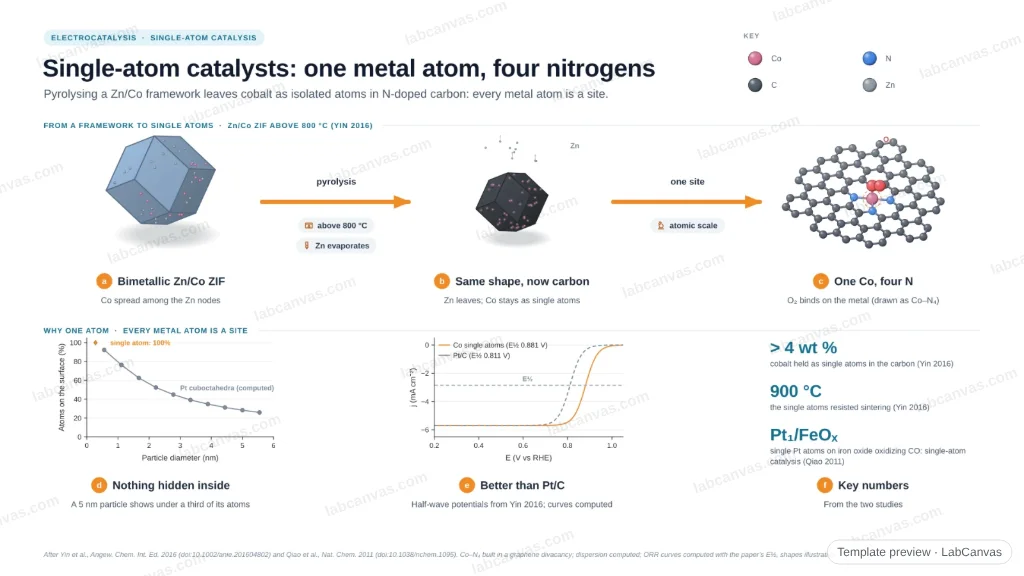
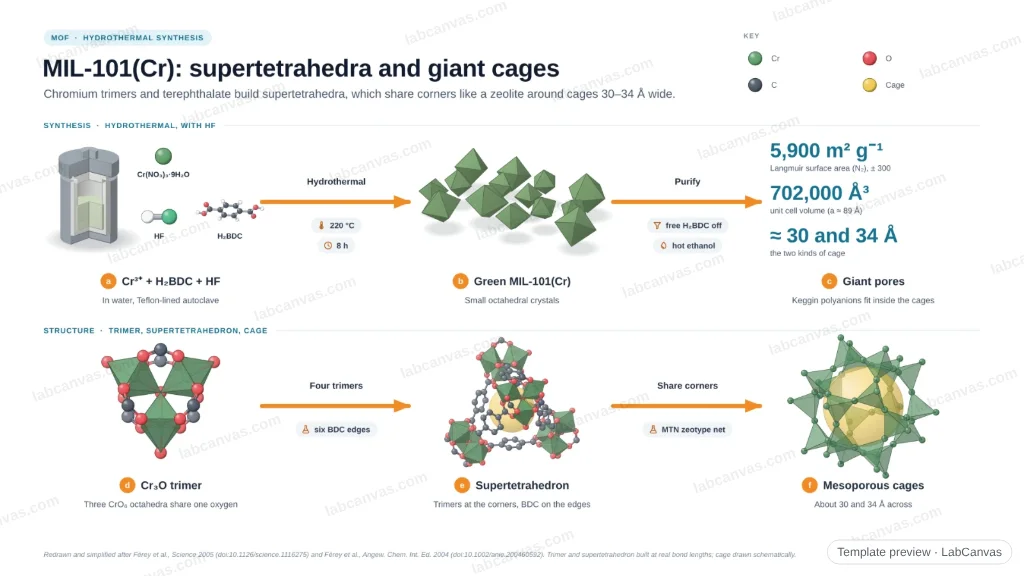
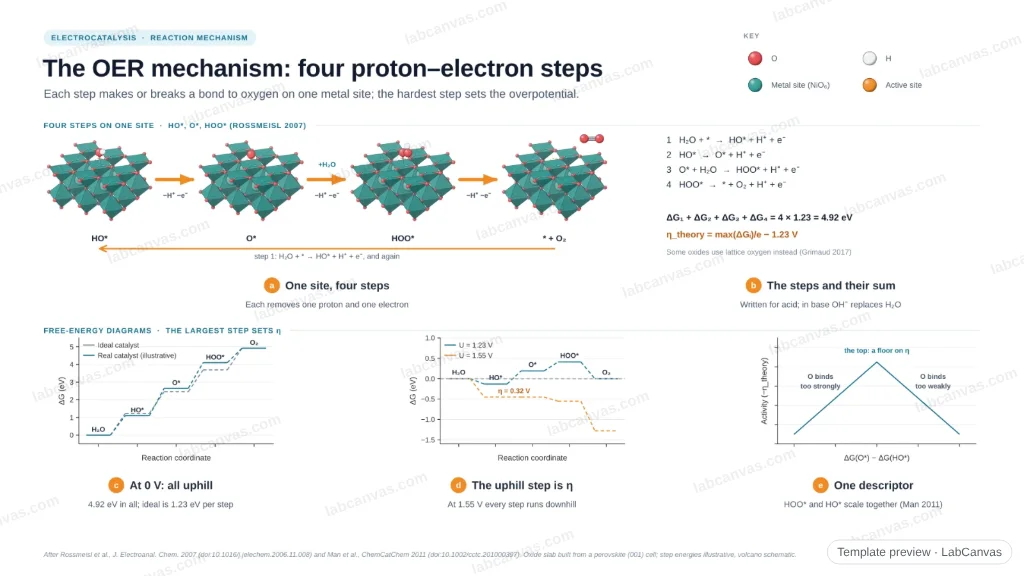
Editable LabCanvas templates in the materials, nano, battery and catalysis fields, each citing the papers it follows. Open one, then switch its artboard to your journal’s size.



More on LabCanvas
- All figure templates: cited, editable graphical abstracts and figures
- Characterisation techniques explained: XRD, XPS, BET, TEM, Raman and more, with editable instruments and plots
- Materials explained: MOFs, COFs, 2D materials, perovskites, batteries and zeolites
- Journal figure size guide: column widths and DPI for 38 journals
- Figure panel maker: lay out multi-panel figures at journal width
- Scientific colour palettes: colour-blind-safe palettes for figures
Frequently asked questions
What is a graphical abstract?
A single image that summarises a paper’s main finding, shown with the title in the journal’s table of contents and online. ACS and Wiley call it a TOC (table-of-contents) graphic or ToC image; Elsevier, RSC, Cell Press and MDPI call it a graphical abstract.
What size is a graphical abstract?
It depends on the publisher: ACS 3.25 × 1.75 in (ACS Nano 9 × 4 cm), Wiley Advanced journals 55 × 50 mm, Angewandte Chemie at most 5.5 × 5 cm, RSC at most 8 × 4 cm, Elsevier at least 1328 × 531 px, Cell Press 1200 × 1200 px, MDPI at least 1100 × 560 px.
Do Nature journals need a graphical abstract?
No: Nature, Nature Materials, Nature Nanotechnology, Nature Chemistry and Nature Communications ask for no graphical abstract; their figures are 89 mm (one column) or 183 mm (two columns) wide.
What resolution should a graphical abstract be?
At least 300 dpi at the final size for most publishers; RSC and Nano Research ask for 600 dpi.
What is the best software for graphical abstracts in chemistry and materials science?
Any vector editor works; LabCanvas is made for it: it opens at each journal’s size, and its Library has editable crystals, MOFs, nanoparticles, battery cells, catalysts and instruments, with templates of real syntheses.
How do I make a graphical abstract for free?
Open LabCanvas at your journal’s size from this page, start from a template or the Library, and export at 300 dpi or more. It runs in the browser and is free to start.
Make your graphical abstract at the right size
LabCanvas opens at your journal’s size, with editable crystals, nanomaterials, devices and plots.
Start an ACS TOC graphic