Perovskite structure (ABX₃): octahedra, tolerance factor and tilts
A perovskite is any ABX₃ compound built from a network of corner-sharing BX₆ octahedra with a larger A cation in the cavities between them: B is 6-fold and A 12-fold coordinated by the anion X, which is usually oxygen or a halogen (Bartel et al. 2019). Whether a composition adopts this structure has been estimated for over 90 years with the Goldschmidt tolerance factor, which compares the sizes of the three ions (Bartel et al. 2019). Oxide perovskites such as SrTiO₃ and BaTiO₃ are classic dielectrics and ferroelectrics; halide perovskites such as CH₃NH₃PbI₃, first used in solar cells by Kojima et al. in 2009, have since reached solar-cell efficiencies above 18% (Jeon et al. 2015) and light-emission quantum yields up to 90% (Protesescu et al. 2015).
Contents
Perovskite structure at a glance
| Formula | ABX₃ (Bartel et al. 2019) |
|---|---|
| Sites | A: larger cation, 12-fold coordinated by X; B: smaller cation, 6-fold coordinated, in BX₆ octahedra; X: anion, usually O or a halogen (Bartel et al. 2019) |
| Framework | Corner-sharing BX₆ octahedra with A in the cavities (Bartel et al. 2019) |
| Ideal structure | Cubic, space group Pm-3m, as in cubic BaTiO₃ (Swaminathan et al. 2010); one formula unit per cell, as in SrTiO₃ at room temperature (Leroy et al. 2025) |
| Ideal cube geometry | B–X = a/2 and A–X = a/√2 for a cell edge a (geometry of the ideal cubic cell) |
| Goldschmidt tolerance factor | A ratio of ionic radii that compares the A–X distance with the B–X distance (Bartel et al. 2019); t = 1 when the ions fit the ideal cube exactly (from the ideal cubic geometry) |
| Tolerance factor range | Perovskite predicted for 0.825 < t < 1.059; right for 74% of 576 ABX₃ solids, 83% of oxides but only 33% of iodides (Bartel et al. 2019) |
| Octahedral factor | μ = r_B / r_X; geometry allows BX₆ octahedra for 0.414 < μ < 0.732 (Bartel et al. 2019) |
| Newer descriptor | τ, from the same radii and oxidation states: 92% accuracy on the same 576 compounds (Bartel et al. 2019) |
| Cubic or not | Fewer than 10% of known perovskites are cubic; most have tilted or distorted octahedra (Bartel et al. 2019) |
| Tilt notation | Glazer notation, e.g. a⁰a⁰a⁰ for no rotation and a⁰a⁰c⁻ for out-of-phase rotation about one axis, as in SrTiO₃ below 105 K (Leroy et al. 2025) |
| Name | From the mineral CaTiO₃, an orthorhombic perovskite (Bartel et al. 2019) |
| Variants | Double perovskites A₂BB′X₆ (Bartel et al. 2019); layered 2D perovskites such as (PEA)₂(MA)₂Pb₃I₁₀ (Smith et al. 2014) |
| Key reports | Ohtomo & Hwang, Nature 427, 423 (2004); Kojima et al., J. Am. Chem. Soc. 131, 6050 (2009); Bartel et al., Sci. Adv. 5, eaav0693 (2019) |
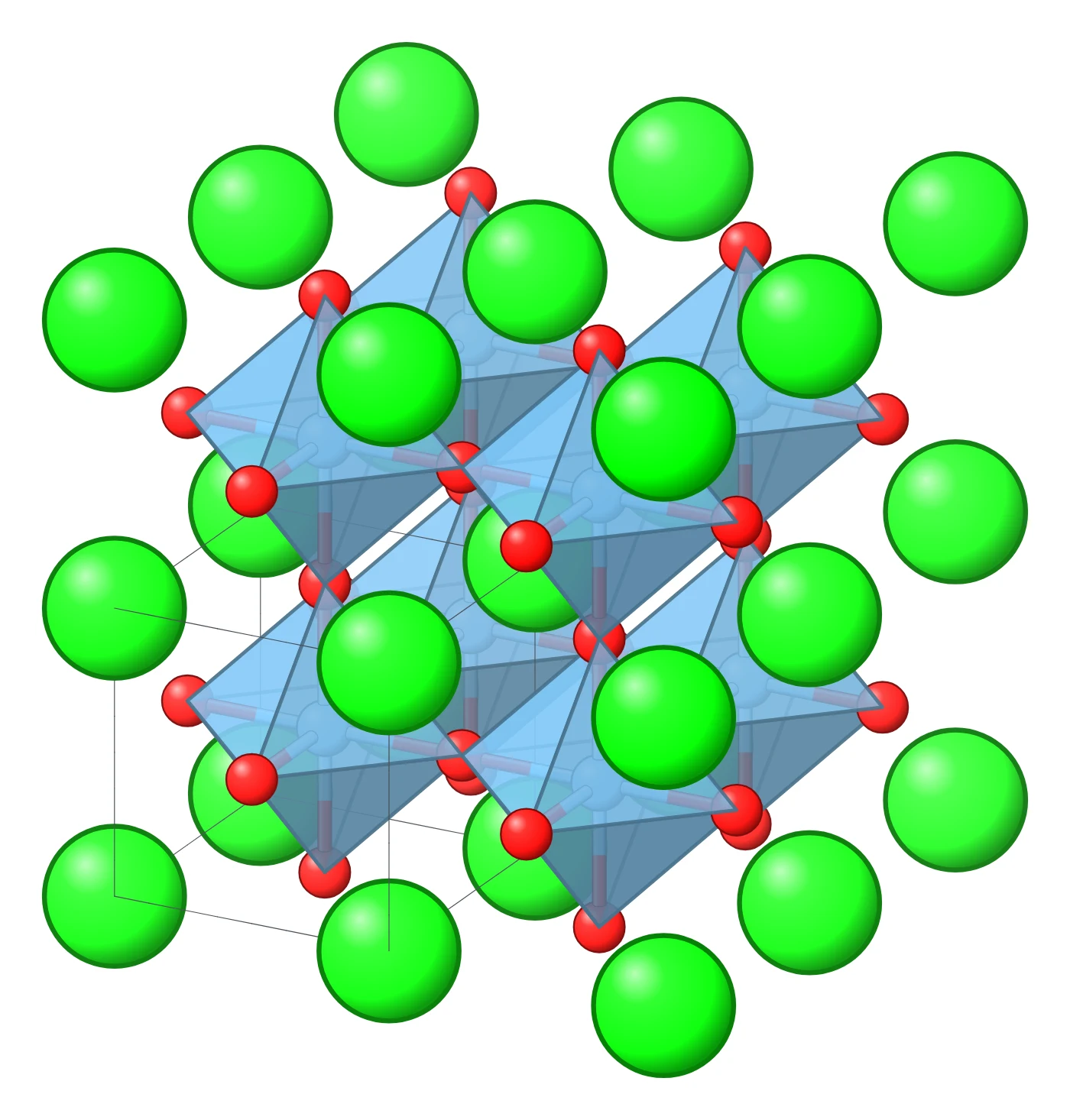
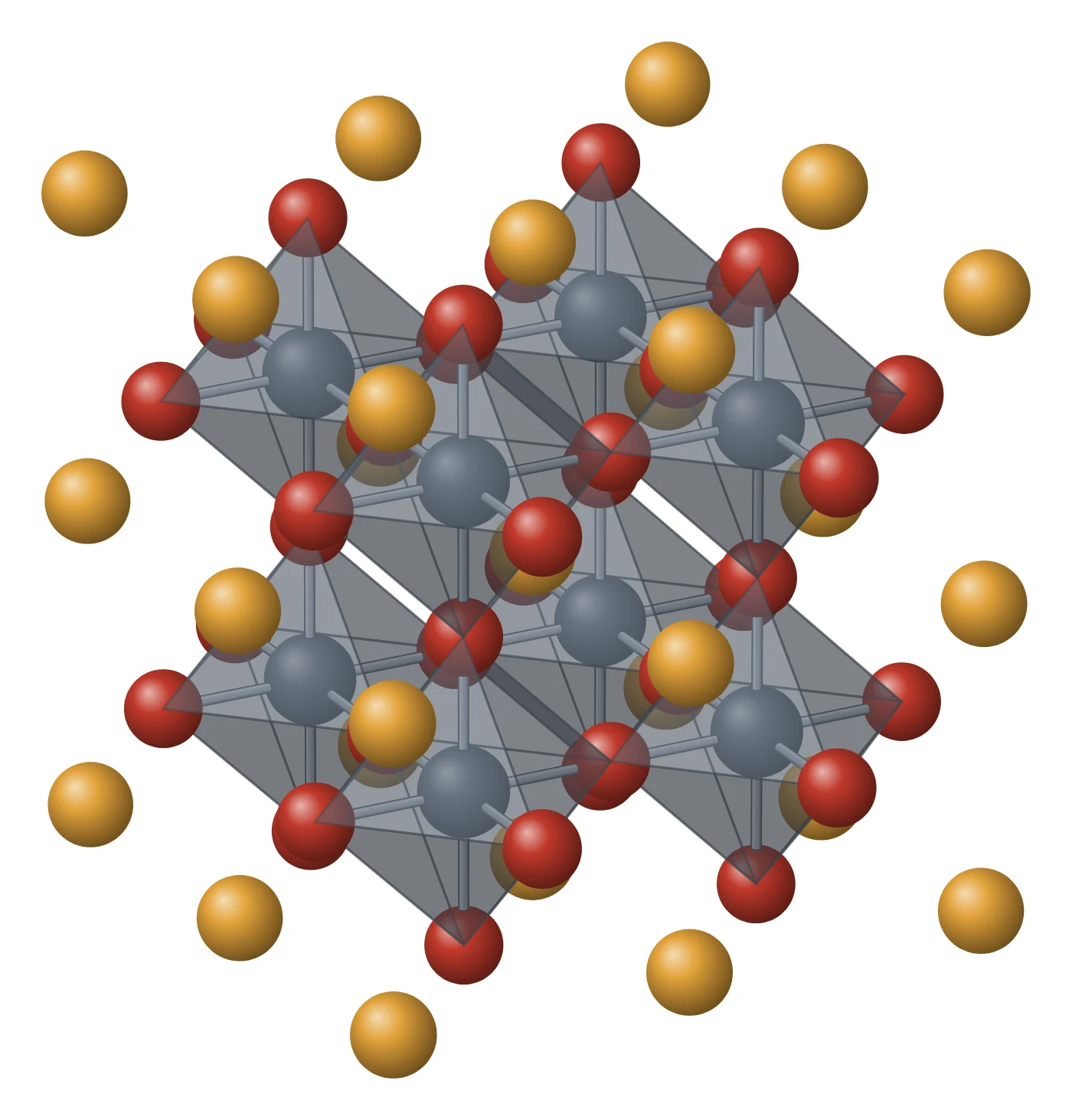
Perovskite crystal structure (high-resolution SVG)
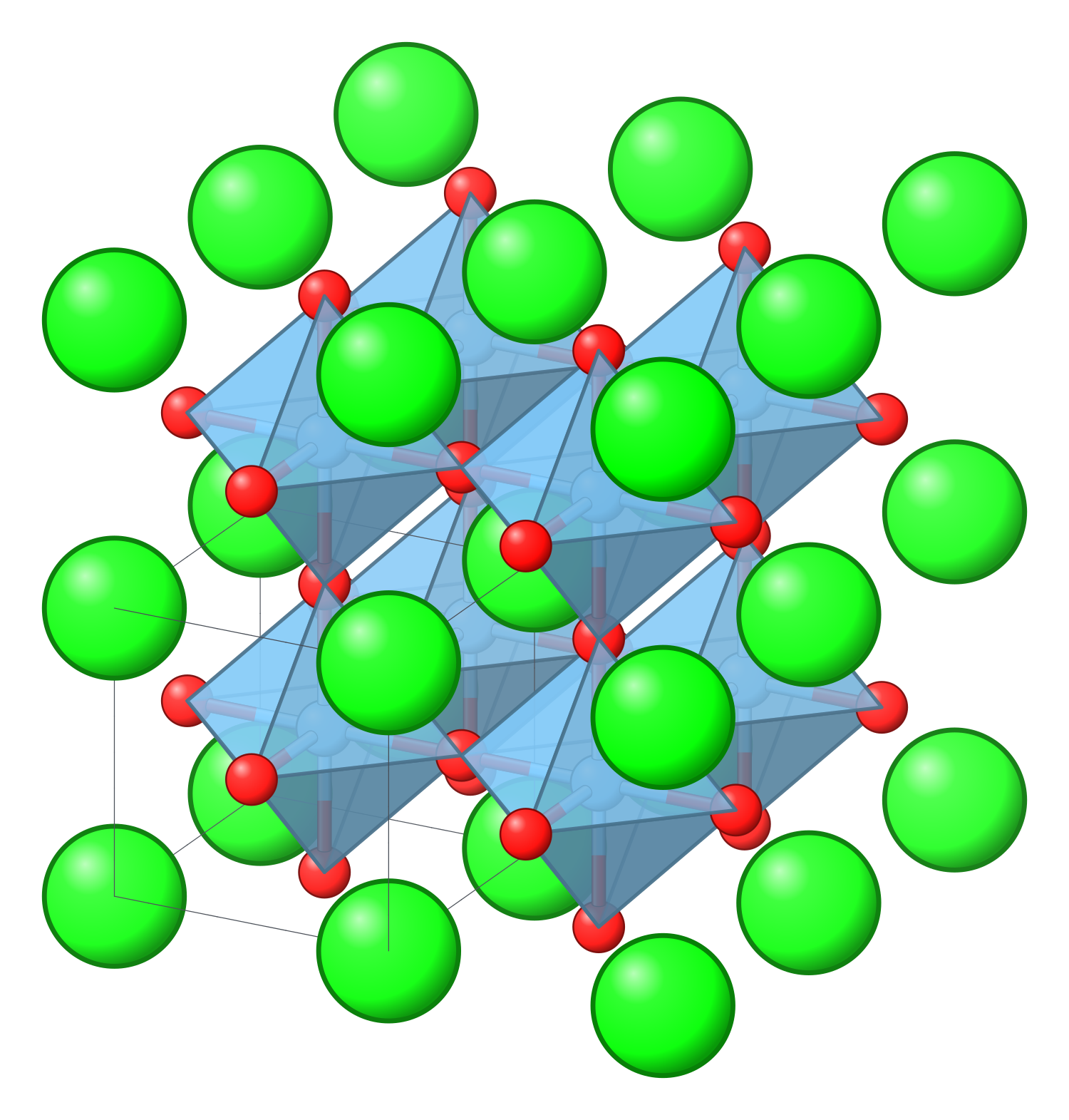
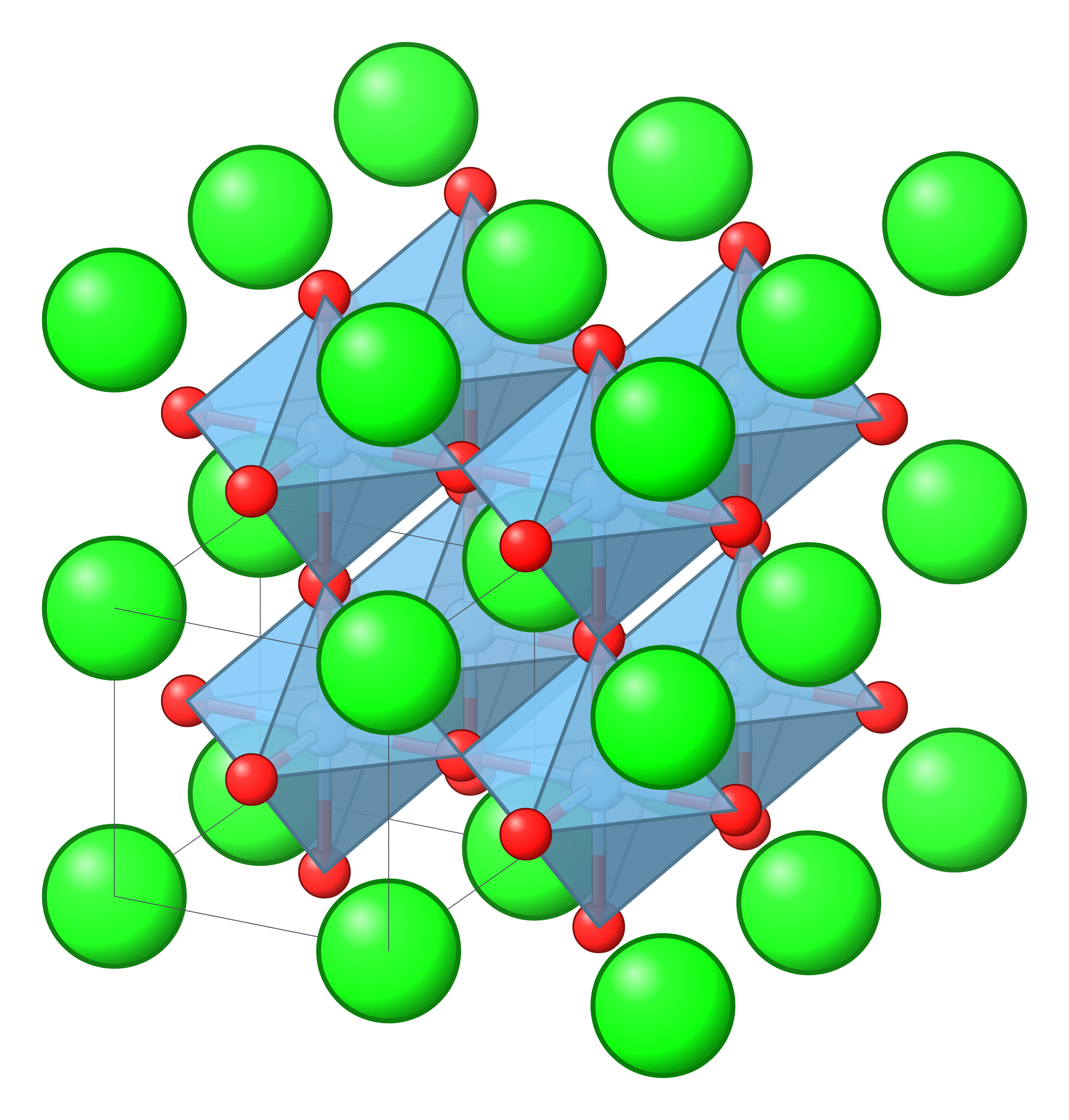
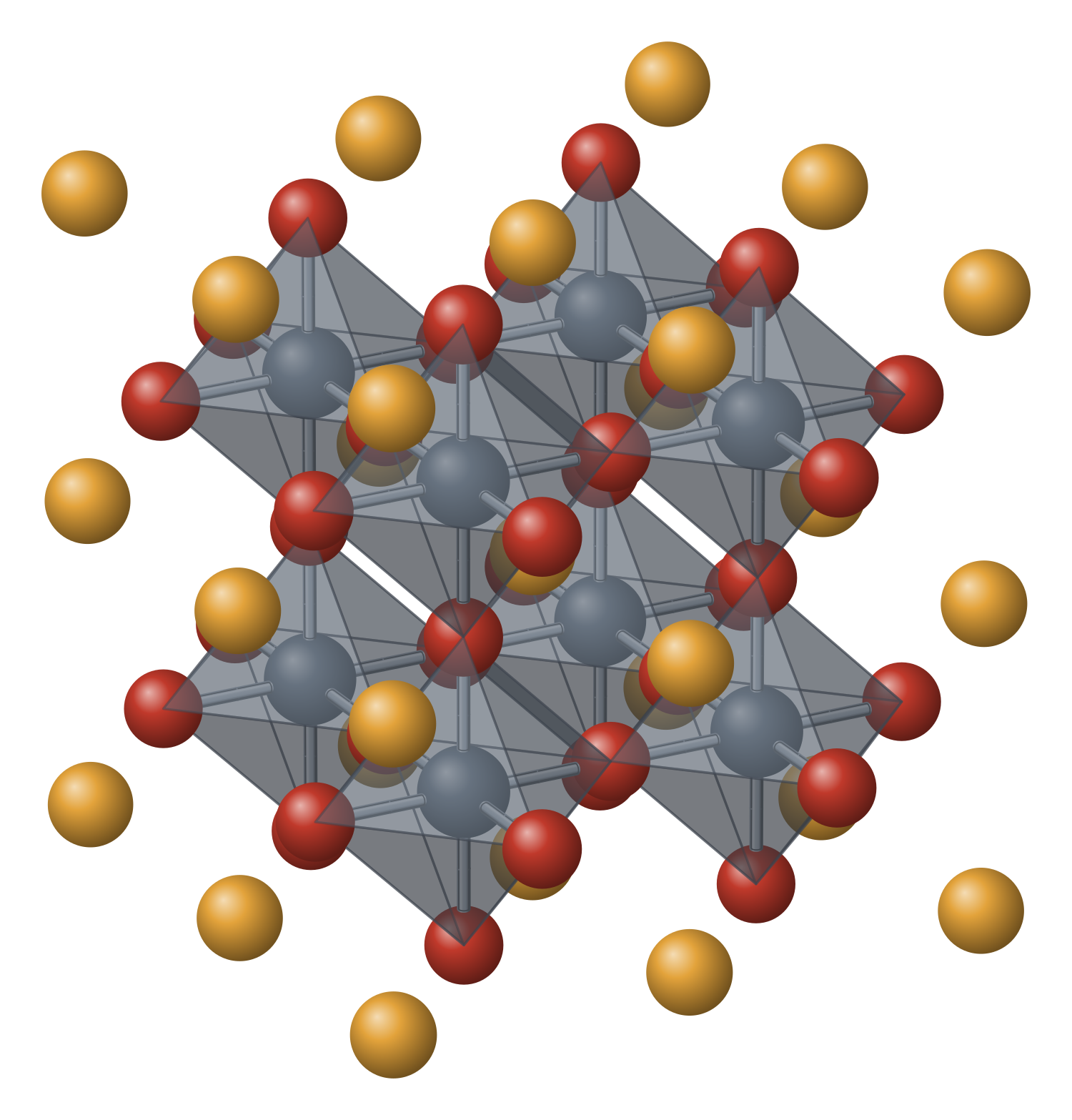
Perovskite structure drawing (high-resolution SVG)
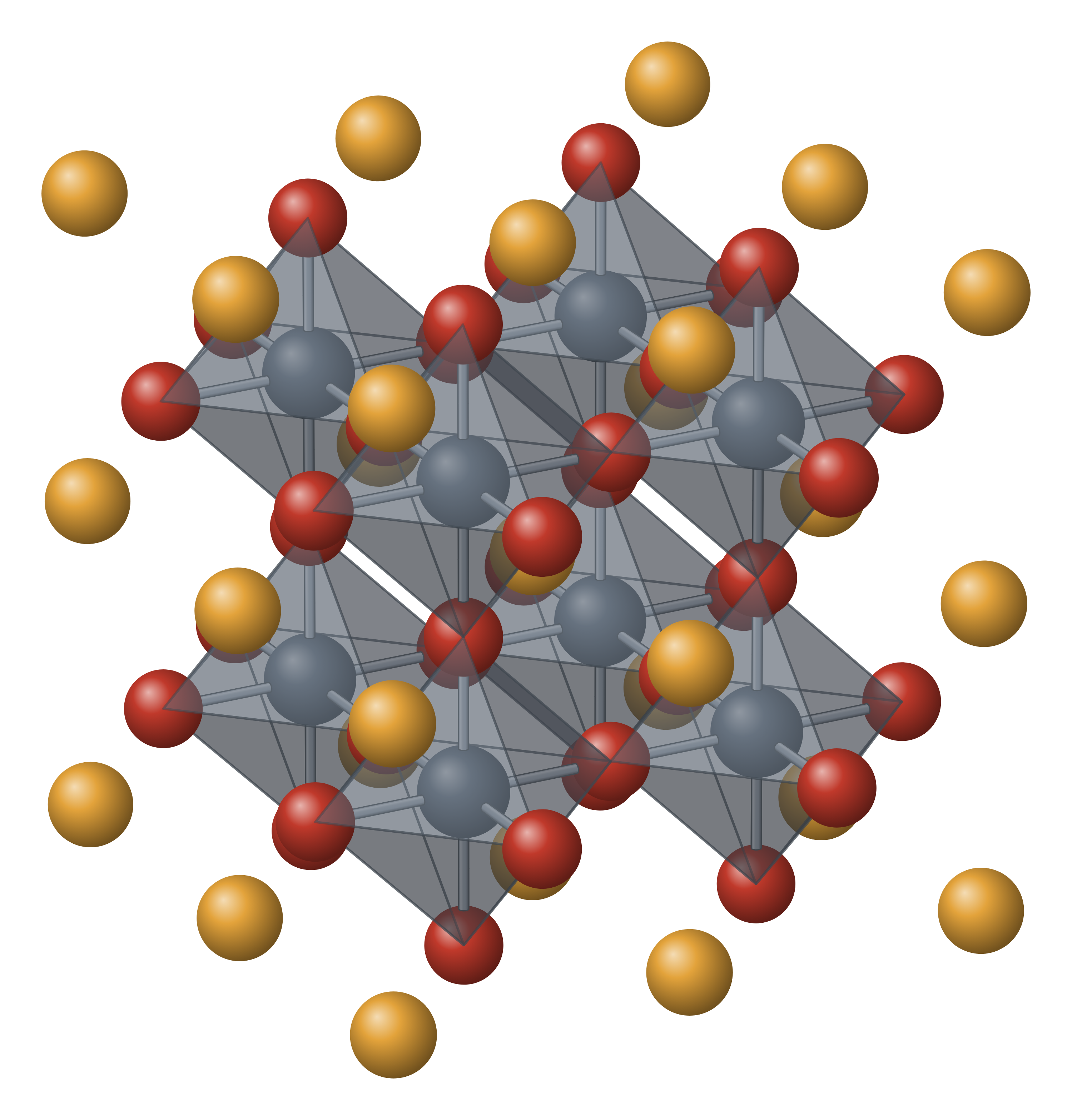
Perovskite in 3D (interactive)
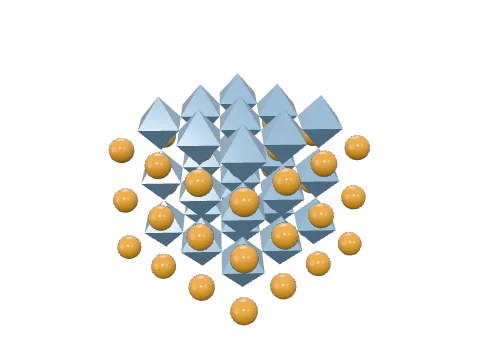
Loading the 3D model…
The perovskite structure explained
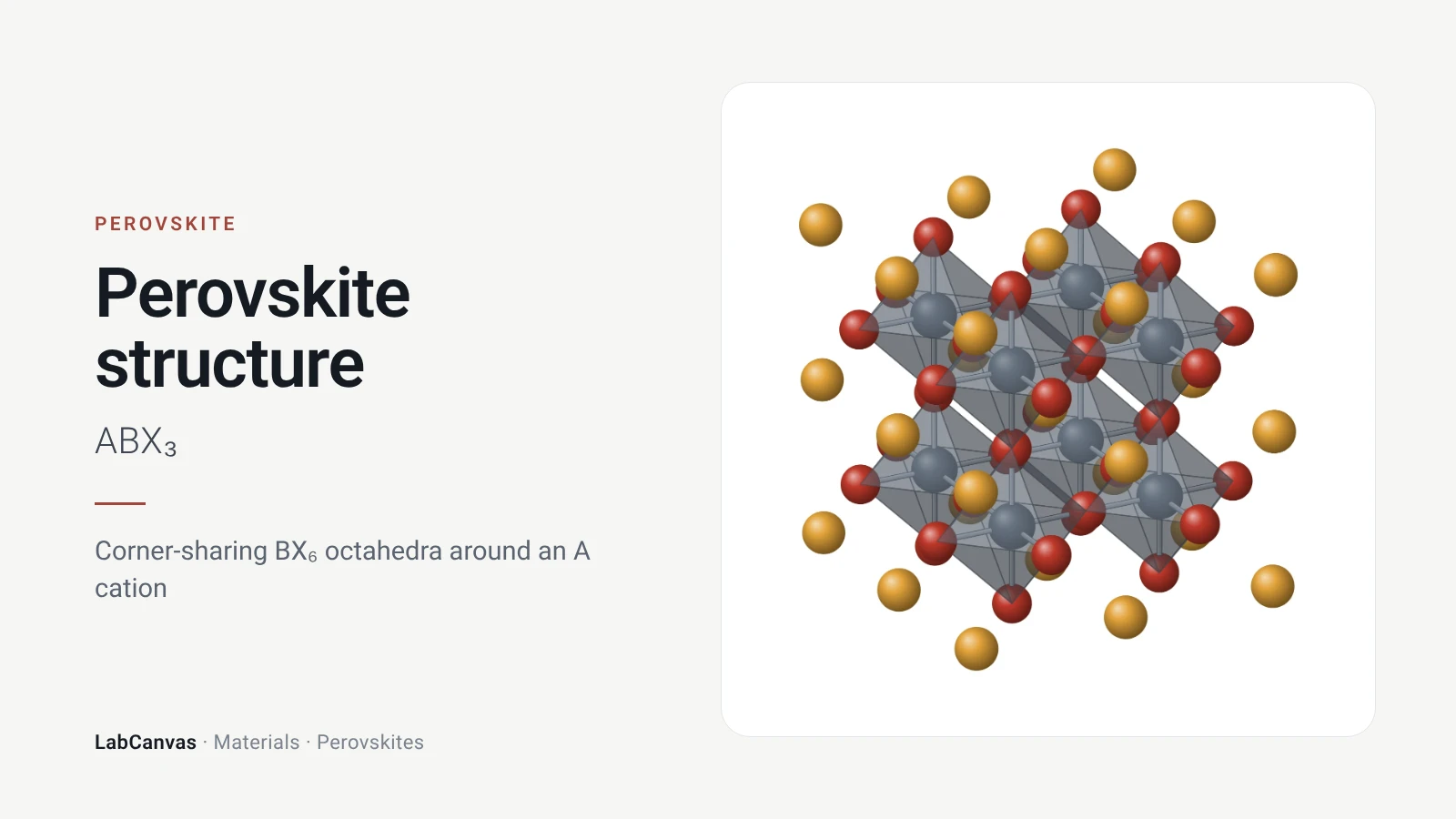
Every perovskite has the formula ABX₃. The smaller B cation sits at the centre of an octahedron of six X anions, and the octahedra share all six corners with their neighbours to make a three-dimensional framework. The larger A cation fills the cavity between eight octahedra, where it has twelve X neighbours (Bartel et al. 2019).
In the ideal cubic cell (space group Pm-3m, as in cubic BaTiO₃; Swaminathan et al. 2010) B sits at the body centre, the X anions at the face centres and A at the corners — or, choosing the origin differently, B at the corners and A at the centre. With one formula unit per cell, the B–X distance is half the cell edge and the A–X distance is a/√2 (geometry of the ideal cubic cell). In SrTiO₃, with a = 3.905 Å (Leroy et al. 2025), that gives Ti–O = 1.95 Å and Sr–O = 2.76 Å (calculated from a).
The X anion depends on the family: oxygen in oxide perovskites (ferroelectrics, catalysts, proton conductors), fluoride in some battery materials, and Cl, Br or I in the halide perovskites used in solar cells and light emitters (Bartel et al. 2019).
Goldschmidt tolerance factor and octahedral factor
Whether a composition will form a perovskite has been estimated for over 90 years with the Goldschmidt tolerance factor, t, which needs only the chemical formula and the ionic radii of A, B and X (Bartel et al. 2019). It is a ratio that compares the A–X distance with the B–X distance, each taken as a sum of ionic radii. In the ideal cube A–X is √2 times B–X, so the ratio is scaled to give t = 1 when the ions fit the cubic cell exactly (from the ideal cubic geometry). A size mismatch between the ions distorts the cubic structure or leads to non-perovskite structures instead (Bartel et al. 2019).
Tested on 576 experimentally known ABX₃ solids, the range that best separates perovskites from non-perovskites is 0.825 < t < 1.059, but it is right only 74% of the time: 83% for oxides and fluorides, and much worse for chlorides (51%), bromides (56%) and iodides (33%) (Bartel et al. 2019).
The second classic test is the octahedral factor, μ = r_B / r_X, which asks whether B is large enough to hold six X ions in an octahedron; geometry gives 0.414 < μ < 0.732. Combining t and μ raises the accuracy to about 85%, and a newer one-number descriptor, τ, built from the same radii and oxidation states, reaches 92% across oxides and halides (Bartel et al. 2019).
Octahedral tilting and lower-symmetry perovskites
Fewer than 10% of known perovskites are actually cubic. Size mismatch between the ions distorts the structure, and more than a dozen distinct structures, all built from corner-sharing BX₆ octahedra, count as perovskites. Even CaTiO₃, the mineral that gave the family its name, is orthorhombic (Bartel et al. 2019).
One common distortion is a cooperative tilt (rotation) of the octahedra. Tilt patterns are written in Glazer notation, one letter and superscript per cubic axis: cubic SrTiO₃, with no rotation, is a⁰a⁰a⁰, and below about 105 K its TiO₆ octahedra rotate about one axis, out of phase between neighbours, which is written a⁰a⁰c⁻; the structure becomes tetragonal and the primitive cell doubles (Leroy et al. 2025).
A second kind of distortion is a polar shift of the B cation off the centre of its octahedron, as in ferroelectric BaTiO₃, where titanium is displaced along the c axis in the tetragonal phase (Swaminathan et al. 2010).
Oxide vs halide perovskites
- Oxide perovskites (ABO₃). X = O²⁻, so the charges of A and B add up to +6, for example Sr²⁺Ti⁴⁺O₃ or La³⁺Al³⁺O₃. They are used as ferroelectrics, electrocatalysts and proton conductors (Bartel et al. 2019), capacitor dielectrics (Dai et al. 2022) and substrates for oxide films (Kawasaki et al. 1994). The interface between two insulating oxide perovskites, LaAlO₃ and SrTiO₃, can even conduct (Ohtomo & Hwang 2004).
- Halide perovskites (ABX₃, X = Cl, Br, I). X is a halide ion, so A is +1 and B is +2: Cs⁺ or an organic cation such as methylammonium (CH₃NH₃⁺, MA) or formamidinium (HC(NH₂)₂⁺, FA) on A, and Pb²⁺ or Sn²⁺ on B. The tin and lead iodides are direct-gap semiconductors with gaps of 1.25–1.75 eV (Stoumpos et al. 2013). The tolerance factor predicts halide perovskites much less reliably than oxides (Bartel et al. 2019).
Six perovskites to know
- SrTiO₃ (strontium titanate). The textbook cubic perovskite at room temperature (a = 3.905 Å), with an antiferrodistortive transition near 105 K and quantum paraelectric behaviour at low temperature (Leroy et al. 2025). Its atomically flat, TiO₂-terminated surfaces make a well-defined substrate for oxide films (Kawasaki et al. 1994), and it hosts a high-mobility electron gas at its interface with LaAlO₃ (Ohtomo & Hwang 2004).
- BaTiO₃ (barium titanate). The classic ferroelectric: cubic above a Curie point near 120 °C, then tetragonal, orthorhombic and rhombohedral on cooling (Tan et al. 2015; Zhang et al. 2006). It is the main raw material of multilayer ceramic capacitors (Dai et al. 2022).
- CsPbBr₃ (caesium lead bromide). An all-inorganic halide perovskite. Colloidal CsPbX₃ nanocrystals emit across 410–700 nm with narrow lines and quantum yields of up to 90% (Protesescu et al. 2015).
- MAPbI₃ (methylammonium lead iodide). The hybrid perovskite that started perovskite photovoltaics: 3.8% efficiency as a dye-cell sensitizer in 2009 (Kojima et al. 2009) and 10.9% in a solid-state cell in 2012, with a 1.55 eV band gap (Lee et al. 2012).
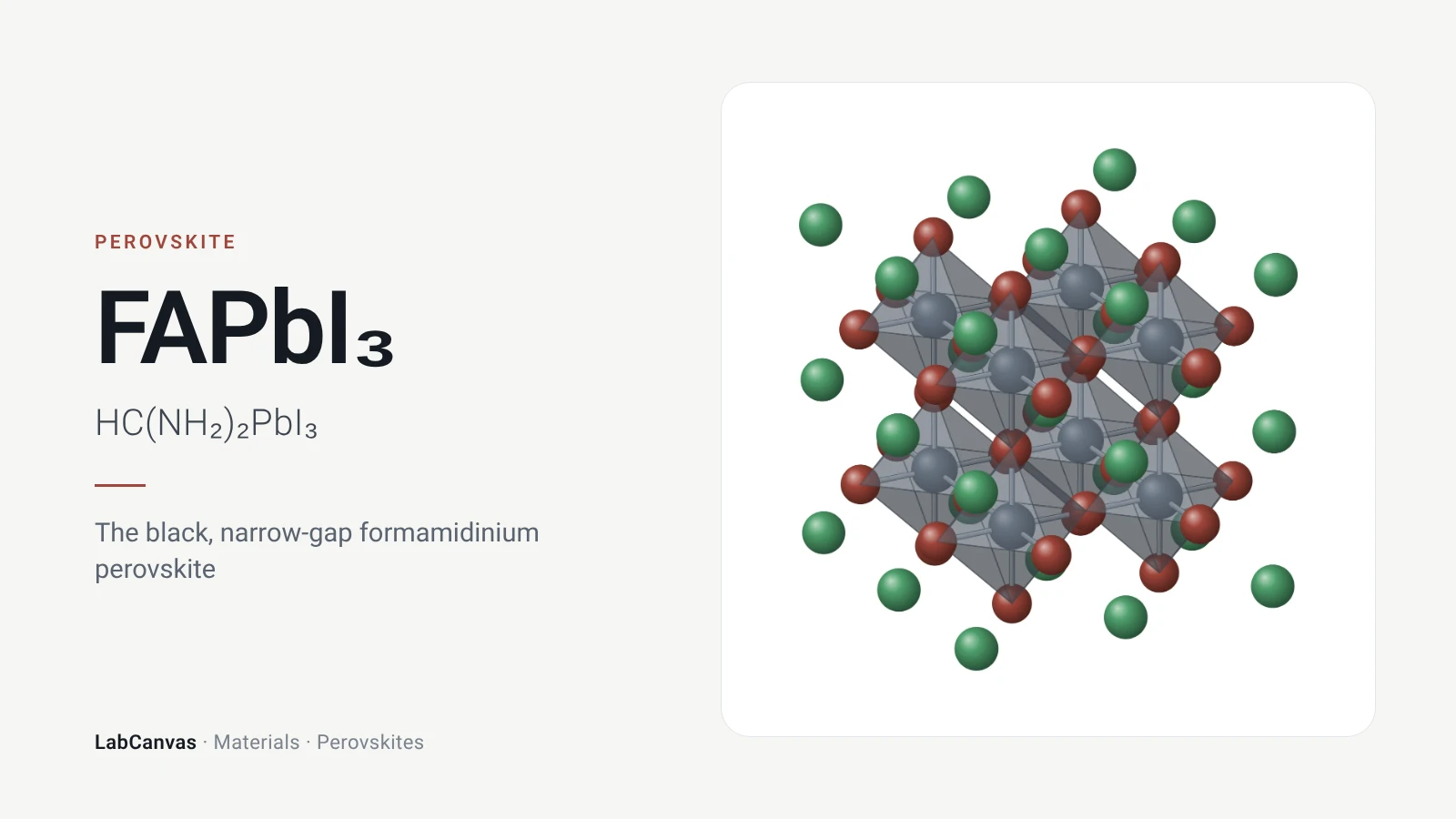
- FAPbI₃ (formamidinium lead iodide). A narrower band gap than MAPbI₃ but a less stable perovskite phase; alloying with MAPbBr₃ stabilized it and gave solar cells above 18% (Jeon et al. 2015).
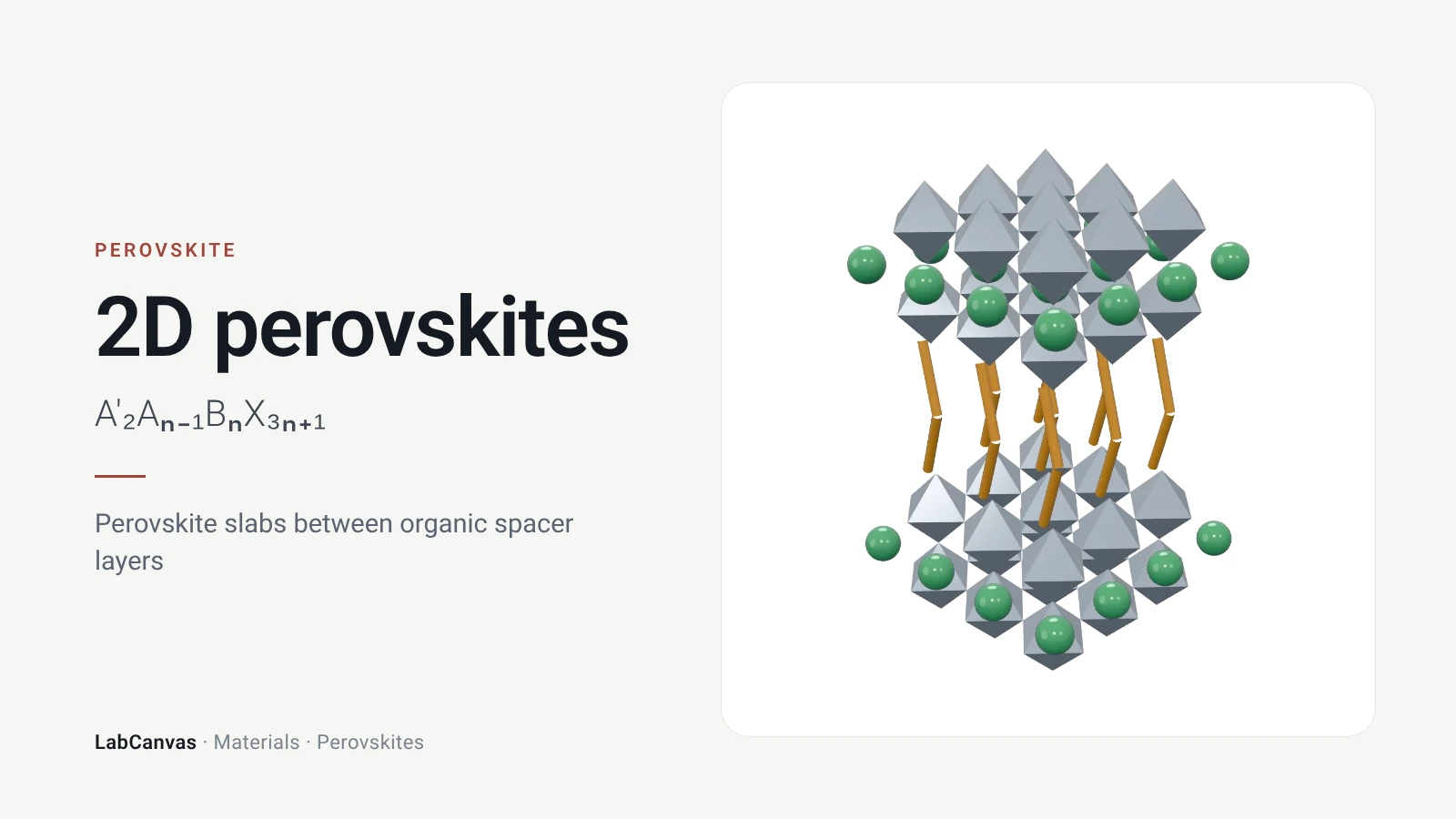
- 2D (layered) perovskites. Slabs of corner-sharing octahedra separated by layers of large organic cations, such as (PEA)₂(MA)₂Pb₃I₁₀, which is more moisture resistant than MAPbI₃ (Smith et al. 2014).
Layered and 2D perovskites
In layered (2D) hybrid perovskites the three-dimensional framework is cut into slabs of corner-sharing octahedra separated by layers of large organic cations. These lower-dimensional organic–inorganic perovskites, known since the late 19th century, offer great chemical flexibility (Saparov & Mitzi 2016). In solar cells, (PEA)₂(MA)₂Pb₃I₁₀ (PEA = C₆H₅(CH₂)₂NH₃⁺) gave 4.73% efficiency with a larger band gap than MAPbI₃ and films that could be made under ambient humidity (Smith et al. 2014).
Uses of perovskites
- Capacitors. BaTiO₃ is the main raw material of multilayer ceramic capacitors (Dai et al. 2022).
- Piezoelectrics. BaTiO₃-based ceramics as lead-free piezoelectrics (Tan et al. 2015; Liu & Ren 2009).
- Solar cells. Lead halide perovskite absorbers, from 3.8% in 2009 to more than 18% by 2015 (Kojima et al. 2009; Jeon et al. 2015).
- Light emission. CsPbX₃ nanocrystals with quantum yields up to 90% and colour covering up to 140% of the NTSC gamut (Protesescu et al. 2015).
- Photocatalysis. Al-doped SrTiO₃ splits water with an external quantum efficiency of up to 96% at 350–360 nm (Takata et al. 2020).
- Oxide electronics. Conducting interfaces between insulating perovskites (Ohtomo & Hwang 2004).
- Catalysis, proton conduction and batteries. Oxide and fluoride perovskites (Bartel et al. 2019).
How to draw the perovskite structure
For a paper, slide or poster, the clearest picture is the cubic cell drawn as polyhedra: one BX₆ octahedron at the centre, or eight octahedra sharing corners with the A cation in the cavity between them. Show the A cation as a large sphere and X at the octahedron corners; to show tilts, rotate neighbouring octahedra in opposite senses (a⁰a⁰c⁻). In LabCanvas you can draw the cell in the figure editor, show the coordination polyhedra, repeat the cell to show the corner-sharing network, recolour the A, B and X sites for an oxide or a halide perovskite, and export a high-resolution image.
Six perovskites compared
| Material | Formula | Family | Known for | Key report |
|---|---|---|---|---|
| Strontium titanate | SrTiO₃ | Oxide | Cubic at room temperature; quantum paraelectric; substrate; LaAlO₃/SrTiO₃ electron gas | Ohtomo & Hwang, Nature 2004 |
| Barium titanate | BaTiO₃ | Oxide | Ferroelectric; capacitors; lead-free piezoelectrics | Tan et al., Sci. Rep. 2015 |
| Caesium lead bromide | CsPbBr₃ | All-inorganic halide | Bright, narrow-line nanocrystal emitters | Protesescu et al., Nano Lett. 2015 |
| Methylammonium lead iodide | CH₃NH₃PbI₃ | Hybrid halide | First perovskite solar cells; 1.55 eV gap | Kojima et al., JACS 2009 |
| Formamidinium lead iodide | HC(NH₂)₂PbI₃ | Hybrid halide | Narrower gap; phase stabilized by alloying | Jeon et al., Nature 2015 |
| 2D perovskites | e.g. (PEA)₂(MA)₂Pb₃I₁₀ | Layered hybrid halide | Moisture-resistant absorbers | Smith et al., Angew. Chem. 2014 |
Related materials
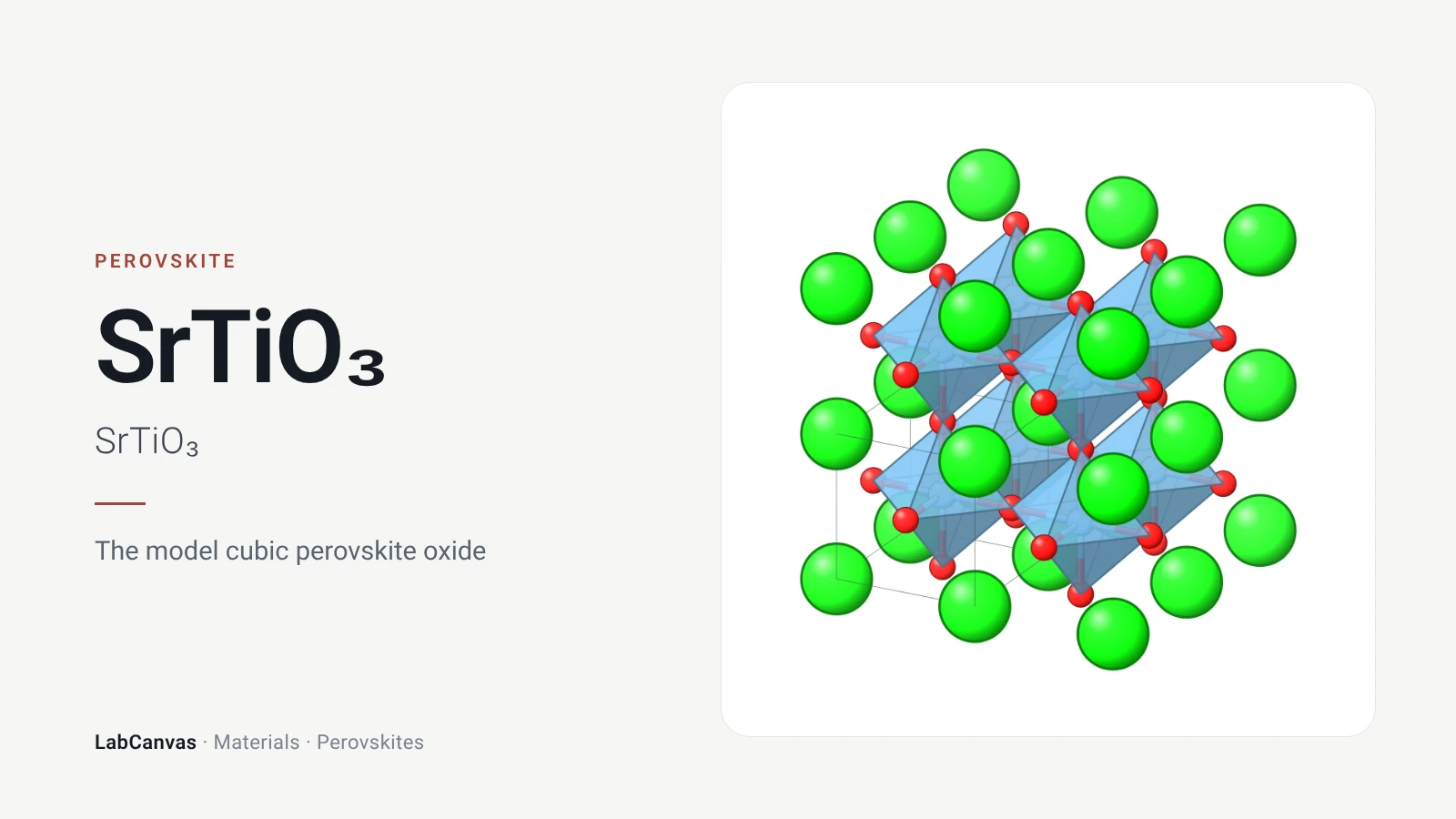
SrTiO₃ (strontium titanate)
SrTiO₃ structure and properties: cubic perovskite (a = 3.905 Å), the 105 K transition, quantum paraelectricity, LaAlO₃/SrTiO₃ interfaces and water splitting.
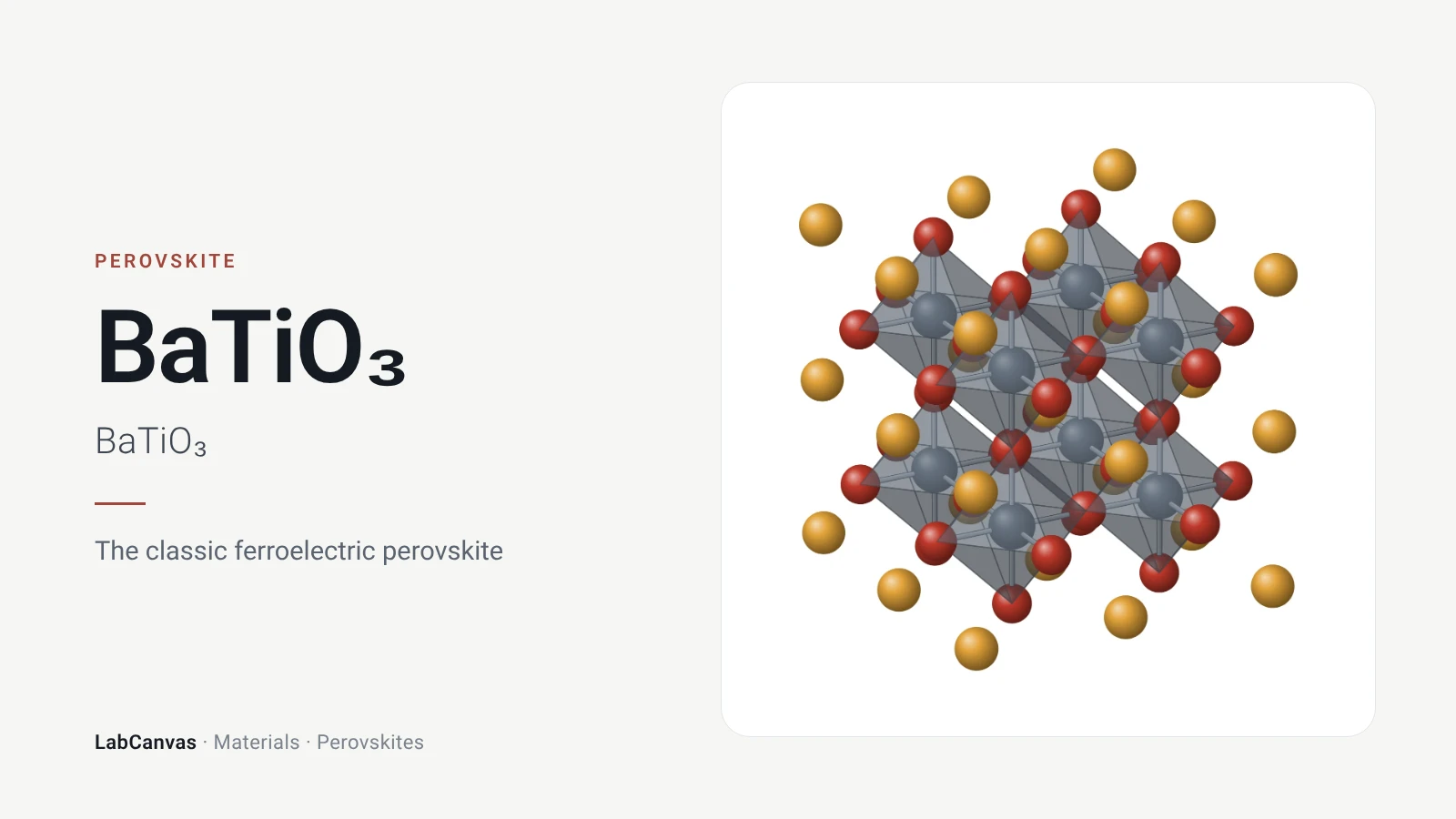
BaTiO₃ (barium titanate)
BaTiO₃, the classic ferroelectric perovskite: its ~120 °C Curie point, tetragonal, orthorhombic and rhombohedral phases, capacitors and piezoelectrics.
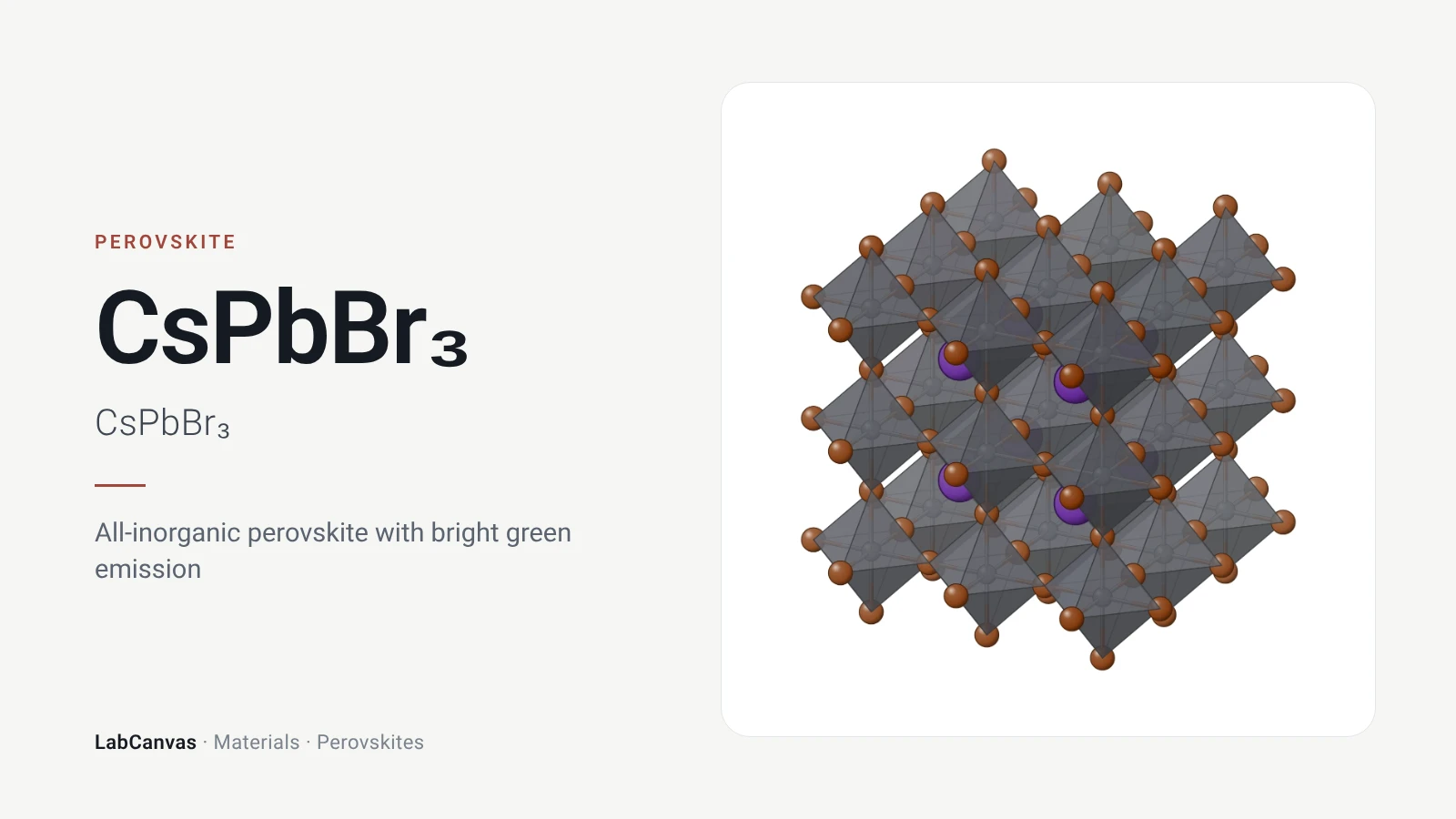
CsPbBr₃
CsPbBr₃ and CsPbX₃ perovskite quantum dots: orthorhombic structure, hot-injection synthesis, emission tunable over 410–700 nm, anion exchange and uses.
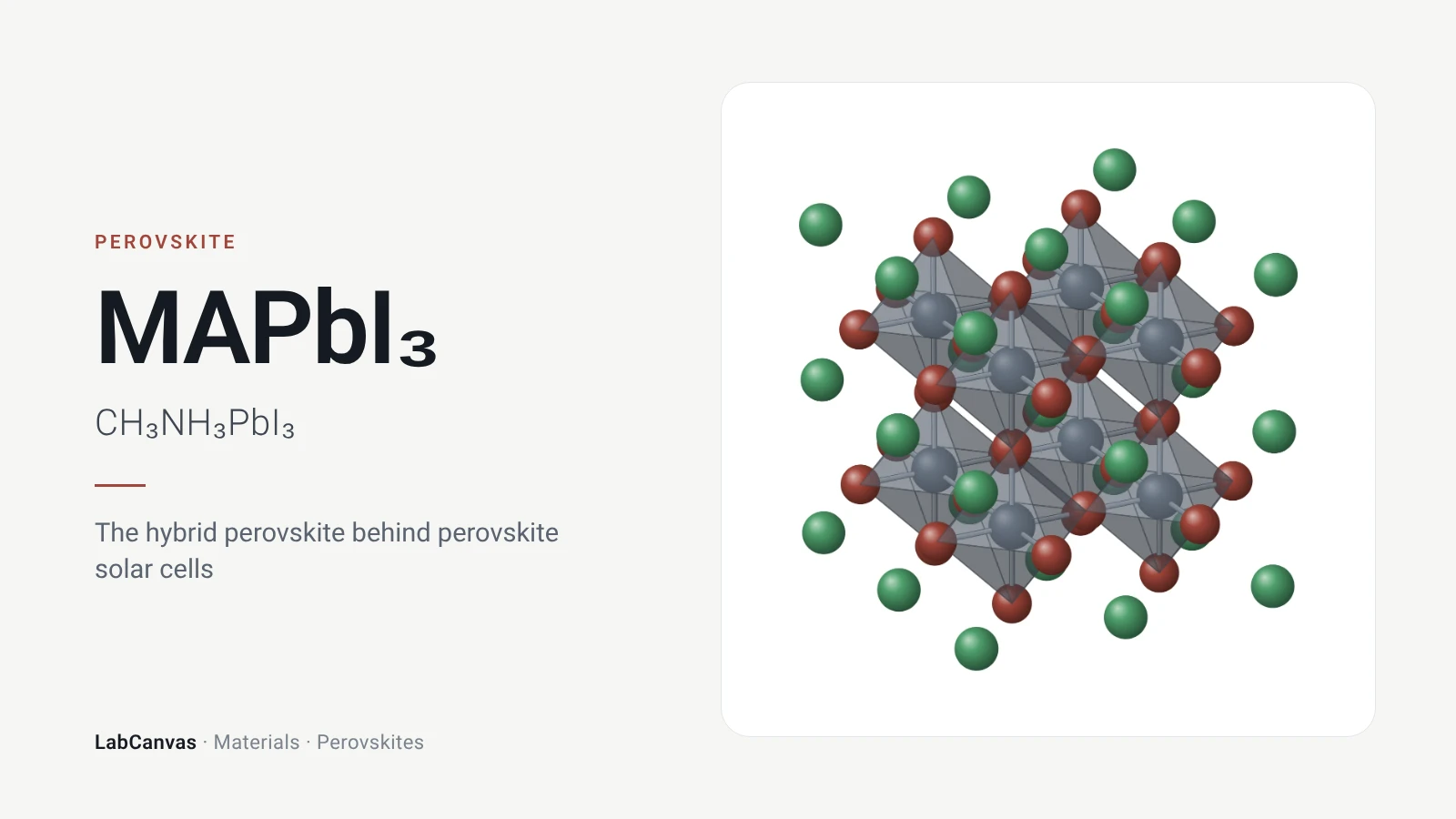
MAPbI₃
MAPbI₃ (CH₃NH₃PbI₃): tetragonal and cubic phases, 1.5 eV band gap, the first perovskite solar cells, long diffusion lengths, instability and lead toxicity.
FAPbI₃
FAPbI₃ explained: the black cubic α-phase and yellow hexagonal δ-phase, its 1.48 eV band gap, how mixed cations stabilise it and its role in solar cells.
2D perovskites
Layered 2D halide perovskites explained: Ruddlesden–Popper and Dion–Jacobson phases, the n value, quantum wells, spacers, stability, solar cells and LEDs.
More on LabCanvas
- Crystal structure figure software compared: VESTA, Mercury, CrystalMaker, Avogadro and LabCanvas
- Tauc plot band gap calculator: Free tool: optical band gap from UV–vis
- XRD Scherrer crystallite size calculator: Free tool
- Molar mass calculator: Free tool
- Journal figure size guide: Column widths and resolutions for 38 journals
- 3D models gallery: Turn MOFs, COFs, perovskites and more in 3D
Frequently asked questions
What is the perovskite structure?
A crystal structure with the formula ABX₃ in which BX₆ octahedra share corners to form a three-dimensional framework and a larger A cation sits in the cavities, with 12 X neighbours (Bartel et al. 2019). The ideal form is cubic; most real perovskites are slightly distorted versions of it.
What is the general formula of a perovskite?
ABX₃: A is a large cation, B a smaller cation in octahedral coordination and X an anion, usually O²⁻ in oxide perovskites or Cl⁻, Br⁻ or I⁻ in halide perovskites. Double perovskites have the formula A₂BB′X₆ (Bartel et al. 2019).
What is the Goldschmidt tolerance factor?
A ratio of ionic radii that compares the A–X and B–X distances and has been used for over 90 years to predict whether a composition forms a perovskite (Bartel et al. 2019). It is scaled so that t = 1 is a perfect fit to the cubic cell (from the ideal cubic geometry); in a test on 576 compounds, perovskites were best predicted for 0.825 < t < 1.059, with 74% accuracy overall (Bartel et al. 2019).
What is the octahedral factor of a perovskite?
μ = r_B / r_X, the ratio of the B-cation radius to the anion radius. Geometry allows a stable BX₆ octahedron for 0.414 < μ < 0.732; it is usually used together with the tolerance factor (Bartel et al. 2019).
What is octahedral tilting in perovskites?
A cooperative rotation of the corner-sharing BX₆ octahedra, one of the distortions that size mismatch between the ions causes (Bartel et al. 2019). It lowers the symmetry and is written in Glazer notation: in SrTiO₃ below about 105 K the TiO₆ octahedra rotate out of phase about one axis, a⁰a⁰c⁻, and the structure becomes tetragonal (Leroy et al. 2025).
Why is it called perovskite?
The structure type is named after the mineral perovskite, CaTiO₃, which itself is an orthorhombic (tilted) perovskite (Bartel et al. 2019).
What is the difference between oxide and halide perovskites?
In oxide perovskites X is O²⁻, so A and B carry charges adding up to +6 (e.g. Sr²⁺ and Ti⁴⁺); in halide perovskites X is Cl⁻, Br⁻ or I⁻, so A is +1 (Cs⁺ or an organic cation) and B is +2 (Pb²⁺ or Sn²⁺). Oxides are dielectric and ferroelectric ceramics; lead and tin iodide perovskites are direct-gap semiconductors with gaps of 1.25–1.75 eV (Stoumpos et al. 2013).
What are 2D perovskites?
Layered perovskites in which slabs of corner-sharing octahedra are separated by layers of large organic cations, such as (PEA)₂(MA)₂Pb₃I₁₀. They are more moisture resistant than three-dimensional MAPbI₃ and have larger band gaps (Smith et al. 2014).
References
- C. J. Bartel, C. Sutton, B. R. Goldsmith, R. Ouyang, C. B. Musgrave, L. M. Ghiringhelli, M. Scheffler. New tolerance factor to predict the stability of perovskite oxides and halides. Sci. Adv. 2019, 5, eaav0693. doi:10.1126/sciadv.aav0693
- L. Leroy et al.. Antiferrodistortive and ferroelectric phase transitions in freestanding films of SrTiO₃. Nano Lett. 2025, 25, 7651–7657. doi:10.1021/acs.nanolett.4c05664
- M. Kawasaki et al.. Atomic control of the SrTiO₃ crystal surface. Science 1994, 266, 1540–1542. doi:10.1126/science.266.5190.1540
- A. Ohtomo, H. Y. Hwang. A high-mobility electron gas at the LaAlO₃/SrTiO₃ heterointerface. Nature 2004, 427, 423–426. doi:10.1038/nature02308
- T. Takata et al.. Photocatalytic water splitting with a quantum efficiency of almost unity. Nature 2020, 581, 411–414. doi:10.1038/s41586-020-2278-9
- Y. Tan et al.. Unfolding grain size effects in barium titanate ferroelectric ceramics. Sci. Rep. 2015, 5, 9953. doi:10.1038/srep09953
- V. Swaminathan, S. S. Pramana, T. J. White, L. Chen, R. Chukka, R. V. Ramanujan. Microwave synthesis of noncentrosymmetric BaTiO₃ truncated nanocubes for charge storage applications. ACS Appl. Mater. Interfaces 2010, 2, 3037–3042. doi:10.1021/am1004865
- Q. Zhang, T. Cagin, W. A. Goddard. The ferroelectric and cubic phases in BaTiO₃ ferroelectrics are also antiferroelectric. Proc. Natl. Acad. Sci. USA 2006, 103, 14695–14700. doi:10.1073/pnas.0606612103
- K. Dai et al.. Quantifying the improvement in dielectric properties of BaSrTiO₃-based ceramics by adding MgO. Materials 2022, 15, 2875. doi:10.3390/ma15082875
- W. Liu, X. Ren. Large piezoelectric effect in Pb-free ceramics. Phys. Rev. Lett. 2009, 103, 257602. doi:10.1103/PhysRevLett.103.257602
- A. Kojima, K. Teshima, Y. Shirai, T. Miyasaka. Organometal halide perovskites as visible-light sensitizers for photovoltaic cells. J. Am. Chem. Soc. 2009, 131, 6050–6051. doi:10.1021/ja809598r
- M. M. Lee, J. Teuscher, T. Miyasaka, T. N. Murakami, H. J. Snaith. Efficient hybrid solar cells based on meso-superstructured organometal halide perovskites. Science 2012, 338, 643–647. doi:10.1126/science.1228604
- C. C. Stoumpos, C. D. Malliakas, M. G. Kanatzidis. Semiconducting tin and lead iodide perovskites with organic cations: phase transitions, high mobilities, and near-infrared photoluminescent properties. Inorg. Chem. 2013, 52, 9019–9038. doi:10.1021/ic401215x
- L. Protesescu et al.. Nanocrystals of cesium lead halide perovskites (CsPbX₃, X = Cl, Br, and I): novel optoelectronic materials showing bright emission with wide color gamut. Nano Lett. 2015, 15, 3692–3696. doi:10.1021/nl5048779
- N. J. Jeon et al.. Compositional engineering of perovskite materials for high-performance solar cells. Nature 2015, 517, 476–480. doi:10.1038/nature14133
- I. C. Smith, E. T. Hoke, D. Solis-Ibarra, M. D. McGehee, H. I. Karunadasa. A layered hybrid perovskite solar-cell absorber with enhanced moisture stability. Angew. Chem. Int. Ed. 2014, 53, 11232–11235. doi:10.1002/anie.201406466
- B. Saparov, D. B. Mitzi. Organic–inorganic perovskites: structural versatility for functional materials design. Chem. Rev. 2016, 116, 4558–4596. doi:10.1021/acs.chemrev.5b00715
Draw Perovskite structure for your paper or slides
LabCanvas is a browser workspace for scientific figures: framework clusters, linkers and nets, crystal structures in 2D and 3D, graphs and posters, all editable.
Draw Perovskite structure in LabCanvas