CsPbBr₃ (caesium lead bromide): structure, nanocrystals and uses
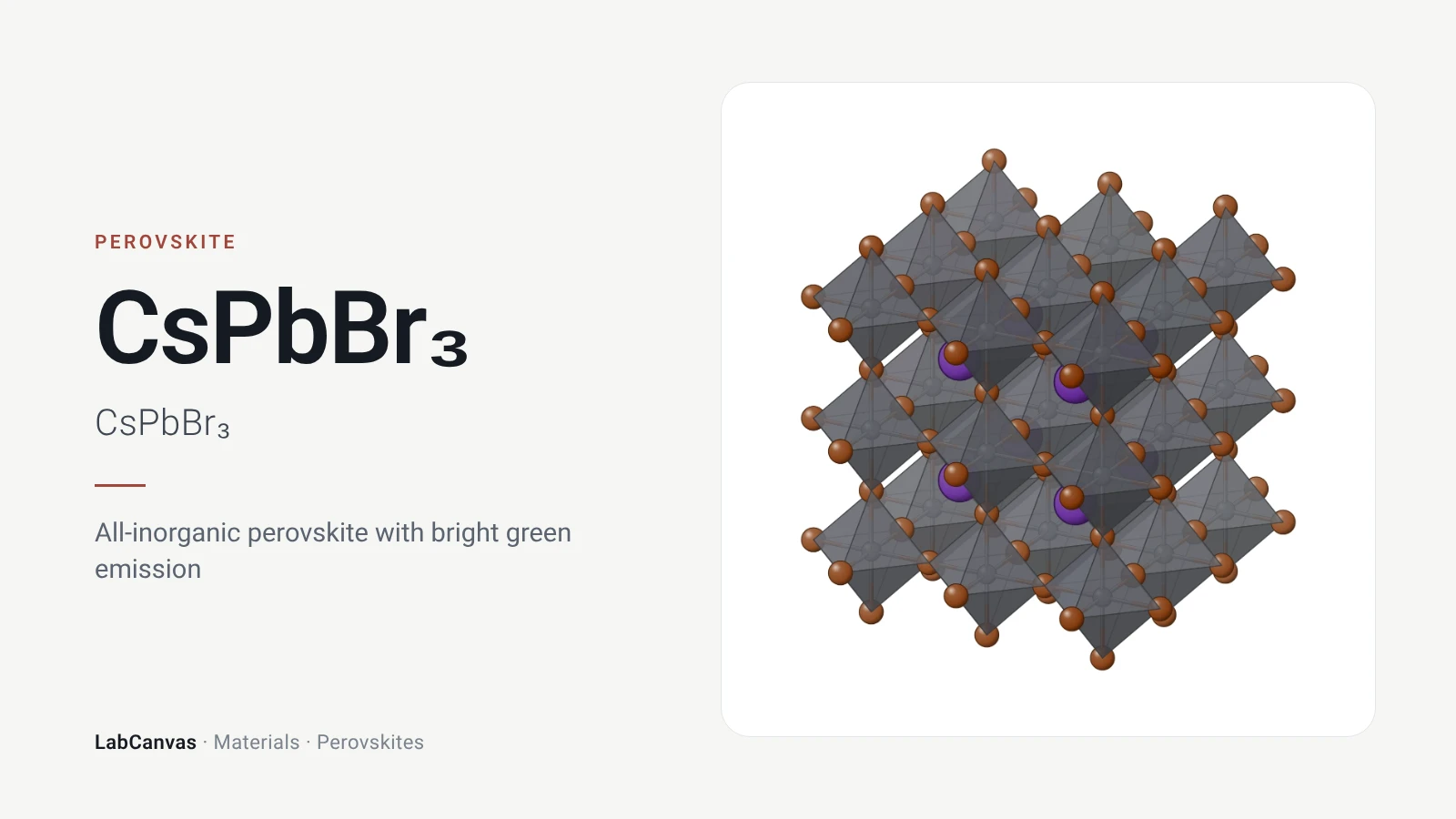
Caesium lead bromide (CsPbBr₃) is an all-inorganic halide perovskite: a framework of corner-sharing PbBr₆ octahedra with Cs⁺ ions in the cavities between them. In bulk it is orthorhombic at room temperature, turning tetragonal at about 88 °C and cubic at about 130 °C, with a band gap of about 2.3 eV (He et al. 2018). As colloidal CsPbX₃ (X = Cl, Br, I) nanocrystals, first made by hot injection by Protesescu et al. in 2015, it emits bright, narrow light tunable across the visible from 410 to 700 nm.
Contents
CsPbBr₃ at a glance
| Formula | CsPbBr₃ (Protesescu et al. 2015) |
|---|---|
| Molar mass | 579.82 g mol⁻¹ (calculated from the formula) |
| Class | All-inorganic halide perovskite, ABX₃: Pb octahedrally coordinated by Br, Cs in the cavities (Bertolotti et al. 2017) |
| Bulk structure at room temperature | Orthorhombic, stable at room temperature (He et al. 2018) |
| Phase transitions (bulk) | Cubic → tetragonal at about 130 °C; tetragonal → orthorhombic at about 88 °C (He et al. 2018) |
| Band gap (bulk) | About 2.3 eV (2.29 eV from transmission of a single crystal) (He et al. 2018) |
| Nanocrystal structure | First assigned cubic (Protesescu et al. 2015); now generally assigned orthorhombic at room temperature, with twinned orthorhombic subdomains (Bertolotti et al. 2017) |
| Nanocrystal size | 4–15 nm nanocubes, tuned by the reaction temperature of 140–200 °C (Protesescu et al. 2015) |
| Exciton Bohr diameter | About 7 nm, exciton binding energy about 40 meV, from effective-mass estimates (Protesescu et al. 2015) |
| Emission (CsPbX₃ nanocrystals) | Tunable over 410–700 nm by halide and size; line widths 12–42 nm; quantum yields up to 90%; lifetimes 1–29 ns (Protesescu et al. 2015) |
| Colour gamut | Red, green and blue CsPbX₃ nanocrystals cover up to 140% of the NTSC standard (Protesescu et al. 2015) |
| Anion exchange | Fast, low-temperature, partial or complete; emission tunable over 410–700 nm with quantum yields of 20–80% (Nedelcu et al. 2015) |
| Key reports | Protesescu et al., Nano Lett. 15, 3692 (2015); Nedelcu et al., Nano Lett. 15, 5635 (2015); Akkerman et al., J. Am. Chem. Soc. 137, 10276 (2015) |
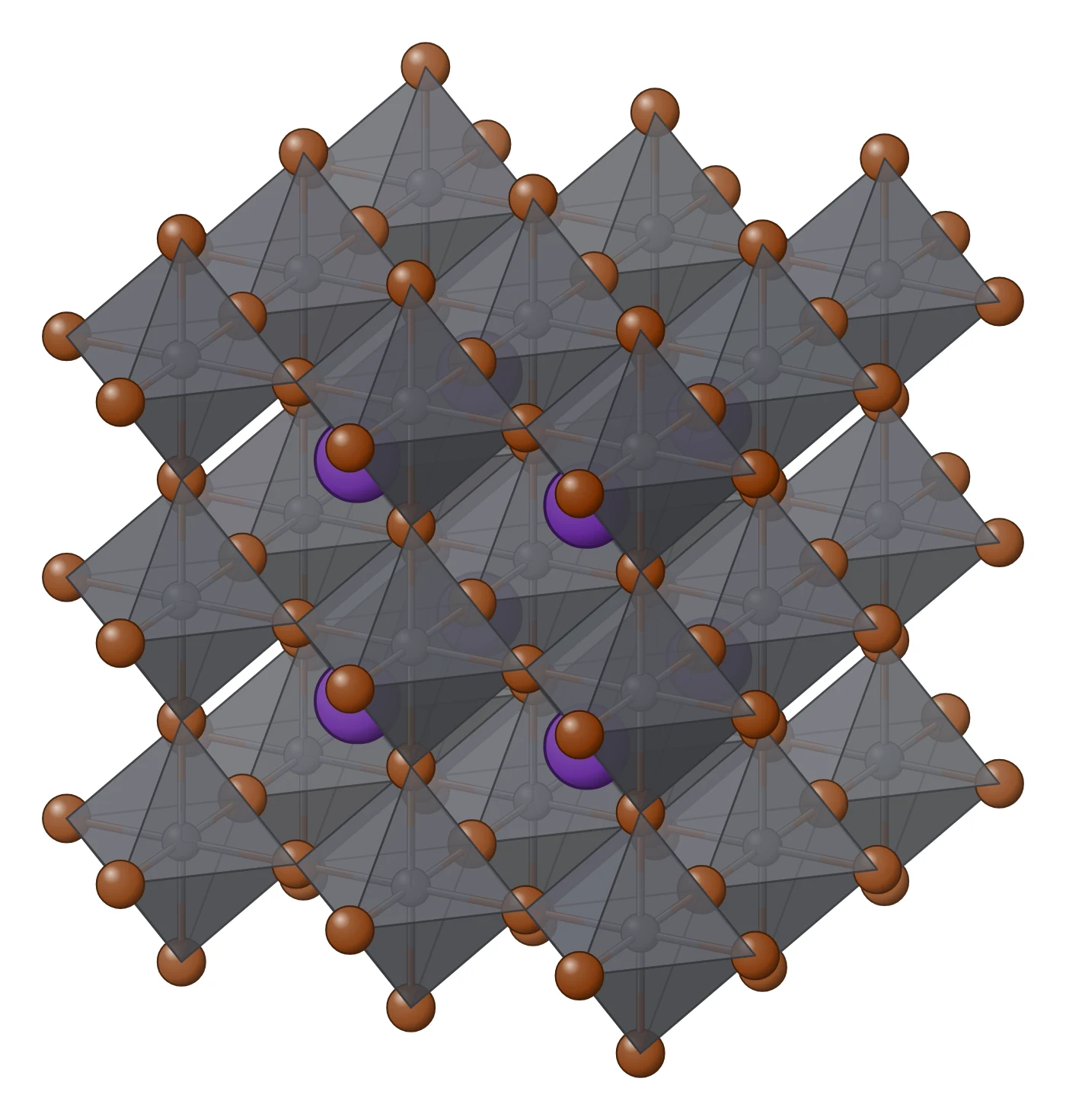
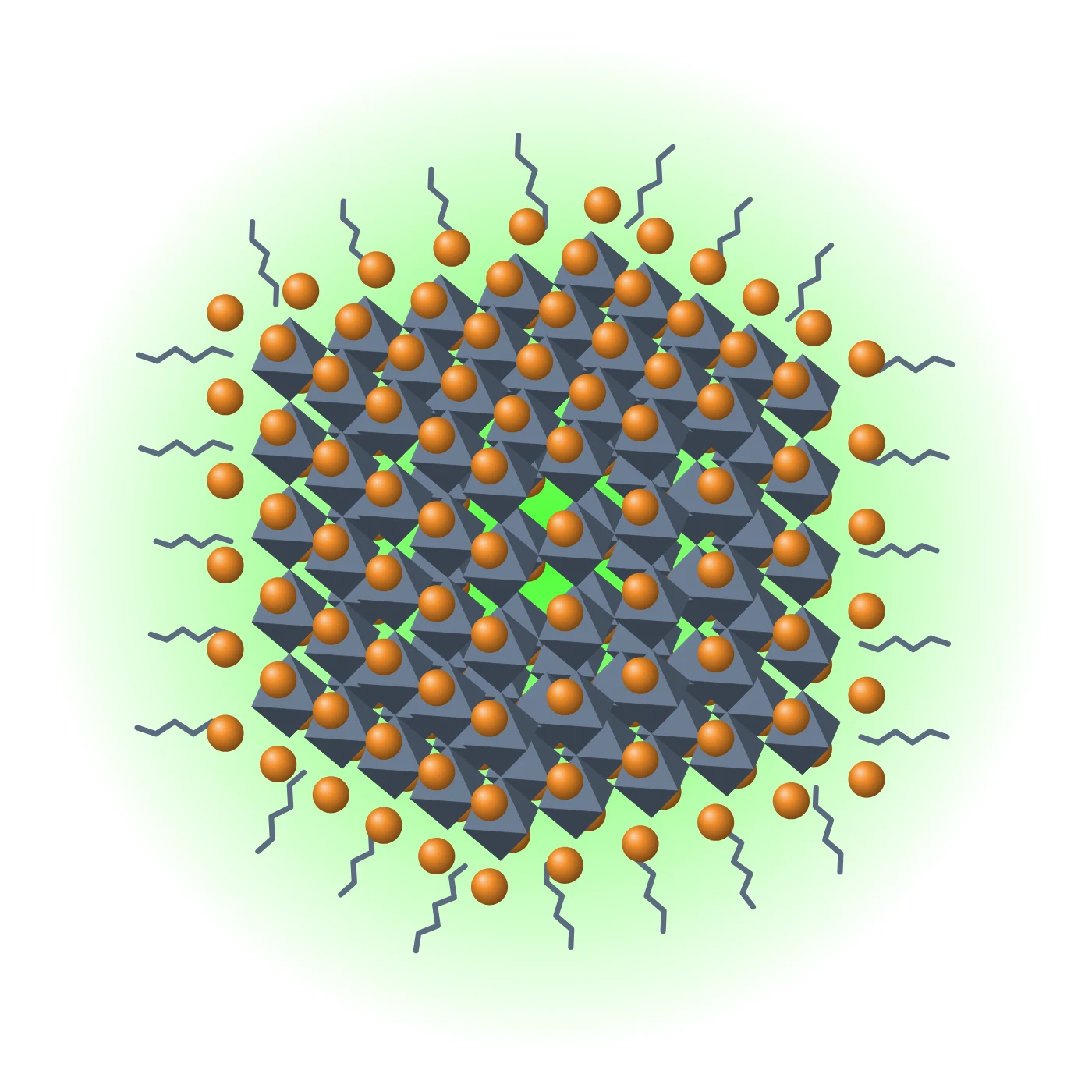
CsPbBr₃ crystal structure (high-resolution SVG)
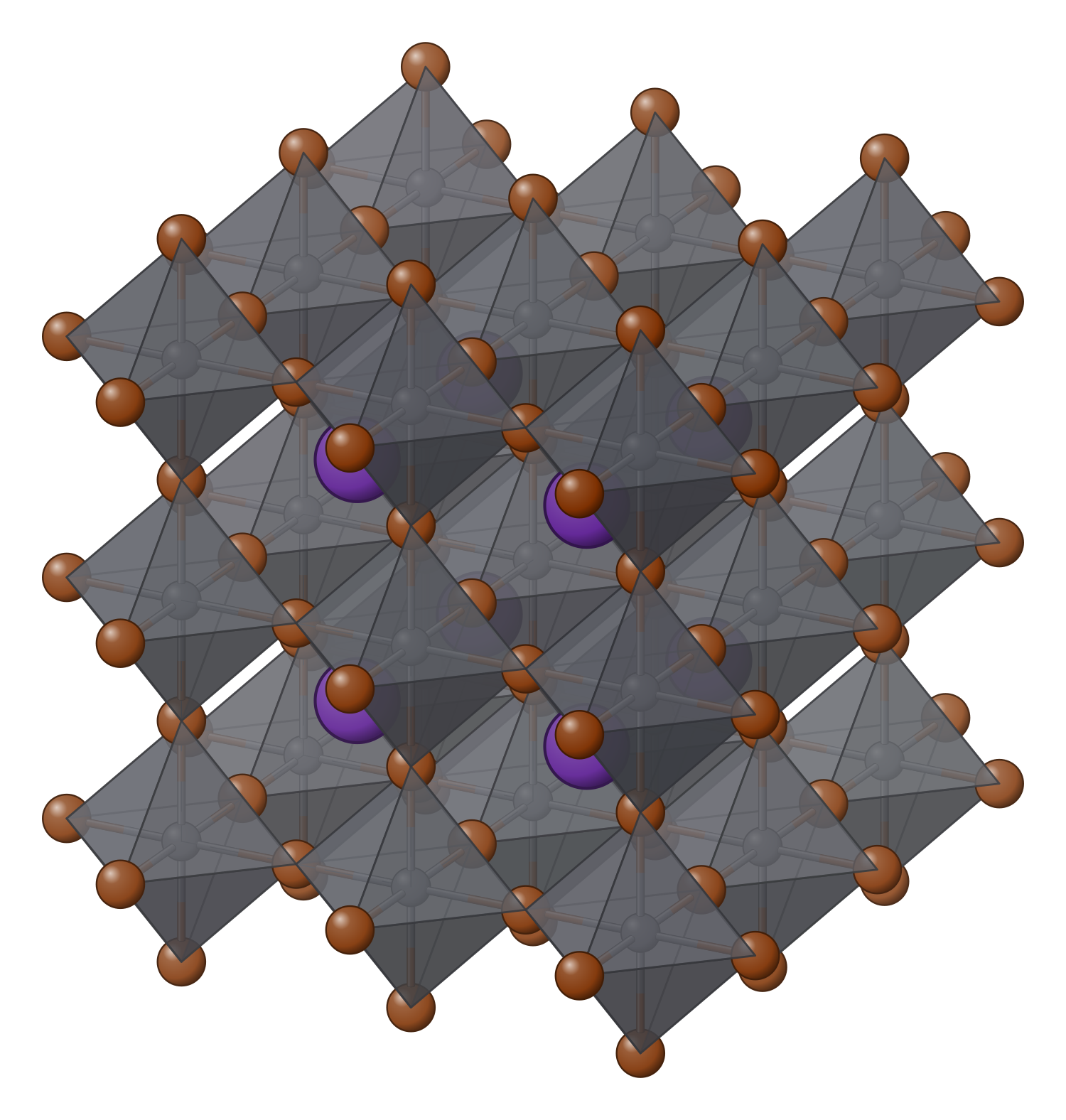
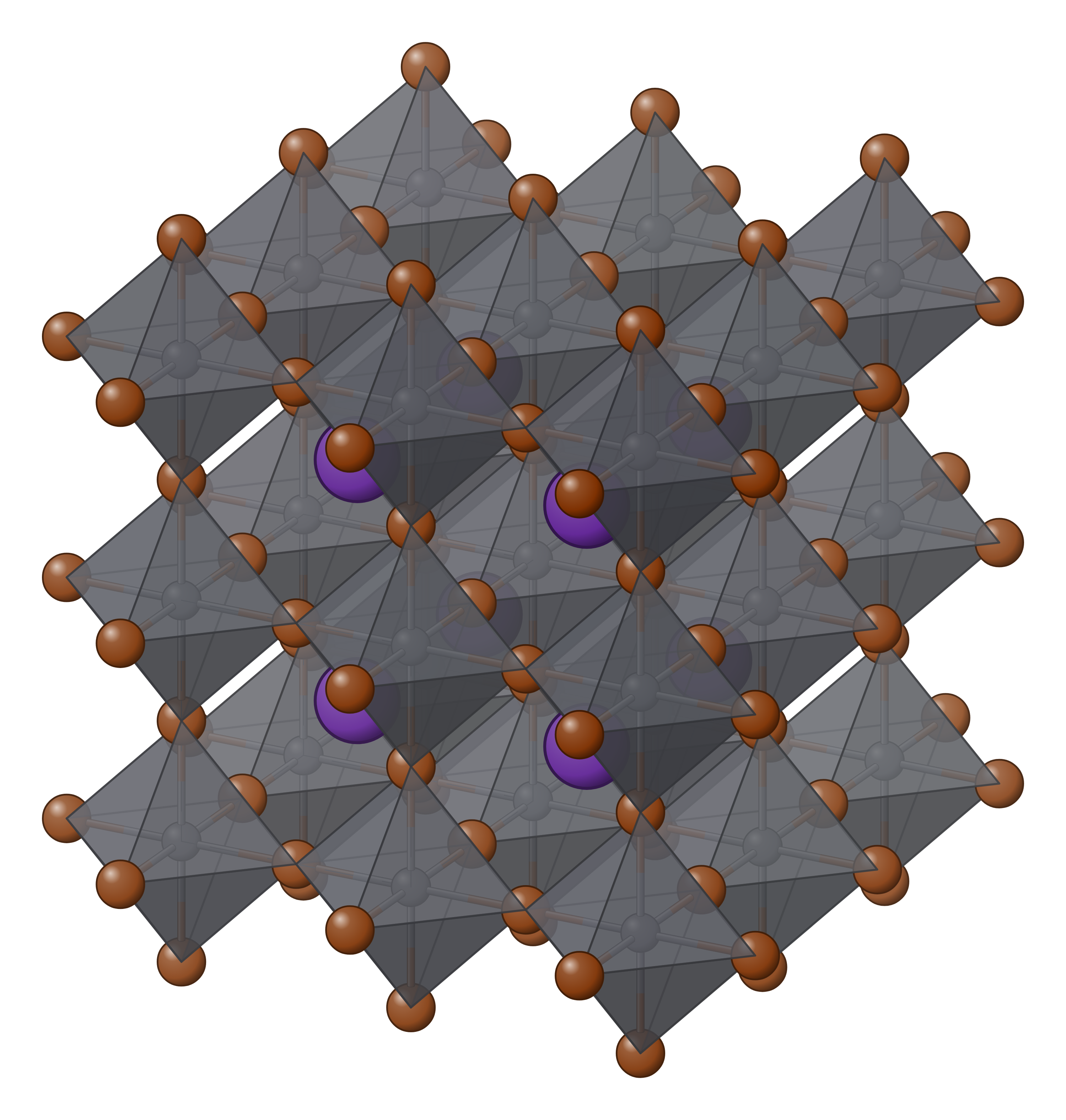
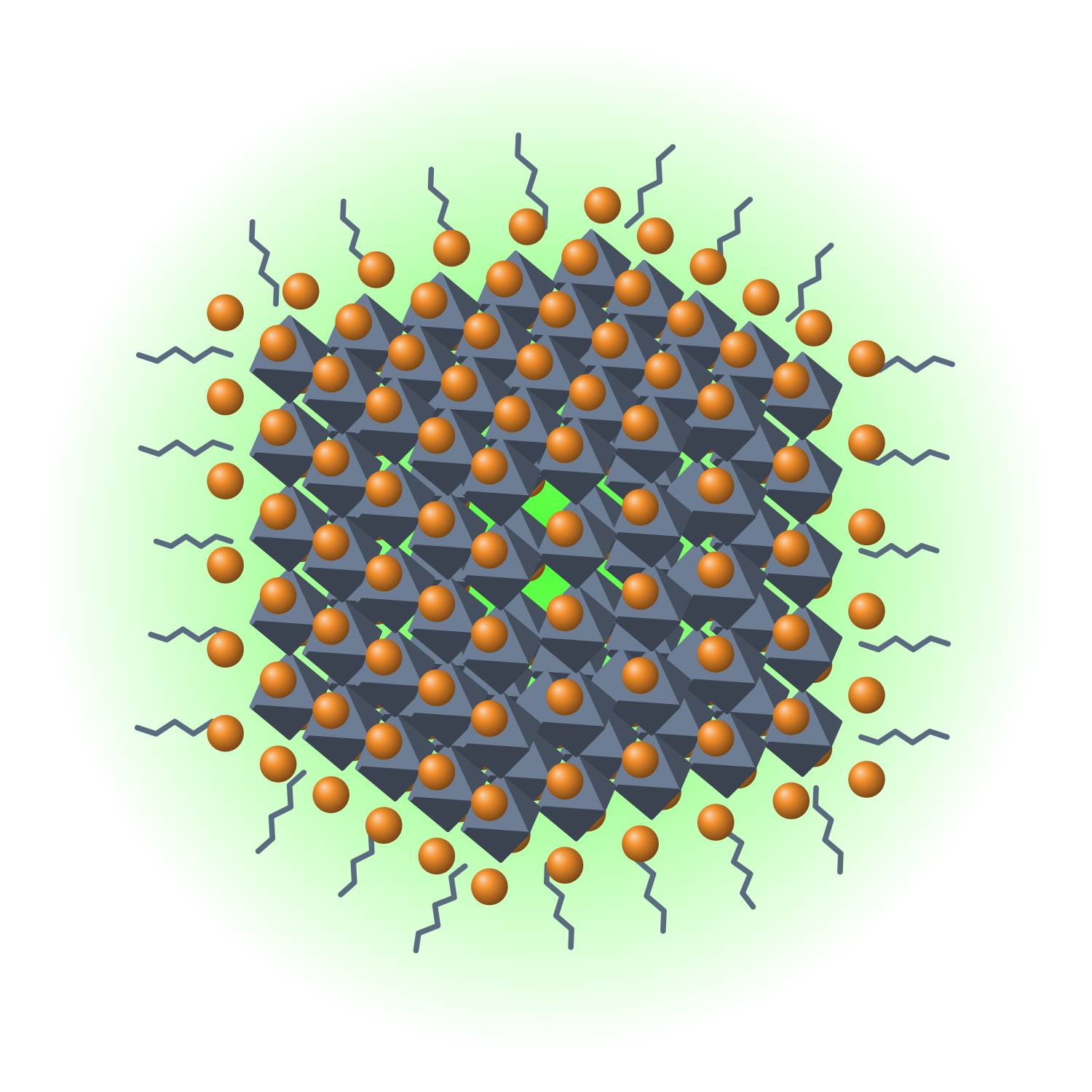
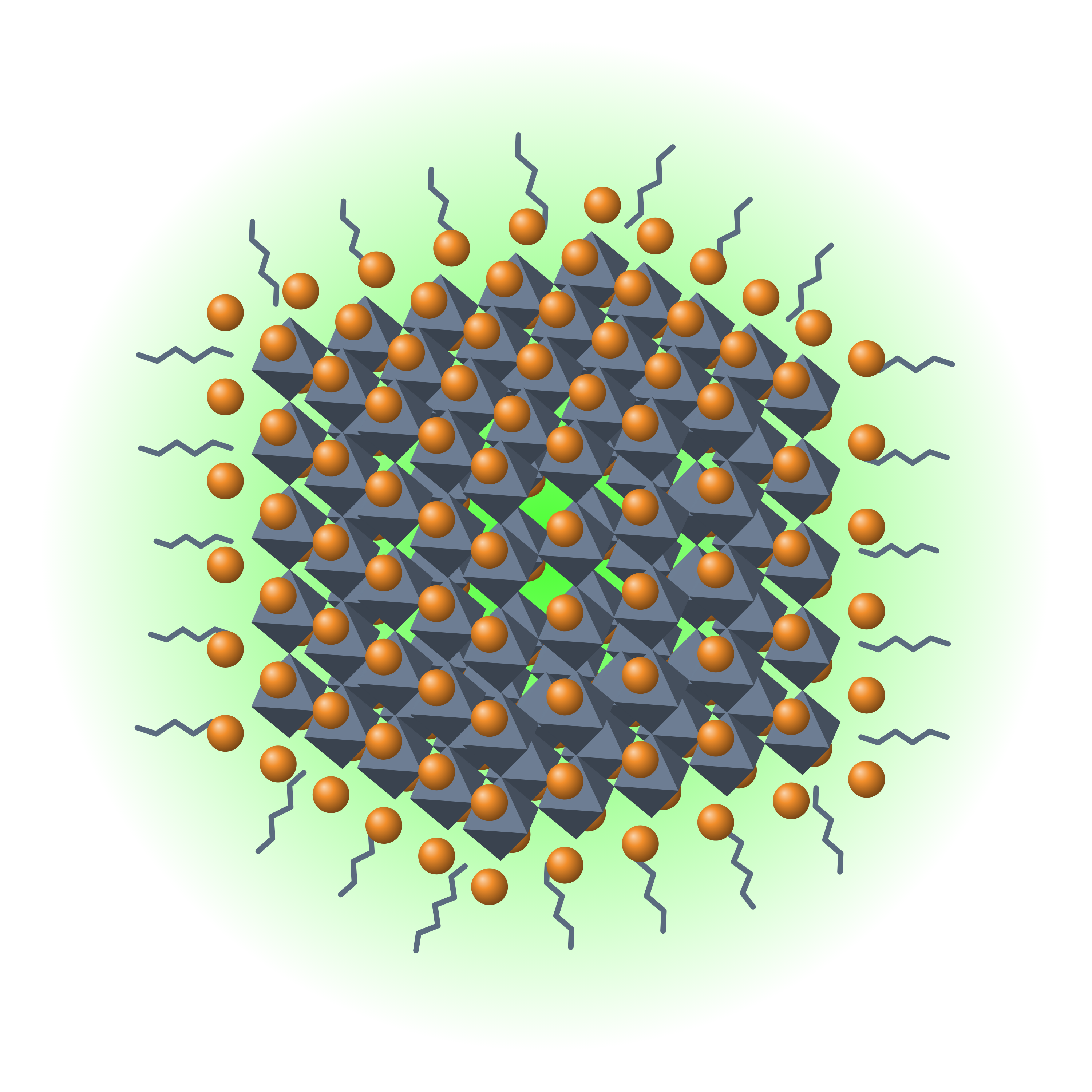
CsPbBr₃ structure drawing (high-resolution SVG)
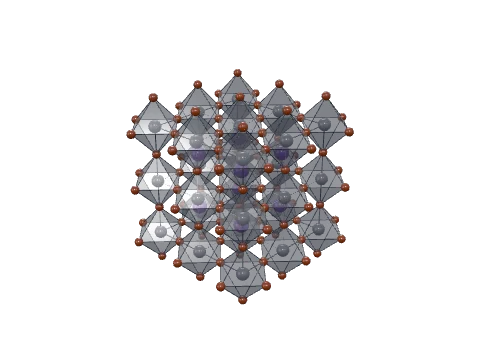
CsPbBr₃ in 3D (interactive)
Loading the 3D model…
CsPbBr₃ structure explained
CsPbBr₃ has the perovskite ABX₃ structure: lead atoms sit at the nodes of a (pseudo)cubic lattice, each surrounded by an octahedron of six bromide ions, the octahedra share corners in three dimensions, and the caesium ions sit in the cavities between them (Bertolotti et al. 2017). For the general picture of the ABX₃ lattice and how it relates to oxides such as SrTiO₃ and BaTiO₃, see the perovskite structure page.
The ideal, untilted framework is the cubic phase, the high-temperature form of all three CsPbX₃ compounds (Protesescu et al. 2015). On cooling, the octahedra tilt: tilts in one plane give a tetragonal structure, tilts about two directions an orthorhombic one (Bertolotti et al. 2017). Bulk CsPbBr₃ goes from cubic to tetragonal at about 130 °C and to orthorhombic at about 88 °C, and the orthorhombic phase is the stable one at room temperature (He et al. 2018). Caesium is slightly too small for the cavity: the Goldschmidt tolerance factors of CsPbX₃ are about 0.85–0.87 (Bertolotti et al. 2017).
In nanocrystals the phase is harder to pin down. The first CsPbX₃ nanocrystals were assigned the cubic structure (Protesescu et al. 2015); total-scattering studies later showed that CsPbBr₃ nanocrystals are orthorhombic at room temperature, made of orthorhombic subdomains joined by twin boundaries that can make the average pattern look tetragonal or cubic (Bertolotti et al. 2017).
How CsPbBr₃ nanocrystals are made: hot injection
- Dissolve the lead halide. PbBr₂ is dried in octadecene, and oleylamine and oleic acid (1:1) are added to dissolve it and later to stabilize the nanocrystals (Protesescu et al. 2015).
- Inject caesium oleate. At 140–200 °C, a solution of caesium oleate is injected quickly. Nucleation and growth are very fast: most growth happens in the first 1–3 s (Protesescu et al. 2015). In a typical CsPbBr₃ run the injection is at 180 °C and the flask is cooled in an ice-water bath 5 s later (Bertolotti et al. 2017).
- Tune size with temperature. Because growth is so fast, the size of the cubes (4–15 nm) is set by the reaction temperature rather than by the growth time (Protesescu et al. 2015).
- Tune colour with the halide. Mixing PbCl₂ and PbBr₂, or PbBr₂ and PbI₂, gives the mixed-halide nanocrystals CsPb(Cl/Br)₃ and CsPb(Br/I)₃; Cl/I mixtures cannot be made because the ionic radii differ too much (Protesescu et al. 2015).
Bulk CsPbBr₃ crystals for detectors are instead grown from the melt by the Bridgman method, from CsBr and PbBr₂ (He et al. 2018).
Bright, narrow, tunable emission
- The whole visible range. By changing the halide (Cl → Br → I) and the size, the band gap and emission of CsPbX₃ nanocrystals cover 410–700 nm (Protesescu et al. 2015); CsPbBr₃ itself is the green emitter (Akkerman et al. 2015).
- Narrow and bright. Emission line widths are 12–42 nm and quantum yields 50–90%, a combination earlier reached only with core–shell chalcogenide quantum dots such as CdSe/CdS (Protesescu et al. 2015).
- Fast. Radiative lifetimes are 1–29 ns, faster for wider-gap nanocrystals (Protesescu et al. 2015).
- Saturated colours. A triangle of red, green and blue CsPbX₃ nanocrystals covers 140% of the NTSC colour standard (Protesescu et al. 2015).
Quantum confinement in CsPbX₃ quantum dots
A nanocrystal behaves as a quantum dot when it is about as small as the exciton Bohr diameter or smaller. Effective-mass estimates give Bohr diameters and exciton binding energies of about 5 nm and 75 meV for CsPbCl₃, 7 nm and 40 meV for CsPbBr₃ and 12 nm and 20 meV for CsPbI₃, so nanocrystals in the 4–15 nm range show size-dependent band gaps: 5–12 nm CsPbBr₃ nanocrystals absorb and emit further to the blue the smaller they are (Protesescu et al. 2015). In practice, though, the colour of CsPbX₃ nanocrystals is set mainly by the halide composition rather than by the size (Bertolotti et al. 2017).
Anion exchange: changing the colour after synthesis
Because the halide ions are mobile, the colour of ready-made nanocrystals can be changed by exchanging the anions. Adding halide sources to a colloid of CsPbX₃ nanocrystals exchanges the halide quickly at low temperature, partially or completely, tuning the emission over 410–700 nm while keeping quantum yields of 20–80% and line widths of 10–40 nm (Nedelcu et al. 2015). Starting from green CsPbBr₃, exchange with chloride or iodide precursors gives emitters across the visible, and adding bromide brings them back (Akkerman et al. 2015).
The exchange also runs between nanocrystals: simply mixing CsPbCl₃ and CsPbBr₃, or CsPbBr₃ and CsPbI₃, nanocrystals gives uniform mixed-halide particles that emit at an intermediate colour (Nedelcu et al. 2015; Akkerman et al. 2015).
Ligands and stability
The nanocrystals are capped by oleylamine and oleic acid, and this ligand shell is highly dynamic: the ligands come off easily, so they are lost during isolation and purification. Adding a small amount of both oleic acid and oleylamine lets the nanocrystals be purified while keeping their optical, colloidal and material integrity, and a high amine content in the shell raises the quantum yield (De Roo et al. 2016).
CsPbX₃ nanocrystals were also put forward as chemically robust in the blue and green, where chalcogenide quantum dots photodegrade, and they can be embedded in PMMA while staying brightly emissive (Protesescu et al. 2015). Of the three halides, CsPbI₃ is the fragile one: its emissive perovskite phase is metastable and turns slowly into a non-emissive yellow phase (Protesescu et al. 2015; Bertolotti et al. 2017). As a solid, CsPbBr₃ contains no organic molecules, which gives it far greater long-term stability than hybrid perovskites (He et al. 2018).
Uses: LEDs, displays and detectors
- Light-emitting diodes. Quantum-dot LEDs with CsPbX₃ nanocrystals as the emitter were reported in 2015 (Song et al. 2015).
- Displays and colour conversion. Narrow emission and a wide colour gamut make CsPbX₃ nanocrystals candidates for display colour conversion; they cover up to 140% of the NTSC standard (Protesescu et al. 2015), and displays are among the proposed uses of CsPbX₃ quantum dots (Song et al. 2015).
- Photodetectors, lasers and solar cells. Proposed applications of the nanocrystals (Song et al. 2015).
- Gamma-ray detectors. Melt-grown CsPbBr₃ single crystals resolve gamma rays at room temperature, with an energy resolution of 3.9% at 122 keV and 3.8% at 662 keV, helped by a hole lifetime of more than 25 μs (He et al. 2018).
How to draw the CsPbBr₃ structure
For a paper, slide or poster, draw CsPbBr₃ as corner-sharing PbBr₆ octahedra with a Cs⁺ ion in each cavity; show the octahedra tilted if you mean the room-temperature orthorhombic phase, or untilted for the cubic high-temperature phase. For nanocrystals, a cube of a few unit cells with ligands on its surface and a coloured glow tells the story at a glance. In the LabCanvas figure editor, the Library has a “Perovskite QD” object (a CsPbX₃ nanocube with corner-sharing octahedra, ligands and an adjustable emission colour) and a “Crystal” object that draws the perovskite lattice in 3D with or without octahedra; both export as high-resolution SVG and can be recoloured and resized.
CsPbCl₃, CsPbBr₃ and CsPbI₃ nanocrystals compared
| Nanocrystal | Exciton Bohr diameter | Exciton binding energy | Emission range | Notes | Source |
|---|---|---|---|---|---|
| CsPbCl₃ | About 5 nm | About 75 meV | Blue end of the 410–700 nm range | Needs trioctylphosphine to dissolve PbCl₂ | Protesescu et al. 2015; Bertolotti et al. 2017 |
| CsPbBr₃ | About 7 nm | About 40 meV | Green | Orthorhombic at room temperature | Protesescu et al. 2015; Bertolotti et al. 2017 |
| CsPbI₃ | About 12 nm | About 20 meV | Red | Emissive phase metastable; slowly turns into a yellow non-emissive phase | Protesescu et al. 2015 |
Related materials
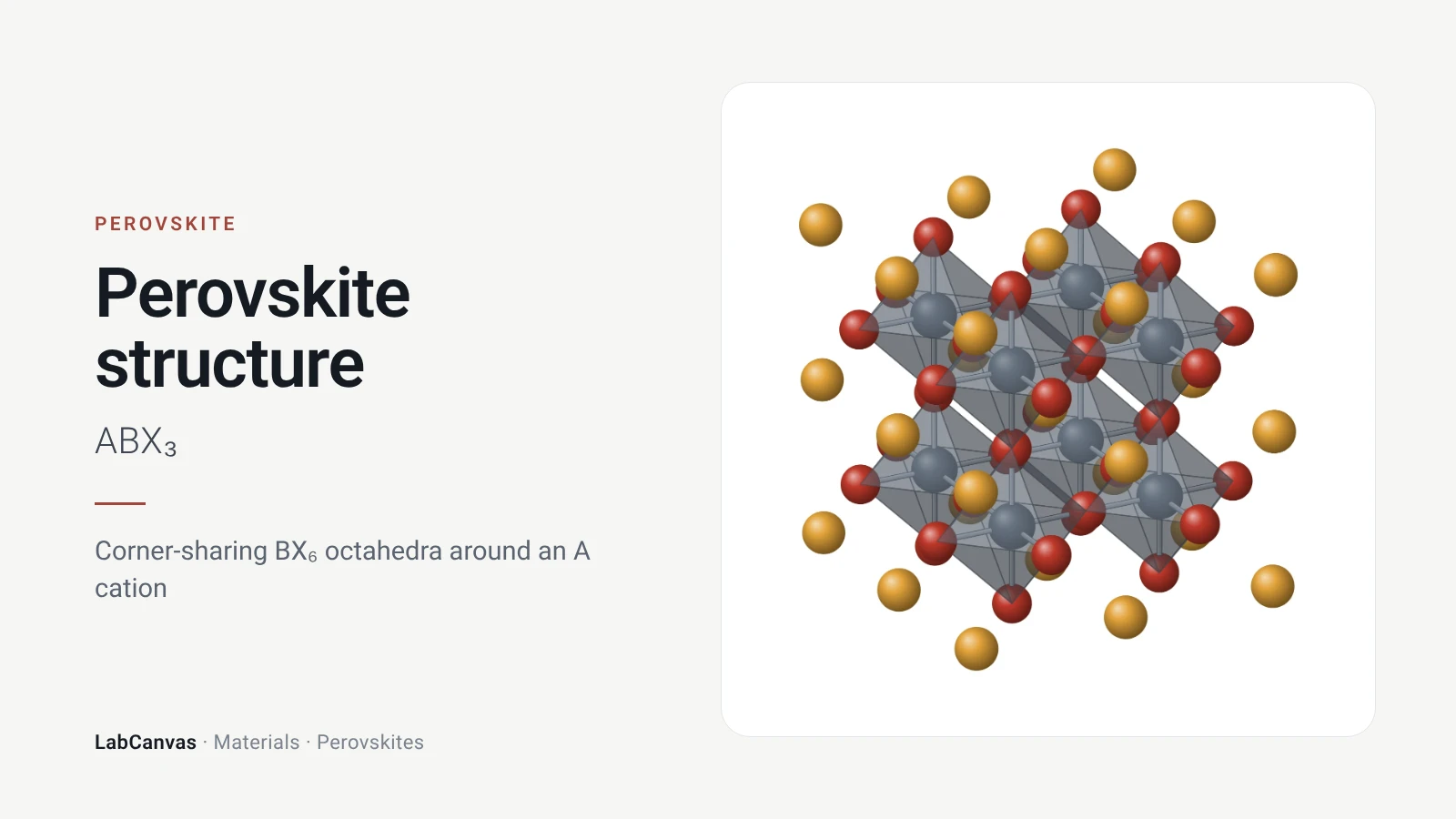
Perovskite structure
The perovskite structure explained: ABX₃ with corner-sharing BX₆ octahedra, the tolerance factor, octahedral tilts, and oxide vs halide perovskites.
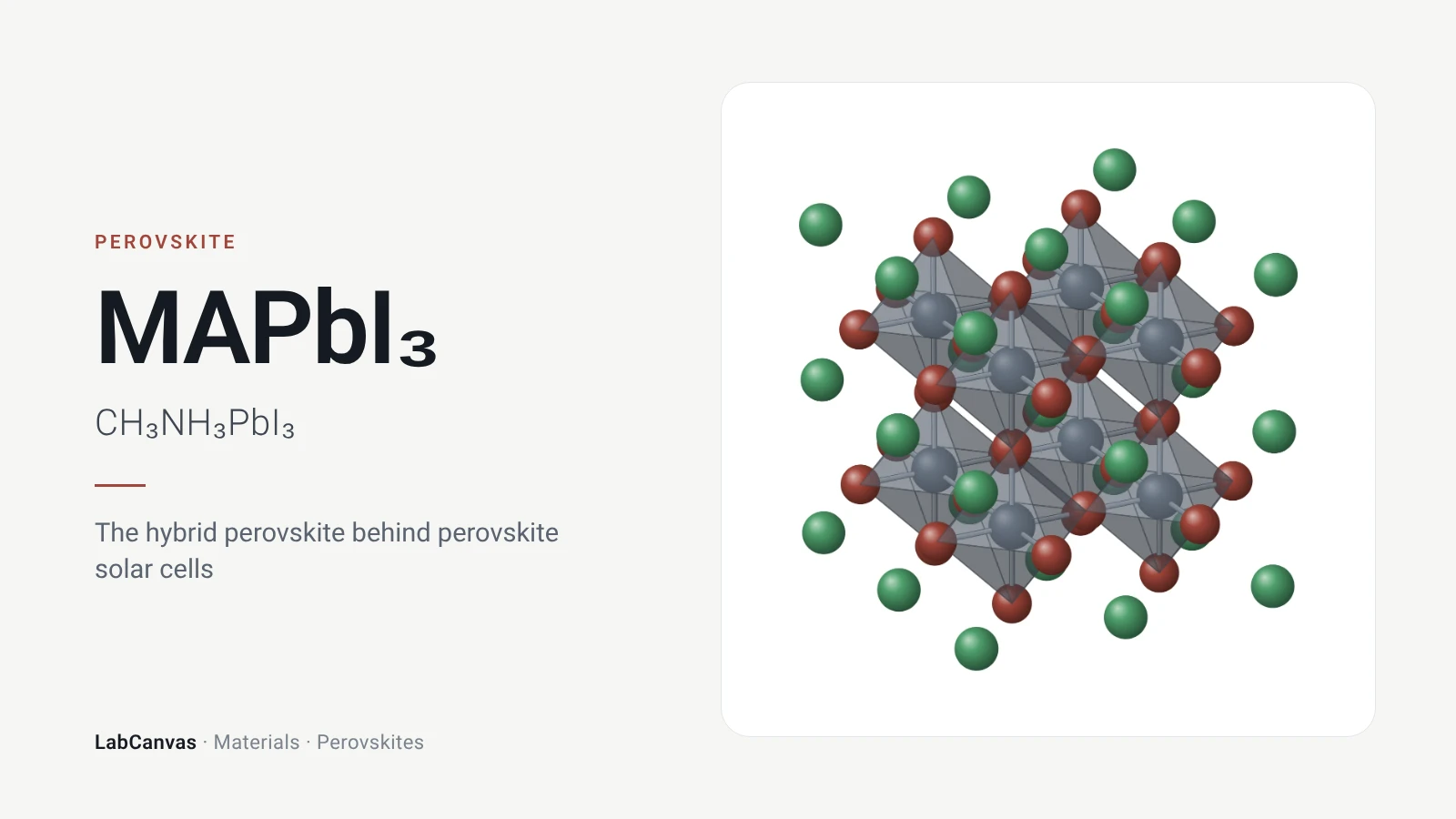
MAPbI₃
MAPbI₃ (CH₃NH₃PbI₃): tetragonal and cubic phases, 1.5 eV band gap, the first perovskite solar cells, long diffusion lengths, instability and lead toxicity.
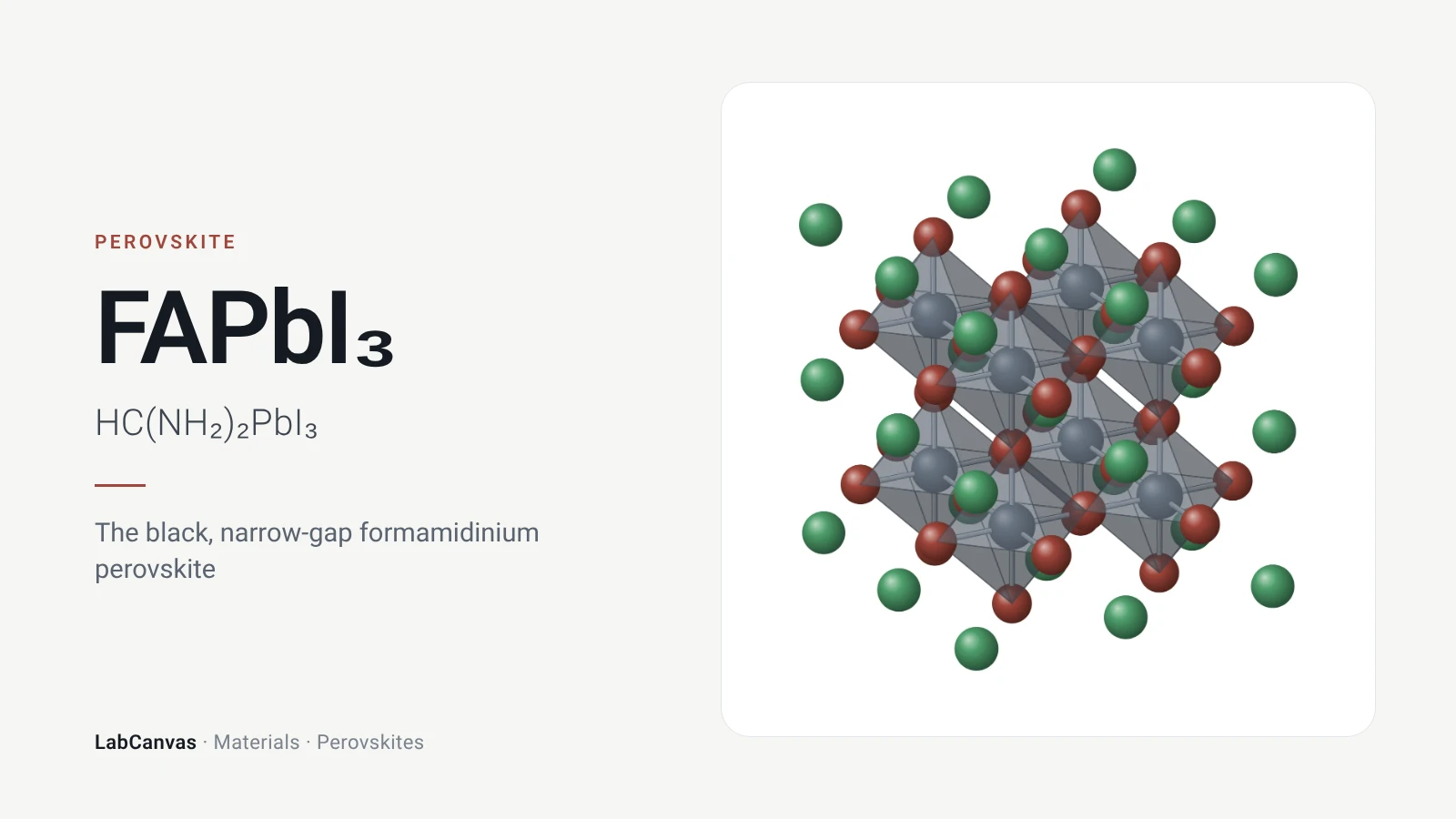
FAPbI₃
FAPbI₃ explained: the black cubic α-phase and yellow hexagonal δ-phase, its 1.48 eV band gap, how mixed cations stabilise it and its role in solar cells.
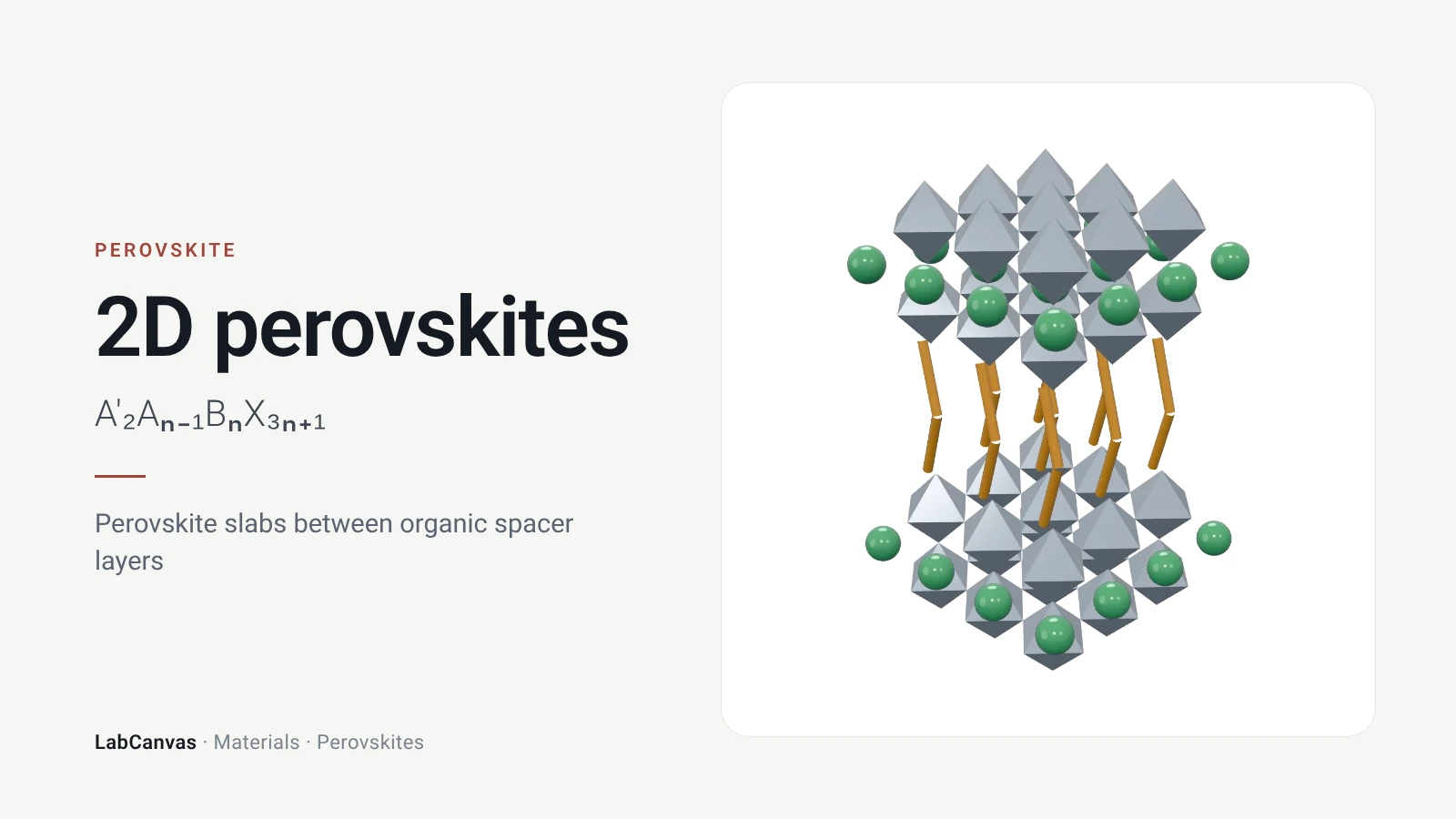
2D perovskites
Layered 2D halide perovskites explained: Ruddlesden–Popper and Dion–Jacobson phases, the n value, quantum wells, spacers, stability, solar cells and LEDs.
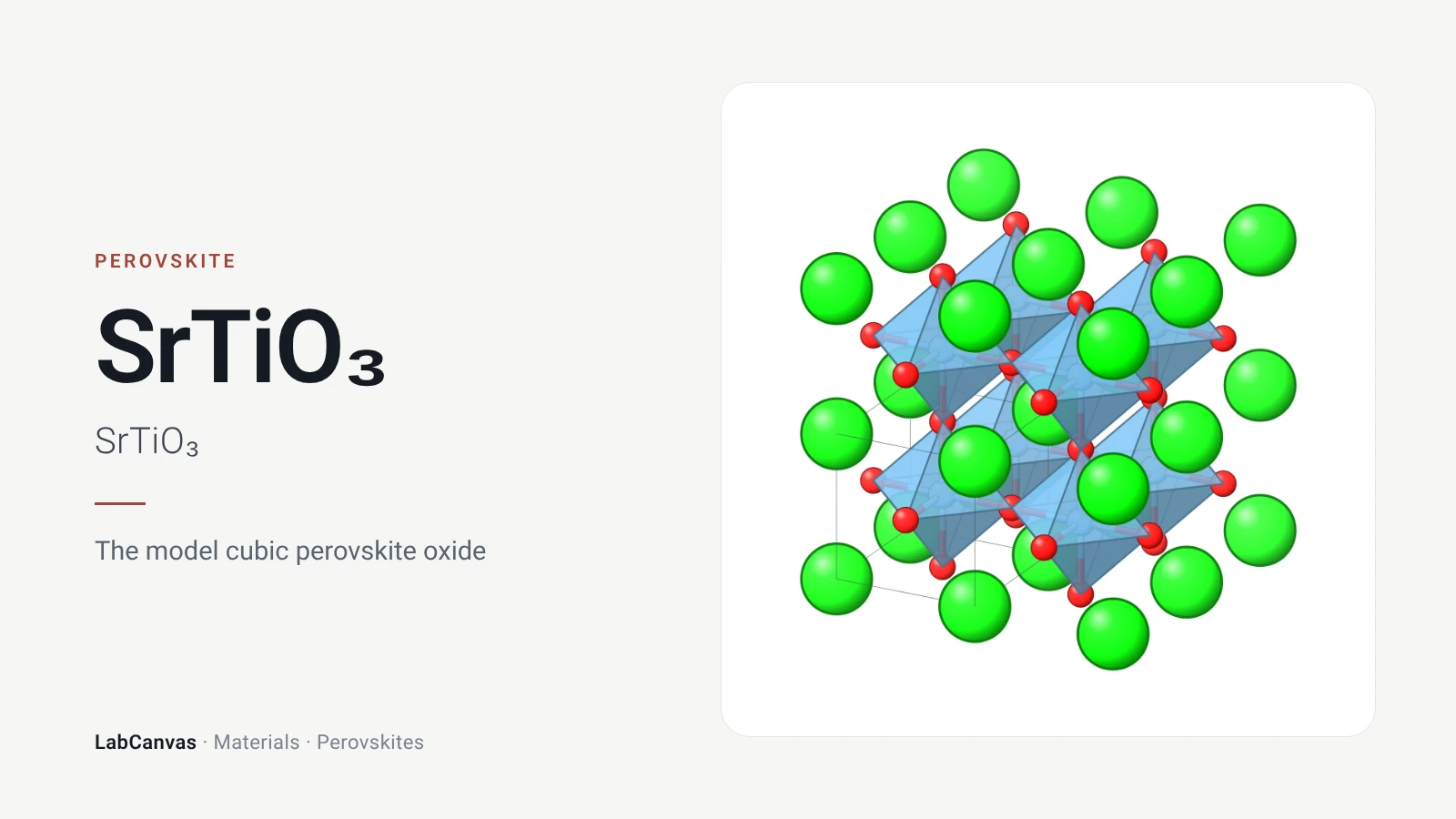
SrTiO₃ (strontium titanate)
SrTiO₃ structure and properties: cubic perovskite (a = 3.905 Å), the 105 K transition, quantum paraelectricity, LaAlO₃/SrTiO₃ interfaces and water splitting.
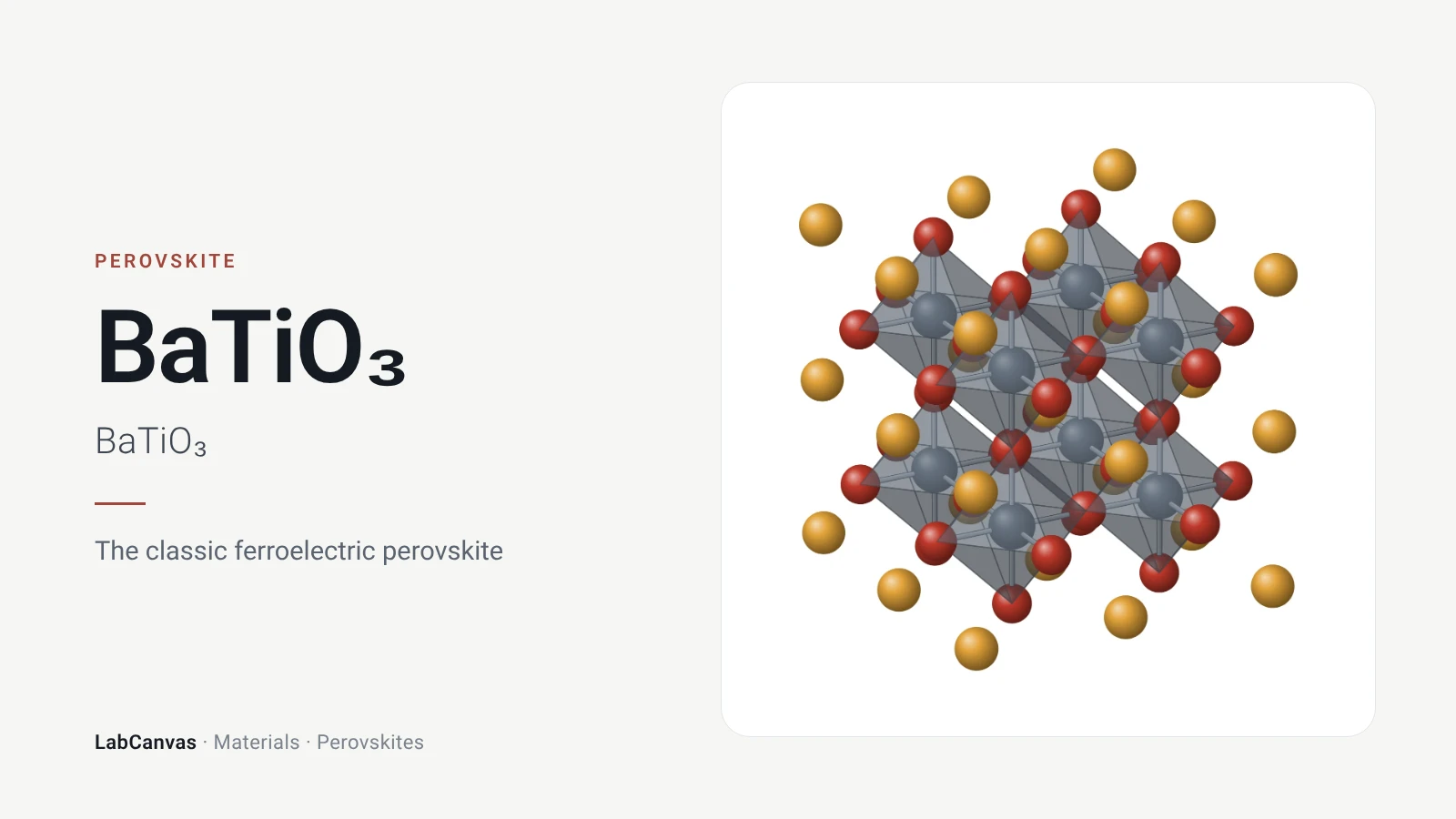
BaTiO₃ (barium titanate)
BaTiO₃, the classic ferroelectric perovskite: its ~120 °C Curie point, tetragonal, orthorhombic and rhombohedral phases, capacitors and piezoelectrics.
More on LabCanvas
- Crystal structure figure software compared: VESTA, Mercury, CrystalMaker, Avogadro and LabCanvas
- Tauc plot band gap calculator: Free tool: optical band gap from UV–vis
- XRD Scherrer crystallite size calculator: Free tool
- Molar mass calculator: Free tool
- Journal figure size guide: Column widths and resolutions for 38 journals
- 3D models gallery: Turn MOFs, COFs, perovskites and more in 3D
Frequently asked questions
What is CsPbBr₃?
Caesium (cesium) lead bromide, an all-inorganic halide perovskite made of corner-sharing PbBr₆ octahedra with Cs⁺ in the cavities. As colloidal nanocrystals it is a bright green emitter (Protesescu et al. 2015; Akkerman et al. 2015); as large single crystals it is used to detect gamma rays (He et al. 2018).
What is the crystal structure of CsPbBr₃?
Bulk CsPbBr₃ is orthorhombic at room temperature. On heating it becomes tetragonal at about 88 °C and cubic at about 130 °C (He et al. 2018). CsPbBr₃ nanocrystals were first described as cubic but are now generally assigned the orthorhombic structure at room temperature (Bertolotti et al. 2017).
What is the band gap of CsPbBr₃?
About 2.3 eV in the bulk; a melt-grown single crystal is transparent below 2.29 eV (He et al. 2018). In small nanocrystals the gap is larger because of quantum confinement (Protesescu et al. 2015).
How are CsPbBr₃ quantum dots made?
By hot injection: caesium oleate is injected into PbBr₂ dissolved in octadecene with oleylamine and oleic acid at 140–200 °C. Growth is over in seconds, and the size (4–15 nm) is set by the temperature (Protesescu et al. 2015).
Why do perovskite quantum dots emit so brightly?
CsPbX₃ nanocrystals reach quantum yields of 50–90% with narrow 12–42 nm emission lines without an epitaxial shell, which suggests that surface dangling bonds do not create severe midgap trap states (Protesescu et al. 2015).
How do you change the emission colour of CsPbX₃ nanocrystals?
Change the halide: during synthesis by mixing lead halides, or afterwards by anion exchange, which tunes the emission over 410–700 nm (Nedelcu et al. 2015; Akkerman et al. 2015). Size also shifts the colour through quantum confinement (Protesescu et al. 2015).
Are CsPbBr₃ nanocrystals stable?
Their ligand shell of oleylamine and oleic acid binds dynamically and is easily stripped during purification; adding a little of both ligands keeps them intact (De Roo et al. 2016). CsPbBr₃ is more stable than CsPbI₃, whose emissive phase slowly converts to a yellow non-emissive one (Protesescu et al. 2015).
What is CsPbBr₃ used for?
Light-emitting diodes (Song et al. 2015), wide-gamut colour conversion (Protesescu et al. 2015) and room-temperature gamma-ray detectors made from melt-grown single crystals (He et al. 2018).
References
- L. Protesescu, S. Yakunin, M. I. Bodnarchuk, F. Krieg, R. Caputo, C. H. Hendon, R. X. Yang, A. Walsh, M. V. Kovalenko. Nanocrystals of cesium lead halide perovskites (CsPbX₃, X = Cl, Br, and I): novel optoelectronic materials showing bright emission with wide color gamut. Nano Lett. 2015, 15, 3692–3696. doi:10.1021/nl5048779
- G. Nedelcu, L. Protesescu, S. Yakunin, M. I. Bodnarchuk, M. J. Grotevent, M. V. Kovalenko. Fast anion-exchange in highly luminescent nanocrystals of cesium lead halide perovskites (CsPbX₃, X = Cl, Br, I). Nano Lett. 2015, 15, 5635–5640. doi:10.1021/acs.nanolett.5b02404
- Q. A. Akkerman, V. D’Innocenzo, S. Accornero, A. Scarpellini, A. Petrozza, M. Prato, L. Manna. Tuning the optical properties of cesium lead halide perovskite nanocrystals by anion exchange reactions. J. Am. Chem. Soc. 2015, 137, 10276–10281. doi:10.1021/jacs.5b05602
- F. Bertolotti et al.. Coherent nanotwins and dynamic disorder in cesium lead halide perovskite nanocrystals. ACS Nano 2017, 11, 3819–3831. doi:10.1021/acsnano.7b00017
- J. De Roo et al.. Highly dynamic ligand binding and light absorption coefficient of cesium lead bromide perovskite nanocrystals. ACS Nano 2016, 10, 2071–2081. doi:10.1021/acsnano.5b06295
- J. Song, J. Li, X. Li, L. Xu, Y. Dong, H. Zeng. Quantum dot light-emitting diodes based on inorganic perovskite cesium lead halides (CsPbX₃). Adv. Mater. 2015, 27, 7162–7167. doi:10.1002/adma.201502567
- Y. He et al.. High spectral resolution of gamma-rays at room temperature by perovskite CsPbBr₃ single crystals. Nat. Commun. 2018, 9, 1609. doi:10.1038/s41467-018-04073-3
Draw CsPbBr₃ for your paper or slides
LabCanvas is a browser workspace for scientific figures: framework clusters, linkers and nets, crystal structures in 2D and 3D, graphs and posters, all editable.
Draw CsPbBr₃ in LabCanvas