MAPbI₃ (methylammonium lead iodide): structure, band gap and solar cells
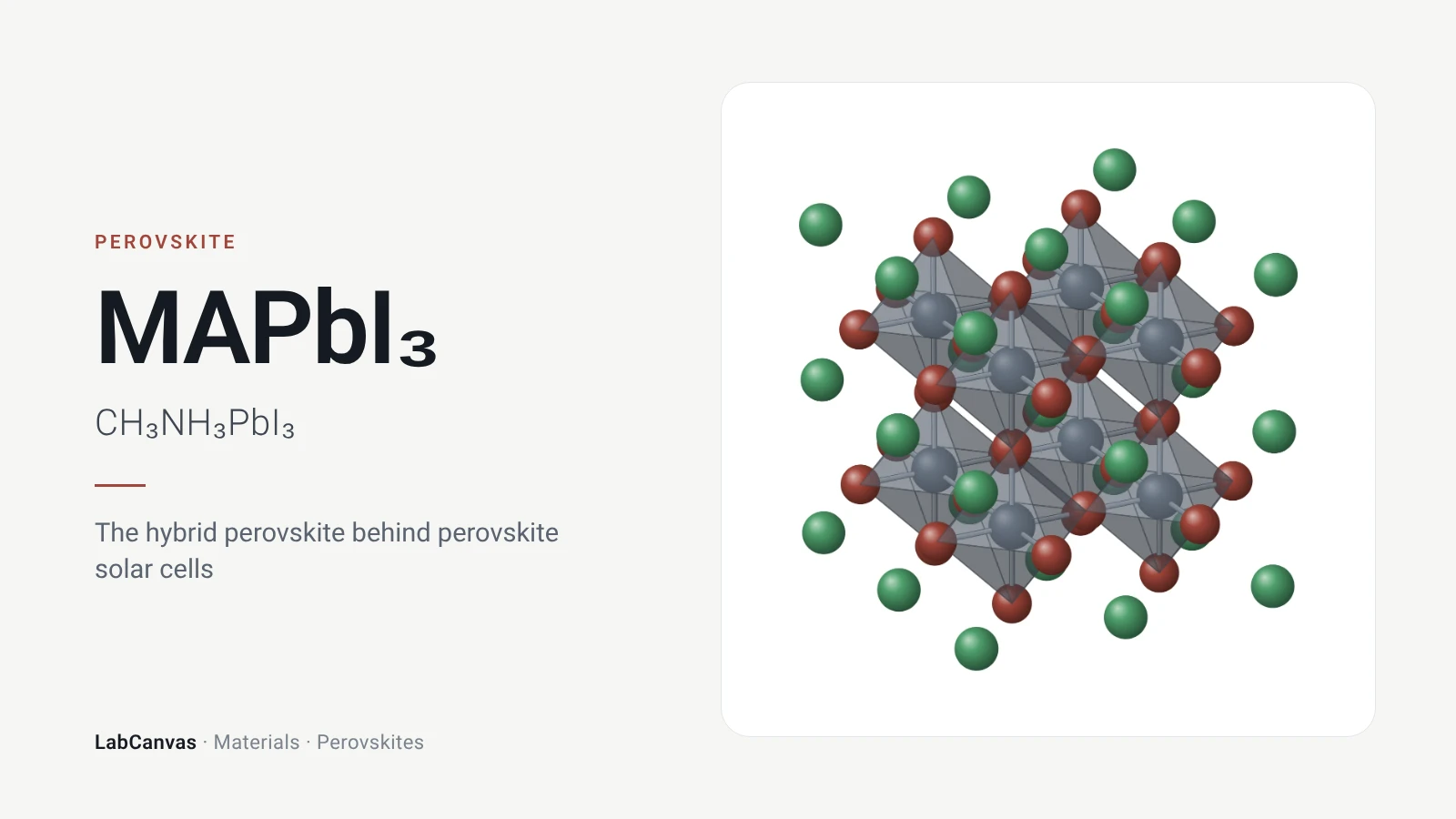
Methylammonium lead iodide (CH₃NH₃PbI₃, MAPbI₃) is a hybrid organic–inorganic halide perovskite: corner-sharing PbI₆ octahedra with methylammonium cations in the cavities. It is tetragonal at room temperature, cubic above about 327–330 K and orthorhombic below about 160–165 K, and absorbs light with a direct band gap of about 1.5 eV (Whitfield et al. 2016; Deretzis & La Magna 2017; Kim et al. 2012). Kojima et al. first used it in a solar cell in 2009, reaching 3.8% efficiency, and solid-state cells followed in 2012 (Kim et al. 2012; Lee et al. 2012).
Contents
MAPbI₃ at a glance
| Formula | CH₃NH₃PbI₃ (Kojima et al. 2009) |
|---|---|
| Molar mass | 619.98 g mol⁻¹ (calculated from the formula) |
| Class | Hybrid organic–inorganic lead halide perovskite (Stranks et al. 2013) |
| Structure at room temperature | Tetragonal, I4/mcm (Ong et al. 2015; Whitfield et al. 2016) |
| High-temperature phase | Cubic, Pm3̄m, above about 327 K (Deretzis & La Magna 2017); near 330 K in neutron and X-ray diffraction (Whitfield et al. 2016) |
| Low-temperature phase | Orthorhombic, Pnma, below about 165 K (Deretzis & La Magna 2017); around 160 K (Whitfield et al. 2016) |
| Band gap | About 1.5 eV, direct (Kim et al. 2012) |
| Light response | Spectral sensitivity up to 800 nm in the first cells (Kojima et al. 2009), about 1.55 eV (calculated from the 800 nm edge) |
| Band edges | Valence band −5.43 eV, conduction band −3.93 eV below vacuum (Kim et al. 2012) |
| Carrier diffusion length, films | About 100 nm, balanced for electrons and holes (Stranks et al. 2013; Xing et al. 2013) |
| Carrier diffusion length, single crystals | More than 175 μm under 1 sun (Dong et al. 2015) |
| First solar cell | 3.8% efficiency, as a sensitizer on mesoporous TiO₂ in a photoelectrochemical cell (Kojima et al. 2009) |
| First solid-state cell | 9.7% efficiency with spiro-MeOTAD as the hole conductor (Kim et al. 2012) |
| Stability | Decomposes rapidly in moist air (Yang et al. 2015); thermally unstable and moisture sensitive (Ciccioli et al. 2019) |
| Key reports | Kojima et al., J. Am. Chem. Soc. 131, 6050 (2009); Kim et al., Sci. Rep. 2, 591 (2012); Lee et al., Science 338, 643 (2012) |
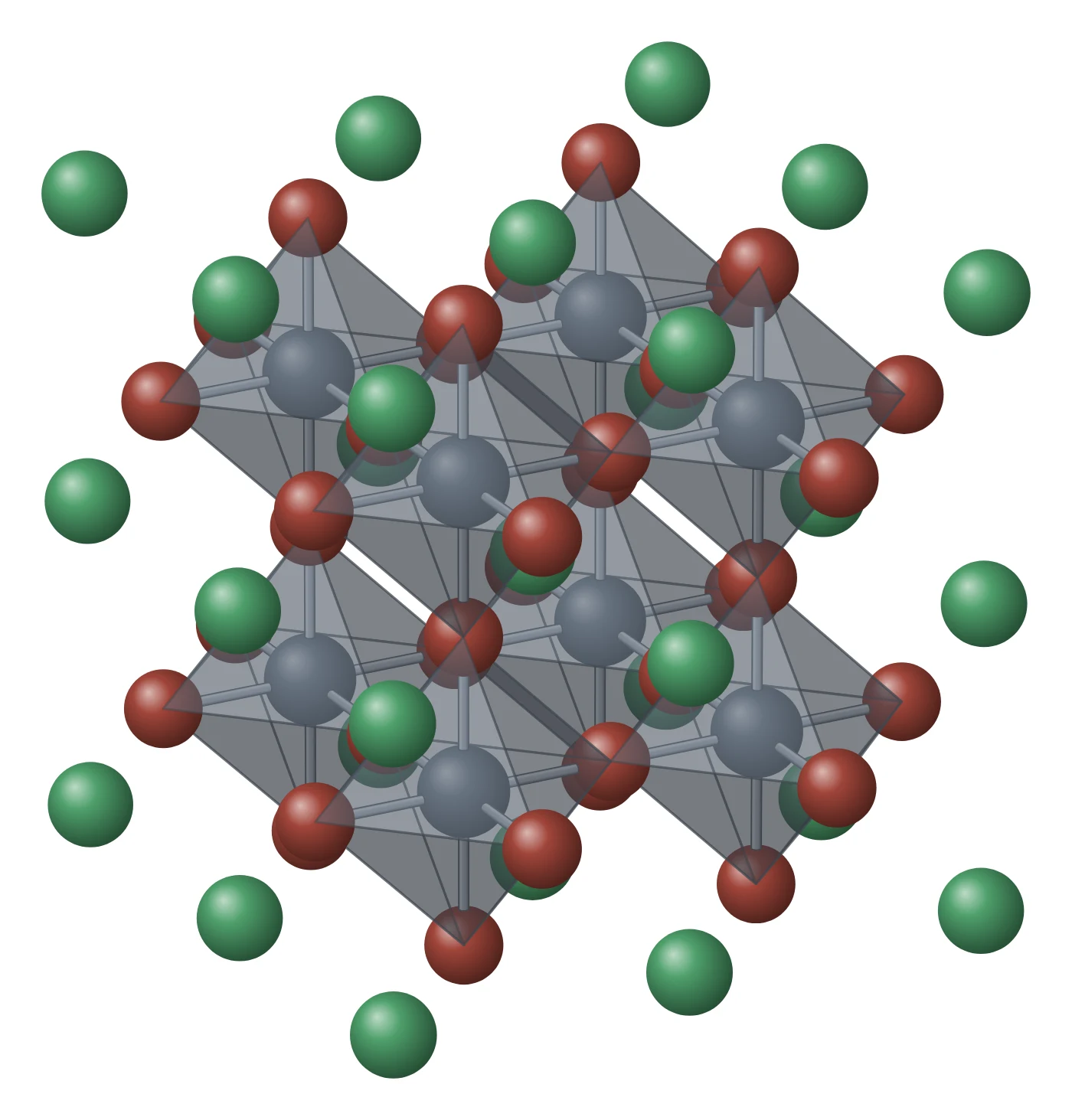
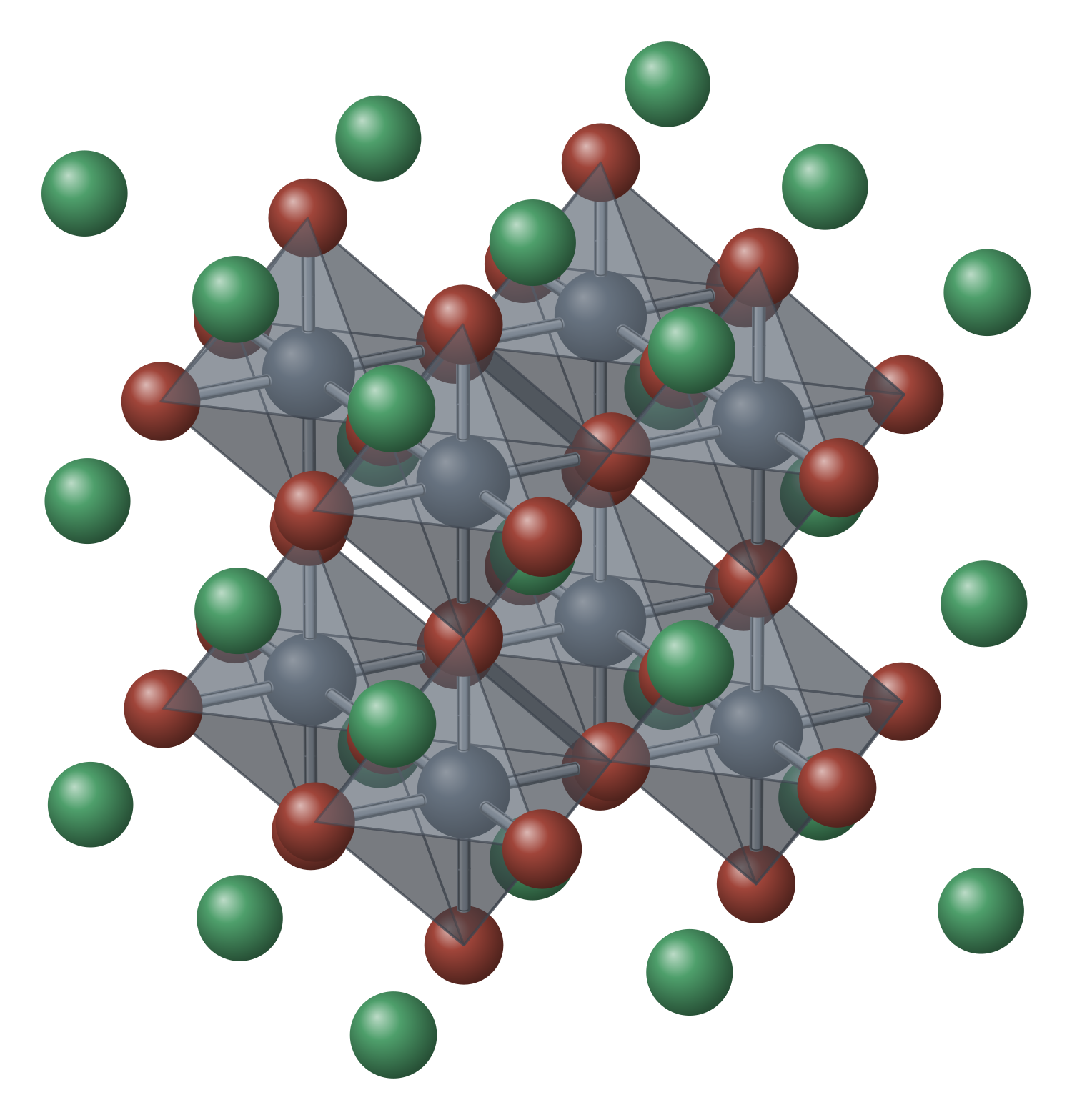
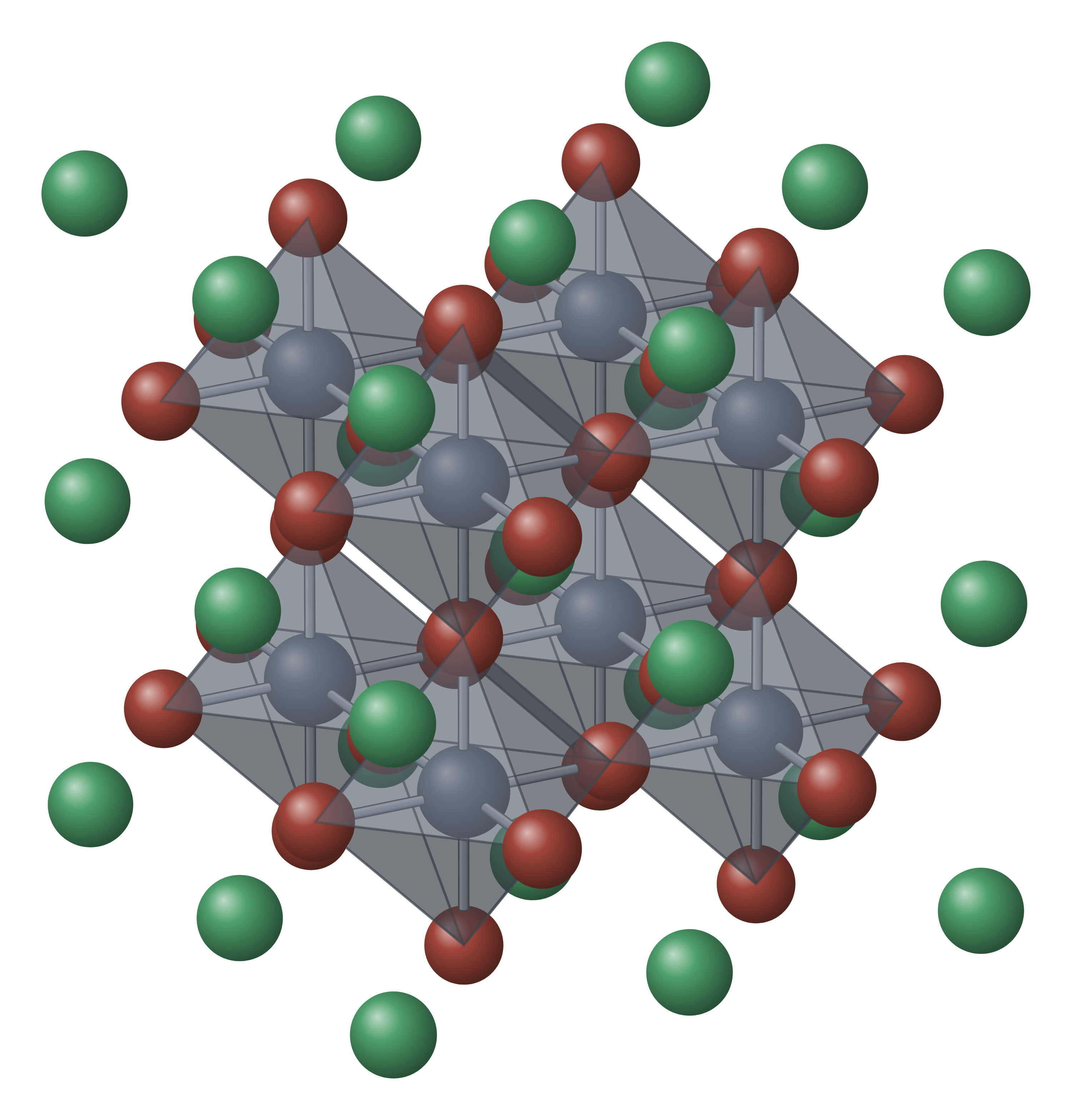
MAPbI₃ structure drawing (high-resolution SVG)
MAPbI₃ in 3D (interactive)
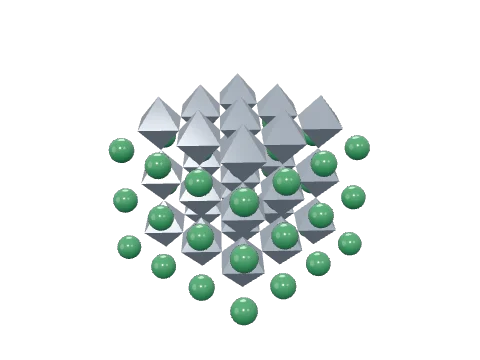
Loading the 3D model…
MAPbI₃ structure explained
MAPbI₃ has the perovskite ABX₃ structure with an organic A cation: lead sits in octahedra of six iodide ions, the PbI₆ octahedra share corners in three dimensions, and the methylammonium cation CH₃NH₃⁺ sits in the cavities between them. The general ABX₃ lattice, and how halide perovskites relate to oxides such as SrTiO₃ and BaTiO₃, is explained on the perovskite structure page.
MAPbI₃ has three phases. Above about 327 K it is cubic; between about 165 K and 327 K, which includes room temperature, it is tetragonal; below about 165 K it is orthorhombic (Deretzis & La Magna 2017). The space groups are Pm3̄m, I4/mcm and Pnma (Ong et al. 2015). Neutron and synchrotron X-ray diffraction place the cubic–tetragonal transition near 330 K and the tetragonal–orthorhombic one around 160 K, both first order, the upper one very close to tricritical (Whitfield et al. 2016).
330 K is about 57 °C (calculated), and Whitfield et al. discuss how these structural transitions affect the performance of MAPbI₃ solar cells (Whitfield et al. 2016). The methylammonium cation tumbles almost isotropically in the cubic phase, orders subtly in the tetragonal phase and is essentially frozen below the tetragonal–orthorhombic transition (Bernard et al. 2018).
The first perovskite solar cells
- 2009: a sensitizer in a liquid cell. Kojima et al. found that nanocrystals of CH₃NH₃PbI₃ and CH₃NH₃PbBr₃ self-assembled on mesoporous TiO₂ sensitize it to visible light. The CH₃NH₃PbI₃ cell responded up to 800 nm and converted sunlight with 3.8% efficiency; the bromide cell gave a high photovoltage of 0.96 V (Kojima et al. 2009). In such liquid-junction cells the perovskite dissolves in the electrolyte, so performance degraded quickly (Kim et al. 2012).
- 2012: solid state. Replacing the liquid electrolyte with the solid hole conductor spiro-MeOTAD, Kim et al. made MAPbI₃ cells on a 0.6 μm mesoporous TiO₂ film with a short-circuit current of 17.6 mA cm⁻², an open-circuit voltage of 0.888 V, a fill factor of 0.62 and an efficiency of 9.7%, and stability greatly improved: unencapsulated cells stored in air were stable for more than 500 h (Kim et al. 2012).
- 2012: an inert scaffold. Lee et al. replaced TiO₂ with mesoporous alumina as an inert scaffold, so electrons are transported through the perovskite itself. Their meso-superstructured cell reached 10.9% and open-circuit voltages above 1.1 V with a 1.55 eV absorber (Lee et al. 2012).
- 2013: about 15%. Sequential deposition, in which PbI₂ in nanoporous TiO₂ is converted to the perovskite by a CH₃NH₃I solution, gave about 15% (Burschka et al. 2013), and a planar cell with a vapour-deposited perovskite absorber gave over 15% without any nanostructure (Liu et al. 2013).
Key properties of MAPbI₃
- A band gap suited to sunlight. The optical gap of MAPbI₃ is about 1.5 eV and direct, with the valence band at −5.43 eV and the conduction band at −3.93 eV, slightly above that of TiO₂ (Kim et al. 2012). Powder MAPbI₃ emits at the band edge around 780 nm (Kim et al. 2012).
- Strong absorption. MAPbI₃ nanocrystals absorb about an order of magnitude more strongly than the dye N719, so submicron-thick films are enough (Kim et al. 2012).
- Long diffusion lengths. Electrons and holes in solution-processed MAPbI₃ films travel about 100 nm before recombining, and the two lengths are balanced (Stranks et al. 2013; Xing et al. 2013); in the mixed halide CH₃NH₃PbI₃₋ₓClₓ they exceed 1 μm (Stranks et al. 2013). Comparable absorption and diffusion lengths explain why such cells are efficient (Xing et al. 2013).
- Few traps in single crystals. MAPbX₃ single crystals have trap densities of 10⁹–10¹⁰ cm⁻³, comparable to the best photovoltaic silicon, and diffusion lengths over 10 μm (Shi et al. 2015); in solution-grown MAPbI₃ crystals diffusion lengths exceed 175 μm under 1 sun and 3 mm under weak light (Dong et al. 2015).
Device architectures
- Mesoscopic, sensitized. MAPbI₃ on mesoporous TiO₂, first with a liquid electrolyte (Kojima et al. 2009), then with a solid hole conductor (Kim et al. 2012).
- Meso-superstructured. The perovskite coats an inert alumina scaffold and carries the electrons itself (Lee et al. 2012).
- Sequential (two-step) deposition. PbI₂ is deposited first and converted into MAPbI₃ by CH₃NH₃I, giving better control of the morphology and reproducibility (Burschka et al. 2013).
- Planar heterojunction. A flat perovskite layer between two charge-selective contacts, no nanostructure needed (Liu et al. 2013; Stranks et al. 2013).
- Radiation sensing. Thick MAPbI₃ single crystals also convert gamma rays to electricity (the gammavoltaic effect), with 3.9% efficiency from a caesium-137 source (Dong et al. 2015).
Instability: moisture, heat and PbI₂
MAPbI₃ decomposes rapidly in moist air. Under controlled humidity, the first step of the degradation is a hydrated intermediate containing isolated PbI₆⁴⁻ octahedra, and the choice of hole transport layer strongly affects how long the film underneath survives (Yang et al. 2015). Thermal instability and moisture sensitivity are the main obstacles to commercial use (Ciccioli et al. 2019). Heating MAPbI₃ under high vacuum in an electron microscope precipitates PbI₂; in single-crystal nanorods the decomposition reversed on cooling and was fully reversible up to 100 °C (Jo et al. 2020).
Lead toxicity
The most efficient perovskite solar cells all contain lead, which raises serious environmental concerns for large-scale use. Tin is the obvious substitute, but tin perovskites are unstable, and in tests on zebrafish a tin perovskite proved harmful too, through acidification, so tin may not be the ideal replacement for lead (Babayigit et al. 2016).
How to draw the MAPbI₃ structure
For a paper, slide or poster, draw MAPbI₃ as corner-sharing PbI₆ octahedra with a CH₃NH₃⁺ cation in each cavity; tilt the octahedra for the tetragonal room-temperature phase, or keep them straight for the cubic phase. For a device figure, show the layer stack: glass and transparent electrode, an electron transport layer such as TiO₂, the perovskite, a hole conductor such as spiro-MeOTAD and a gold contact. In the LabCanvas figure editor, the Library’s “Crystal” object draws the perovskite lattice in 3D with or without octahedra, and the device objects include perovskite solar cell stacks; all export as high-resolution SVG and can be recoloured and resized.
Early MAPbI₃ and related perovskite solar cells
| Year | Cell | Efficiency | What changed | Report |
|---|---|---|---|---|
| 2009 | CH₃NH₃PbI₃ on mesoporous TiO₂, liquid electrolyte | 3.8% | Perovskite used as a light absorber for the first time | Kojima et al., J. Am. Chem. Soc. 2009 |
| 2012 | MAPbI₃ on mesoporous TiO₂, spiro-MeOTAD | 9.7% | Solid hole conductor; much better stability | Kim et al., Sci. Rep. 2012 |
| 2012 | Perovskite on mesoporous alumina | 10.9% | Inert scaffold; the perovskite carries the electrons | Lee et al., Science 2012 |
| 2013 | Sequentially deposited perovskite in TiO₂ | About 15% | Two-step deposition from PbI₂ | Burschka et al., Nature 2013 |
| 2013 | Vapour-deposited planar perovskite | Over 15% | No nanostructure needed | Liu et al., Nature 2013 |
Related materials
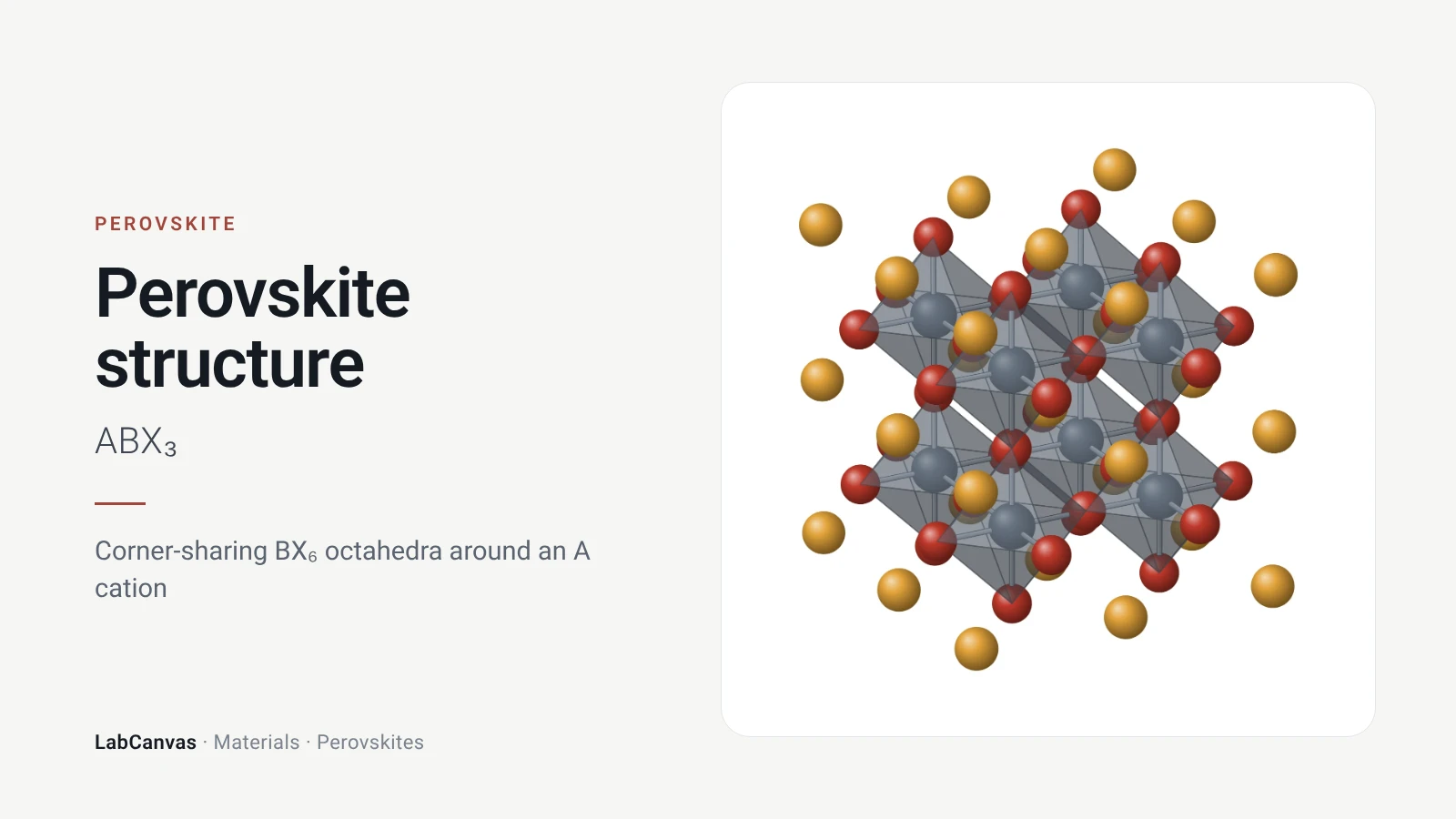
Perovskite structure
The perovskite structure explained: ABX₃ with corner-sharing BX₆ octahedra, the tolerance factor, octahedral tilts, and oxide vs halide perovskites.
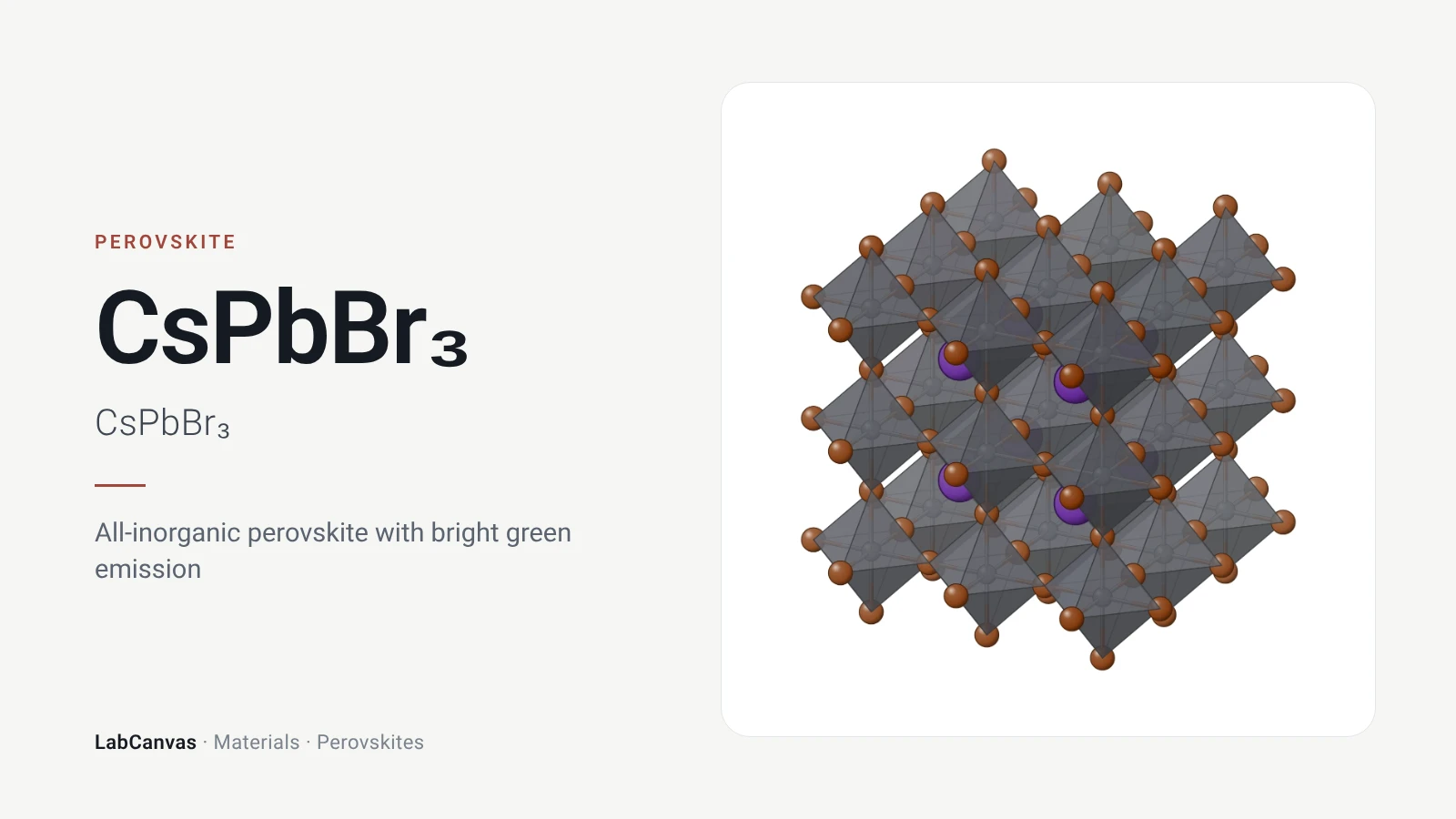
CsPbBr₃
CsPbBr₃ and CsPbX₃ perovskite quantum dots: orthorhombic structure, hot-injection synthesis, emission tunable over 410–700 nm, anion exchange and uses.
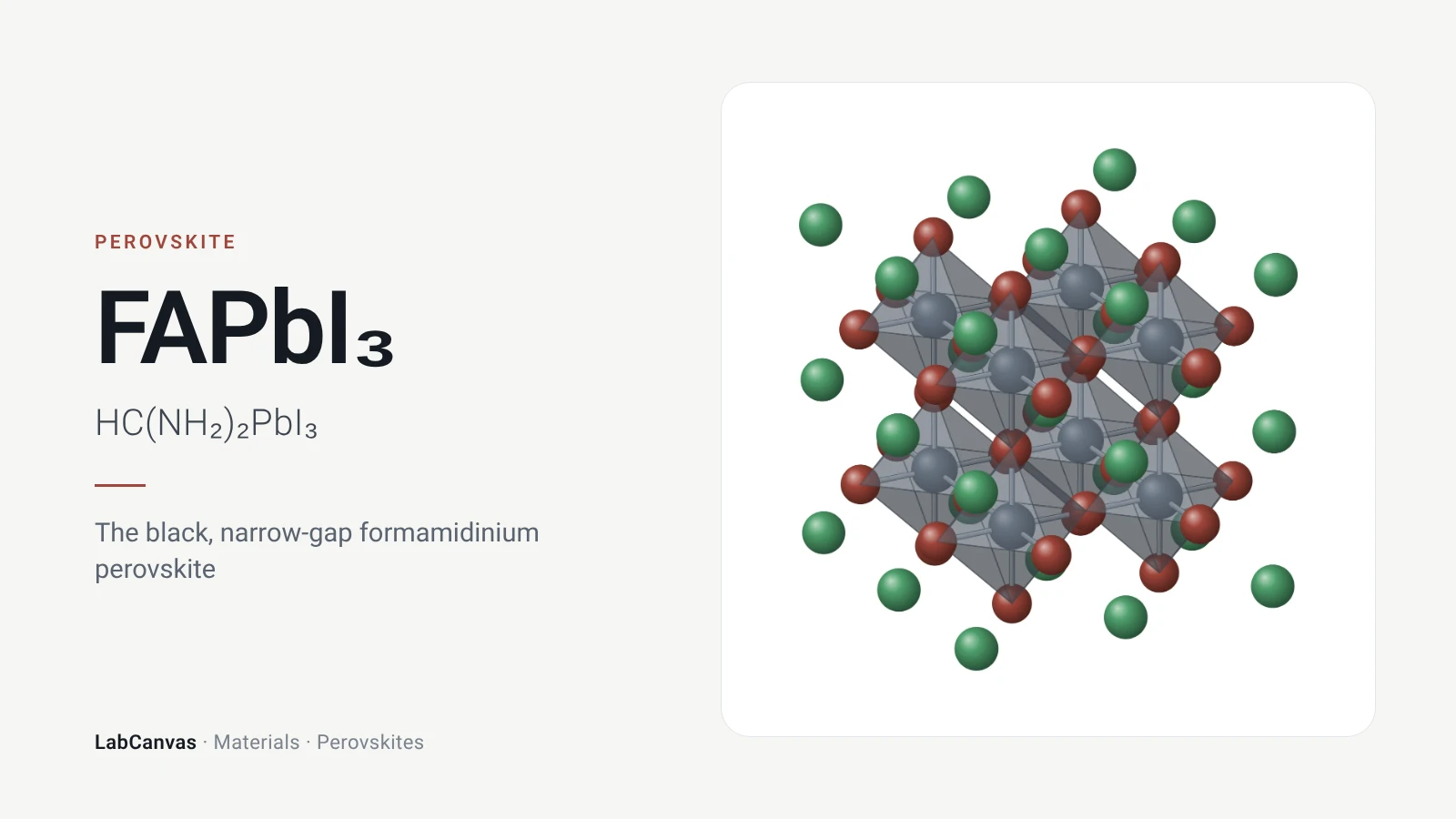
FAPbI₃
FAPbI₃ explained: the black cubic α-phase and yellow hexagonal δ-phase, its 1.48 eV band gap, how mixed cations stabilise it and its role in solar cells.
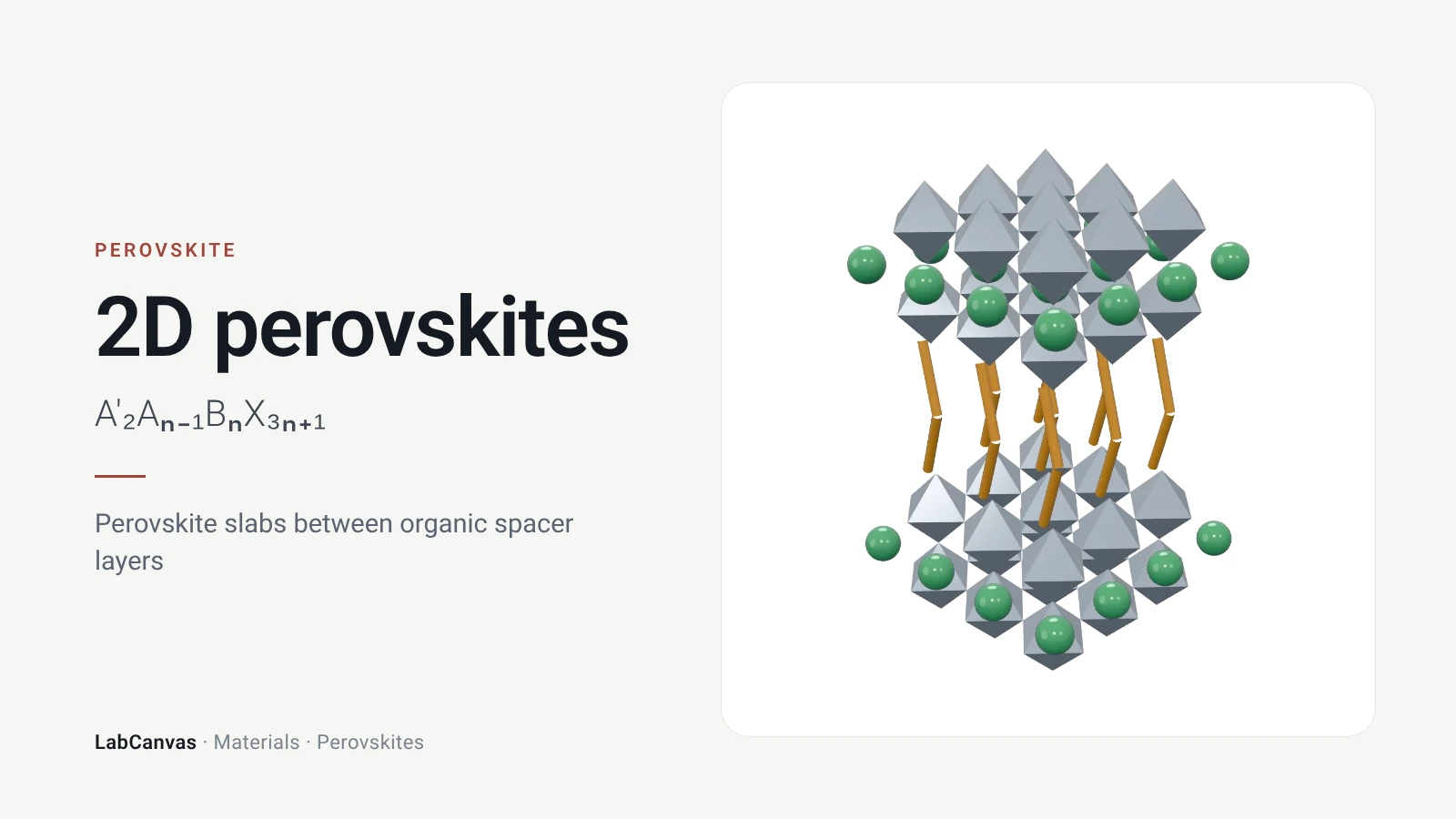
2D perovskites
Layered 2D halide perovskites explained: Ruddlesden–Popper and Dion–Jacobson phases, the n value, quantum wells, spacers, stability, solar cells and LEDs.
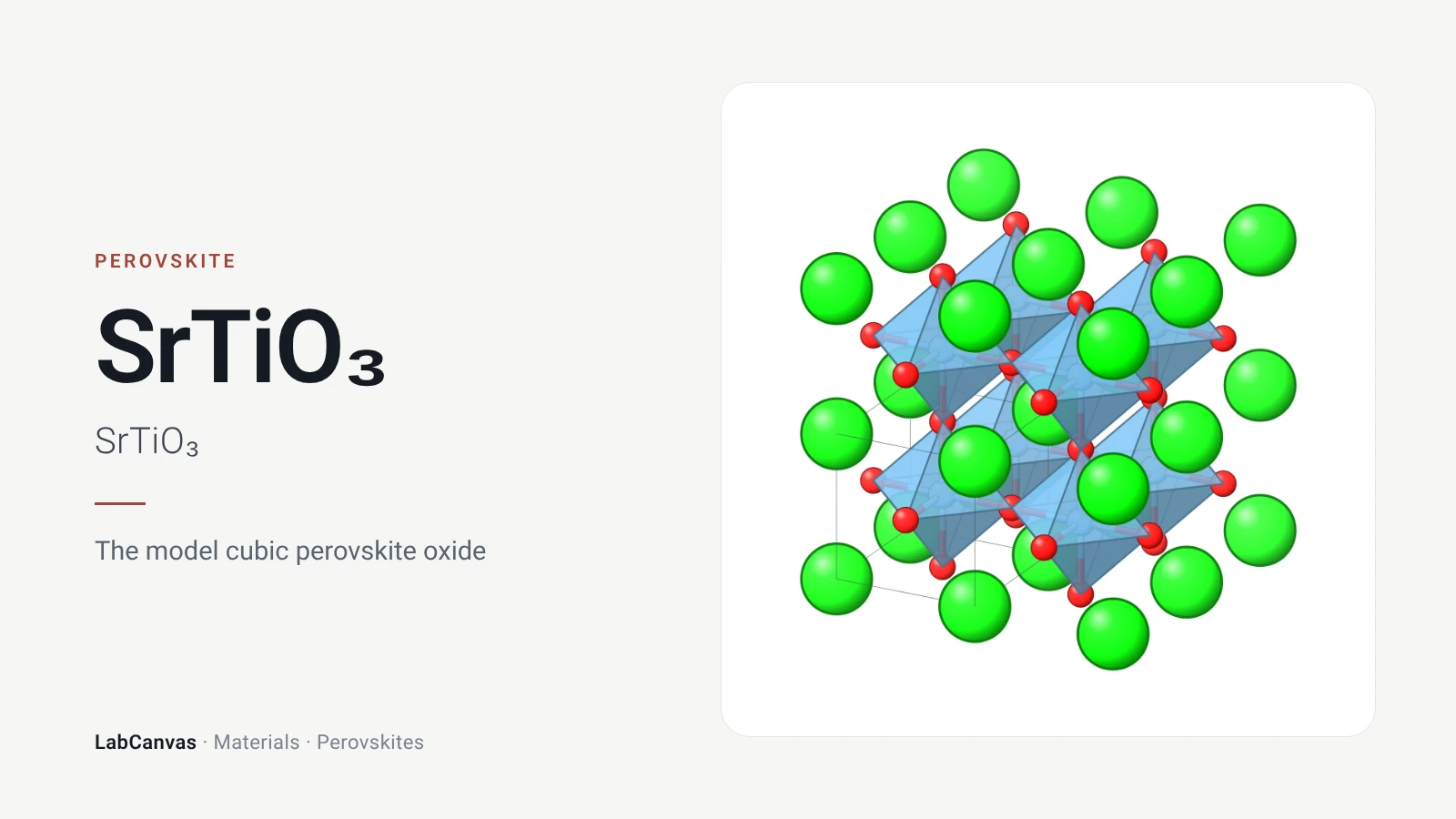
SrTiO₃ (strontium titanate)
SrTiO₃ structure and properties: cubic perovskite (a = 3.905 Å), the 105 K transition, quantum paraelectricity, LaAlO₃/SrTiO₃ interfaces and water splitting.
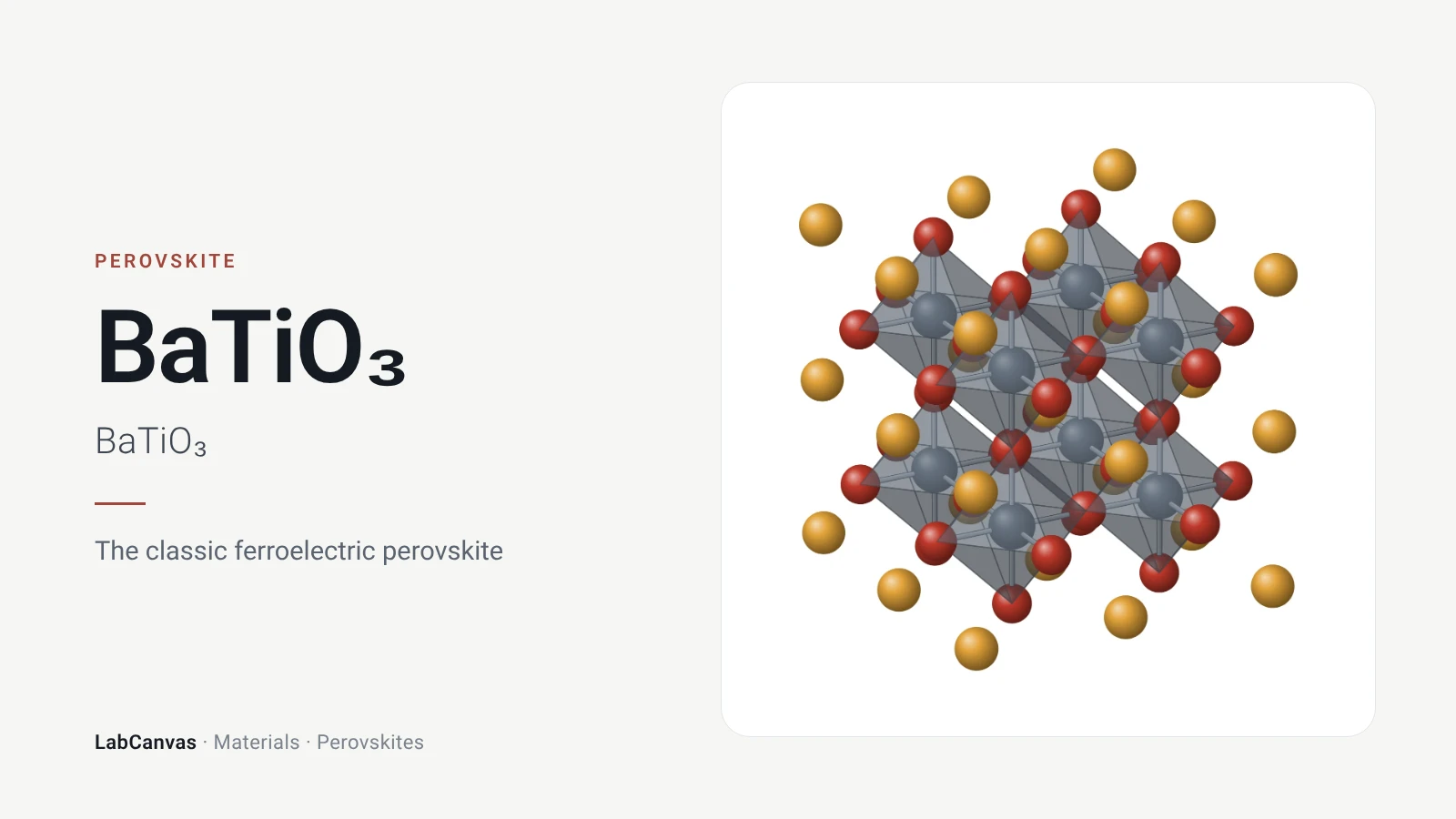
BaTiO₃ (barium titanate)
BaTiO₃, the classic ferroelectric perovskite: its ~120 °C Curie point, tetragonal, orthorhombic and rhombohedral phases, capacitors and piezoelectrics.
More on LabCanvas
- Crystal structure figure software compared: VESTA, Mercury, CrystalMaker, Avogadro and LabCanvas
- Tauc plot band gap calculator: Free tool: optical band gap from UV–vis
- XRD Scherrer crystallite size calculator: Free tool
- Molar mass calculator: Free tool
- Journal figure size guide: Column widths and resolutions for 38 journals
- 3D models gallery: Turn MOFs, COFs, perovskites and more in 3D
Frequently asked questions
What is MAPbI₃?
Methylammonium lead iodide, CH₃NH₃PbI₃: a hybrid organic–inorganic perovskite of corner-sharing PbI₆ octahedra with methylammonium cations in the cavities. It is the absorber of the first perovskite solar cells (Kojima et al. 2009; Kim et al. 2012).
What is the crystal structure of MAPbI₃ at room temperature?
Tetragonal (I4/mcm). It turns cubic (Pm3̄m) above about 327–330 K and orthorhombic (Pnma) below about 160–165 K (Ong et al. 2015; Whitfield et al. 2016; Deretzis & La Magna 2017).
What is the band gap of MAPbI₃?
About 1.5 eV, and direct (Kim et al. 2012). The first MAPbI₃ cells responded to light up to 800 nm (Kojima et al. 2009), which corresponds to about 1.55 eV (calculated).
Who made the first perovskite solar cell?
Kojima, Teshima, Shirai and Miyasaka, in 2009: CH₃NH₃PbI₃ nanocrystals on mesoporous TiO₂ in a photoelectrochemical cell gave 3.8% efficiency (Kojima et al. 2009). Solid-state cells followed in 2012 (Kim et al. 2012; Lee et al. 2012).
What is the diffusion length of MAPbI₃?
About 100 nm for both electrons and holes in solution-processed films (Stranks et al. 2013; Xing et al. 2013), and more than 175 μm in solution-grown single crystals under 1 sun (Dong et al. 2015).
Why does MAPbI₃ degrade?
It decomposes rapidly in moist air, starting with a hydrated phase of isolated PbI₆⁴⁻ octahedra (Yang et al. 2015), and it is thermally unstable (Ciccioli et al. 2019); heating it in vacuum precipitates PbI₂ (Jo et al. 2020).
Is MAPbI₃ toxic?
It contains lead, which raises environmental concerns for large-scale use; tin substitutes are not necessarily safer, as a zebrafish study found (Babayigit et al. 2016).
What is the difference between MAPbI₃ and CsPbBr₃?
MAPbI₃ has an organic A cation and a band gap of about 1.5 eV, suited to absorbing sunlight (Kim et al. 2012); CsPbBr₃ is all-inorganic, has a gap of about 2.3 eV and, lacking organic molecules, is far more stable (He et al. 2018).
References
- A. Kojima, K. Teshima, Y. Shirai, T. Miyasaka. Organometal halide perovskites as visible-light sensitizers for photovoltaic cells. J. Am. Chem. Soc. 2009, 131, 6050–6051. doi:10.1021/ja809598r
- H.-S. Kim et al.. Lead iodide perovskite sensitized all-solid-state submicron thin film mesoscopic solar cell with efficiency exceeding 9%. Sci. Rep. 2012, 2, 591. doi:10.1038/srep00591
- M. M. Lee, J. Teuscher, T. Miyasaka, T. N. Murakami, H. J. Snaith. Efficient hybrid solar cells based on meso-superstructured organometal halide perovskites. Science 2012, 338, 643–647. doi:10.1126/science.1228604
- S. D. Stranks et al.. Electron-hole diffusion lengths exceeding 1 micrometer in an organometal trihalide perovskite absorber. Science 2013, 342, 341–344. doi:10.1126/science.1243982
- G. Xing et al.. Long-range balanced electron- and hole-transport lengths in organic-inorganic CH₃NH₃PbI₃. Science 2013, 342, 344–347. doi:10.1126/science.1243167
- J. Burschka et al.. Sequential deposition as a route to high-performance perovskite-sensitized solar cells. Nature 2013, 499, 316–319. doi:10.1038/nature12340
- M. Liu, M. B. Johnston, H. J. Snaith. Efficient planar heterojunction perovskite solar cells by vapour deposition. Nature 2013, 501, 395–398. doi:10.1038/nature12509
- D. Shi et al.. Low trap-state density and long carrier diffusion in organolead trihalide perovskite single crystals. Science 2015, 347, 519–522. doi:10.1126/science.aaa2725
- Q. Dong et al.. Electron-hole diffusion lengths > 175 μm in solution-grown CH₃NH₃PbI₃ single crystals. Science 2015, 347, 967–970. doi:10.1126/science.aaa5760
- P. S. Whitfield et al.. Structures, phase transitions and tricritical behavior of the hybrid perovskite methyl ammonium lead iodide. Sci. Rep. 2016, 6, 35685. doi:10.1038/srep35685
- I. Deretzis, A. La Magna. Exploring the orthorhombic–tetragonal phase transition in CH₃NH₃PbI₃: the role of atom kinetics. Nanoscale 2017, 9, 5896–5903. doi:10.1039/c7nr01818e
- K. P. Ong, T. W. Goh, Q. Xu, A. Huan. Structural evolution in methylammonium lead iodide CH₃NH₃PbI₃. J. Phys. Chem. A 2015, 119, 11033–11038. doi:10.1021/acs.jpca.5b09884
- G. M. Bernard et al.. Methylammonium cation dynamics in methylammonium lead halide perovskites: a solid-state NMR perspective. J. Phys. Chem. A 2018, 122, 1560–1573. doi:10.1021/acs.jpca.7b11558
- J. Yang, B. D. Siempelkamp, D. Liu, T. L. Kelly. Investigation of CH₃NH₃PbI₃ degradation rates and mechanisms in controlled humidity environments using in situ techniques. ACS Nano 2015, 9, 1955–1963. doi:10.1021/nn506864k
- A. Ciccioli et al.. Stabilizing lead halide perovskites with quaternary ammonium cations: the case of tetramethylammonium lead iodide. Phys. Chem. Chem. Phys. 2019, 21, 24768–24777. doi:10.1039/c9cp04051j
- Y.-R. Jo, J. Tersoff, M.-W. Kim, J. Kim, B.-J. Kim. Reversible decomposition of single-crystal methylammonium lead iodide perovskite nanorods. ACS Cent. Sci. 2020, 6, 959–968. doi:10.1021/acscentsci.0c00385
- A. Babayigit et al.. Assessing the toxicity of Pb- and Sn-based perovskite solar cells in model organism Danio rerio. Sci. Rep. 2016, 6, 18721. doi:10.1038/srep18721
- Y. He et al.. High spectral resolution of gamma-rays at room temperature by perovskite CsPbBr₃ single crystals. Nat. Commun. 2018, 9, 1609. doi:10.1038/s41467-018-04073-3
Draw MAPbI₃ for your paper or slides
LabCanvas is a browser workspace for scientific figures: framework clusters, linkers and nets, crystal structures in 2D and 3D, graphs and posters, all editable.
Draw MAPbI₃ in LabCanvas