MIL-101(Cr): structure, pore size, synthesis and uses
MIL-101(Cr) is a chromium terephthalate metal–organic framework, Cr₃F(H₂O)₂O(BDC)₃·nH₂O: trimers of CrO₆ octahedra joined by terephthalate (BDC) linkers into supertetrahedra, which share corners like the tetrahedra of a zeolite (MTN topology). First reported by Férey and co-workers in Science in 2005, it has a giant cubic cell of about 702,000 ų, mesoporous cages about 30 and 34 Å across and a Langmuir surface area near 5,900 m² g⁻¹.
Last updated
MIL-101(Cr) at a glance
| Formula | Cr₃F(H₂O)₂O(BDC)₃·nH₂O, BDC = 1,4-benzenedicarboxylate (terephthalate) (Férey et al. 2005) |
|---|---|
| Other names | MIL-101, Cr-MIL-101 (MIL = Matériaux de l’Institut Lavoisier) |
| Molar mass | 719.4 g mol⁻¹ for Cr₃F(H₂O)₂O(BDC)₃, without guest water (calculated from the formula) |
| Metal node (SBU) | Cr₃O trimer: three CrO₆ octahedra sharing one μ₃-oxygen, with F⁻/OH⁻ and water on the chromium sites (Férey et al. 2005) |
| Organic linker | Terephthalate (BDC²⁻), from terephthalic acid H₂BDC |
| Building block | Supertetrahedron: four Cr₃O trimers at the corners, six BDC along the edges (Férey et al. 2005) |
| Topology | MTN zeotype net: the supertetrahedra share corners like the SiO₄ tetrahedra of a zeolite (Férey et al. 2005) |
| Crystal system | Cubic, space group Fd-3m, a ≈ 88.9 Å (Crystallography Open Database entry 4000663) |
| Unit cell volume | About 702,000 ų (Férey et al. 2005) |
| Pores | Two kinds of mesoporous cage, about 30 and 34 Å across (Férey et al. 2005) |
| Surface area | Langmuir about 5,900 ± 300 m² g⁻¹ (N₂) (Férey et al. 2005) |
| Water stability | High: stable in water at pH 0–12 for 2 months, thanks to strong Cr³⁺–carboxylate bonds (as reviewed by Ding et al. 2019) |
| Synthesis | Hydrothermal: Cr(NO₃)₃·9H₂O, terephthalic acid, HF and water at 220 °C for 8 h (Férey et al. 2005) |
| First reported | Férey, Mellot-Draznieks, Serre, Millange, Dutour, Surblé and Margiolaki, Science 309, 2040 (2005) |
MIL-101(Cr) structure diagram
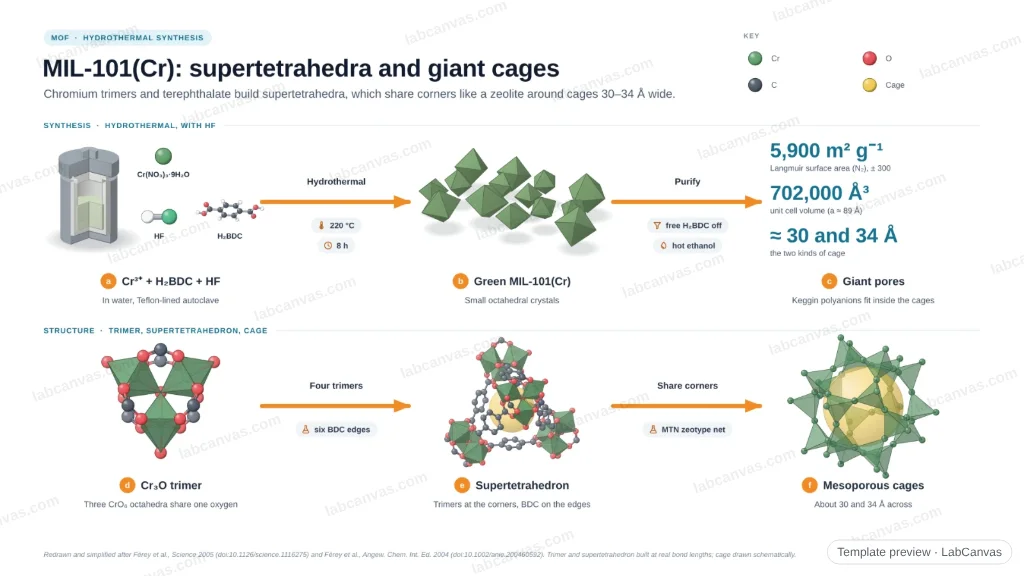
MIL-101(Cr) structure drawing (high-resolution SVG)
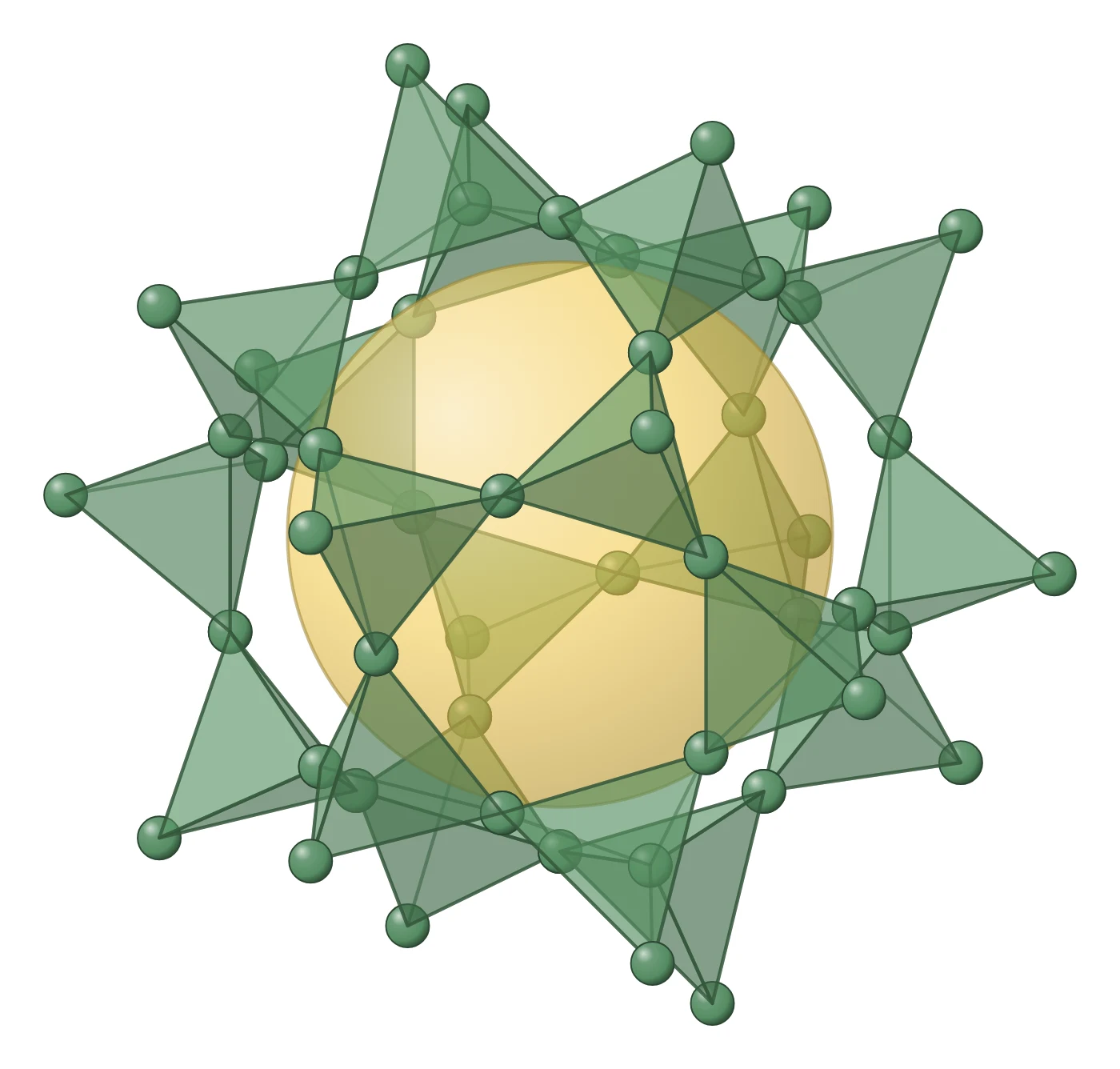
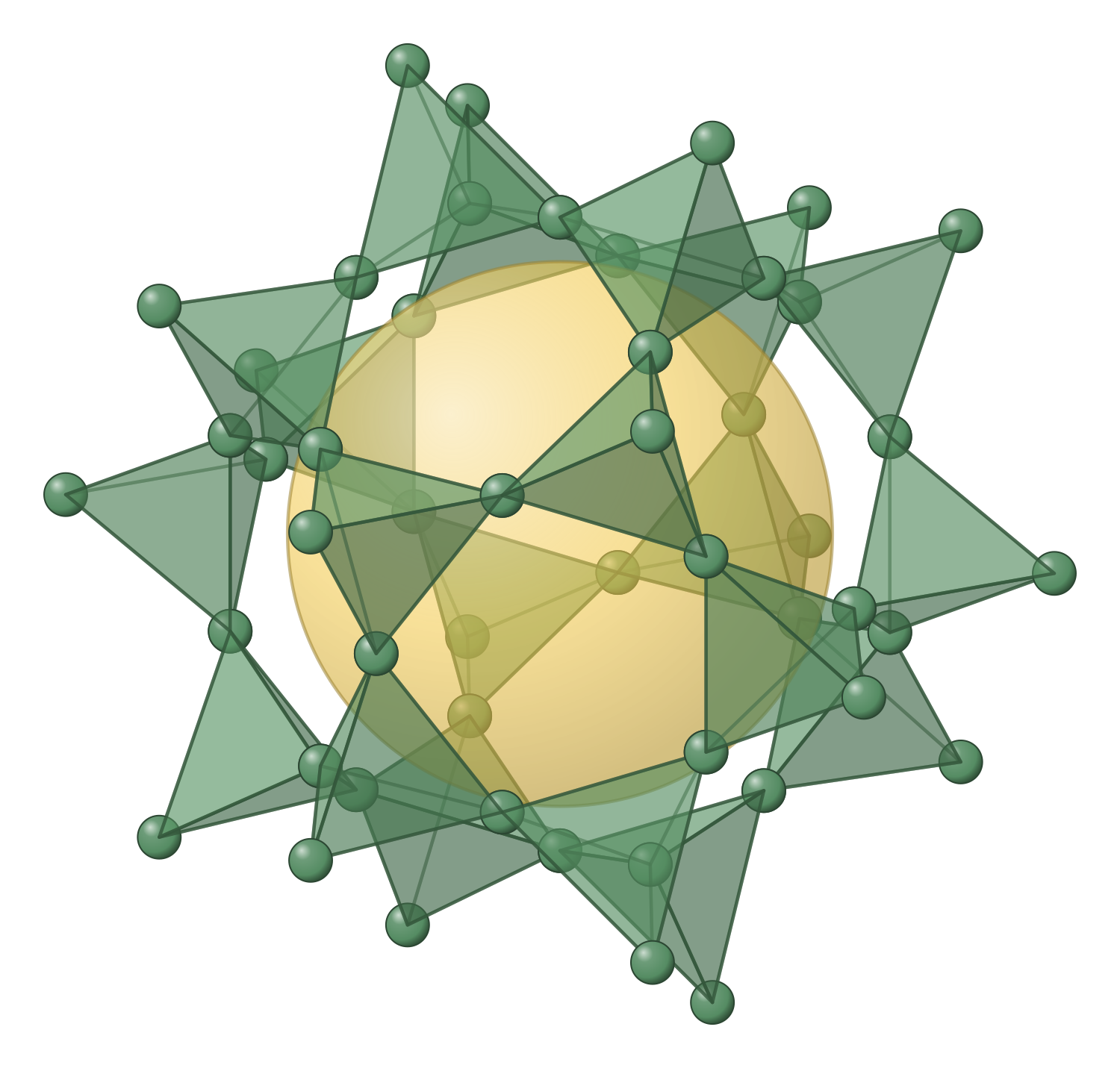
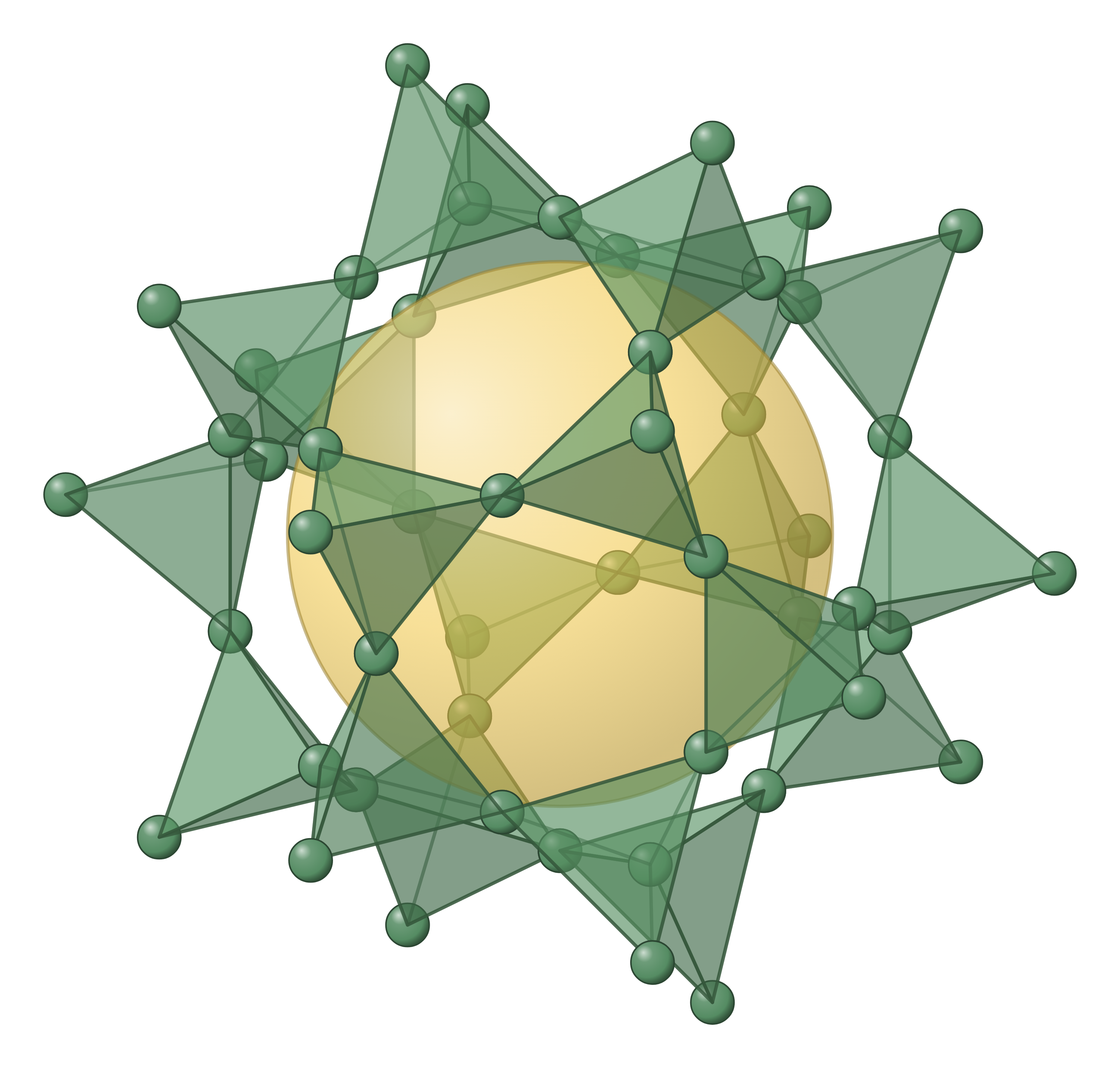
MIL-101 structure explained
MIL-101 is built in three levels. The node is a chromium trimer: three CrO₆ octahedra share a single central (μ₃) oxygen, and six carboxylate groups bridge pairs of chromium atoms around it. The remaining site on each chromium points outwards and is filled by water or by a fluoride or hydroxide ion, which balances the charge (Cr₃F(H₂O)₂O).
The linker is terephthalate (BDC²⁻), as in MOF-5 and UiO-66. Four trimers and six BDC linkers close up into a small rigid tetrahedron, the supertetrahedron: a trimer at each corner, a linker along each edge.
The supertetrahedra then share corners with one another, just as SiO₄ tetrahedra share corners in a zeolite. They follow the MTN zeolite net, so MIL-101 is called a zeotype. Because each “tetrahedron” is now a whole supertetrahedron, everything is scaled up: the cubic cell (space group Fd-3m, a ≈ 88.9 Å) has a volume of about 702,000 ų, and the net encloses two kinds of mesoporous cage, about 30 and 34 Å across (Férey et al. 2005). In the MTN net the smaller cage has only pentagonal windows and the larger one has pentagonal and hexagonal windows.
Férey’s group found the structure by combining targeted chemistry with computer simulation of possible nets and powder diffraction, the same approach that gave its trimesate cousin MIL-100 a year earlier (Férey et al. 2004).
How MIL-101 is made
- Hydrothermal synthesis. Chromium(III) nitrate nonahydrate, terephthalic acid, hydrofluoric acid and water are sealed in a Teflon-lined autoclave and heated at 220 °C for 8 h (Férey et al. 2005). The product is a green powder of small octahedral crystals.
- Purification. Unreacted terephthalic acid, which crystallises alongside the MOF, is filtered off, and the solid is washed in hot ethanol to clear the pores.
- Handling. The synthesis uses HF and a chromium salt, so it needs the matching safety precautions; once made, the framework itself is robust in water and in acid (Ding et al. 2019).
Why MIL-101 matters
When it appeared in 2005, MIL-101 combined three records in one solid: an exceptionally large cubic cell (about 702,000 ų), cages of 30–34 Å, in the mesoporous range rather than the micropores of most MOFs and zeolites, and a Langmuir surface area of about 5,900 m² g⁻¹ (Férey et al. 2005). Molecules far too big for a zeolite, such as Keggin polyoxometalate anions, fit inside its cages.
It also showed a new way to find frameworks: predicting likely nets by simulation and then matching them to powder diffraction patterns, instead of waiting for single crystals. And because Cr³⁺–carboxylate bonds are strong and inert, MIL-101 is far more resistant to water, acid and base than zinc MOFs such as MOF-5 (Ding et al. 2019), which made it a practical workhorse.
Uses and research areas
- Host for large guests. Its cages hold Keggin polyanions, and the original paper proposed it as a nanomold for monodisperse nanomaterials (Férey et al. 2005).
- Drug delivery. MIL-100 and MIL-101 were shown to store and release the drug ibuprofen in an early study of MOFs for drug delivery (Horcajada et al. 2006).
- CO₂ capture. Loaded with branched poly(ethylenimine) and 3D-printed into cellulose acetate monoliths, MIL-101(Cr) took up 1.05 mmol g⁻¹ of CO₂ from 400 ppm CO₂ at −20 °C and kept a working capacity of 0.95 mmol g⁻¹ over 14 cycles with regeneration at 60 °C (Wang et al. 2024).
- Adsorption and catalysis. Its large pores and water stability make it a frequent choice for adsorption and catalysis studies.
- Limitation. The classic synthesis uses HF and chromium, and the large cages make it a powder that is usually shaped (pellets, monoliths) before use in beds.
How to draw the MIL-101 structure
A good MIL-101 figure shows the hierarchy: the Cr₃O trimer (three green CrO₆ octahedra around one oxygen), one supertetrahedron (trimers at the corners, terephthalate along the edges) and a cage of corner-sharing supertetrahedra with a sphere marking the 30–34 Å pore. Draw the cage schematically: the full cell, at about 89 Å on a side, holds far too many atoms to show clearly. The figure above has all three levels plus the synthesis, and opens as an editable LabCanvas figure where you can restyle the polyhedra, change colours and labels, and export a high-resolution image.
MIL-101 compared with other well-known MOFs
| MOF | Formula | Metal node | Linker | Net | First report |
|---|---|---|---|---|---|
| MIL-101(Cr) | Cr₃F(H₂O)₂O(BDC)₃ | Cr₃O trimer | Terephthalate | MTN (zeotype) | Férey et al., Science 2005 |
| MOF-5 (IRMOF-1) | Zn₄O(BDC)₃ | Zn₄O cluster | Terephthalate | pcu | Li et al., Nature 1999 |
| HKUST-1 | Cu₃(BTC)₂ | Cu₂ paddlewheel | Trimesate (BTC) | tbo | Chui et al., Science 1999 |
| ZIF-8 | Zn(mIm)₂ | Single Zn²⁺ (tetrahedral) | 2-Methylimidazolate | sod | Park et al., PNAS 2006 |
| UiO-66 | Zr₆O₄(OH)₄(BDC)₆ | Zr₆ cluster | Terephthalate | fcu | Cavka et al., JACS 2008 |
Related materials
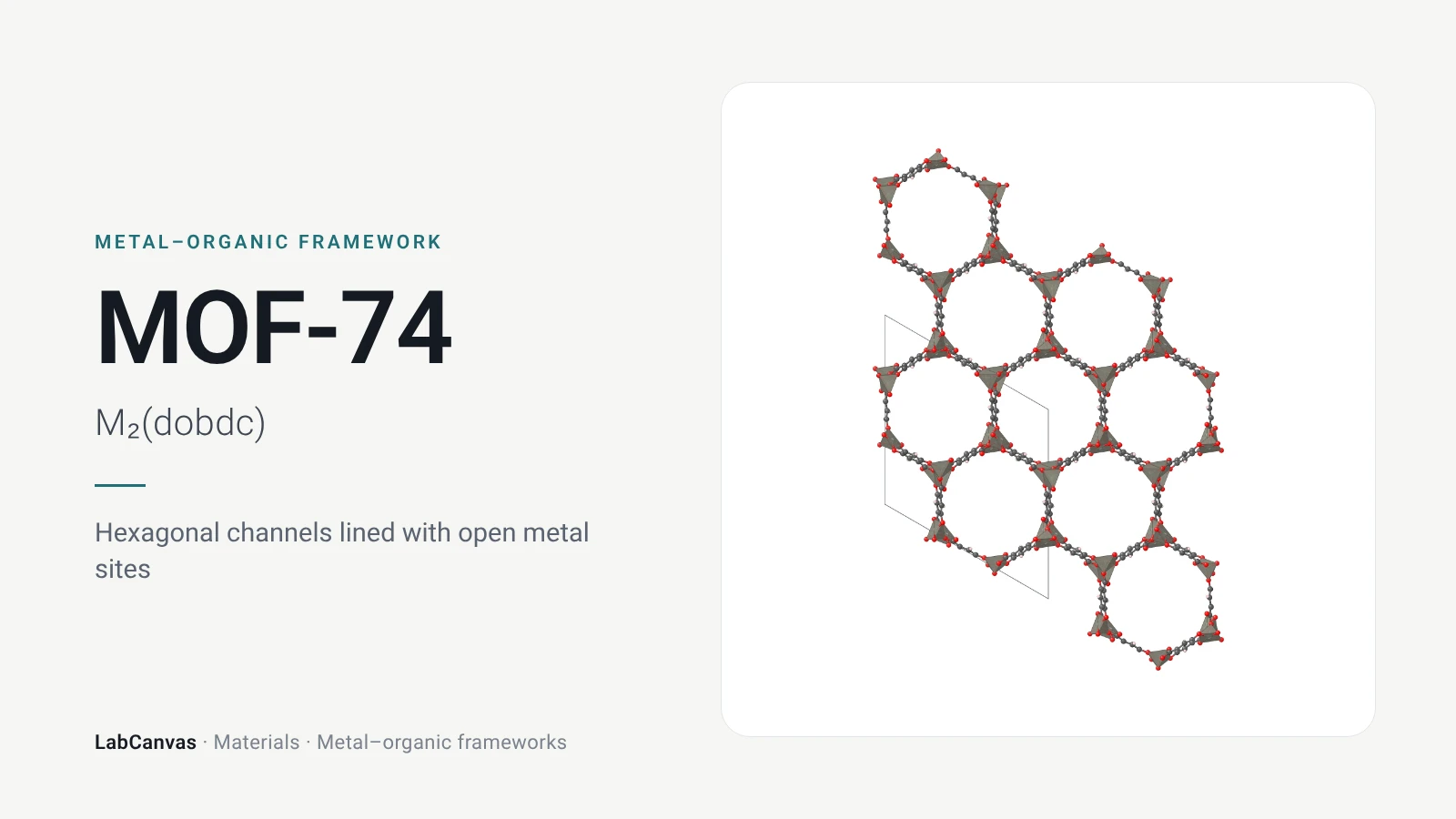
MOF-74
MOF-74 (CPO-27), M₂(dobdc): its honeycomb channels and open metal sites, Mg-MOF-74 for CO₂ capture, Zn-MOF-74, synthesis and pore size, with the papers.
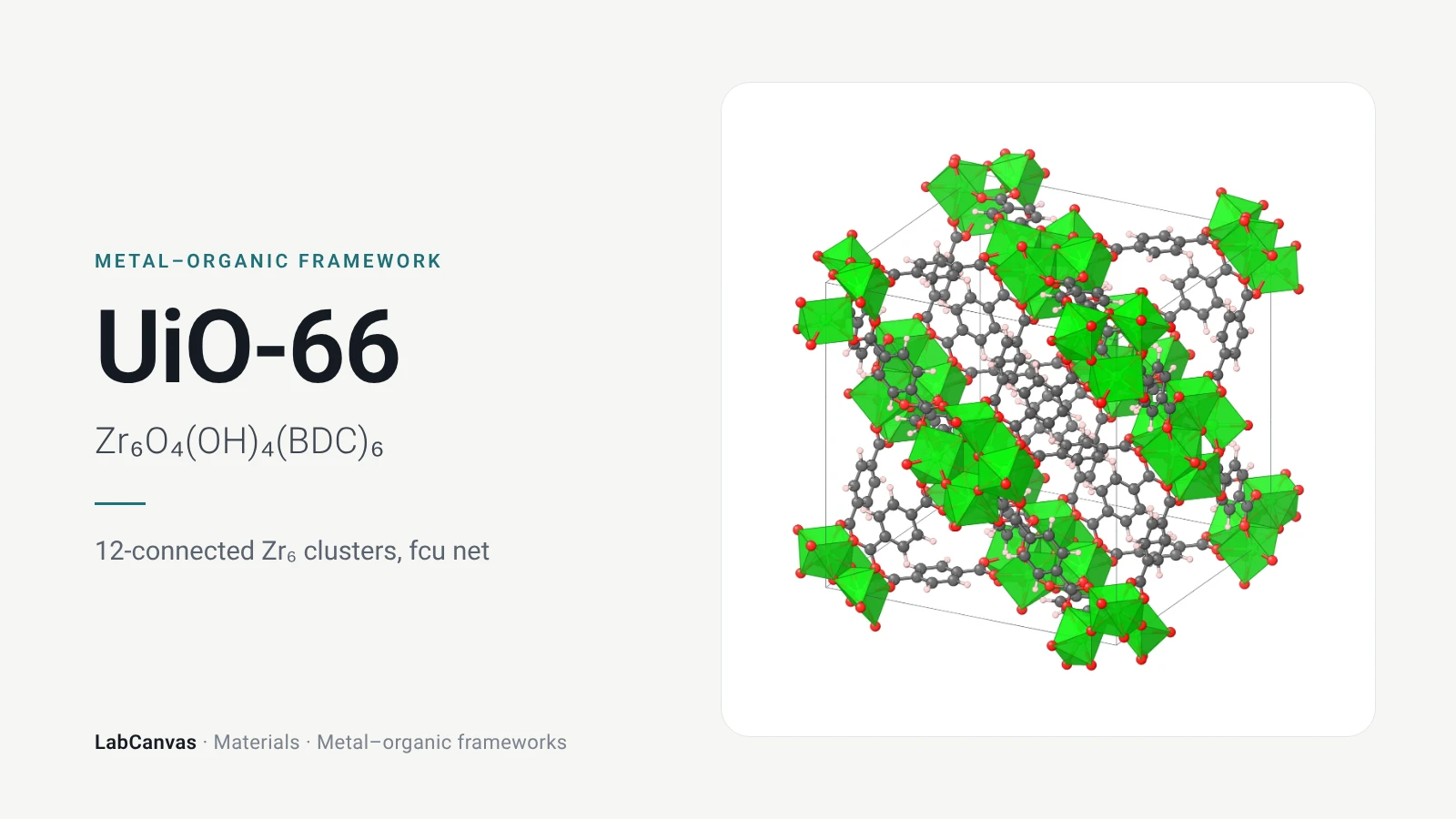
UiO-66
UiO-66, Zr₆O₄(OH)₄(BDC)₆: its fcu structure in 2D and 3D, how it is made, missing-linker defects, pore size, surface area and stability, with the papers.
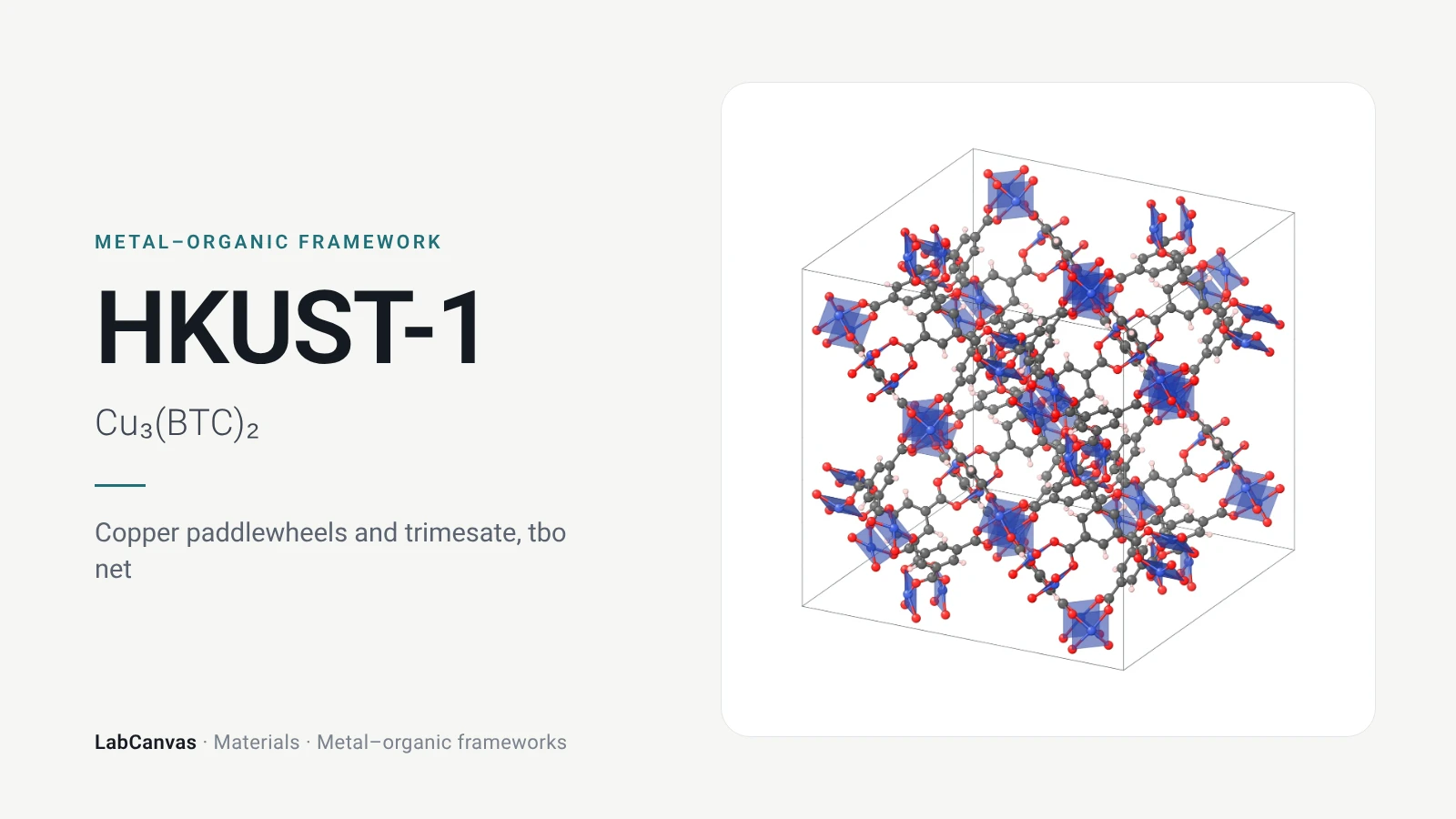
HKUST-1
HKUST-1 (Cu-BTC), Cu₃(BTC)₂: its paddlewheel structure in 2D and 3D, how it is made, pore size, open copper sites and stability, with the original papers.
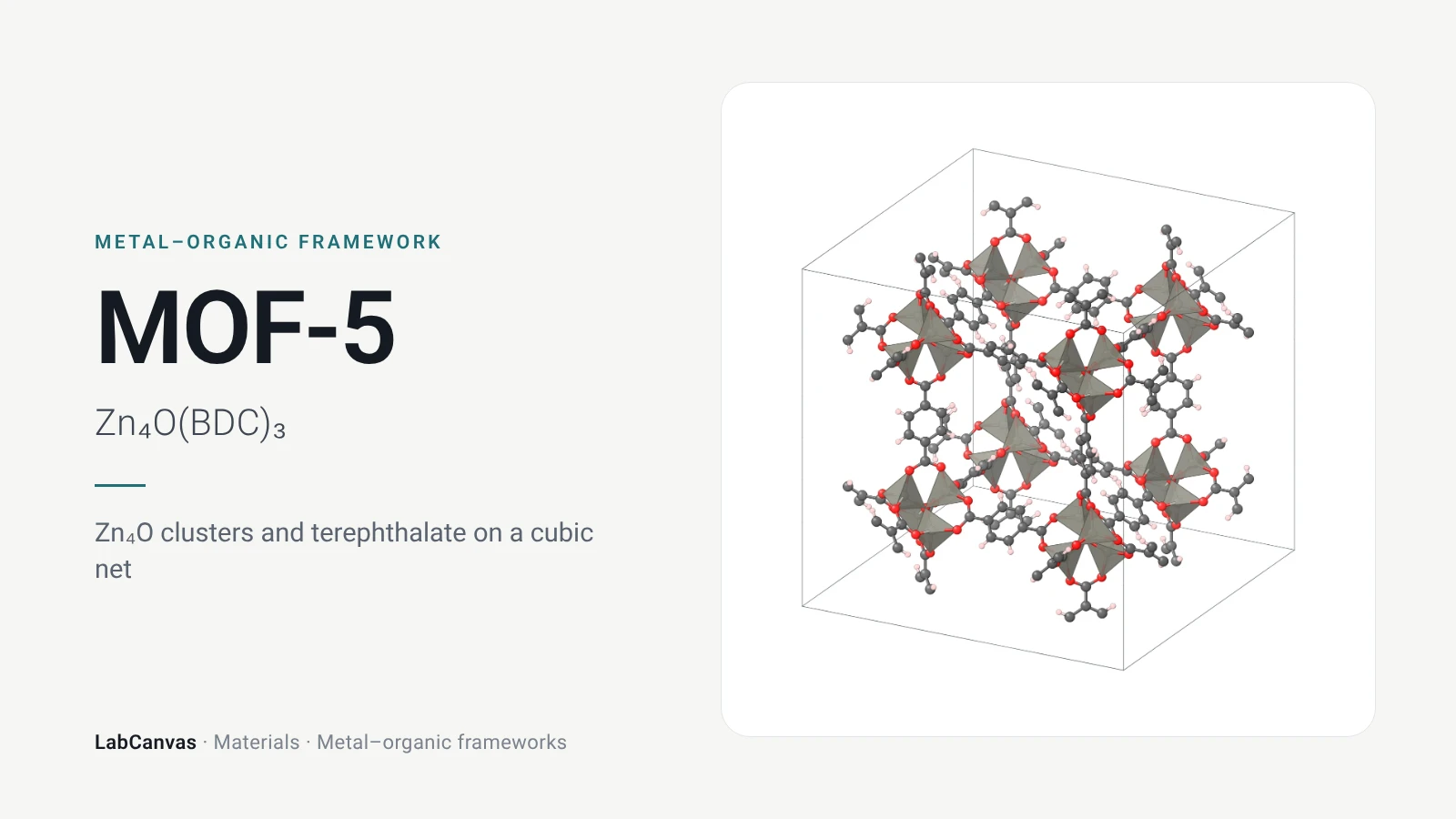
MOF-5
MOF-5, Zn₄O(BDC)₃: its cubic structure in 2D and interactive 3D, how it is made, surface area, stability and uses, with the original papers. Edit the figures free.
ZIF-8
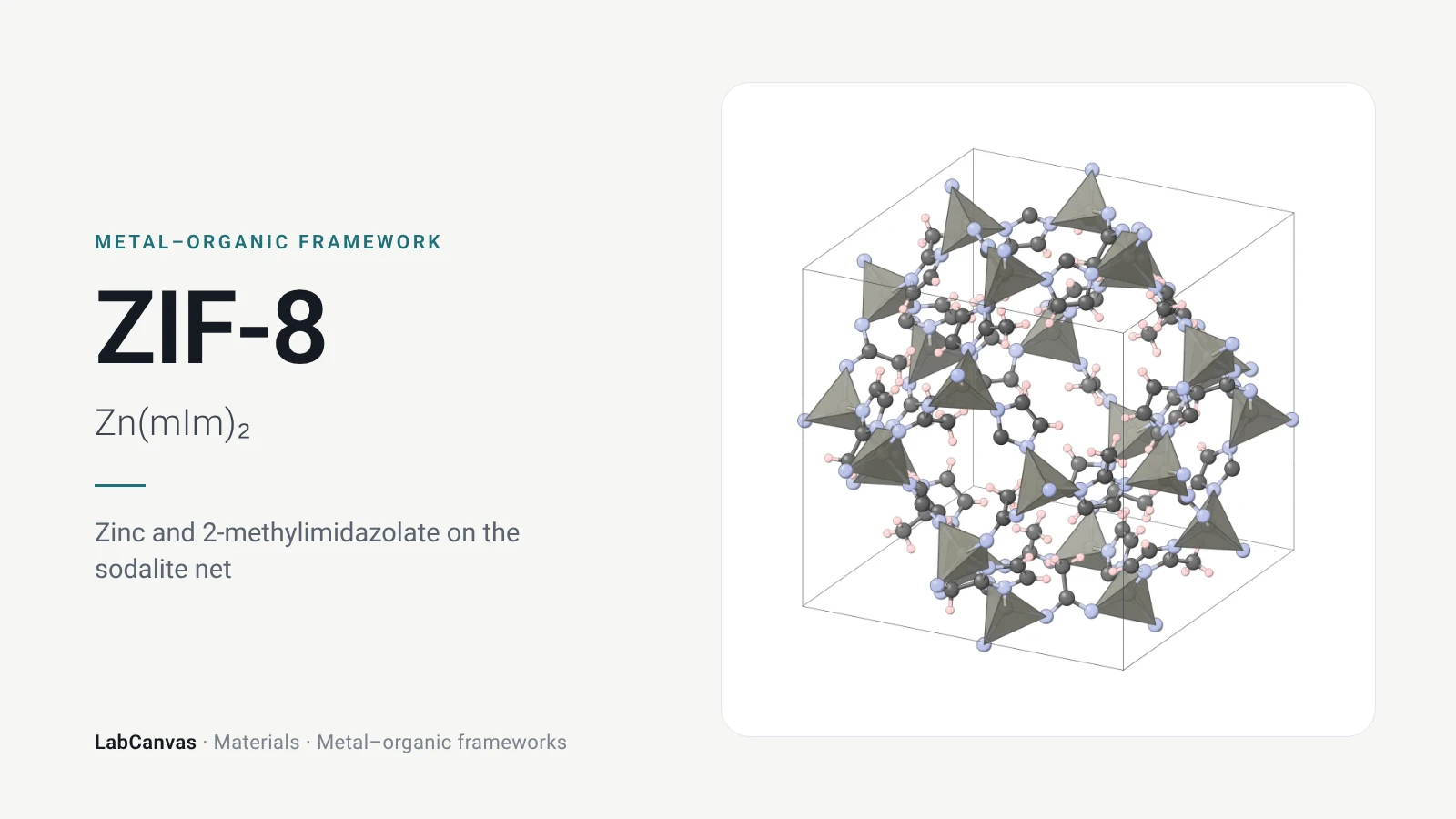
ZIF-8, Zn(mIm)₂: its sodalite structure in 2D and 3D, how it is made, pore size, surface area and stability, with the original papers. Edit the figures free.
More on LabCanvas
- MIL-101(Cr): supertetrahedra and giant cages: Editable figure template
- More MOF figure templates: Ready-made, cited figures to edit
- Crystal structure figure software compared: VESTA, Mercury, CrystalMaker, Avogadro and LabCanvas
- XRD Scherrer crystallite size calculator: Free tool
- Molar mass calculator: Free tool
- Journal figure size guide: Column widths and resolutions for 38 journals
- 3D models gallery: Turn MOFs, COFs and more in 3D
Frequently asked questions
What is MIL-101?
MIL-101(Cr) is a chromium terephthalate metal–organic framework with giant mesoporous cages. Chromium trimers and terephthalate linkers form supertetrahedra that share corners like a zeolite. It was reported by Gérard Férey’s group in Science in 2005.
What is the chemical formula of MIL-101?
Cr₃F(H₂O)₂O(BDC)₃·nH₂O, where BDC is 1,4-benzenedicarboxylate (terephthalate). Without the guest water the framework formula weighs about 719.4 g/mol.
What is the pore size of MIL-101?
MIL-101 has two kinds of mesoporous cage, about 30 Å and 34 Å across (Férey et al., Science 2005), in the mesoporous range rather than the micropores of most MOFs.
What is the surface area of MIL-101?
The original report gave a Langmuir surface area for N₂ of about 5,900 ± 300 m²/g (Férey et al., Science 2005).
What is the structure of MIL-101?
Cubic (space group Fd-3m, a ≈ 89 Å, cell volume about 702,000 ų). Cr₃O trimers and terephthalate build supertetrahedra, which share corners in the MTN zeolite net and enclose cages about 30 and 34 Å across.
How is MIL-101 synthesised?
Hydrothermally: chromium(III) nitrate, terephthalic acid, hydrofluoric acid and water heated in a Teflon-lined autoclave at 220 °C for 8 h. Free terephthalic acid is then filtered off and the green powder washed in hot ethanol.
Is MIL-101 stable in water?
Yes. Held together by strong Cr³⁺–carboxylate bonds, MIL-101(Cr) resists acid and base and has been reported stable in water at pH 0–12 for 2 months (Ding et al., Chem. Sci. 2019).
What is the difference between MIL-100 and MIL-101?
Both are chromium frameworks with giant pores, found by the same mix of targeted chemistry, simulation and powder diffraction. MIL-100 uses trimesate (1,3,5-benzenetricarboxylate) as the linker; MIL-101 uses terephthalate. MIL-100 was reported in 2004, MIL-101 in 2005 (Férey et al.).
How can I draw MIL-101 for a paper or presentation?
Open the MIL-101 figure on this page in LabCanvas (free): it shows the Cr₃O trimer, the supertetrahedron and the mesoporous cage, and every part can be restyled, relabelled and exported at high resolution.
References
- G. Férey, C. Mellot-Draznieks, C. Serre, F. Millange, J. Dutour, S. Surblé, I. Margiolaki. A chromium terephthalate-based solid with unusually large pore volumes and surface area. Science 2005, 309, 2040–2042. doi:10.1126/science.1116275
- G. Férey et al.. A hybrid solid with giant pores prepared by a combination of targeted chemistry, simulation, and powder diffraction. Angew. Chem. Int. Ed. 2004, 43, 6296–6301. doi:10.1002/anie.200460592
- P. Horcajada, C. Serre, M. Vallet-Regí, M. Sebban, F. Taulelle, G. Férey. Metal–organic frameworks as efficient materials for drug delivery. Angew. Chem. Int. Ed. 2006, 45, 5974–5978. doi:10.1002/anie.200601878
- M. Ding, X. Cai, H.-L. Jiang. Improving MOF stability: approaches and applications. Chem. Sci. 2019, 10, 10209–10230. doi:10.1039/c9sc03916c
- Y. Wang et al.. Cold temperature direct air CO₂ capture with amine-loaded metal–organic framework monoliths. ACS Appl. Mater. Interfaces 2024, 16, 1404–1415. doi:10.1021/acsami.3c13528
- H. Li, M. Eddaoudi, M. O’Keeffe, O. M. Yaghi. Design and synthesis of an exceptionally stable and highly porous metal-organic framework. Nature 1999, 402, 276–279. doi:10.1038/46248
- S. S.-Y. Chui et al.. A chemically functionalizable nanoporous material [Cu₃(TMA)₂(H₂O)₃]ₙ. Science 1999, 283, 1148–1150. doi:10.1126/science.283.5405.1148
- K. S. Park et al.. Exceptional chemical and thermal stability of zeolitic imidazolate frameworks. Proc. Natl. Acad. Sci. USA 2006, 103, 10186–10191. doi:10.1073/pnas.0602439103
- J. H. Cavka et al.. A new zirconium inorganic building brick forming metal organic frameworks with exceptional stability. J. Am. Chem. Soc. 2008, 130, 13850–13851. doi:10.1021/ja8057953
Draw MIL-101(Cr) for your paper or slides
LabCanvas is a browser workspace for scientific figures: framework clusters, linkers and nets, crystal structures in 2D and 3D, graphs and posters, all editable.
Edit the MIL-101(Cr) figure