UiO-66: structure, synthesis and properties
UiO-66 is a zirconium metal–organic framework, Zr₆O₄(OH)₄(BDC)₆: octahedral Zr₆O₄(OH)₄ clusters, each joined to twelve neighbours by terephthalate (1,4-benzenedicarboxylate, BDC) linkers in a face-centred cubic (fcu) net. First reported by Cavka, Lillerud and co-workers at the University of Oslo in JACS in 2008, it decomposes only above 500 °C, resists most chemicals and stays crystalline under 10 tons/cm² of pressure, making it the prototypical zirconium MOF.
Last updated
UiO-66 at a glance
| Formula | Zr₆O₄(OH)₄(BDC)₆, BDC = 1,4-benzenedicarboxylate (terephthalate); Zr₆O₆(BDC)₆ after dehydroxylation (Valenzano et al. 2011) |
|---|---|
| Name | UiO: Universitetet i Oslo (University of Oslo), where it was first made (Cavka et al. 2008) |
| Molar mass | 1664.1 g mol⁻¹ for Zr₆O₄(OH)₄(BDC)₆, 1628.0 g mol⁻¹ dehydroxylated (calculated from the formula) |
| Metal node (SBU) | Zr₆O₄(OH)₄ cluster: an octahedron of six Zr atoms capped by four μ₃-O and four μ₃-OH, with twelve carboxylates (Valenzano et al. 2011) |
| Organic linker | Terephthalate (BDC²⁻), from terephthalic acid H₂BDC |
| Topology | fcu (face-centred cubic): each cluster linked to twelve others (Wu et al. 2013) |
| Crystal system | Cubic, space group Fm-3m, a ≈ 20.70 Å (the crystal file on this page), four clusters per cell |
| Pores | Larger octahedral and smaller tetrahedral cages, the two kinds of cavity of an fcu net; pore volume 0.44–1.0 cm³ g⁻¹, rising with the number of missing linkers (Wu et al. 2013) |
| Surface area | BET 1,000–1,600 m² g⁻¹, depending on missing-linker defects (Wu et al. 2013) |
| Density | About 1.2 g cm⁻³ (calculated from the cubic cell) |
| Thermal stability | Decomposition temperature above 500 °C (Cavka et al. 2008) |
| Chemical and mechanical stability | Resistant to most chemicals; crystalline after exposure to 10 tons/cm² of external pressure (Cavka et al. 2008) |
| Defects | About 10% of linkers missing in a typical sample, lowering the connectivity from 12 to about 11 (Wu et al. 2013); tunable with modulators |
| First reported | Cavka, Jakobsen, Olsbye, Guillou, Lamberti, Bordiga and Lillerud, J. Am. Chem. Soc. 130, 13850 (2008) |
UiO-66 structure diagram
UiO-66 crystal structure (high-resolution SVG)
UiO-66 in 3D (interactive)
Loading the 3D model…
More UiO-66 figures
UiO-66 structure explained
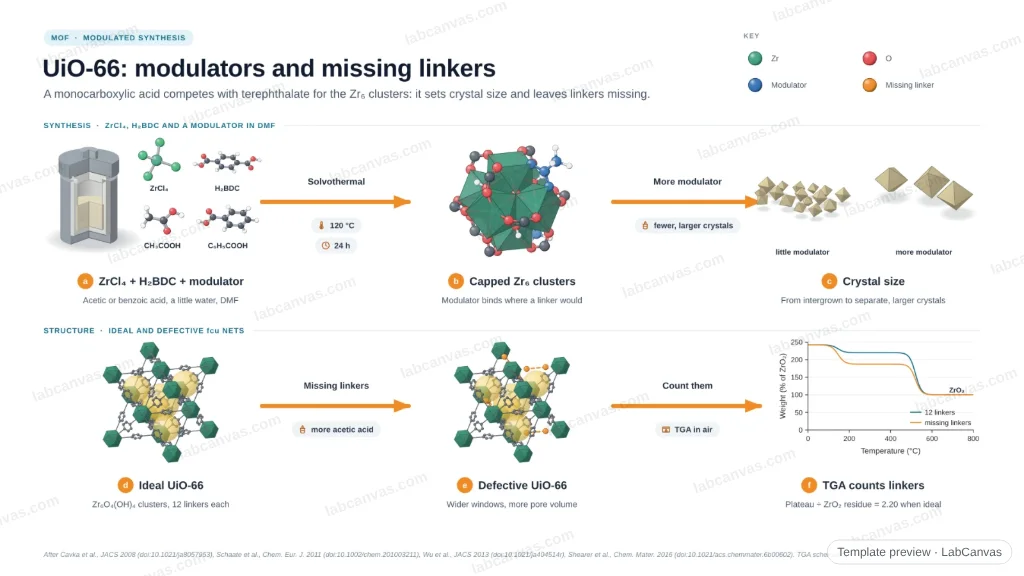
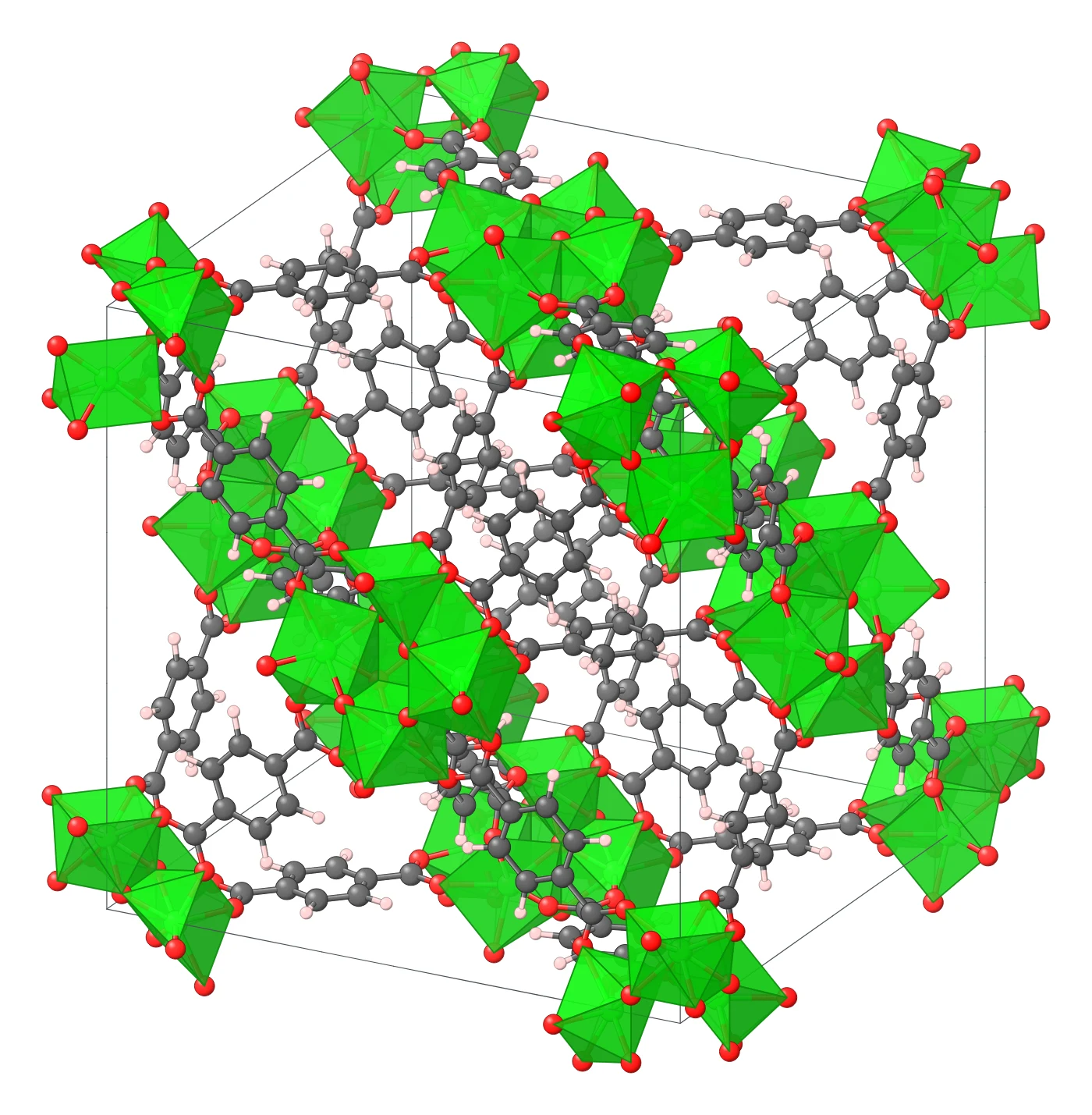
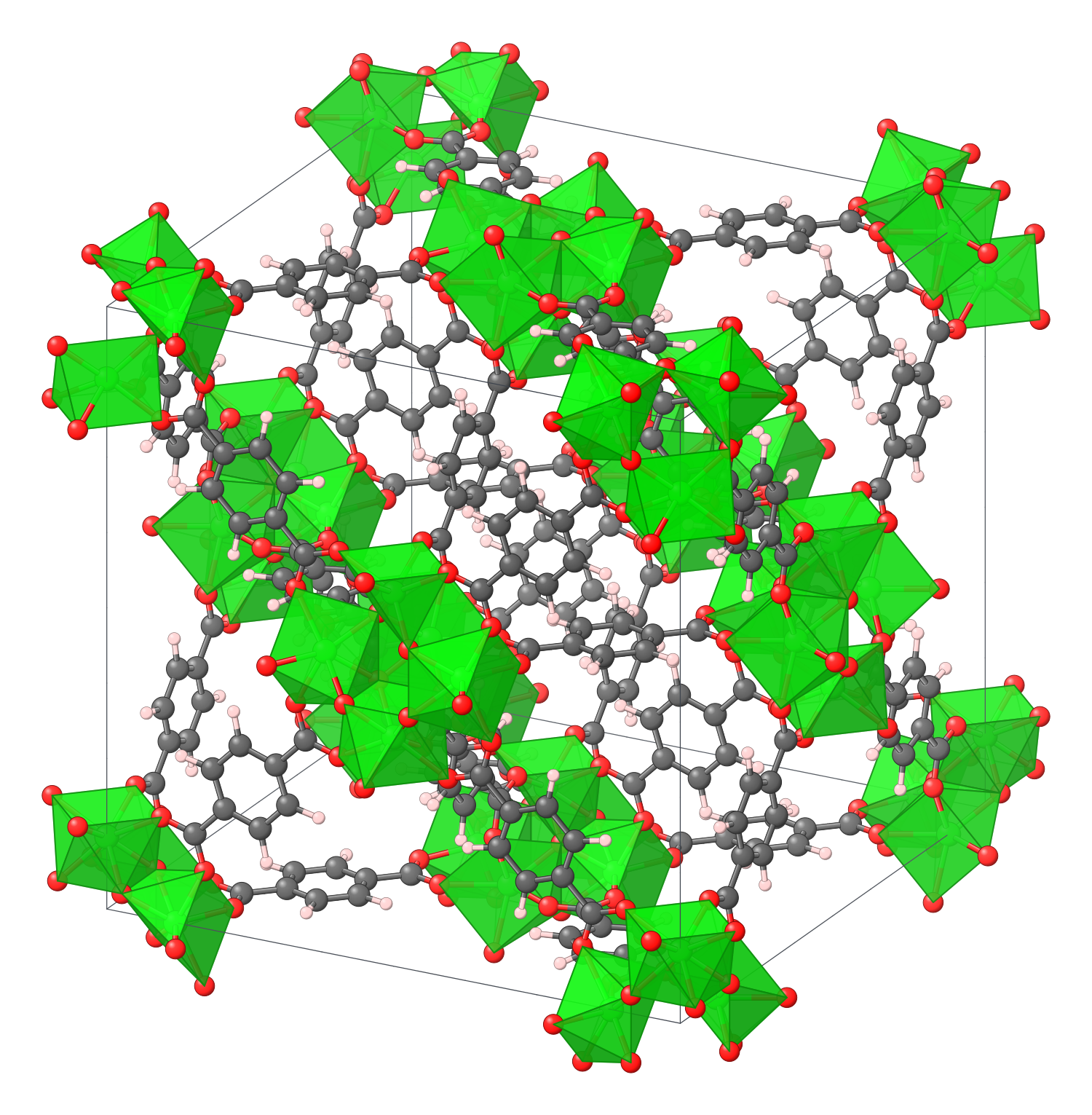
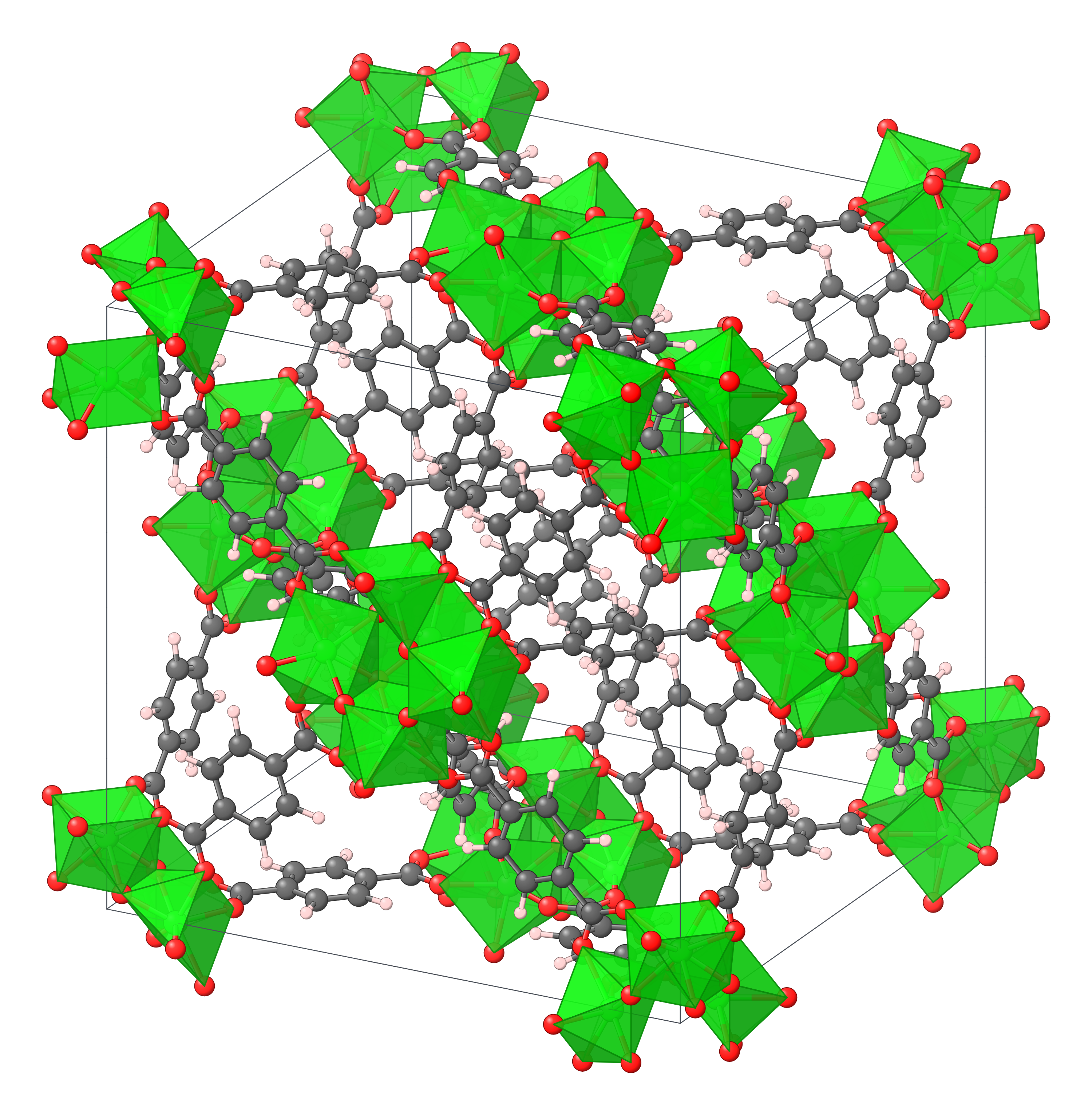
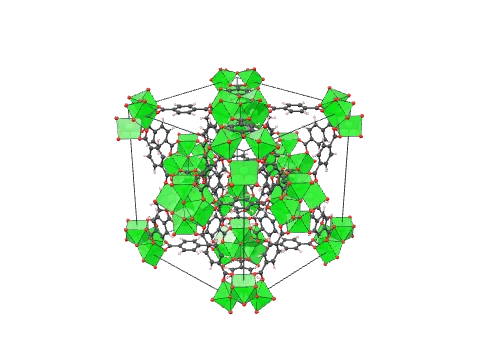
UiO-66 is built from two parts. The node is a Zr₆O₄(OH)₄ cluster: six zirconium atoms at the corners of an octahedron, with four oxide and four hydroxide ions capping its eight faces. Twelve carboxylate groups bridge its twelve edges, so the cluster is a 12-connected building unit (Valenzano et al. 2011).
The linker is terephthalate (BDC²⁻), the same linker as in MOF-5. Each linker joins two clusters, and each cluster takes twelve linkers. The clusters sit like the atoms of a face-centred cubic metal, giving the 12-connected fcu net (Wu et al. 2013). The cell is cubic (Fm-3m, a ≈ 20.7 Å) and holds four clusters.
Like a face-centred cubic metal, the framework has two kinds of cavity: larger octahedral cages and smaller tetrahedral cages. When UiO-66 is heated, the cluster loses its μ₃-OH groups as water and becomes Zr₆O₆; the change is reversible and does not disturb the carboxylates, which is part of why the framework is so stable (Cavka et al. 2008; Valenzano et al. 2011).
How UiO-66 is made
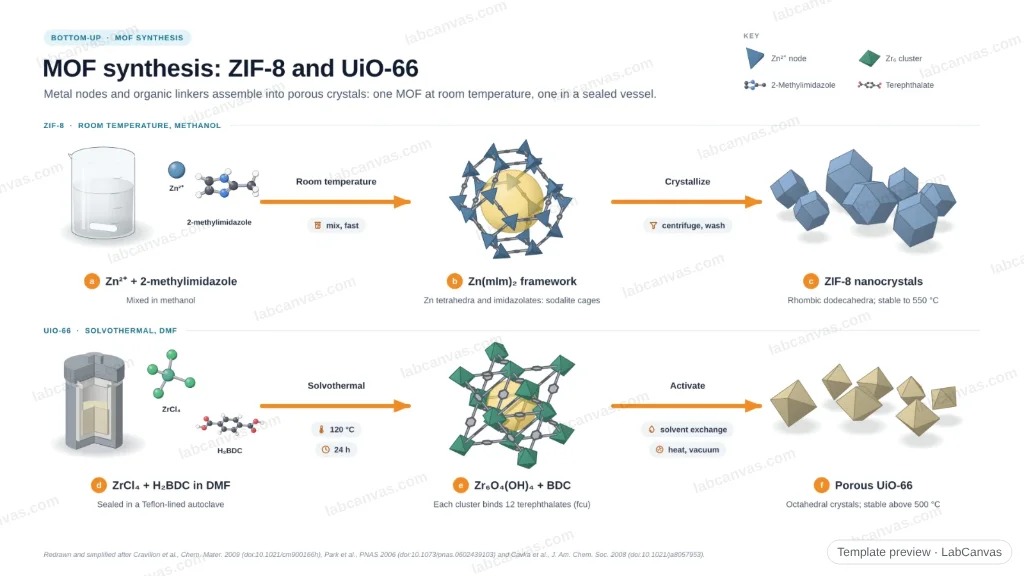
- Solvothermal synthesis. Zirconium tetrachloride (ZrCl₄) and terephthalic acid are dissolved in N,N-dimethylformamide (DMF), sealed and heated at 120 °C for 24 h (Cavka et al. 2008). Small octahedral crystals form.
- Modulation. A monocarboxylic acid such as acetic or benzoic acid is often added. It competes with terephthalate for the Zr₆ clusters: with more modulator the product changes from intergrown to separate crystals of tunable size, and water is needed for well-ordered products (Schaate et al. 2011).
- Washing and activation. The solid is washed, the DMF in the pores is exchanged for a volatile solvent, and the pores are emptied by heating under vacuum.
- Other routes. UiO-66 has been made at the half-kilogram scale under reflux (Ragon et al. 2014) and by ball milling with little solvent (Užarević et al. 2016).
Why UiO-66 matters
Most early MOFs were fragile: heat, water or mechanical stress broke them down. UiO-66 introduced the Zr₆ cluster, a building unit whose strong Zr–O bonds give frameworks with a decomposition temperature above 500 °C, resistance to most chemicals, and crystallinity after 10 tons/cm² of external pressure (Cavka et al. 2008). The same cluster with longer linkers gives UiO-67 and UiO-68 (Cavka et al. 2008; Schaate et al. 2011).
UiO-66 is also the model system for defects in MOFs. Real samples have linkers missing: neutron diffraction found about 10% missing in a typical sample, and varying the acetic acid modulator and the synthesis time tunes the vacancies, raising the BET surface area from 1,000 to 1,600 m² g⁻¹ (Wu et al. 2013). In modulated samples, missing clusters were found to be the predominant defect, their number set by the concentration and acidity of the modulator (Shearer et al. 2016). Thermogravimetry counts the linkers: for ideal Zr₆O₆(BDC)₆ the mass before the linkers burn is 2.20 times the ZrO₂ residue (calculated from the formulas), and it is lower when linkers are missing (Shearer et al. 2016).
Uses and research areas
- Catalysis. Missing-linker sites expose zirconium ions that act as Lewis acids, and modulated synthesis raises the catalytic activity of UiO-66 (Vermoortele et al. 2013).
- Gas adsorption. Missing linkers change how UiO-66 takes up gases, CO₂ in particular, and the hydroxylated form adsorbs better than the dehydroxylated one (Wu et al. 2013).
- Functional fabrics. The amino version, UiO-66-NH₂, grown on polymer fibres catalyses the hydrolysis of chemical warfare agent simulants (Lee et al. 2017).
- Defect engineering. Modulators, water and time set the crystal size and the number of defects, so UiO-66 is the standard system for studying how defects change porosity and reactivity (Schaate et al. 2011; Shearer et al. 2016).
How to draw the UiO-66 structure
For a paper, slide or poster, show the Zr₆O₄(OH)₄ cluster (often as a green octahedron) with its twelve carboxylates, one terephthalate linker, and the fcu net, with a defect marked if your work is about missing linkers. The two figures above, the defect-engineering figure and the ZIF-8/UiO-66 synthesis figure, open as editable LabCanvas figures. The crystal structure SVG is drawn from the UiO-66 crystal file by the LabCanvas figure editor, where you can switch between atoms and polyhedra and change the number of cells; the 3D model on this page opens in the LabCanvas 3D Studio, where you can turn it and export a high-resolution image.
UiO-66 compared with other well-known MOFs
| MOF | Formula | Metal node | Linker | Net | Stable to | First report |
|---|---|---|---|---|---|---|
| UiO-66 | Zr₆O₄(OH)₄(BDC)₆ | Zr₆ cluster (12-connected) | Terephthalate | fcu | Above 500 °C | Cavka et al., JACS 2008 |
| MOF-5 (IRMOF-1) | Zn₄O(BDC)₃ | Zn₄O cluster (6-connected) | Terephthalate | pcu | 300 °C | Li et al., Nature 1999 |
| HKUST-1 | Cu₃(BTC)₂ | Cu₂ paddlewheel | Trimesate (BTC) | tbo | 240 °C | Chui et al., Science 1999 |
| ZIF-8 | Zn(mIm)₂ | Single Zn²⁺ (tetrahedral) | 2-Methylimidazolate | sod | 550 °C | Park et al., PNAS 2006 |
Related materials
MOF-5
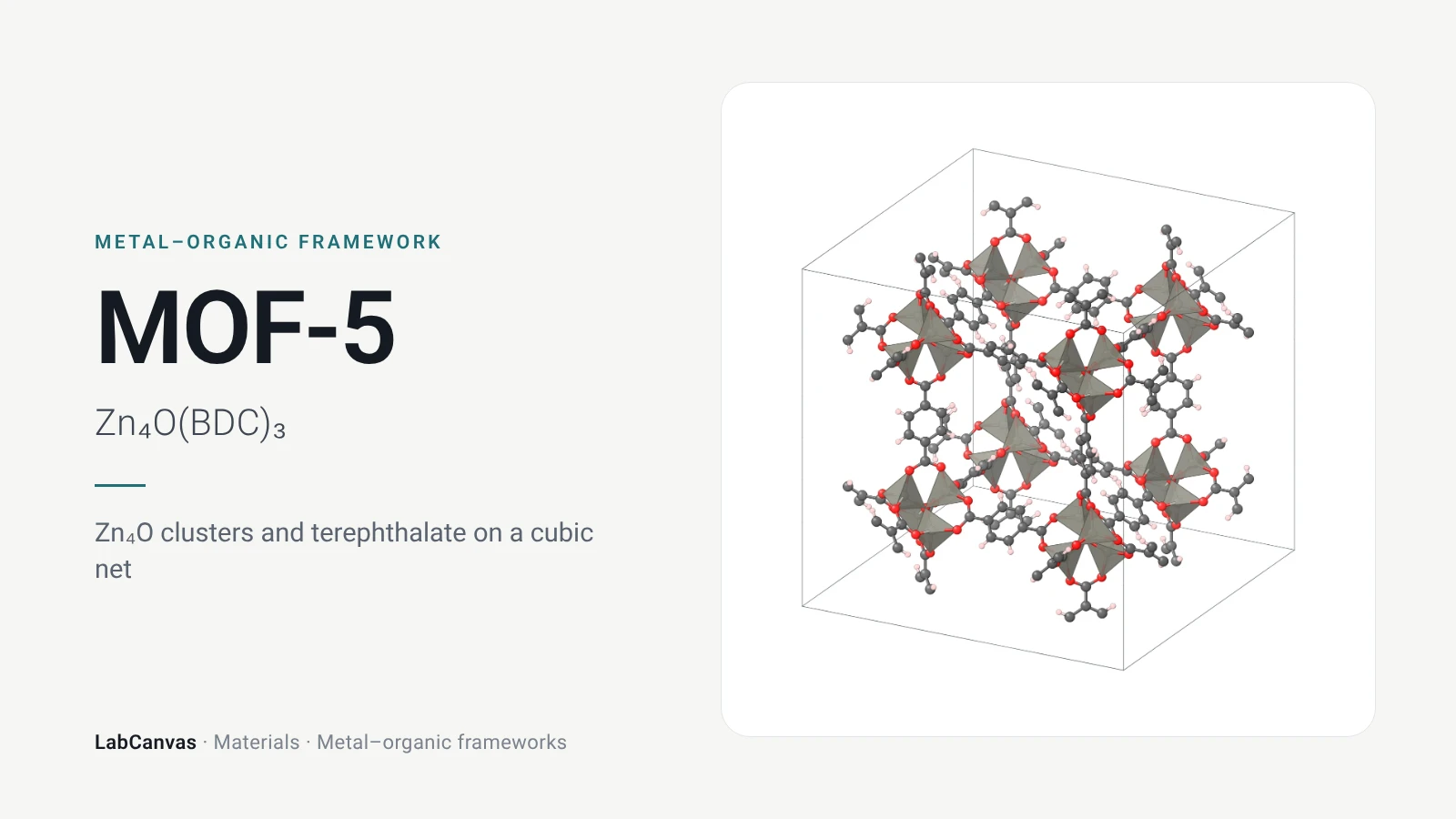
MOF-5, Zn₄O(BDC)₃: its cubic structure in 2D and interactive 3D, how it is made, surface area, stability and uses, with the original papers. Edit the figures free.
ZIF-8
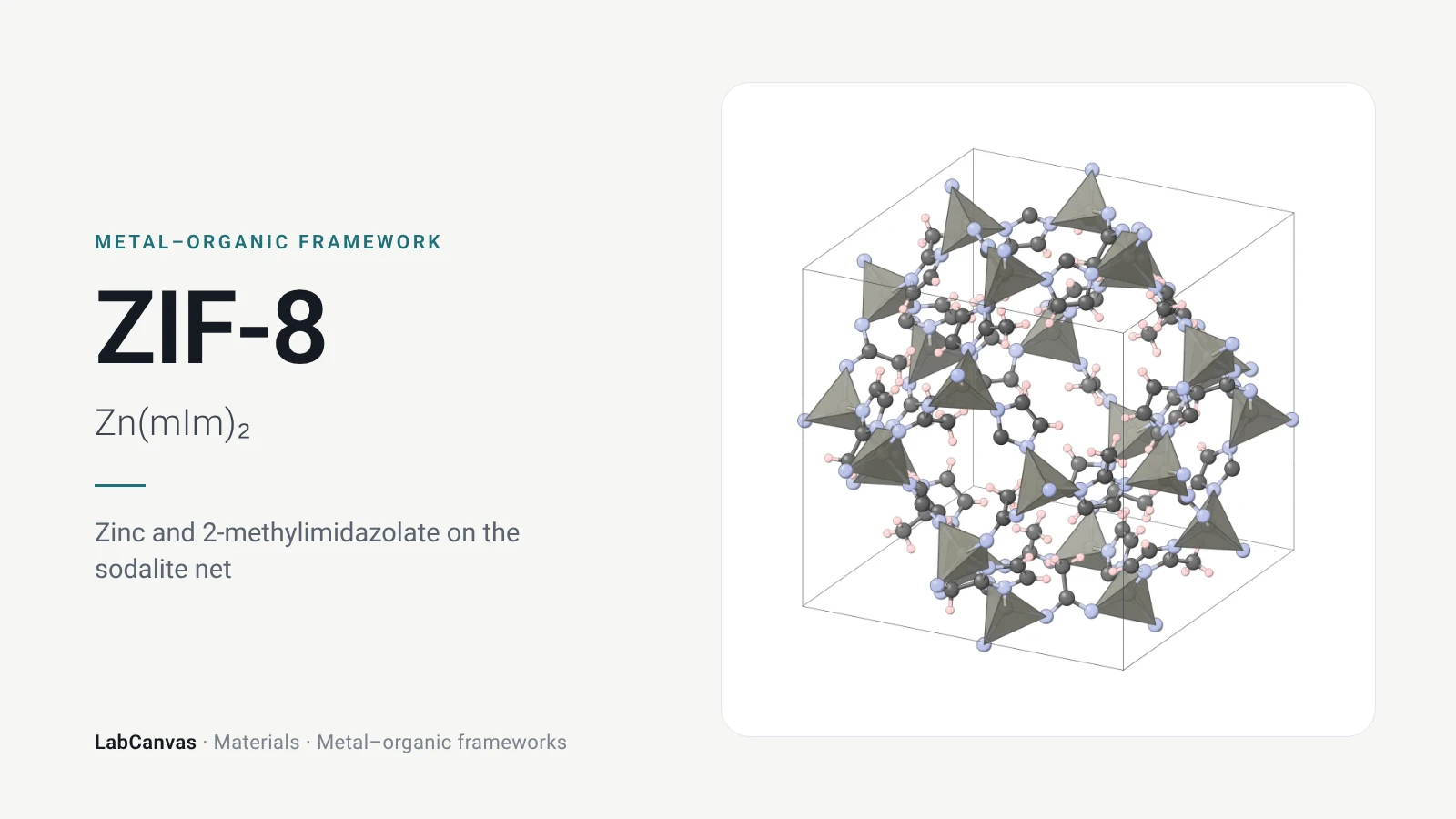
ZIF-8, Zn(mIm)₂: its sodalite structure in 2D and 3D, how it is made, pore size, surface area and stability, with the original papers. Edit the figures free.
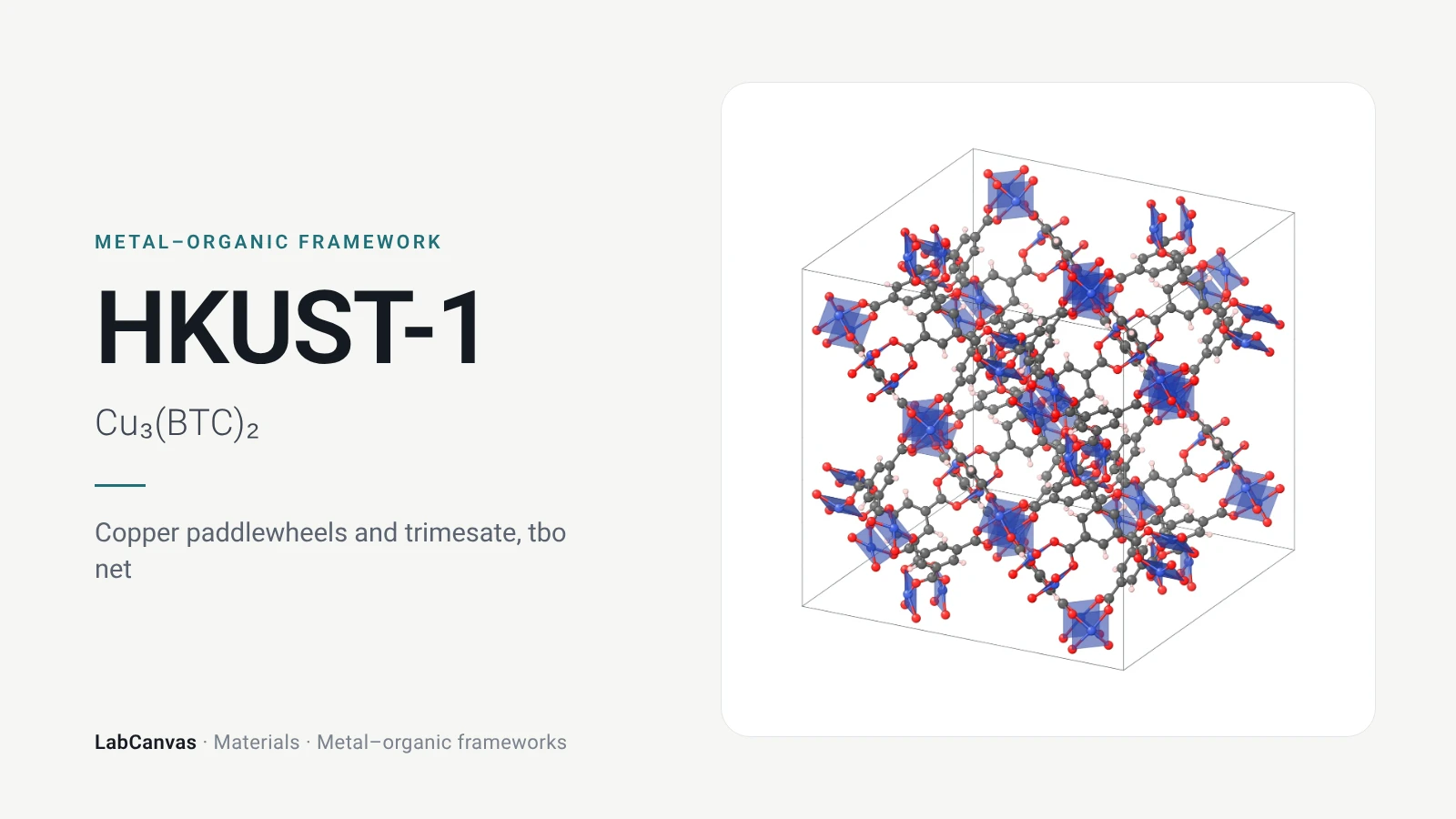
HKUST-1
HKUST-1 (Cu-BTC), Cu₃(BTC)₂: its paddlewheel structure in 2D and 3D, how it is made, pore size, open copper sites and stability, with the original papers.
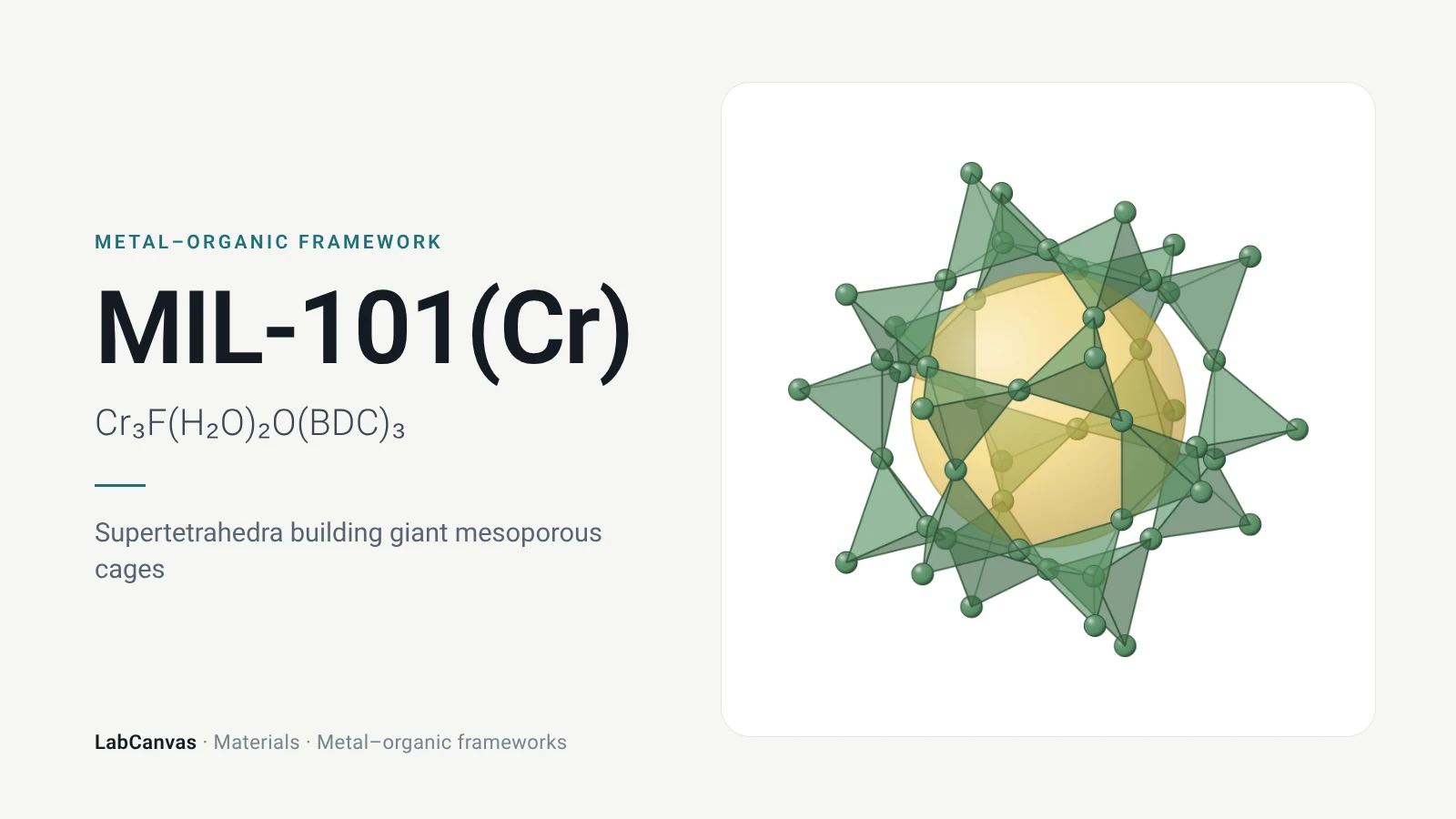
MIL-101(Cr)
MIL-101(Cr), a chromium terephthalate MOF: its giant 30–34 Å cages, MTN structure, synthesis, surface area, water stability and uses, with the original papers.
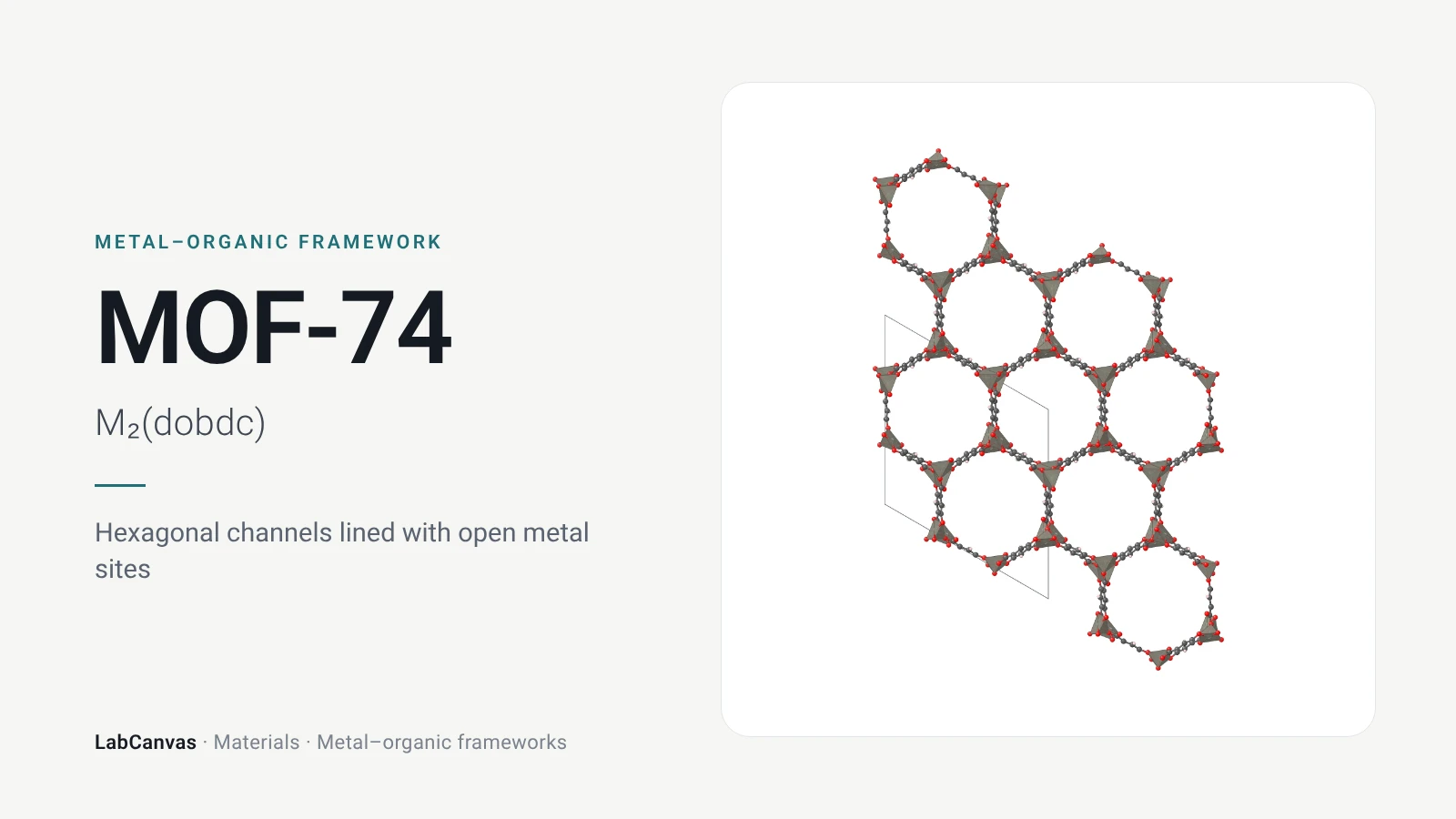
MOF-74
MOF-74 (CPO-27), M₂(dobdc): its honeycomb channels and open metal sites, Mg-MOF-74 for CO₂ capture, Zn-MOF-74, synthesis and pore size, with the papers.
More on LabCanvas
- UiO-66: modulators and missing-linker defects: Editable figure template
- MOF synthesis: ZIF-8 and UiO-66: Editable figure template
- More MOF figure templates: Ready-made, cited figures to edit
- More figure templates in this category: Ready-made, cited figures to edit
- Crystal structure figure software compared: VESTA, Mercury, CrystalMaker, Avogadro and LabCanvas
- XRD Scherrer crystallite size calculator: Free tool
- Molar mass calculator: Free tool
- Journal figure size guide: Column widths and resolutions for 38 journals
- 3D models gallery: Turn MOFs, COFs and more in 3D
Frequently asked questions
What is UiO-66?
UiO-66 is a zirconium metal–organic framework made of Zr₆O₄(OH)₄ clusters joined by terephthalate linkers into a face-centred cubic network. Reported in 2008 by the University of Oslo, it is known for its thermal, chemical and mechanical stability.
What is the chemical formula of UiO-66?
Zr₆O₄(OH)₄(BDC)₆, where BDC is 1,4-benzenedicarboxylate (terephthalate). Its molar mass is about 1664.1 g/mol. On heating it loses water and becomes Zr₆O₆(BDC)₆ (about 1628.0 g/mol).
What does UiO stand for?
Universitetet i Oslo, the University of Oslo, where Cavka, Lillerud and co-workers first made UiO-66 (J. Am. Chem. Soc. 2008).
What is the structure of UiO-66?
Each Zr₆O₄(OH)₄ cluster is joined by terephthalate linkers to twelve others, giving the fcu (face-centred cubic) net. The cubic cell (Fm-3m) is about 20.7 Å on a side and contains octahedral and tetrahedral cages.
What is the surface area of UiO-66?
BET surface areas from about 1,000 to 1,600 m²/g have been measured, with pore volumes of 0.44 to 1.0 cm³/g; the more linkers are missing, the higher both values (Wu et al., J. Am. Chem. Soc. 2013).
Why is UiO-66 so stable?
Its strong Zr–O bonds and its highly connected Zr₆ cluster, which can lose and regain its μ₃-OH groups without changing the carboxylates. It decomposes only above 500 °C, resists most chemicals and stays crystalline after 10 tons/cm² of pressure (Cavka et al., J. Am. Chem. Soc. 2008).
What are missing-linker defects in UiO-66?
Places where a terephthalate linker is absent and its sites on the cluster are capped by modulator, hydroxide or water. About 10% of linkers were missing in a typical sample, and modulators tune the number (Wu et al., J. Am. Chem. Soc. 2013).
How is UiO-66 synthesised?
ZrCl₄ and terephthalic acid in DMF are heated in a sealed vessel at 120 °C for 24 h, often with acetic or benzoic acid as a modulator, then washed, solvent-exchanged and activated under vacuum.
How can I draw UiO-66 for a paper or presentation?
Open the UiO-66 figures on this page in LabCanvas (free) to edit the cluster, linker, defects and net, use the crystal structure SVG drawn from its crystal file, or open the 3D model in the LabCanvas 3D Studio and export a render.
References
- J. H. Cavka, S. Jakobsen, U. Olsbye, N. Guillou, C. Lamberti, S. Bordiga, K. P. Lillerud. A new zirconium inorganic building brick forming metal organic frameworks with exceptional stability. J. Am. Chem. Soc. 2008, 130, 13850–13851. doi:10.1021/ja8057953
- L. Valenzano et al.. Disclosing the complex structure of UiO-66 metal organic framework: a synergic combination of experiment and theory. Chem. Mater. 2011, 23, 1700–1718. doi:10.1021/cm1022882
- H. Wu et al.. Unusual and highly tunable missing-linker defects in zirconium metal-organic framework UiO-66 and their important effects on gas adsorption. J. Am. Chem. Soc. 2013, 135, 10525–10532. doi:10.1021/ja404514r
- A. Schaate et al.. Modulated synthesis of Zr-based metal-organic frameworks: from nano to single crystals. Chem. Eur. J. 2011, 17, 6643–6651. doi:10.1002/chem.201003211
- G. C. Shearer et al.. Defect engineering: tuning the porosity and composition of the metal–organic framework UiO-66 via modulated synthesis. Chem. Mater. 2016, 28, 3749–3761. doi:10.1021/acs.chemmater.6b00602
- F. Vermoortele et al.. Synthesis modulation as a tool to increase the catalytic activity of metal-organic frameworks: the unique case of UiO-66(Zr). J. Am. Chem. Soc. 2013, 135, 11465. doi:10.1021/ja405078u
- F. Ragon et al.. In situ energy-dispersive X-ray diffraction for the synthesis optimization and scale-up of the porous zirconium terephthalate UiO-66. Inorg. Chem. 2014, 53, 2491. doi:10.1021/ic402514n
- K. Užarević et al.. Mechanochemical and solvent-free assembly of zirconium-based metal-organic frameworks. Chem. Commun. 2016, 52, 2133. doi:10.1039/c5cc08972g
- D. T. Lee et al.. UiO-66-NH₂ metal-organic framework (MOF) nucleation on TiO₂, ZnO, and Al₂O₃ atomic layer deposition-treated polymer fibers: role of metal oxide on MOF growth and catalytic hydrolysis of chemical warfare agent simulants. ACS Appl. Mater. Interfaces 2017, 9, 44847. doi:10.1021/acsami.7b15397
Draw UiO-66 for your paper or slides
LabCanvas is a browser workspace for scientific figures: framework clusters, linkers and nets, crystal structures in 2D and 3D, graphs and posters, all editable.
Edit the UiO-66 figure