MOF-74 (CPO-27): structure, synthesis and CO₂ capture
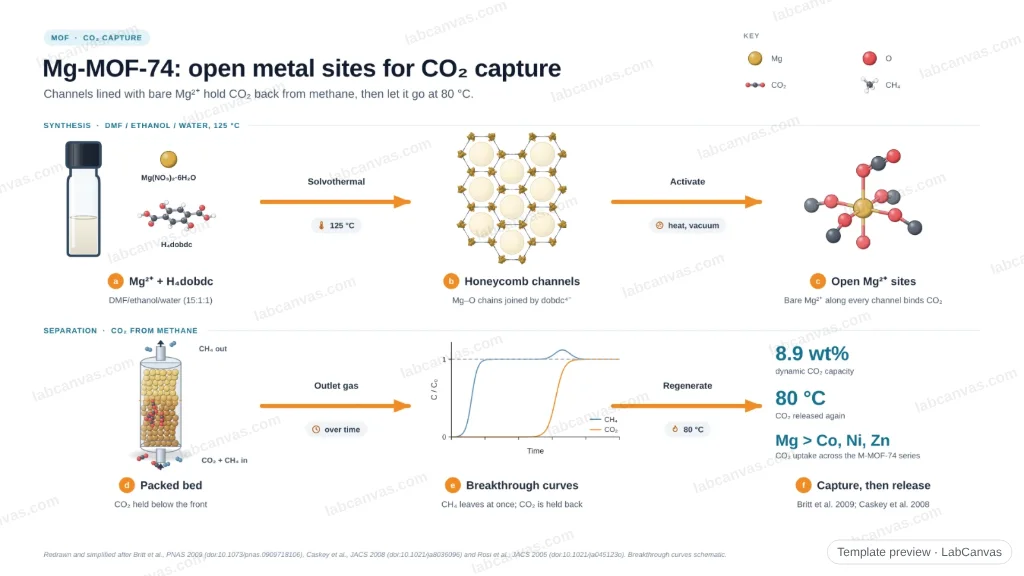
MOF-74, also called CPO-27 or M₂(dobdc), is a family of metal–organic frameworks in which helical chains of metal ions are joined by 2,5-dioxidoterephthalate (dobdc⁴⁻) into a honeycomb of one-dimensional hexagonal channels. The zinc compound, Zn₂(dobdc), was first reported as MOF-74 by Rosi, Yaghi and co-workers in JACS in 2005; once the solvent is removed, every metal leaves an open site facing the channel, which is why the magnesium member, Mg-MOF-74, is a benchmark CO₂ adsorbent.
Last updated
MOF-74 at a glance
| Formula | M₂(dobdc), dobdc⁴⁻ = 2,5-dioxido-1,4-benzenedicarboxylate; e.g. Mg₂(dobdc), Zn₂(dobdc) (Caskey et al. 2008; Bloch et al. 2011) |
|---|---|
| Other names | CPO-27-M (e.g. CPO-27-Mg), M-MOF-74 (Bloch et al. 2011), M₂(dhtp) (Dietzel et al. 2008) |
| Metals | Mg, Co, Ni and Zn give isostructural frameworks (Caskey et al. 2008); Fe as well (Bloch et al. 2011) |
| Molar mass | Mg₂(dobdc) 242.7 g mol⁻¹; Zn₂(dobdc) 324.9 g mol⁻¹ (calculated from the formulas, solvent-free) |
| Metal node (SBU) | Rod-shaped SBU: infinite helical metal–oxygen chains running along c (Rosi et al. 2005) |
| Organic linker | dobdc⁴⁻, from 2,5-dihydroxyterephthalic acid (H₄dobdc, also written H₄dhtp) |
| Pores | One-dimensional hexagonal channels lined with metal sites (Bloch et al. 2011); about 11–12 Å across after subtracting the atoms’ van der Waals radii (calculated from the Zn₂(dobdc) crystal file) |
| Crystal system | Trigonal, space group R-3, a = 26.19 Å, c = 6.935 Å (Zn₂(dobdc) crystal file on this page) |
| Channel spacing | 15.1 Å between neighbouring channel centres (calculated, a/√3) |
| Open metal sites | One per metal after activation: the solvent bound to each metal is removed, leaving a bare site facing the channel (Britt et al. 2009) |
| Surface area | BET 1,360 m² g⁻¹ for Fe₂(dobdc) (Bloch et al. 2011); Mg-MOF-74 was the highest-surface-area magnesium framework reported at the time (Caskey et al. 2008) |
| CO₂ capture | Mg-MOF-74: 8.9 wt% dynamic CO₂ capacity, CO₂ released at 80 °C (Britt et al. 2009) |
| First reported | MOF-74 (Zn): Rosi, Kim, Eddaoudi, Chen, O’Keeffe and Yaghi, J. Am. Chem. Soc. 127, 1504 (2005) |
MOF-74 structure diagram
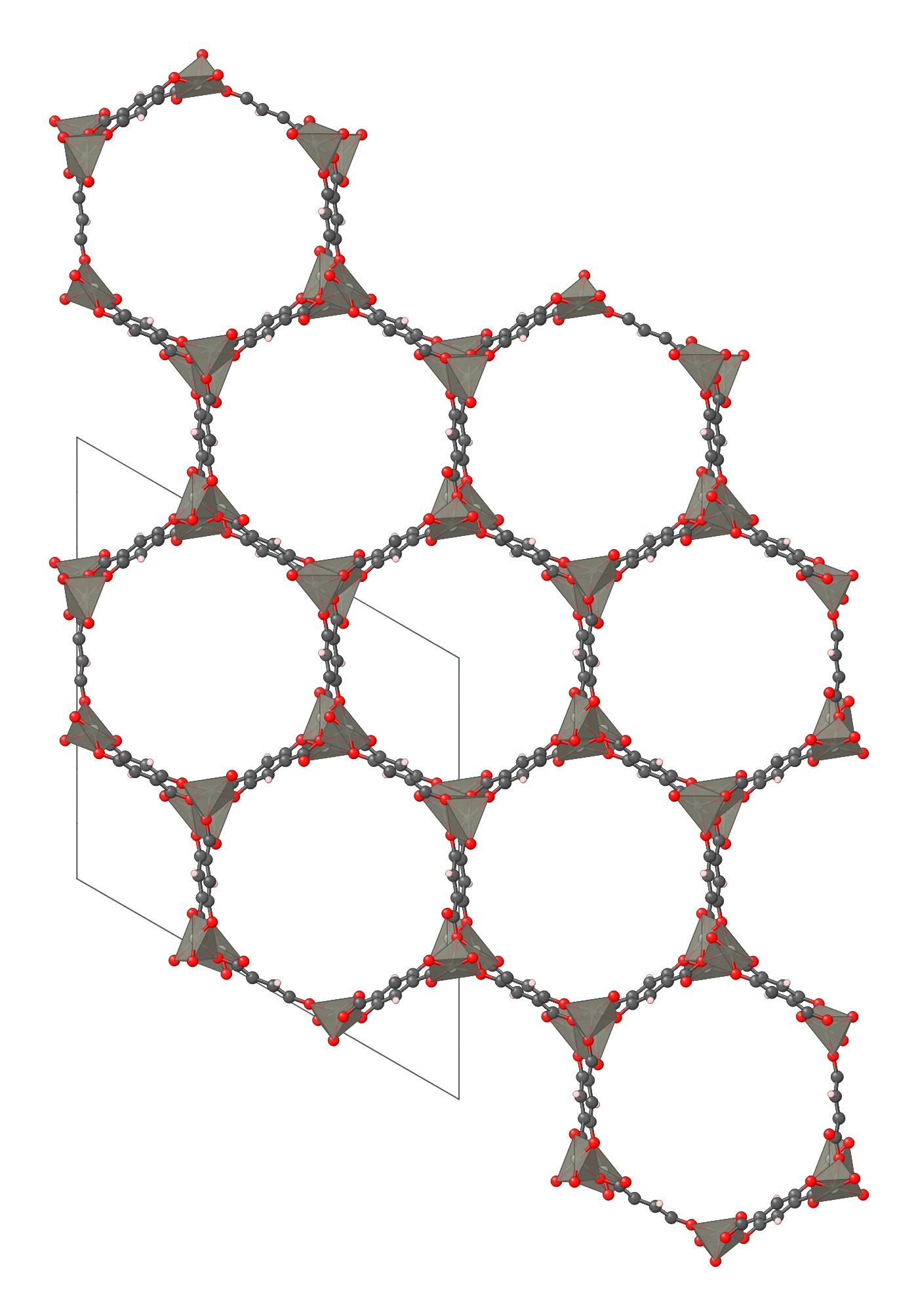
MOF-74 crystal structure (high-resolution SVG)
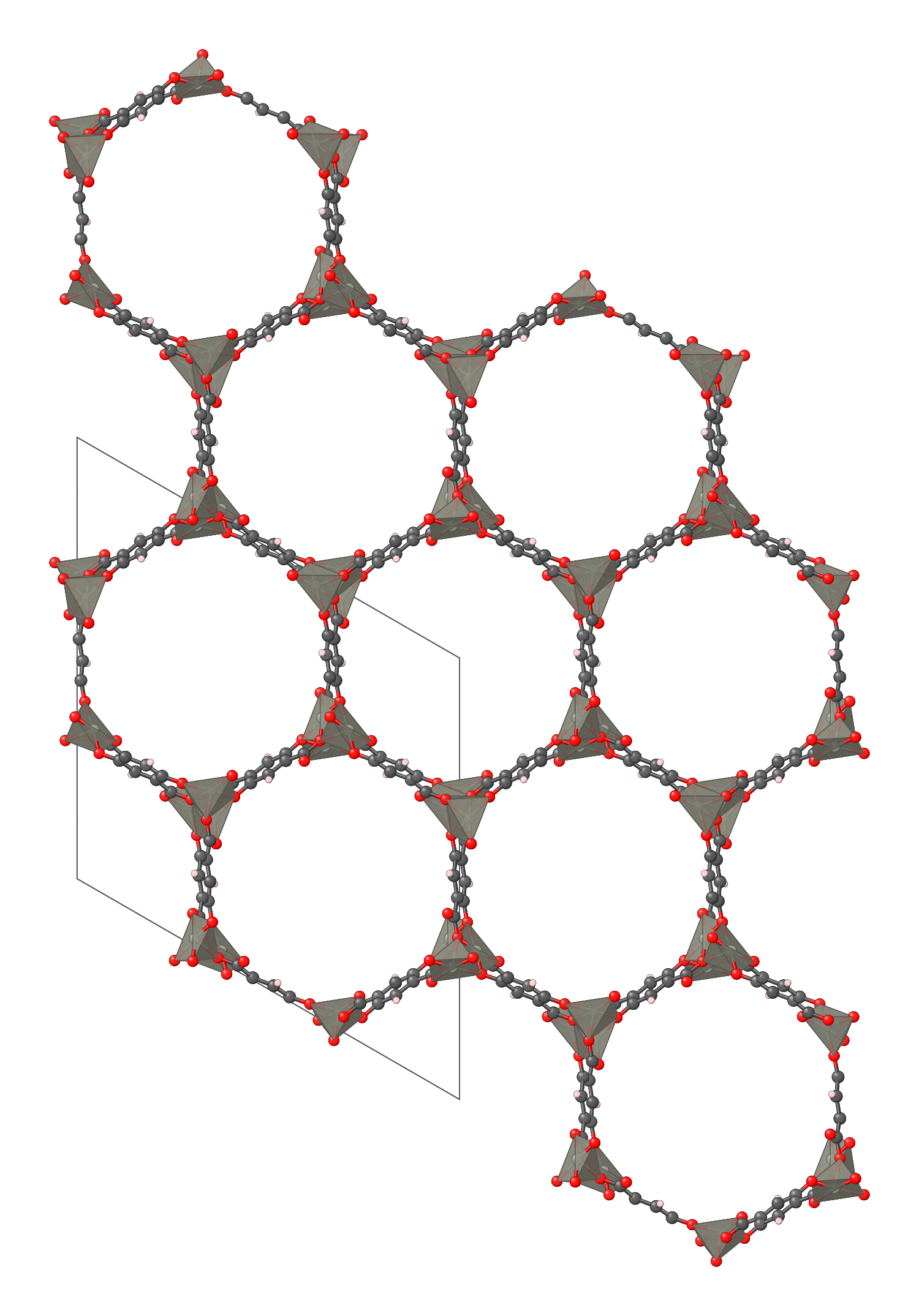
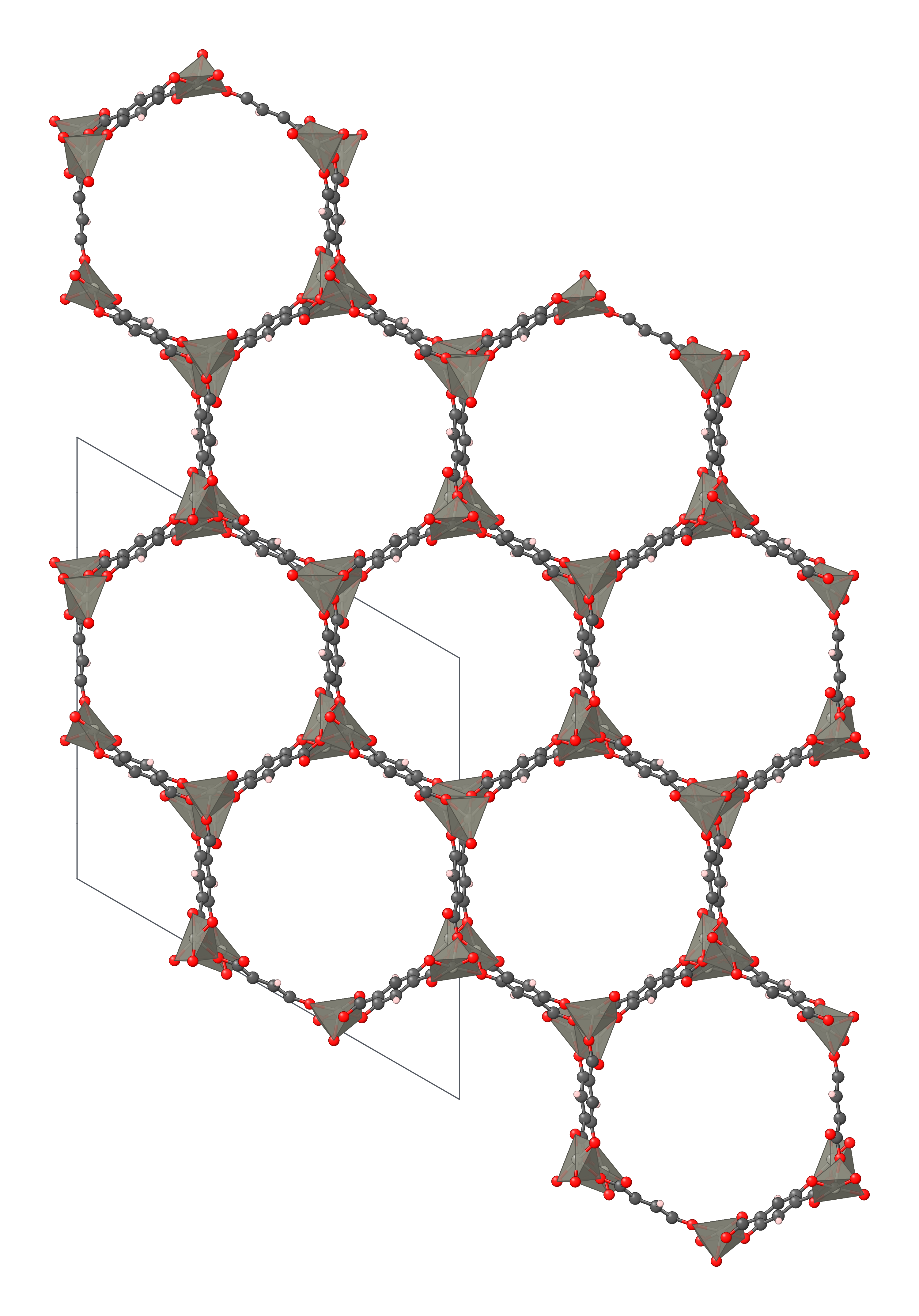
MOF-74 in 3D (interactive)
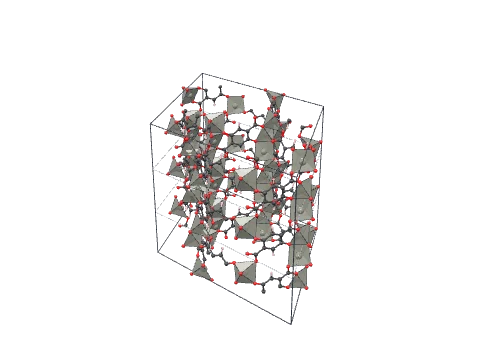
Loading the 3D model…
MOF-74 structure explained
Most famous MOFs are built from separate clusters, such as the Zn₄O unit of MOF-5. MOF-74 is different: its node is an infinite rod, a chain of metal–oxygen polyhedra that winds as a helix along the c axis of the crystal (Rosi et al. 2005). The chains repeat every 6.9 Å along c (c = 6.935 Å in the Zn₂(dobdc) crystal file).
The linker is dobdc⁴⁻, the fully deprotonated form of 2,5-dihydroxyterephthalic acid. Both its carboxylate and its phenoxide oxygens bind to metals, so each linker ties two neighbouring rods together. Seen down the c axis, the rods sit at the corners of hexagons and the linkers form the walls, giving a honeycomb of one-dimensional hexagonal channels.
In the as-made solid each metal also holds one solvent molecule (water or DMF) pointing into the channel. Heating under vacuum removes it, and the metal is left with an empty coordination site, an open metal site. Every channel is lined with these bare cations along its whole length (Britt et al. 2009; Bloch et al. 2011), which is what makes MOF-74 unusual.
In the Zn₂(dobdc) crystal file (trigonal, R-3, a = 26.19 Å) the channel centres are 15.1 Å apart, and the channel is about 11–12 Å across once the size of the atoms lining it is taken into account (both calculated from the file).
How MOF-74 is made
- Solvothermal synthesis. For Mg-MOF-74, magnesium nitrate hexahydrate and 2,5-dihydroxyterephthalic acid are dissolved in DMF/ethanol/water (15:1:1) and heated at 125 °C (Caskey et al. 2008). The Co, Ni and Zn members are made in a similar way from their metal salts and the same linker (Caskey et al. 2008).
- Solvent exchange. The crystals are washed and the high-boiling DMF in the channels is exchanged for a more volatile solvent.
- Activation. Heating under vacuum removes the solvent bound to the metals and opens the metal sites. The activated material must then be kept dry, because water binds strongly to the open sites and competes with CO₂.
Why MOF-74 matters
MOF-74 made open metal sites a design tool. Its channels hold one exposed metal cation per metal atom, packed densely along every wall, and guests such as CO₂, O₂ and olefins bind directly to them (Dietzel et al. 2008; Bloch et al. 2011, 2012).
It is also the clearest example of tuning a framework by changing the metal alone. Caskey, Wong-Foy and Matzger made four isostructural versions (Mg, Co, Ni and Zn) and found that the CO₂ uptake at low pressure changed dramatically with the metal, with the magnesium version on top (Caskey et al. 2008). Britt et al. then showed in a packed bed that Mg-MOF-74 separates CO₂ from methane with 8.9 wt% dynamic capacity and gives the CO₂ back at only 80 °C (Britt et al. 2009). Rosi et al. used MOF-74 and its relatives to show that MOFs built from rod-shaped units can also be permanently porous (Rosi et al. 2005).
Uses and research areas
- CO₂ capture. Mg-MOF-74 is a benchmark adsorbent for CO₂ from natural gas and flue gas (Caskey et al. 2008; Britt et al. 2009). Infrared and diffraction studies of the nickel version show CO₂ binding end-on to the open Ni sites (Dietzel et al. 2008).
- Hydrocarbon separations. Fe₂(dobdc) separates ethylene from ethane and propylene from propane at 318 K; neutron diffraction shows the olefins bound side-on at the open Fe(II) sites (Bloch et al. 2012).
- Oxygen from air. Fe₂(dobdc) binds O₂ in preference to N₂: at 211 K reversibly, one O₂ per iron (Bloch et al. 2011).
- Toxic gas removal. MOF-74 was one of six MOFs benchmarked against eight harmful gases, including ammonia and sulfur dioxide, by breakthrough measurements (Britt et al. 2008).
- Limitation. Water competes for the open metal sites, so humid gas streams lower the CO₂ capacity, and powders have to be shaped into pellets for use in beds.
How to draw the MOF-74 structure
Draw MOF-74 looking straight down its channels: the honeycomb view shows the metal rods at the corners of the hexagons, the dobdc⁴⁻ linkers as the walls and the open metal sites pointing into each channel. Add a close-up of one open metal site with a bound CO₂ molecule to explain capture. The Mg-MOF-74 figure above has both, plus the synthesis and a breakthrough experiment, and opens as an editable LabCanvas figure. Below it, the crystal structure of Zn₂(dobdc) is drawn as a high-resolution SVG from its crystal file, and the same file opens as a live 3D model you can turn to look along the channels and export as an image.
MOF-74 compared with other well-known MOFs
| MOF | Formula | Metal node | Linker | Net / pores | First report |
|---|---|---|---|---|---|
| MOF-74 (CPO-27) | M₂(dobdc) | Helical M–O rod | dobdc⁴⁻ | Rod packing, 1D hexagonal channels | Rosi et al., JACS 2005 |
| MOF-5 (IRMOF-1) | Zn₄O(BDC)₃ | Zn₄O cluster | Terephthalate | pcu | Li et al., Nature 1999 |
| HKUST-1 | Cu₃(BTC)₂ | Cu₂ paddlewheel | Trimesate (BTC) | tbo | Chui et al., Science 1999 |
| UiO-66 | Zr₆O₄(OH)₄(BDC)₆ | Zr₆ cluster | Terephthalate | fcu | Cavka et al., JACS 2008 |
| MIL-101(Cr) | Cr₃F(H₂O)₂O(BDC)₃ | Cr₃O trimer | Terephthalate | MTN (zeotype) | Férey et al., Science 2005 |
Related materials
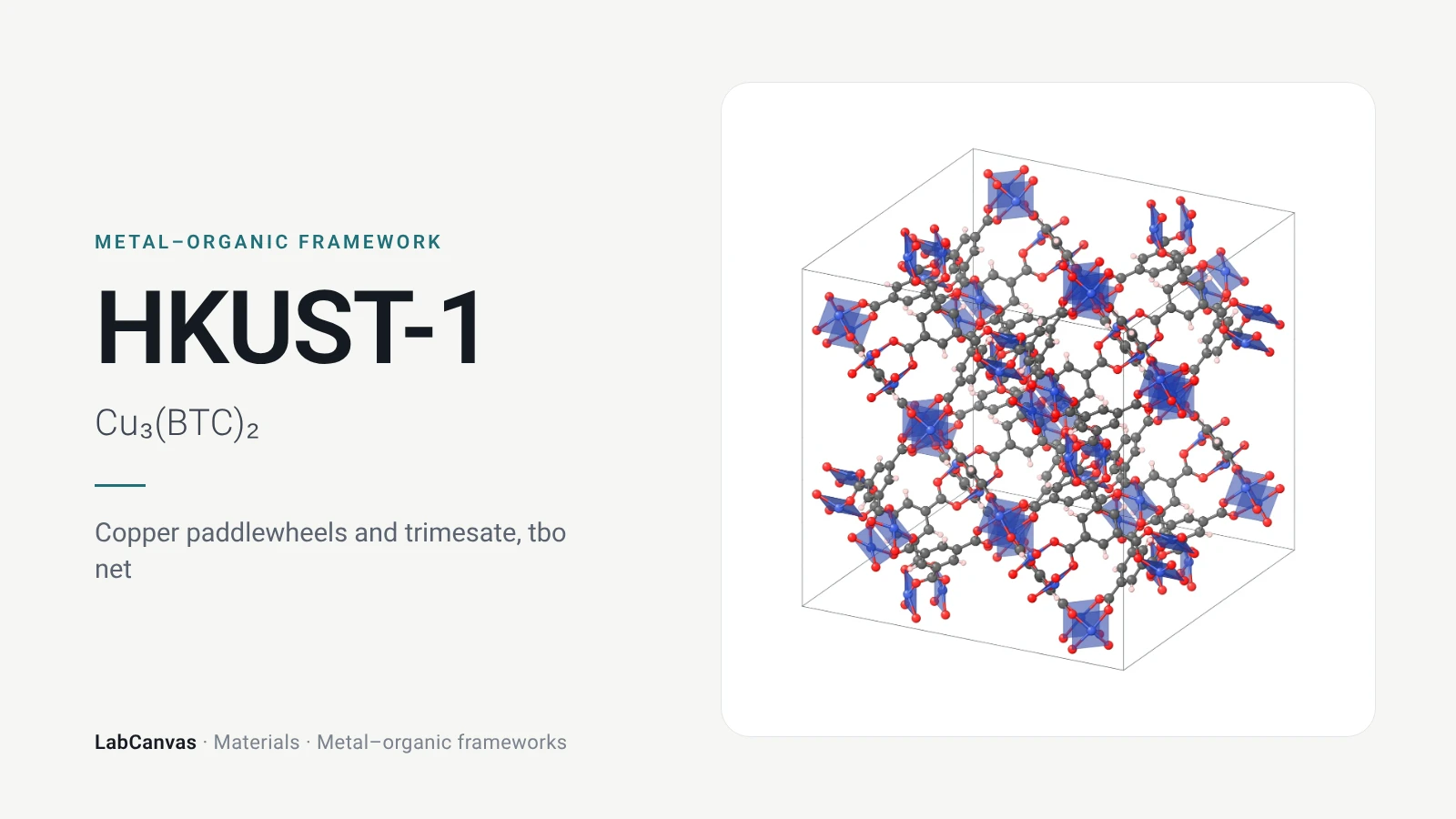
HKUST-1
HKUST-1 (Cu-BTC), Cu₃(BTC)₂: its paddlewheel structure in 2D and 3D, how it is made, pore size, open copper sites and stability, with the original papers.
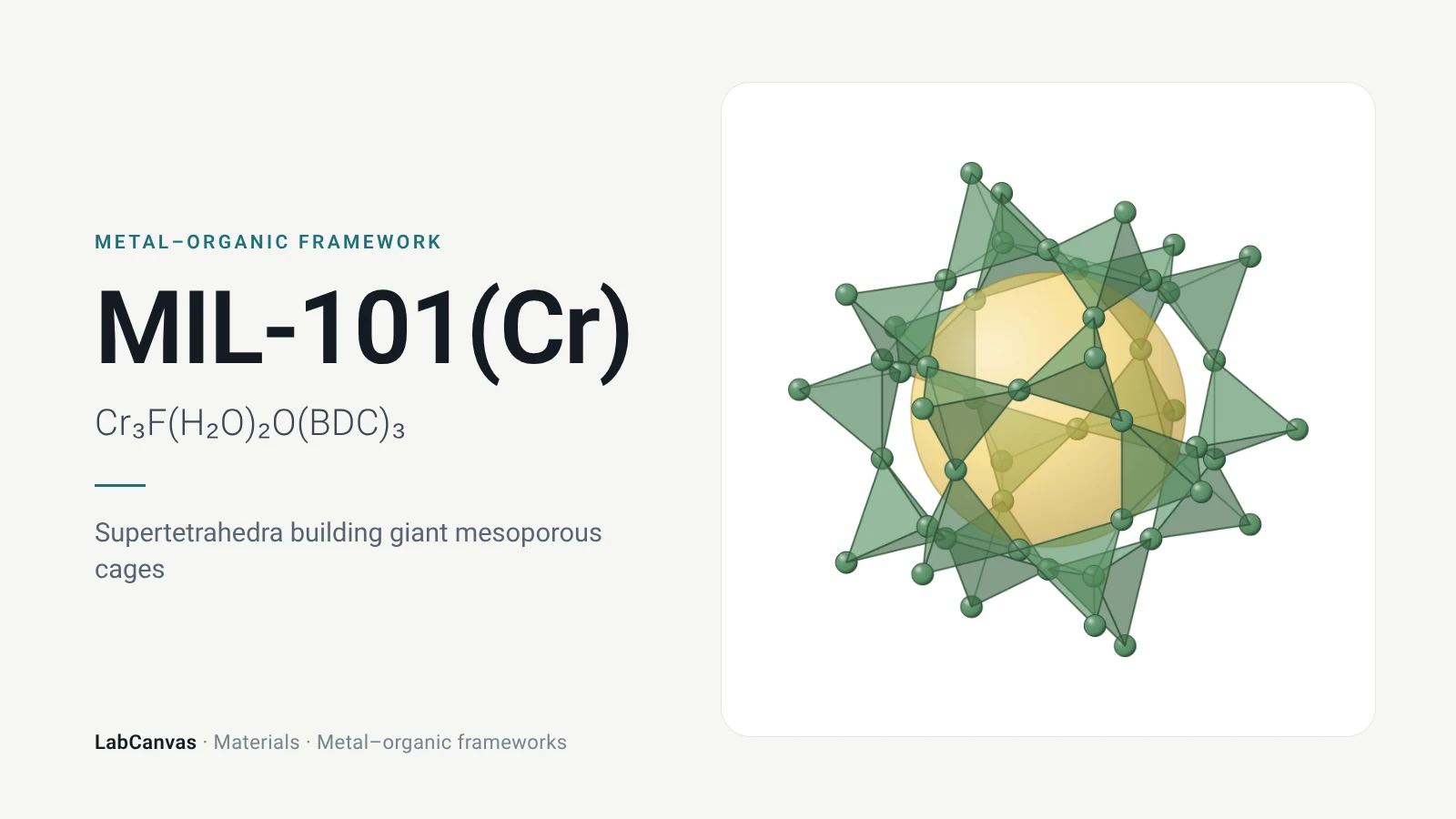
MIL-101(Cr)
MIL-101(Cr), a chromium terephthalate MOF: its giant 30–34 Å cages, MTN structure, synthesis, surface area, water stability and uses, with the original papers.
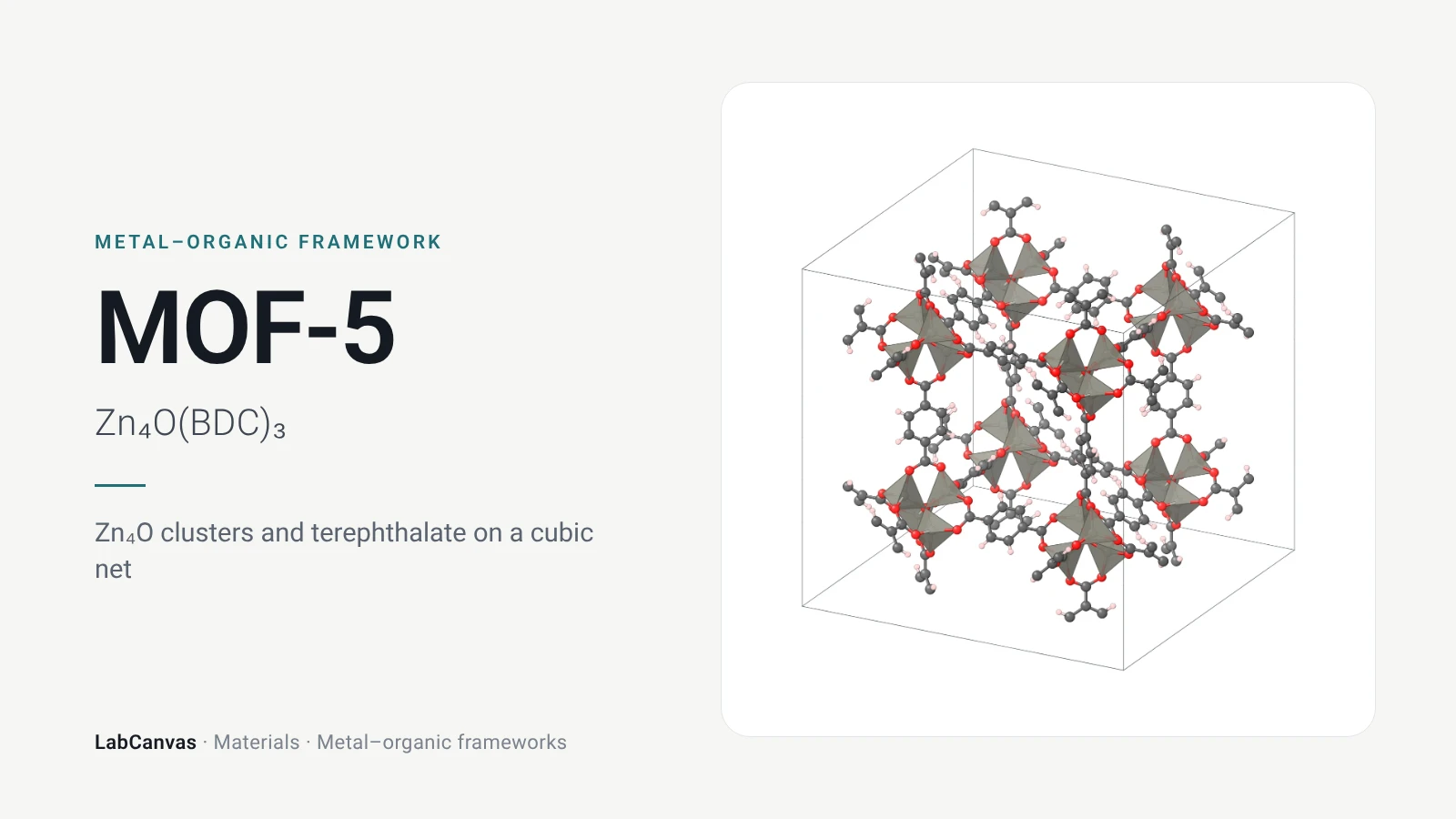
MOF-5
MOF-5, Zn₄O(BDC)₃: its cubic structure in 2D and interactive 3D, how it is made, surface area, stability and uses, with the original papers. Edit the figures free.
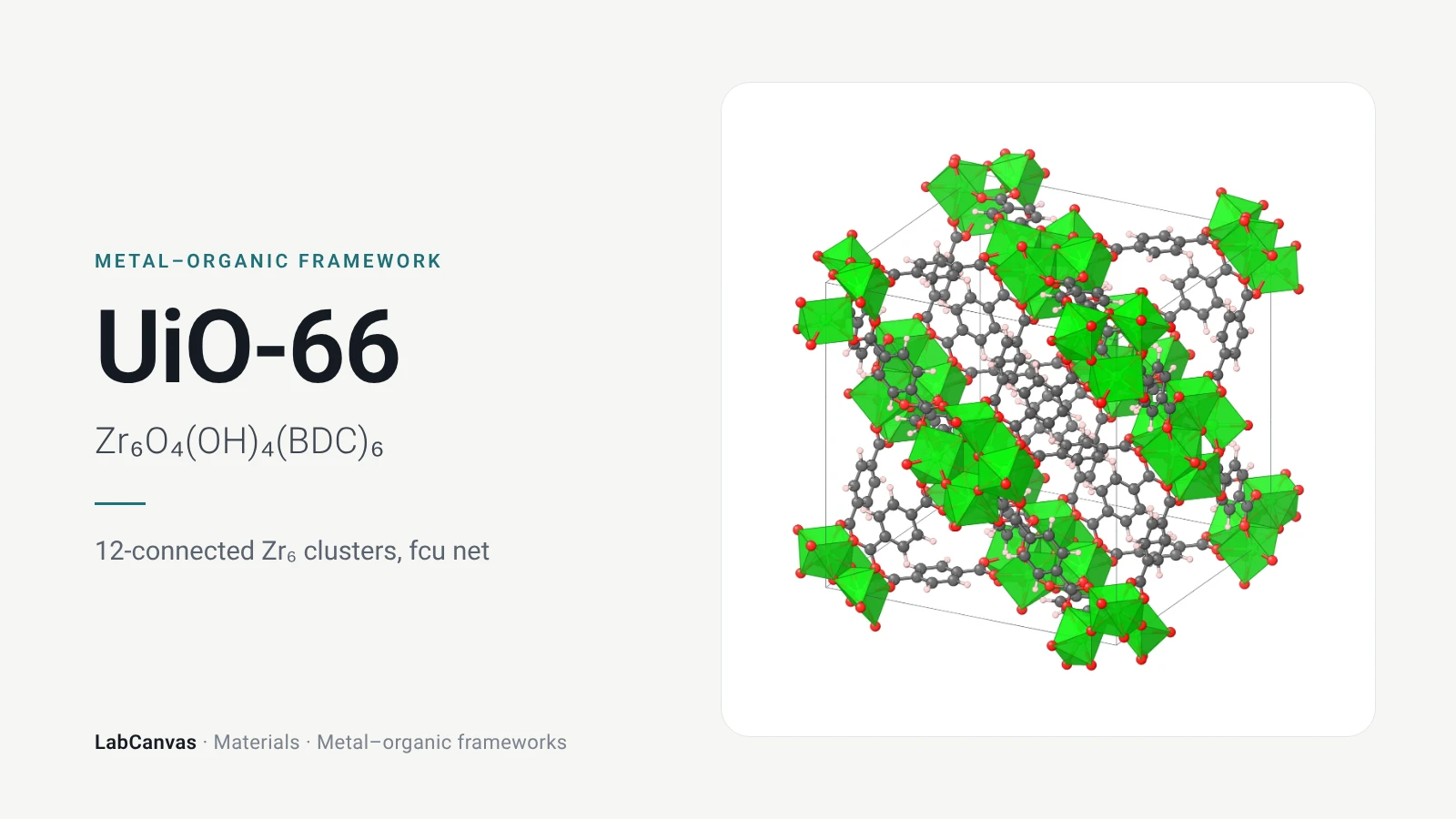
UiO-66
UiO-66, Zr₆O₄(OH)₄(BDC)₆: its fcu structure in 2D and 3D, how it is made, missing-linker defects, pore size, surface area and stability, with the papers.
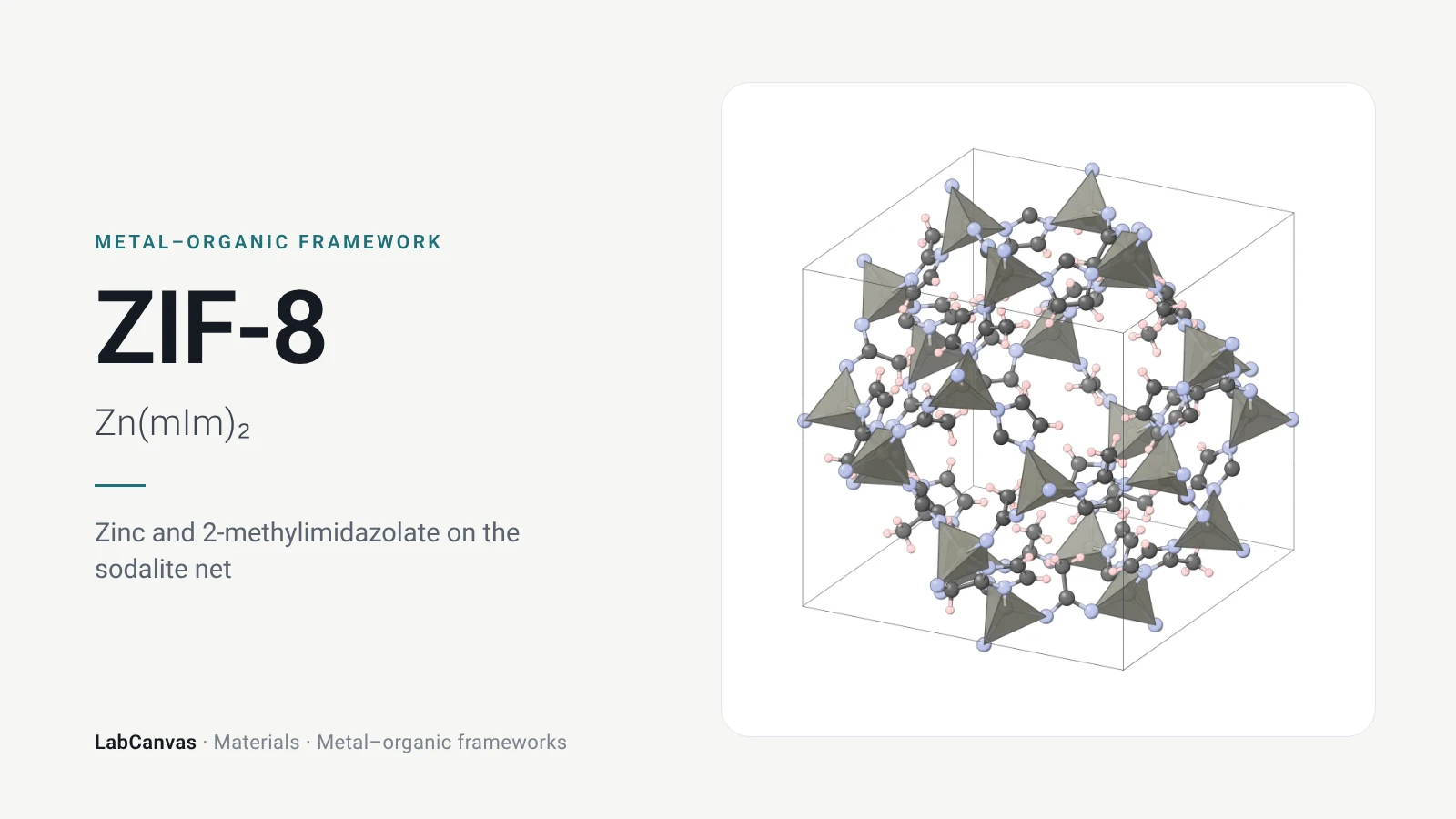
ZIF-8
ZIF-8, Zn(mIm)₂: its sodalite structure in 2D and 3D, how it is made, pore size, surface area and stability, with the original papers. Edit the figures free.
More on LabCanvas
- Mg-MOF-74: open metal sites for CO₂ capture: Editable figure template
- More MOF figure templates: Ready-made, cited figures to edit
- Crystal structure figure software compared: VESTA, Mercury, CrystalMaker, Avogadro and LabCanvas
- XRD Scherrer crystallite size calculator: Free tool
- Molar mass calculator: Free tool
- Journal figure size guide: Column widths and resolutions for 38 journals
- 3D models gallery: Turn MOFs, COFs and more in 3D
Frequently asked questions
What is MOF-74?
MOF-74 (also called CPO-27 or M₂(dobdc)) is a family of metal–organic frameworks made of helical metal–oxide chains joined by 2,5-dioxidoterephthalate into hexagonal, honeycomb-like channels. After activation every metal has an open site facing the channel. The zinc compound was reported as MOF-74 in 2005.
What is the chemical formula of MOF-74?
M₂(dobdc), where dobdc⁴⁻ is 2,5-dioxido-1,4-benzenedicarboxylate and M is a divalent metal such as Mg, Zn, Co, Ni or Fe. Solvent-free Mg₂(dobdc) weighs about 242.7 g/mol and Zn₂(dobdc) about 324.9 g/mol.
What is the difference between MOF-74 and CPO-27?
None in structure: they are two names for the same framework type, M₂(dobdc), used by different groups (Bloch et al. 2011). MOF-74 comes from the Yaghi group (Rosi et al. 2005); CPO-27 from the Oslo group of Dietzel, Blom and Fjellvåg (Dietzel et al. 2005). The metal is added to the name, as in Mg-MOF-74 or CPO-27-Mg.
What is the pore size of MOF-74?
Its one-dimensional hexagonal channels are about 11–12 Å across, calculated from the Zn₂(dobdc) crystal structure after subtracting the van der Waals radii of the atoms that line them. Neighbouring channels are 15.1 Å apart.
Why is Mg-MOF-74 good for CO₂ capture?
Activation leaves a bare Mg²⁺ site along every channel wall, and these sites bind CO₂ strongly. Of the Mg, Co, Ni and Zn versions, Mg takes up the most CO₂ (Caskey et al. 2008). In a packed bed it holds 8.9 wt% CO₂ dynamically while methane passes through, and releases the CO₂ at 80 °C (Britt et al., PNAS 2009).
How is Mg-MOF-74 synthesised?
Solvothermally: magnesium nitrate hexahydrate and 2,5-dihydroxyterephthalic acid in DMF/ethanol/water (15:1:1) at 125 °C (Caskey et al. 2008), then solvent exchange and heating under vacuum to open the Mg sites.
What are open metal sites in MOF-74?
Metal ions with an empty coordination position. In as-made MOF-74 each metal holds a solvent molecule; heating under vacuum removes it and leaves the metal exposed to the channel, where it binds gases such as CO₂, O₂ or olefins directly.
What is the crystal structure of Zn-MOF-74?
Trigonal, space group R-3, with a = 26.19 Å and c = 6.935 Å in the crystal file shown on this page: zinc–oxygen chains along c, linked by dobdc⁴⁻ into hexagonal channels.
How can I draw MOF-74 for a paper or presentation?
Open the Mg-MOF-74 figure on this page in LabCanvas (free) to edit the channels, the open-metal-site close-up and the breakthrough plot, or open the Zn₂(dobdc) crystal structure as a high-resolution SVG or a live 3D model and export it.
References
- N. L. Rosi, J. Kim, M. Eddaoudi, B. Chen, M. O’Keeffe, O. M. Yaghi. Rod packings and metal–organic frameworks constructed from rod-shaped secondary building units. J. Am. Chem. Soc. 2005, 127, 1504–1518. doi:10.1021/ja045123o
- P. D. C. Dietzel, Y. Morita, R. Blom, H. Fjellvåg. An in situ high-temperature single-crystal investigation of a dehydrated metal–organic framework compound and field-induced magnetization of one-dimensional metal–oxygen chains. Angew. Chem. Int. Ed. 2005, 44, 6354–6358. doi:10.1002/anie.200501508
- S. R. Caskey, A. G. Wong-Foy, A. J. Matzger. Dramatic tuning of carbon dioxide uptake via metal substitution in a coordination polymer with cylindrical pores. J. Am. Chem. Soc. 2008, 130, 10870–10871. doi:10.1021/ja8036096
- D. Britt, H. Furukawa, B. Wang, T. G. Glover, O. M. Yaghi. Highly efficient separation of carbon dioxide by a metal-organic framework replete with open metal sites. Proc. Natl. Acad. Sci. USA 2009, 106, 20637–20640. doi:10.1073/pnas.0909718106
- P. D. C. Dietzel et al.. Adsorption properties and structure of CO₂ adsorbed on open coordination sites of metal–organic framework Ni₂(dhtp) from gas adsorption, IR spectroscopy and X-ray diffraction. Chem. Commun. 2008, 5125–5127. doi:10.1039/b810574j
- E. D. Bloch et al.. Selective binding of O₂ over N₂ in a redox-active metal–organic framework with open iron(II) coordination sites. J. Am. Chem. Soc. 2011, 133, 14814–14822. doi:10.1021/ja205976v
- E. D. Bloch et al.. Hydrocarbon separations in a metal–organic framework with open iron(II) coordination sites. Science 2012, 335, 1606–1610. doi:10.1126/science.1217544
- D. Britt, D. Tranchemontagne, O. M. Yaghi. Metal-organic frameworks with high capacity and selectivity for harmful gases. Proc. Natl. Acad. Sci. USA 2008, 105, 11623–11627. doi:10.1073/pnas.0804900105
- H. Li, M. Eddaoudi, M. O’Keeffe, O. M. Yaghi. Design and synthesis of an exceptionally stable and highly porous metal-organic framework. Nature 1999, 402, 276–279. doi:10.1038/46248
- S. S.-Y. Chui et al.. A chemically functionalizable nanoporous material [Cu₃(TMA)₂(H₂O)₃]ₙ. Science 1999, 283, 1148–1150. doi:10.1126/science.283.5405.1148
- J. H. Cavka et al.. A new zirconium inorganic building brick forming metal organic frameworks with exceptional stability. J. Am. Chem. Soc. 2008, 130, 13850–13851. doi:10.1021/ja8057953
- G. Férey et al.. A chromium terephthalate-based solid with unusually large pore volumes and surface area. Science 2005, 309, 2040–2042. doi:10.1126/science.1116275
Draw MOF-74 for your paper or slides
LabCanvas is a browser workspace for scientific figures: framework clusters, linkers and nets, crystal structures in 2D and 3D, graphs and posters, all editable.
Edit the MOF-74 figure