Battery materials figure templates
10 editable battery graphical abstract templates built from crystal structures: how a lithium-ion cell works, LiCoO₂, LiFePO₄, LiMn₂O₄ and NMC811 cathodes, graphite and the SEI, silicon anodes, lithium–sulfur, solid-state electrolytes and coin cells.
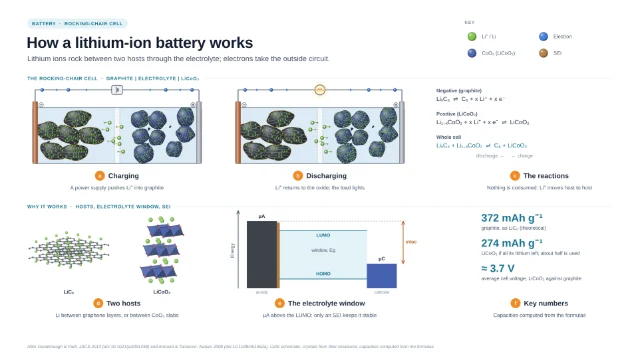 How a lithium-ion battery works
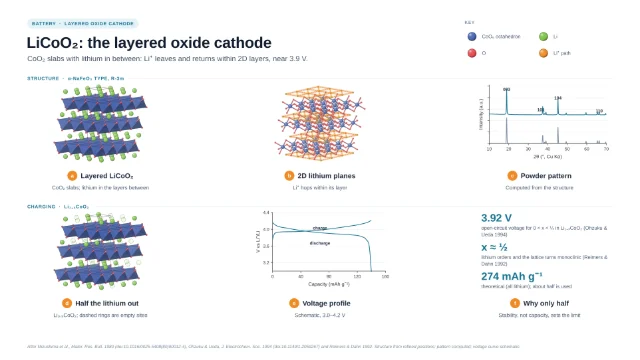 LiCoO₂: the layered oxide cathode
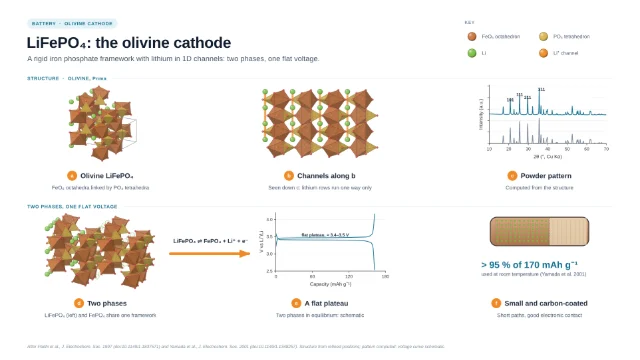 LiFePO₄: the olivine cathode
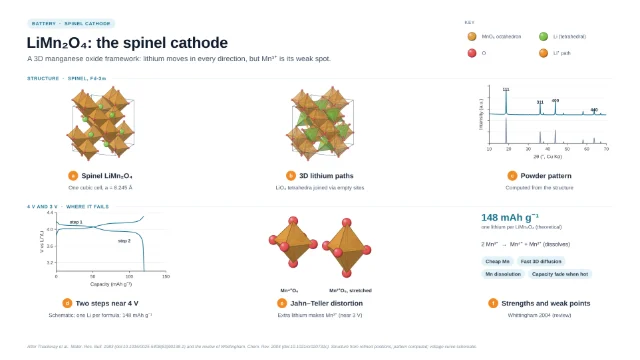 LiMn₂O₄: the spinel cathode
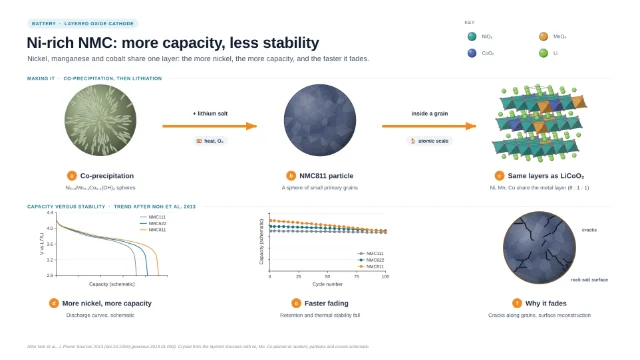 Ni-rich NMC: more capacity, less stability
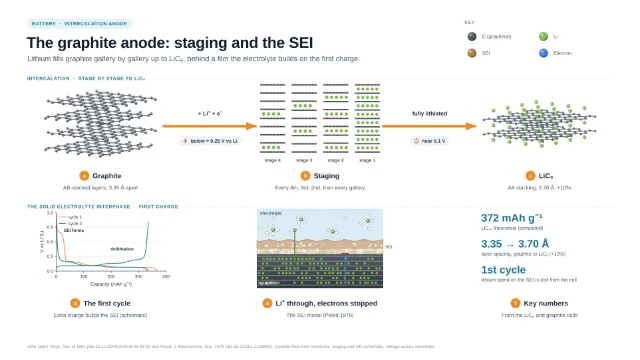 The graphite anode: staging and the SEI
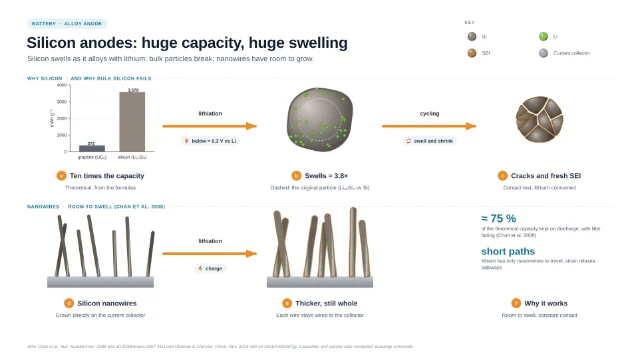 Silicon anodes: huge capacity, huge swelling
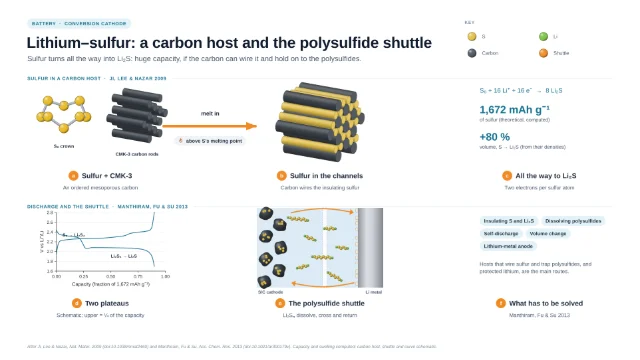 Lithium–sulfur: a carbon host and the polysulfide shuttle
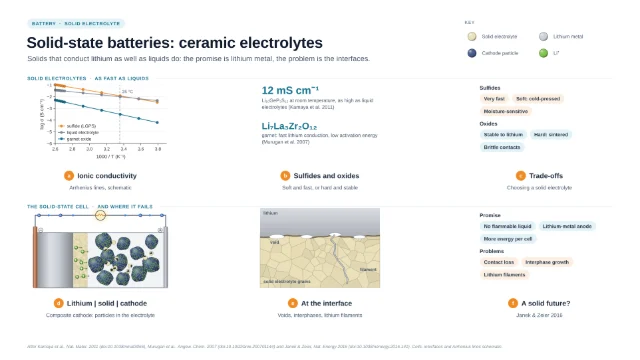 Solid-state batteries: ceramic electrolytes
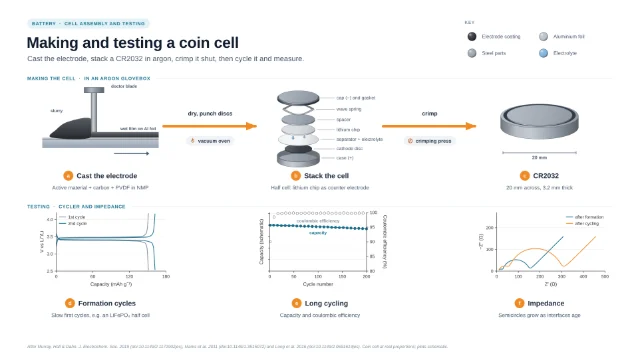 Making and testing a coin cell
Questions
What templates are there for battery materials?
10: How a lithium-ion battery works; LiCoO₂: the layered oxide cathode; LiFePO₄: the olivine cathode; LiMn₂O₄: the spinel cathode; Ni-rich NMC: more capacity, less stability; The graphite anode: staging and the SEI; Silicon anodes: huge capacity, huge swelling; Lithium–sulfur: a carbon host and the polysulfide shuttle; Solid-state batteries: ceramic electrolytes; Making and testing a coin cell.
Which papers are these templates based on?
Together they follow 26 published papers; each template’s page lists its own, with DOIs, and the figure credit names them too.
How do I use one of these templates?
Open its page and click Open in the editor. Sign in, or create an account, and it opens in the LabCanvas figure editor as your own design, with every layer editable.
Make it your own figure
Start from a template and change anything: the text, the colours, the structures.
Create an account Sign in