Battery materials: how a lithium-ion cell works and what it is made of
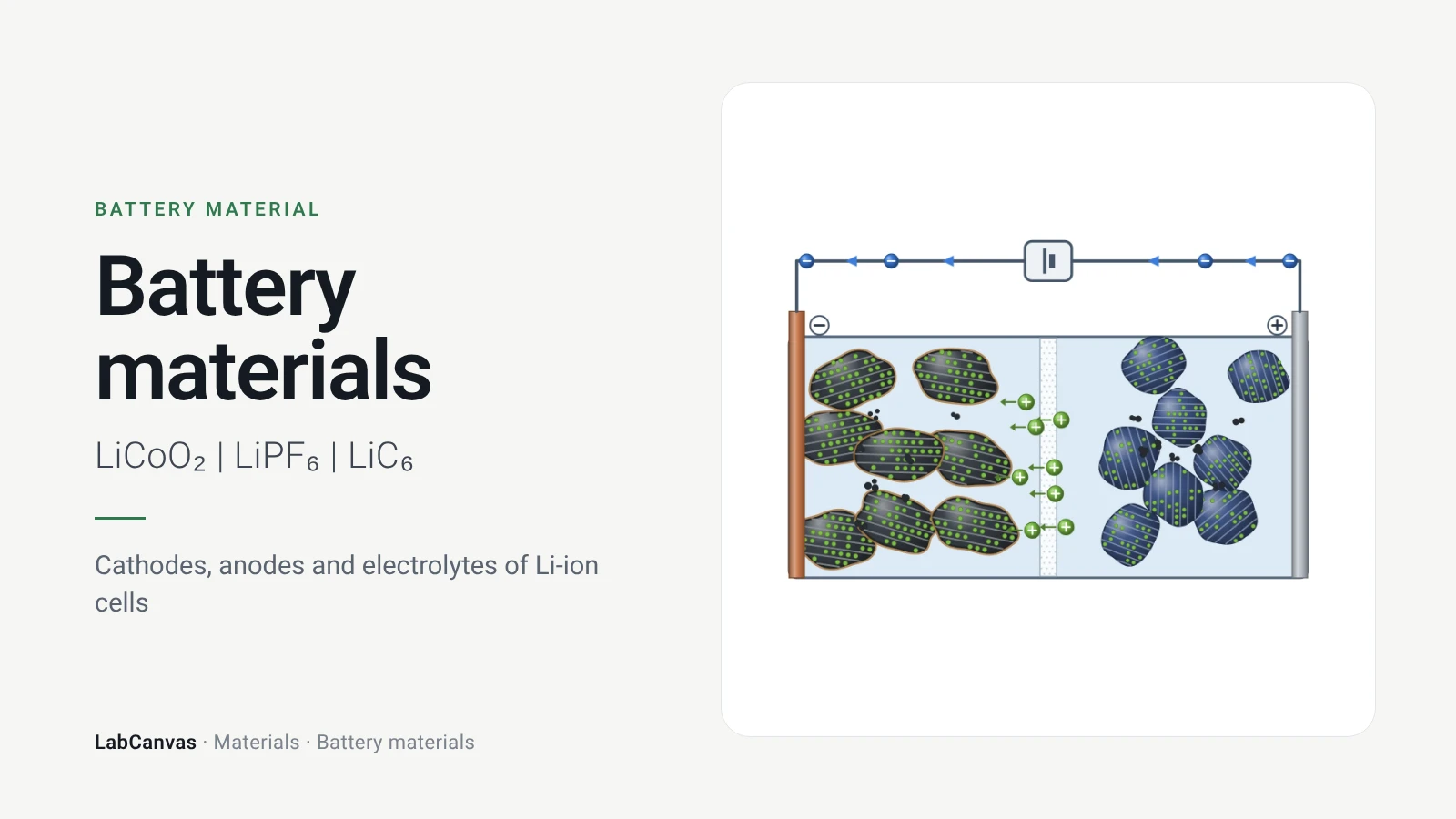
A lithium-ion battery stores energy in two electrodes, a cathode such as LiCoO₂ and an anode such as graphite (LiC₆), separated by an electrolyte that lets Li⁺ ions through but forces the electrons round the external circuit (Goodenough & Park 2013). On charge, Li⁺ leaves the cathode host and enters the anode; on discharge it goes back (Lin et al. 2026). The practical cathodes are layered oxides (LiCoO₂, NMC), spinels (LiMn₂O₄) and polyanion compounds (olivine LiFePO₄), all from Goodenough’s group in the 1980s and 1990s (Manthiram 2020), while research pushes towards silicon and lithium-metal anodes, solid electrolytes and sodium-ion cells.
Contents
Battery materials at a glance
| Cell parts | Anode, cathode, electrolyte and separator (Heidari & Mahdavi 2020) |
|---|---|
| Working principle | Reversible insertion (intercalation) of Li⁺ into host electrodes; the electrolyte carries the ions, electrons go through the external circuit (Goodenough & Park 2013) |
| Cathode families | Layered oxides (LiCoO₂, NMC), spinels (LiMn₂O₄) and polyanion oxides (LiFePO₄) (Manthiram 2020) |
| LiCoO₂ | ~4 V, ~140 mAh g⁻¹ practical (Manthiram 2020); 274 mAh g⁻¹ theoretical (Lin et al. 2026) |
| NMC111 | ~200 mAh g⁻¹ for 2.8–4.6 V (Hashem et al. 2019) |
| LiMn₂O₄ | 4 V, below 130 mAh g⁻¹ (Manthiram 2020) |
| LiFePO₄ | Olivine, identified as a cathode in 1997 (Manthiram 2020); 170 mAh g⁻¹ theoretical (Jung et al. 2022) |
| Graphite anode | 372 mAh g⁻¹ as LiC₆ (Eshetu & Figgemeier 2019; Lee et al. 2024); 372 mAh g⁻¹ (calculated for LiC₆) |
| Silicon anode | 4200 mAh g⁻¹, about 10× graphite (Eshetu & Figgemeier 2019), with about 300% volume expansion (Shen et al. 2023) |
| Lithium metal anode | 3860 mAh g⁻¹, −3.04 V vs SHE; dendrites and unstable SEI (Bae et al. 2025) |
| Liquid electrolyte window | Organic electrolytes allow higher voltages than water, which is limited to 1.5 V (Goodenough & Park 2013) |
| Solid electrolyte record | Li₁₀GeP₂S₁₂: 12 mS cm⁻¹ at room temperature (Kamaya et al. 2011) |
| Sodium-ion | Abundant, low-cost sodium with chemistry similar to Li-ion (Hwang et al. 2017); Na⁺ is 1.07 Å and does not store reversibly in graphite or silicon (Qiao et al. 2023) |
| First commercial cell | Sony, 1991: LiCoO₂ cathode, graphite anode (Manthiram 2020) |
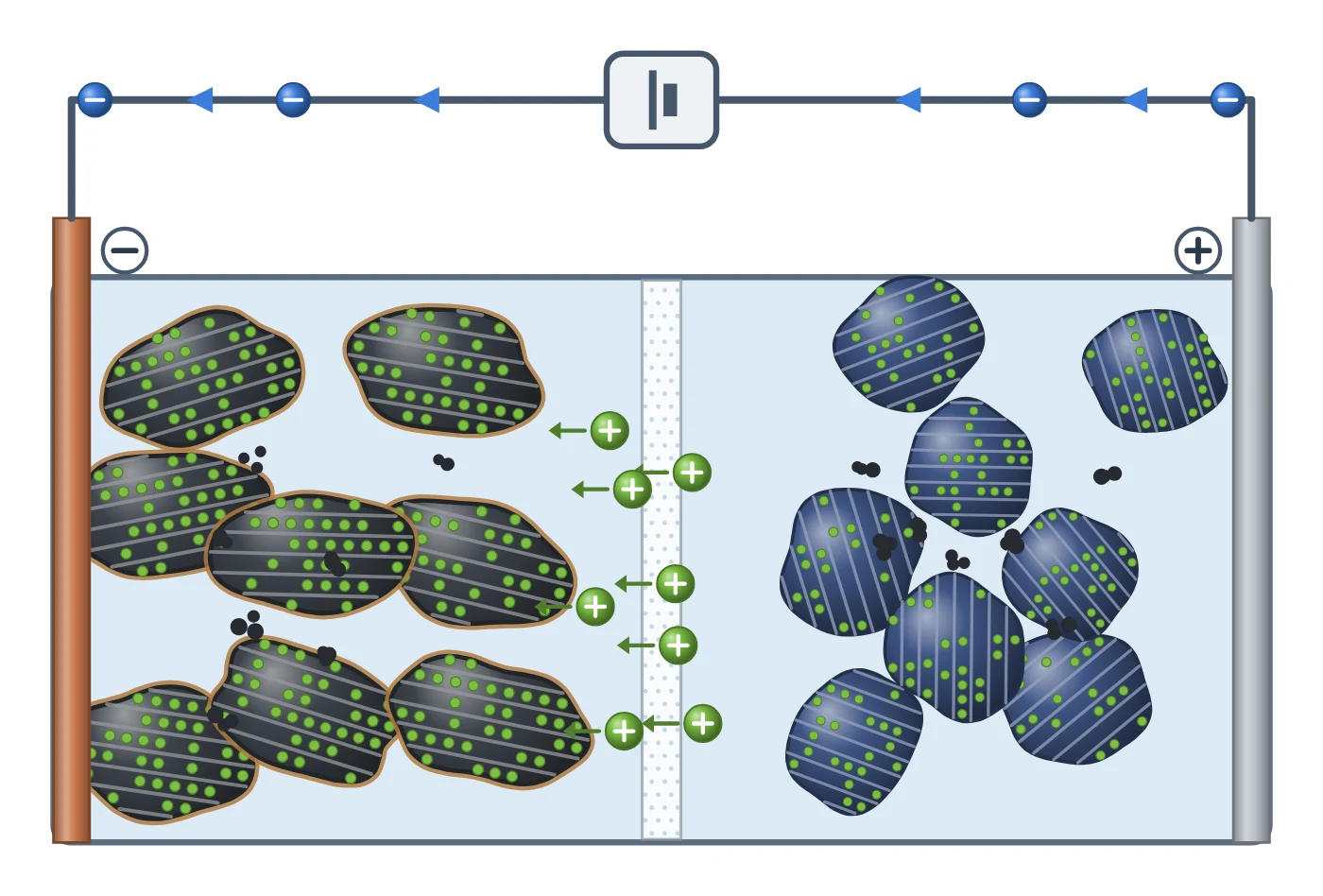
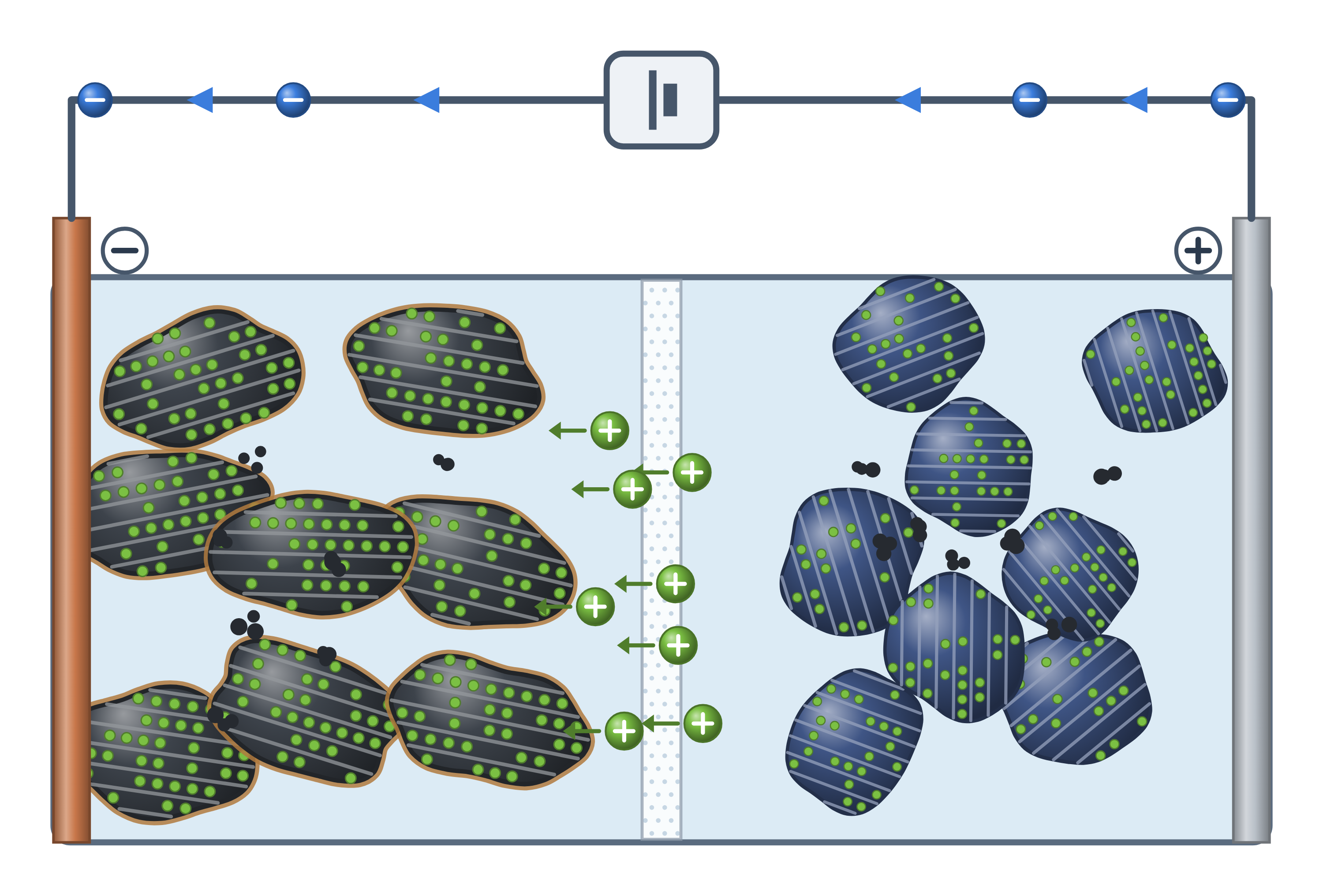
Lithium-ion cell diagram
Lithium-ion cell structure drawing (high-resolution SVG)
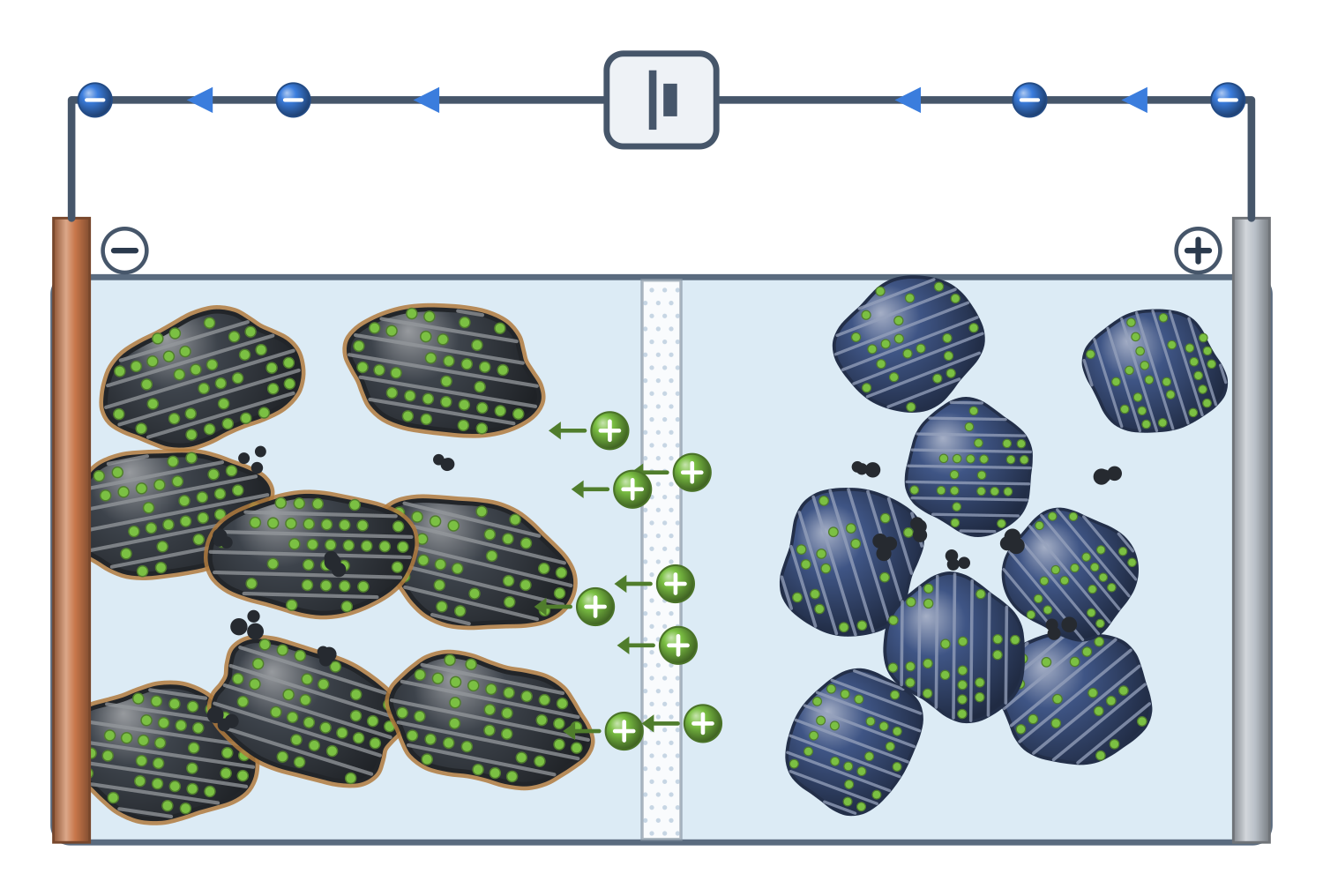
Lithium-ion cell in 3D (interactive)
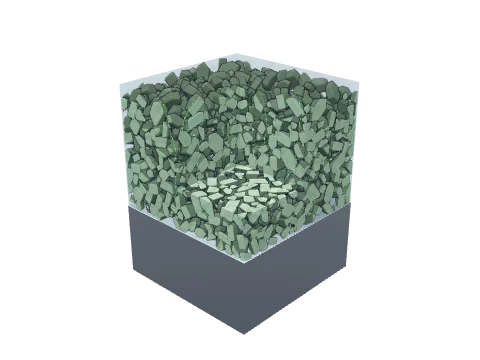
Loading the 3D model…
How a lithium-ion battery works
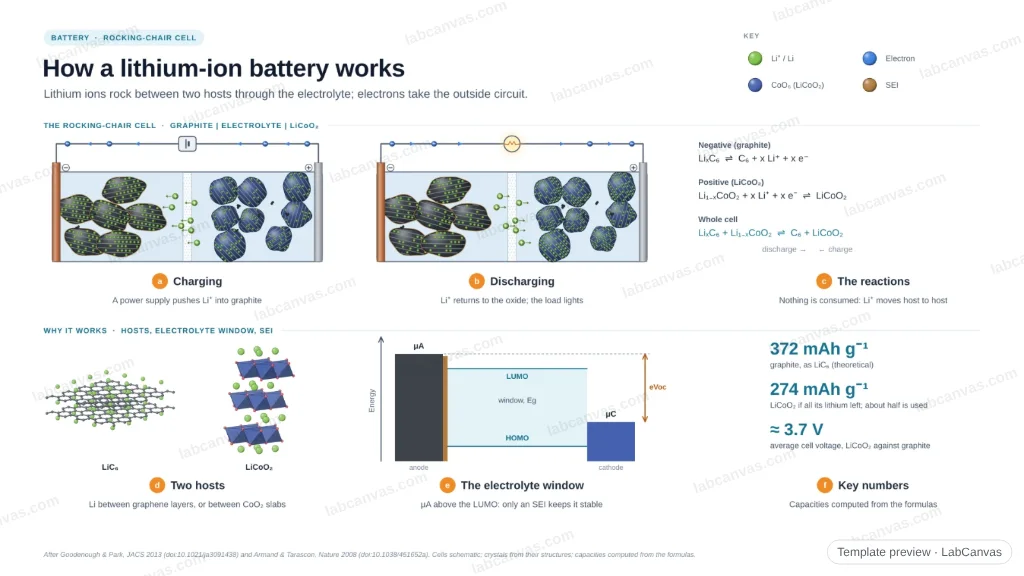
Every battery cell stores electrical energy as chemical energy in two electrodes: a reductant, the anode, and an oxidant, the cathode. Between them an electrolyte carries the ionic part of the reaction inside the cell and forces the electronic part to flow through the outside circuit, where it does work (Goodenough & Park 2013).
In a lithium-ion cell both electrodes are hosts. The cathode is a framework into which Li⁺ is inserted reversibly over a range of compositions (Goodenough & Park 2013), and the anode is usually graphite, which takes lithium between its carbon layers up to LiC₆ (Eshetu & Figgemeier 2019). On charging, Li⁺ is pulled out of the cathode, crosses the electrolyte and enters the anode; on discharge it returns (Lin et al. 2026). This “rocking chair” shuttle (Qiao et al. 2023) is called intercalation.
Between the electrodes sits a porous separator, usually polyethylene or polypropylene: it takes no part in the chemistry but keeps the electrodes apart to prevent a short circuit while letting Li⁺ pass through the liquid electrolyte in its pores (Heidari & Mahdavi 2020).
Voltage, electrolyte window and the SEI
The cell voltage is set by the difference between the redox energies of the anode and the cathode (Manthiram 2020), but its useful upper limit is set by the electrolyte window, the gap between the electrolyte’s LUMO and HOMO. Water limits a cell to about 1.5 V; lithium-ion cells use an organic electrolyte with a larger window (Goodenough & Park 2013), typically a lithium salt such as LiPF₆ in carbonate solvents (as in the cells of Hashem et al. 2019).
The graphite anode works at a potential outside that window, so it is protected by a passivating surface layer, the solid–electrolyte interphase (SEI), which must let Li⁺ through. Forming it consumes lithium from the cathode on the first charge, and it adds impedance (Goodenough & Park 2013). At high voltage a similar cathode–electrolyte interphase (CEI) grows on the cathode (Lin et al. 2026).
Cathode materials: layered, spinel and olivine
All three practical classes of oxide cathodes came from John Goodenough’s group, at Oxford and later in Texas, and remain the only practical cathode classes for lithium-ion batteries (Manthiram 2020):
- Layered oxides. In LiCoO₂, Li⁺ and Co³⁺ order on alternate planes of a close-packed oxide, giving fast two-dimensional lithium diffusion and about 4 V; oxygen loss beyond half delithiation limits it to about 140 mAh g⁻¹ (Manthiram 2020). NMC replaces much of the cobalt with nickel and manganese (Manthiram 2020; Hashem et al. 2019).
- Spinels. LiMn₂O₄ has a three-dimensional framework of edge-sharing MnO₆ octahedra with lithium in tetrahedral sites: 4 V, below 130 mAh g⁻¹, fast rates and cheap manganese, but Mn dissolves into the electrolyte and poisons the graphite anode (Manthiram 2020).
- Polyanion oxides. Phosphate, sulfate and silicate groups raise the voltage through the inductive effect; olivine LiFePO₄ was identified in 1997. They conduct electrons poorly, so the particles are made small and coated with carbon, and they are less dense, but oxygen bound to phosphorus makes them thermally stable and safe, and they use abundant iron (Manthiram 2020).
Anode materials: graphite, silicon and lithium metal
- Graphite is the commercial anode, with a theoretical capacity of 372 mAh g⁻¹ as LiC₆ (Lee et al. 2024; Eshetu & Figgemeier 2019). Pairing a lithium-containing oxide cathode with lithium-free graphite is what made the modern lithium-ion cell possible (Manthiram 2020).
- Silicon alloys with lithium to about 4200 mAh g⁻¹, roughly ten times graphite (Eshetu & Figgemeier 2019), but expands by about 300% (Shen et al. 2023), which pulverizes particles and keeps breaking the SEI (Zhang et al. 2022). Silicon–carbon composites, in which carbon buffers the expansion, are the main remedy (Zhang et al. 2022).
- Lithium metal has the highest capacity, 3860 mAh g⁻¹, and the lowest potential, −3.04 V vs SHE, but grows dendrites and forms an unstable SEI (Bae et al. 2025). Dendrites causing internal shorts already ended the first lithium-metal batteries of the 1970s (Manthiram 2020).
Electrolytes: liquid and solid
Commercial lithium-ion cells use organic liquid electrolytes, which need stringent safety precautions in large systems (Kamaya et al. 2011). The sulfide Li₁₀GeP₂S₁₂ reached 12 mS cm⁻¹ at room temperature, higher than liquid organic electrolytes, while being non-volatile and non-explosive (Kamaya et al. 2011). The three main families each have a weakness: sulfides conduct well but have a narrow electrochemical window and allow dendrites, oxides have a wide window but high interfacial resistance with lithium metal, and polymers are flexible but conduct poorly (Lee et al. 2024). All-solid-state batteries attract interest for lithium metal anodes because they promise higher energy density and better safety (Lee et al. 2024).
Sodium-ion batteries as an alternative
Concerns over the supply and price of lithium have revived interest in sodium-ion batteries: sodium is widely available and its chemistry is similar to lithium’s (Hwang et al. 2017). Sodium layered oxides, phosphates and organic compounds serve as cathodes (Hwang et al. 2017), and the layered and polyanion cathode classes developed for lithium are the basis of sodium cathodes too (Manthiram 2020). The anode is harder: the Na⁺ ion is large (1.07 Å) and neither graphite nor silicon stores it reversibly, so carbons, oxides, alloys and organic materials are studied instead (Qiao et al. 2023; Hwang et al. 2017).
Eight battery materials to know
- LiCoO₂ (lithium cobalt oxide). The layered cathode of the first commercial lithium-ion cells, Sony 1991 (Manthiram 2020); about 140 of its theoretical 274 mAh g⁻¹ are used at 4.2 V (Lin et al. 2026).
- NMC (LiNiₓMnᵧCo₁₋ₓ₋ᵧO₂). Layered oxides in which nickel and manganese replace much of the cobalt; more nickel means more capacity and less cobalt but less stability (Manthiram 2020). Nickel-rich NMC powers millions of electric vehicles (Lu et al. 2024).
- LiFePO₄ (lithium iron phosphate). The olivine polyanion cathode (1997): thermally stable, safe and iron-based, but less dense and needing carbon coating (Manthiram 2020).
- LiMn₂O₄ (spinel). A cheap manganese spinel with three-dimensional lithium paths and 4 V operation, limited by manganese dissolution (Manthiram 2020).
- Graphite anode. The standard anode, storing lithium between its layers up to LiC₆, 372 mAh g⁻¹ (Eshetu & Figgemeier 2019).
- Silicon anode. About 4200 mAh g⁻¹ but about 300% volume change, usually used in silicon–carbon composites (Eshetu & Figgemeier 2019; Shen et al. 2023; Zhang et al. 2022).
- Solid electrolytes. Sulfide, oxide and polymer ion conductors for all-solid-state batteries (Lee et al. 2024); Li₁₀GeP₂S₁₂ conducts 12 mS cm⁻¹ (Kamaya et al. 2011).
- Sodium-ion batteries. The same rocking-chair principle with abundant, low-cost sodium (Hwang et al. 2017; Qiao et al. 2023).
How to draw battery materials
A clear lithium-ion schematic shows the cathode crystal on one side, the anode on the other, the electrolyte and separator between them, and arrows for Li⁺ moving through the electrolyte and electrons through the external circuit, reversed for charge and discharge. Draw the cathode as its crystal structure: alternating layers for LiCoO₂ and NMC, a 3D framework for the spinel, PO₄ tetrahedra and FeO₆ octahedra for LiFePO₄. The LabCanvas figure editor’s Library has battery crystal objects, including a layered oxide and NMC811, that drop into a figure as high-resolution vector drawings you can recolour and label, and the LabCanvas 3D Studio has battery models you can rotate, show as polyhedra and export as high-resolution images.
Lithium-ion battery cathodes and anodes compared
| Material | Role | Structure or mechanism | Capacity | Main issue |
|---|---|---|---|---|
| LiCoO₂ | Cathode | Layered O3, 2D Li diffusion | ~140 mAh g⁻¹ practical, ~4 V | Cobalt cost; O loss beyond half delithiation (Manthiram 2020) |
| NMC111 | Cathode | Layered α-NaFeO₂ type | ~200 mAh g⁻¹, 2.8–4.6 V | Fade at high voltage; Ni-rich grades crack (Hashem et al. 2019; Manthiram 2020) |
| LiMn₂O₄ | Cathode | Spinel, 3D Li diffusion | Below 130 mAh g⁻¹, 4 V | Mn dissolution (Manthiram 2020) |
| LiFePO₄ | Cathode | Olivine polyanion | 170 mAh g⁻¹ theoretical | Low conductivity and density (Manthiram 2020; Jung et al. 2022) |
| Graphite | Anode | Intercalation to LiC₆ | 372 mAh g⁻¹ | Limited capacity (Lee et al. 2024) |
| Silicon | Anode | Alloying | ~4200 mAh g⁻¹ | ~300% volume expansion (Eshetu & Figgemeier 2019; Shen et al. 2023) |
| Lithium metal | Anode | Plating and stripping | 3860 mAh g⁻¹ | Dendrites, unstable SEI (Bae et al. 2025) |
Related materials
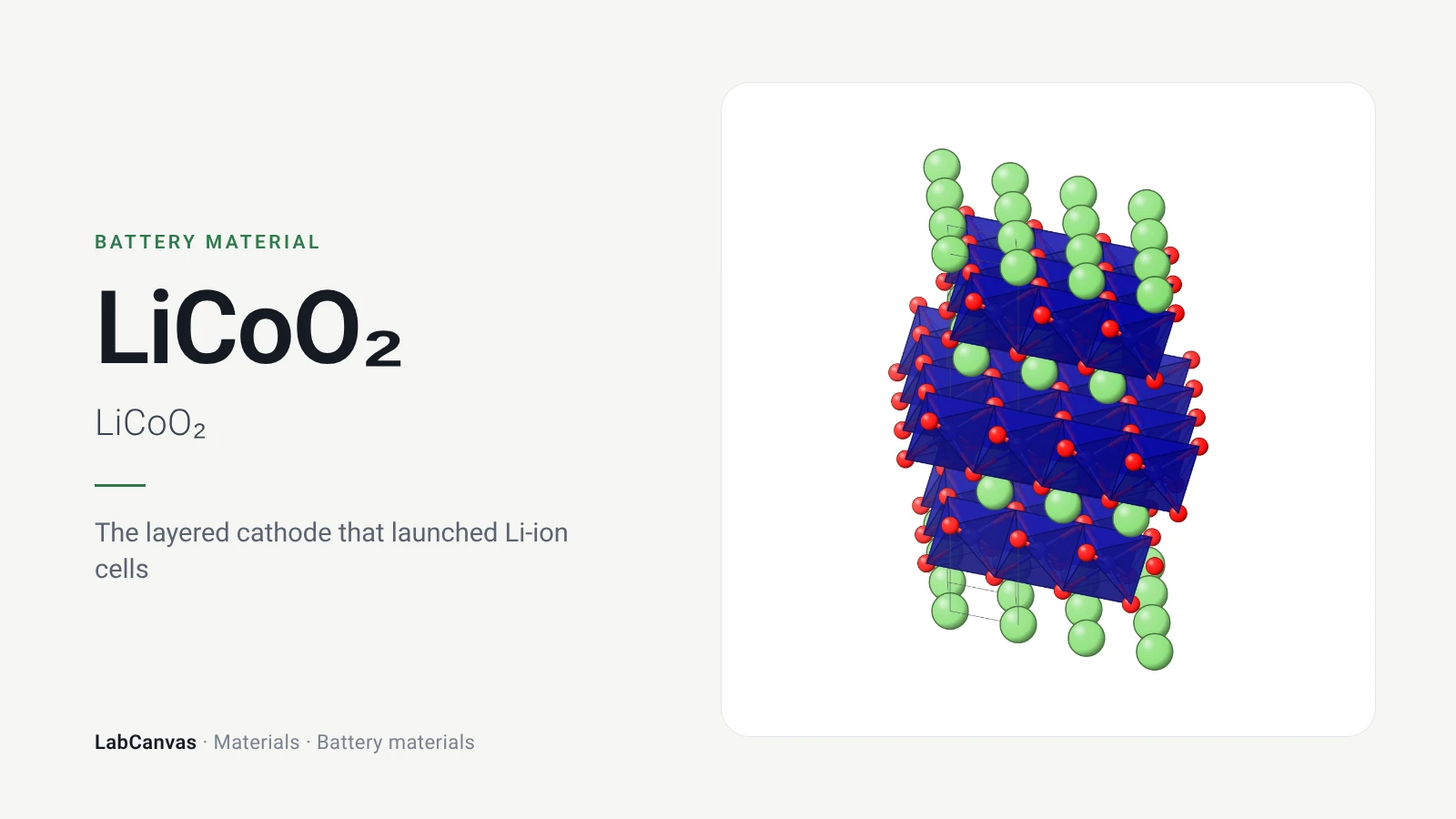
LiCoO₂
LiCoO₂ structure and properties: the layered O3 (α-NaFeO₂-type) cathode, why only half its lithium is used, ~4 V vs Li, phones and laptops, high-voltage LCO.
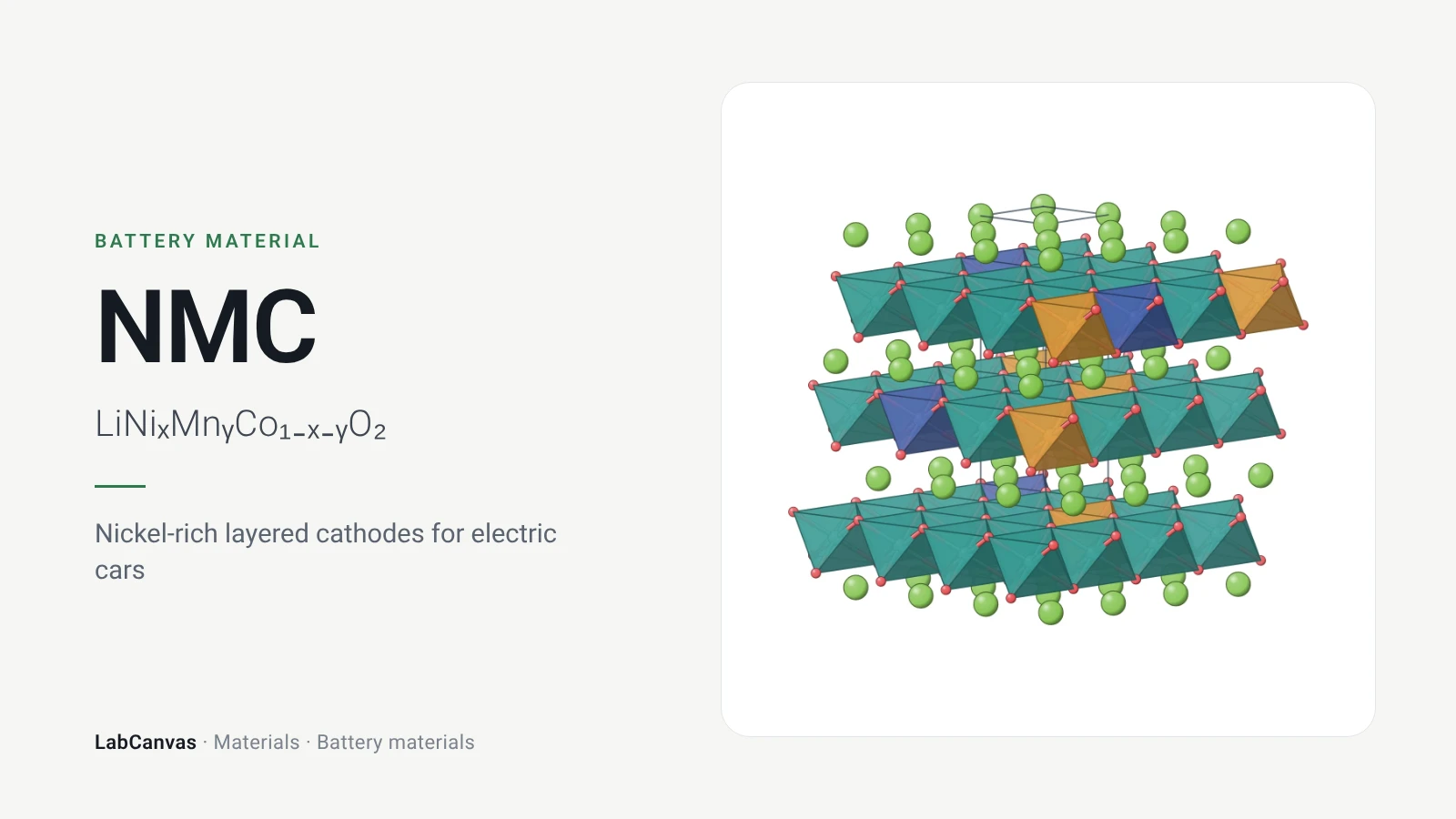
NMC (LiNiₓMnᵧCo₁₋ₓ₋ᵧO₂)
NMC cathodes (LiNiₓMnᵧCo₁₋ₓ₋ᵧO₂): layered structure, NMC111 to 811, why more nickel means more capacity but less stability, and the fixes.
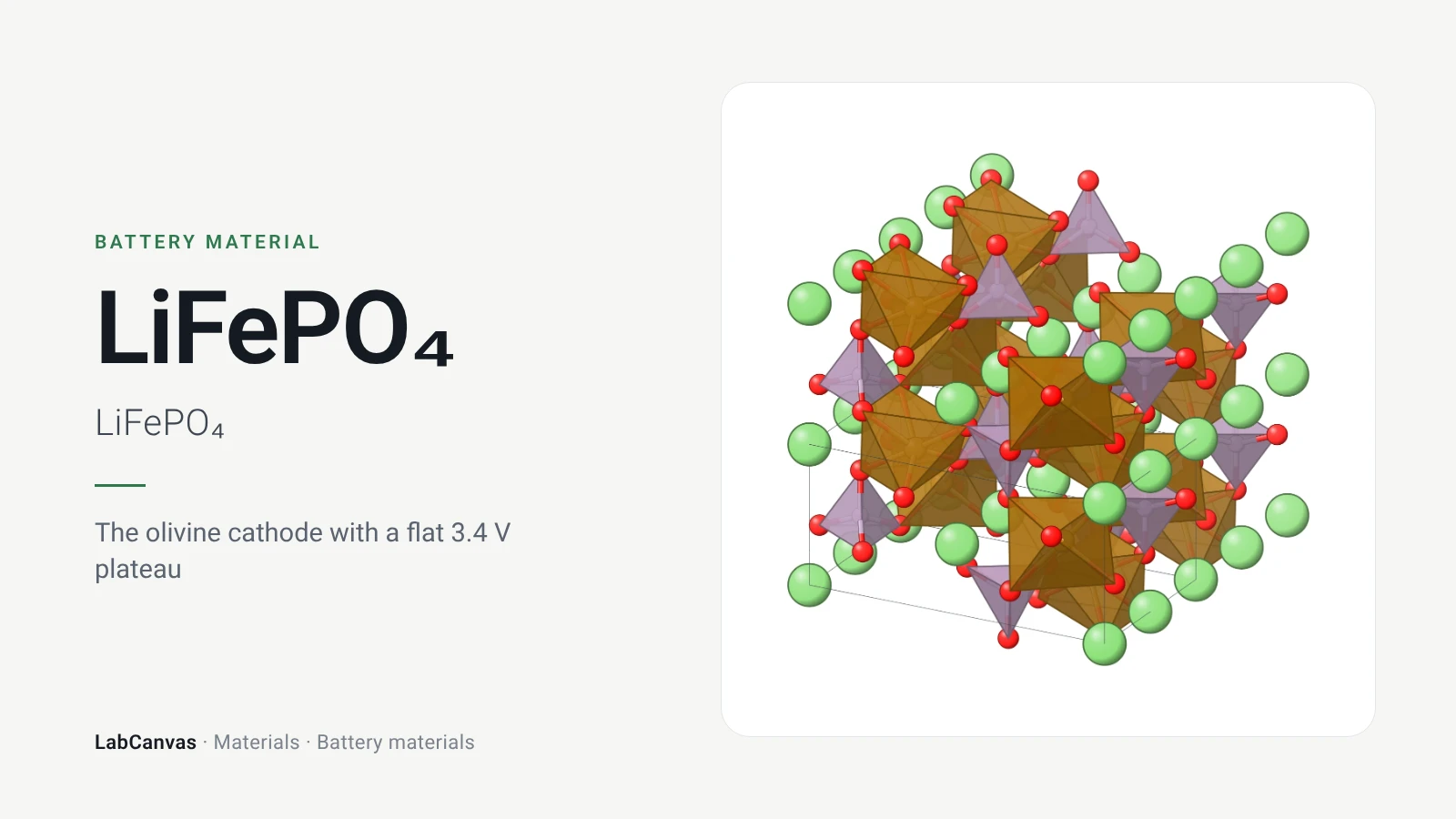
LiFePO₄ (LFP)
LiFePO₄ (LFP) cathode: olivine structure (Pnma), 1D lithium channels, the flat 3.4 V two-phase plateau, 170 mAh/g, carbon coating and why LFP is safe.
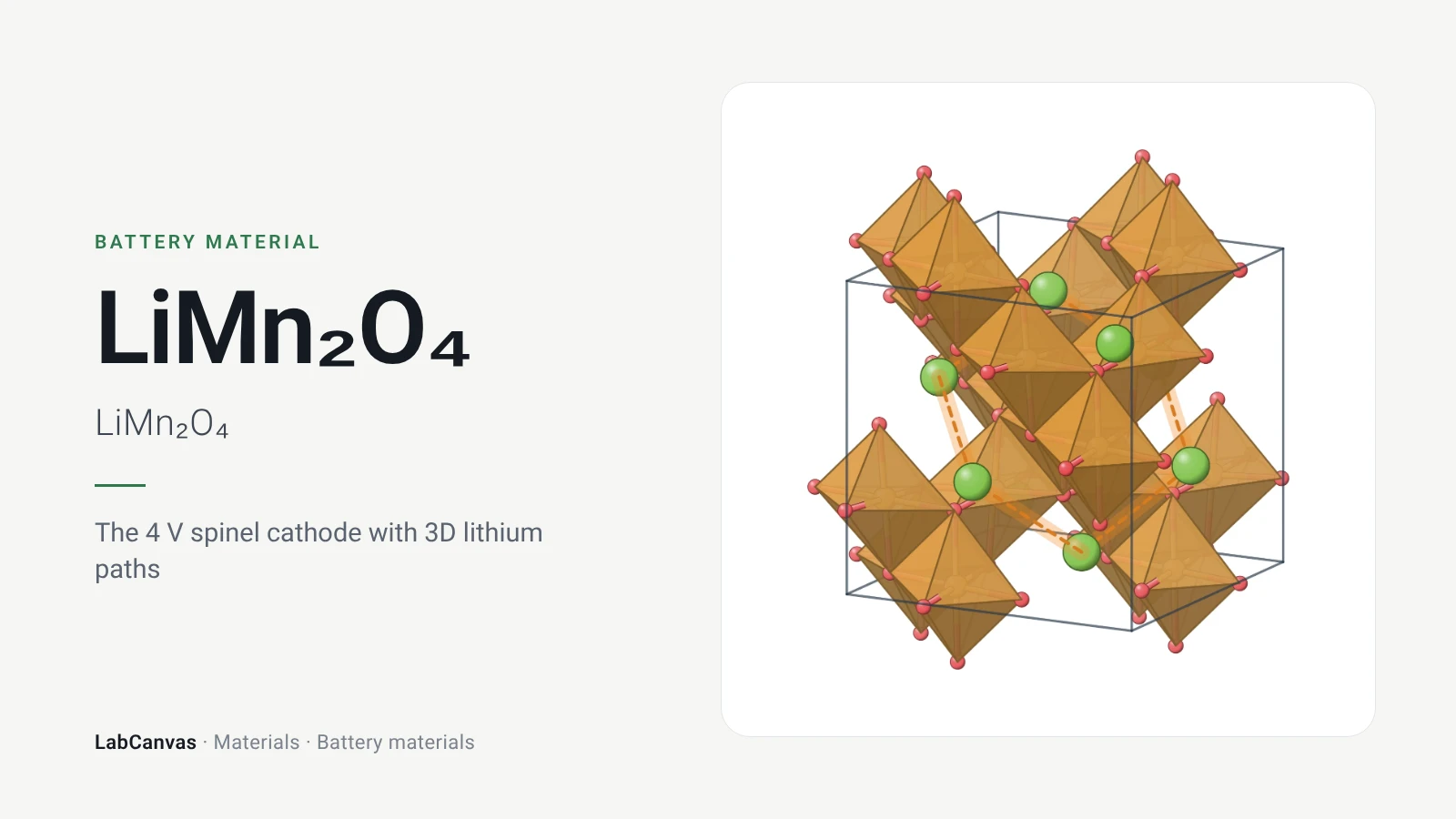
LiMn₂O₄ (spinel)
LiMn₂O₄ (LMO) spinel cathode: cubic Fd-3m structure, 3D lithium diffusion, 4.1 V plateaus, 148 mAh/g, Mn dissolution, Jahn–Teller fade and LiNi₀.₅Mn₁.₅O₄.
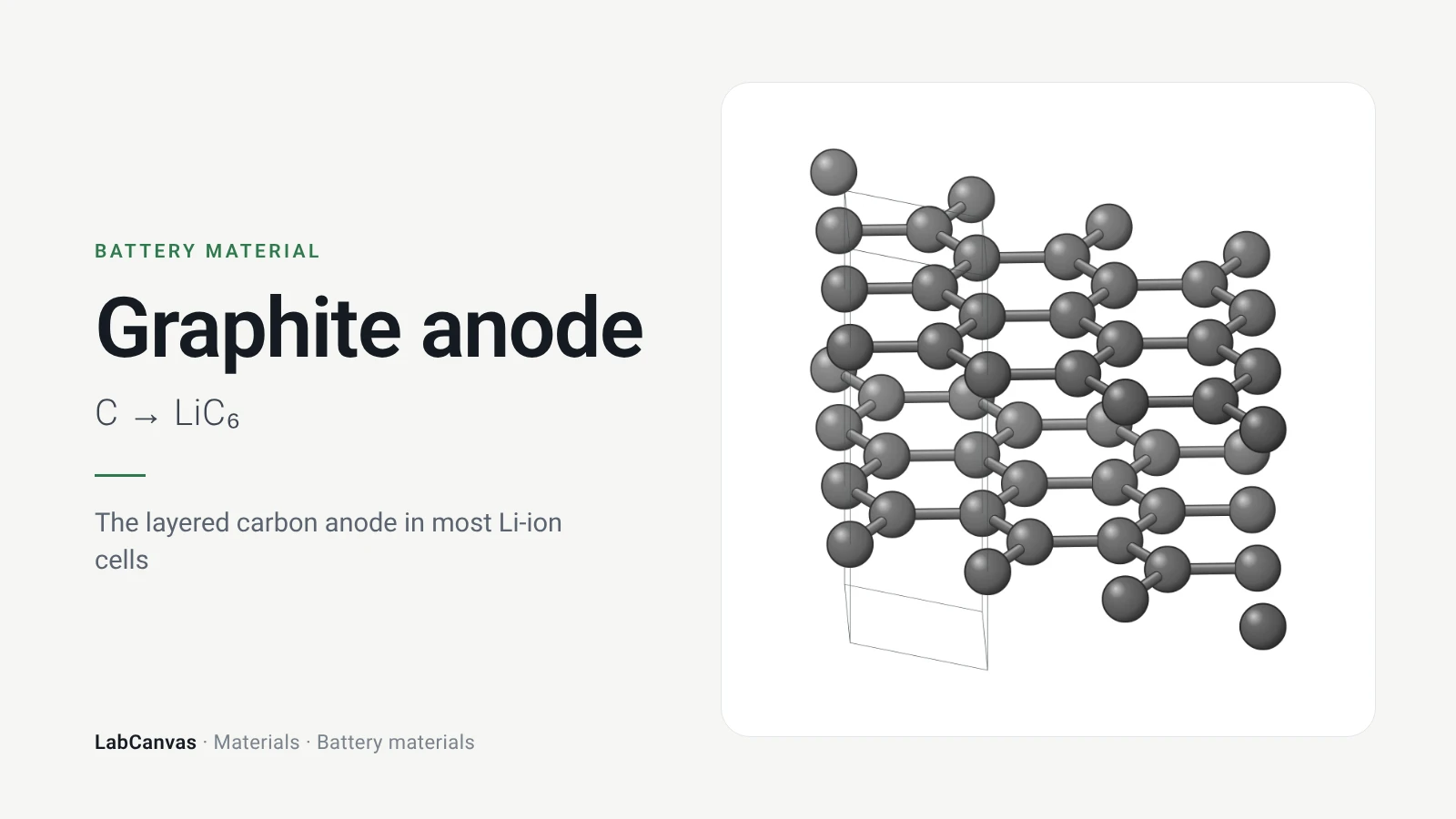
Graphite anode
Graphite anode in lithium-ion batteries: LiC₆ and 372 mAh/g, staging, intercalation near 0.1 V, the SEI from ethylene carbonate and lithium plating.
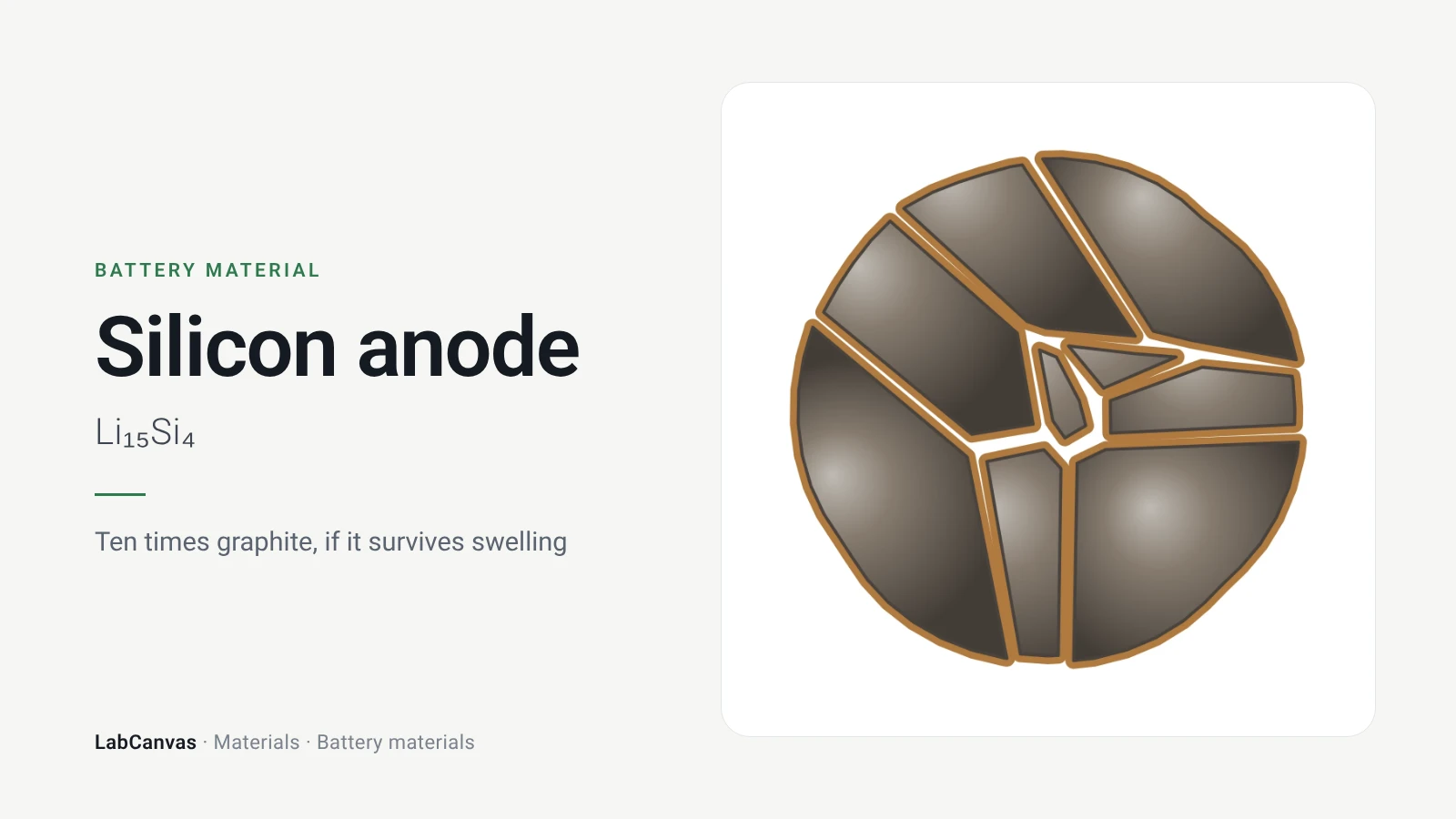
Silicon anode
Silicon anodes for Li-ion batteries: 3,579 mAh/g as Li₁₅Si₄, ~300% volume expansion, cracking and SEI, nanowires, yolk–shell, SiOx, Si–graphite, binders.
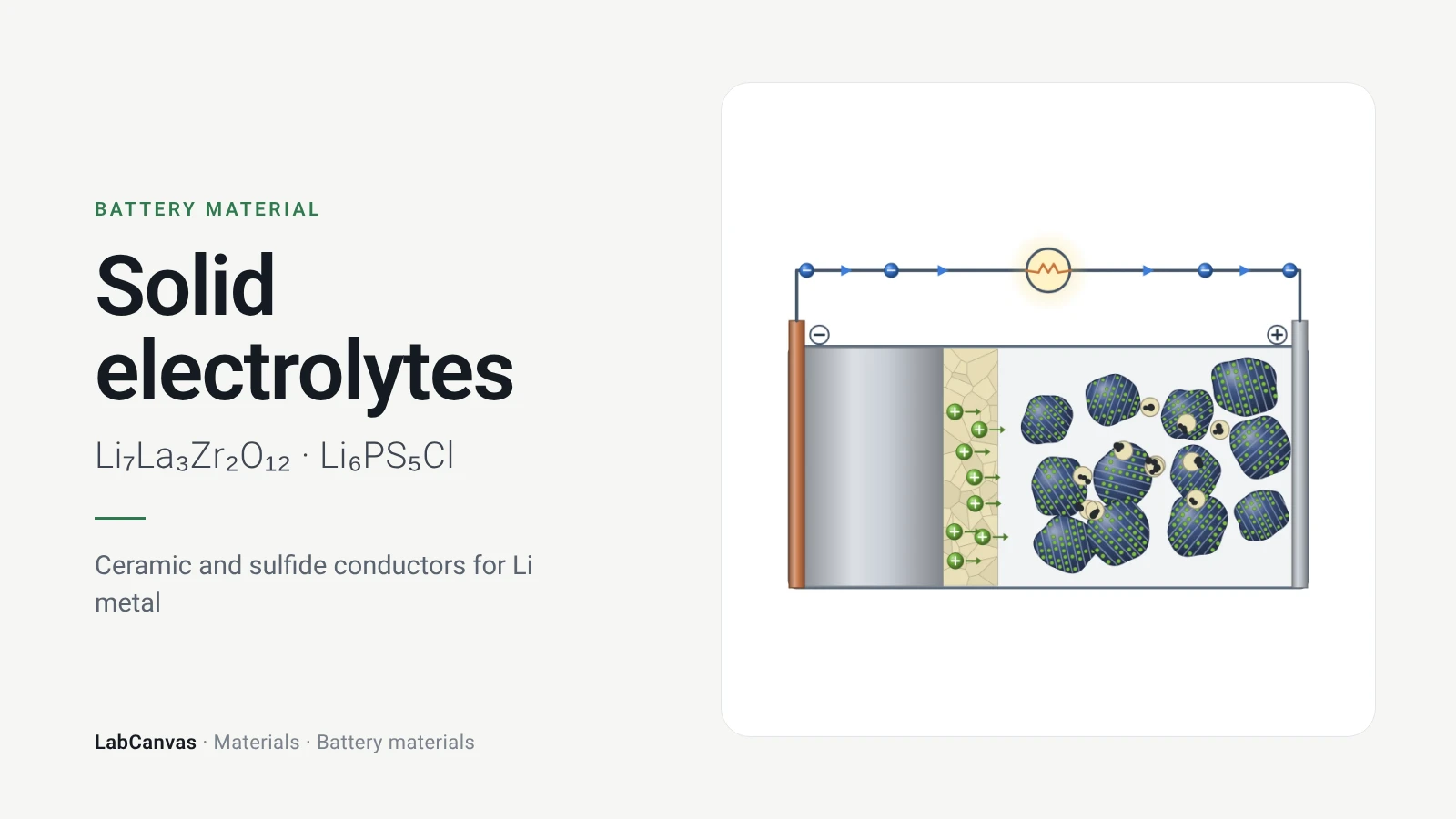
Solid electrolytes (LLZO, argyrodite)
Solid electrolytes for solid-state batteries: garnet LLZO (cubic vs tetragonal, Al/Ga/Ta doping), argyrodite Li₆PS₅Cl, LGPS, PEO, dendrites and Li metal.
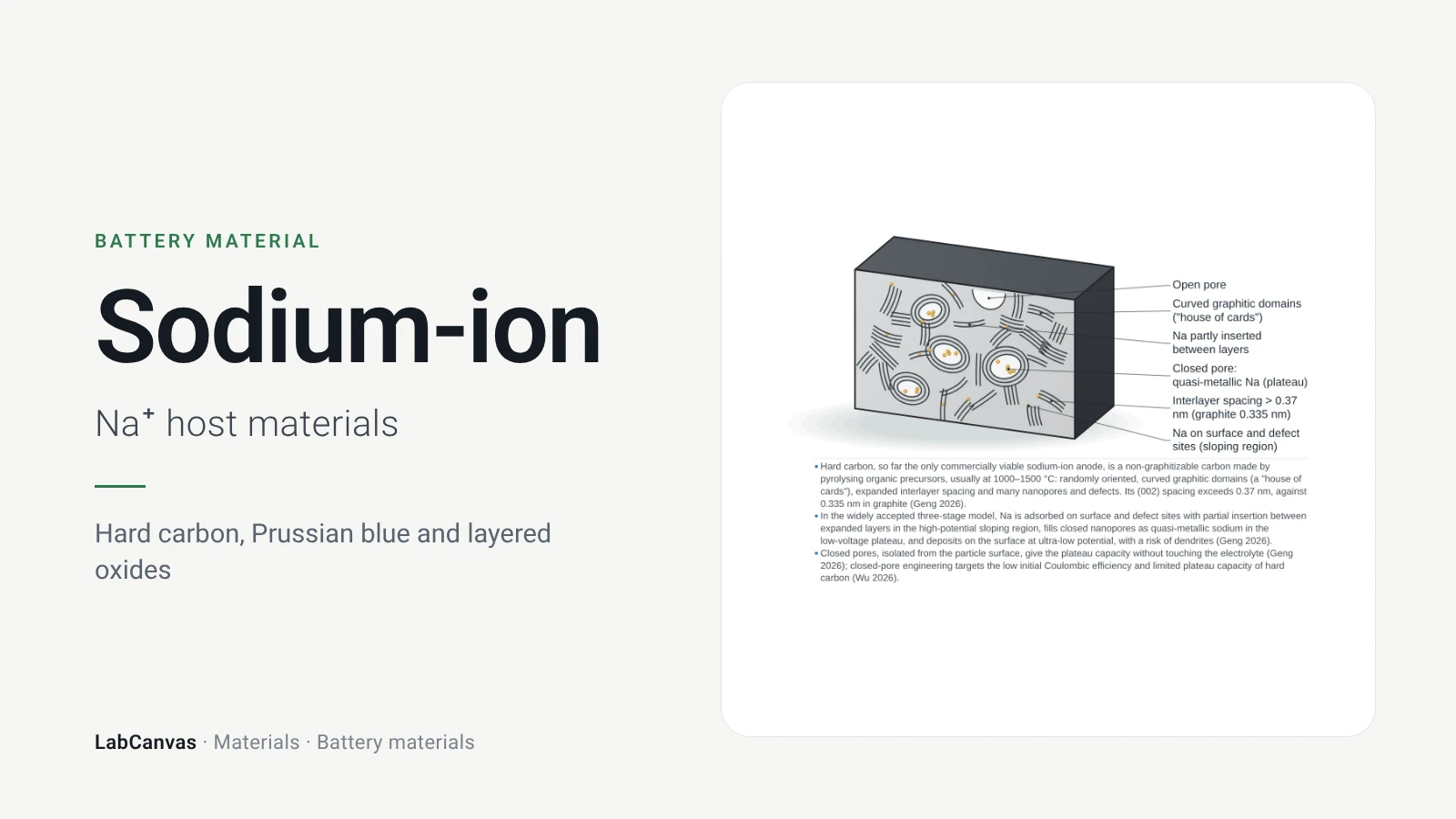
Sodium-ion battery materials
Sodium-ion battery materials: why sodium, hard carbon anodes (graphite stores little Na), Prussian blue, layered oxide and polyanion cathodes compared.
More on LabCanvas
- How a lithium-ion battery works: Editable figure template
- More battery figure templates: Ready-made, cited figures to edit
- Crystal structure figure software compared: VESTA, Mercury, CrystalMaker, Avogadro and LabCanvas
- Supercapacitor calculator: Free tool: capacitance, energy and power from cycling data
- Faradaic efficiency calculator: Free tool
- Battery figure templates: Cited, editable battery figures
- XRD Scherrer crystallite size calculator: Free tool
- Molar mass calculator: Free tool
- Journal figure size guide: Column widths and resolutions for 38 journals
- 3D models gallery: Turn MOFs, COFs, perovskites and more in 3D
Frequently asked questions
How does a lithium-ion battery work?
Lithium ions shuttle between two host electrodes. On charging they leave the cathode (e.g. LiCoO₂), cross the electrolyte and enter the anode (graphite); on discharge they go back, while electrons flow through the external circuit and power the device (Goodenough & Park 2013; Lin et al. 2026).
What are the main cathode materials for lithium-ion batteries?
Three classes: layered oxides such as LiCoO₂ and NMC, spinels such as LiMn₂O₄, and polyanion compounds such as olivine LiFePO₄ (Manthiram 2020). Nickel cobalt aluminium oxide (NCA), another layered oxide, is also used in electric vehicles (Lin et al. 2026).
What is the anode of a lithium-ion battery made of?
Usually graphite, which stores lithium between its layers up to LiC₆, for 372 mAh g⁻¹ (Lee et al. 2024; Eshetu & Figgemeier 2019). Silicon is added to raise capacity, and lithium metal is studied for next-generation cells (Eshetu & Figgemeier 2019; Bae et al. 2025).
What is the SEI in a battery?
The solid–electrolyte interphase, a passivating layer that forms on the anode because it works outside the electrolyte’s stability window. It must let Li⁺ through, consumes some lithium from the cathode on the first charge and adds impedance (Goodenough & Park 2013).
What does the separator do in a lithium-ion battery?
It keeps the anode and cathode apart so they cannot short-circuit while letting lithium ions flow through the liquid electrolyte in its pores. Commercial separators are mostly porous polyethylene and polypropylene (Heidari & Mahdavi 2020).
Why is silicon not used alone as an anode?
Silicon stores about ten times as much lithium as graphite (Eshetu & Figgemeier 2019) but swells by about 300% (Shen et al. 2023), which breaks the particles and the SEI and quickly destroys the capacity. Silicon–carbon composites buffer the swelling (Zhang et al. 2022).
What is a solid-state battery?
A battery with a solid electrolyte instead of a flammable organic liquid. Sulfide, oxide and polymer solid electrolytes are studied, each with trade-offs in conductivity, stability and interfaces (Lee et al. 2024); the sulfide Li₁₀GeP₂S₁₂ conducts 12 mS cm⁻¹ at room temperature (Kamaya et al. 2011).
Are sodium-ion batteries better than lithium-ion?
Not in energy density, but sodium is abundant and cheap and its chemistry is similar, which makes sodium-ion attractive for large-scale storage (Hwang et al. 2017). The large Na⁺ ion cannot use graphite or silicon anodes, so new anode materials are needed (Qiao et al. 2023).
References
- J. B. Goodenough, K.-S. Park. The Li-ion rechargeable battery: a perspective. J. Am. Chem. Soc. 2013, 135, 1167–1176. doi:10.1021/ja3091438
- A. Manthiram. A reflection on lithium-ion battery cathode chemistry. Nat. Commun. 2020, 11, 1550. doi:10.1038/s41467-020-15355-0
- Z. Lin, Y. Ying, H. Li, Y. Ren, T. Liu, P. Hou, H. Huang. Decoding high-voltage LiCoO₂: from degradation to stabilization toward durable Li-ion batteries. Adv. Mater. 2026, 38, e23570. doi:10.1002/adma.202523570
- A. M. Hashem, A. E. Abdel-Ghany, M. Scheuermann, S. Indris, H. Ehrenberg, A. Mauger, C. M. Julien. Doped nanoscale NMC333 as cathode materials for Li-ion batteries. Materials 2019, 12, 2899. doi:10.3390/ma12182899
- J. Lu, C. Xu, W. Dose, S. Dey, X. Wang, Y. Wu, D. Li, L. Ci. Microstructures of layered Ni-rich cathodes for lithium-ion batteries. Chem. Soc. Rev. 2024, 53, 4707–4740. doi:10.1039/d3cs00741c
- J. H. Jung, V. Vijayakumar, A. K. Haridas, J.-H. Ahn, S. Y. Nam. Effect of cross-linking and surface treatment on the functional properties of electrospun polybenzimidazole separators for lithium metal batteries. ACS Omega 2022, 7, 47784–47795. doi:10.1021/acsomega.2c05472
- A. A. Heidari, H. Mahdavi. Recent development of polyolefin-based microporous separators for Li-ion batteries: a review. Chem. Rec. 2020, 20, 570–595. doi:10.1002/tcr.201900054
- G. G. Eshetu, E. Figgemeier. Confronting the challenges of next-generation silicon anode-based lithium-ion batteries: role of designer electrolyte additives and polymeric binders. ChemSusChem 2019, 12, 2515–2539. doi:10.1002/cssc.201900209
- H. Shen, Q. Wang, Z. Chen, C. Rong, D. Chao. Application and development of silicon anode binders for lithium-ion batteries. Materials 2023, 16, 4266. doi:10.3390/ma16124266
- X. Zhang et al.. Strategies for controlling or releasing the influence due to the volume expansion of silicon inside Si-C composite anode for high-performance lithium-ion batteries. Materials 2022, 15, 4264. doi:10.3390/ma15124264
- J. Bae et al.. Emerging surface engineering methods for lithium metal anodes: critical review beyond conventional SEI and surface coatings. Adv. Mater. 2025, 37, e2501959. doi:10.1002/adma.202501959
- N. Kamaya et al.. A lithium superionic conductor. Nat. Mater. 2011, 10, 682–686. doi:10.1038/nmat3066
- H. Lee, T. Yoon, O. B. Chae. Strategies for enhancing the stability of lithium metal anodes in solid-state electrolytes. Micromachines 2024, 15, 453. doi:10.3390/mi15040453
- J.-Y. Hwang, S.-T. Myung, Y.-K. Sun. Sodium-ion batteries: present and future. Chem. Soc. Rev. 2017, 46, 3529–3614. doi:10.1039/c6cs00776g
- S. Qiao, Q. Zhou, M. Ma, H. K. Liu, S. X. Dou, S. Chong. Advanced anode materials for rechargeable sodium-ion batteries. ACS Nano 2023, 17, 11220–11252. doi:10.1021/acsnano.3c02892
Draw Battery materials for your paper or slides
LabCanvas is a browser workspace for scientific figures: framework clusters, linkers and nets, crystal structures in 2D and 3D, graphs and posters, all editable.
Edit the Battery materials figure