Materials
Famous materials explained, every fact cited to the original papers: metal–organic frameworks (MOFs), covalent organic frameworks (COFs), 2D materials such as graphene and MoS₂, perovskites, battery materials and zeolites, with editable figures, high-resolution crystal structures and interactive 3D models you can open in LabCanvas.
Metal–organic frameworks (MOFs)
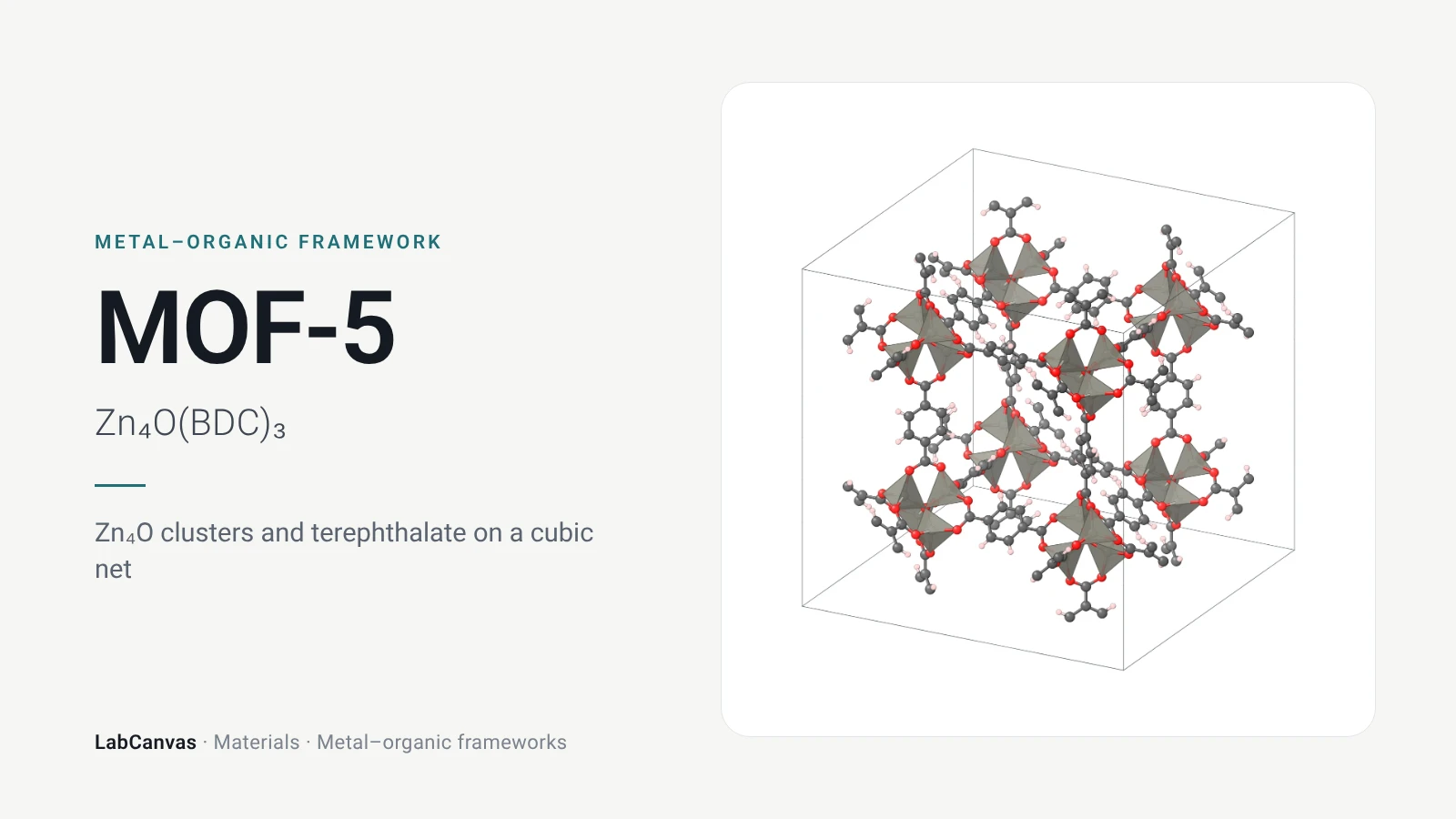
MOF-5
MOF-5, Zn₄O(BDC)₃: its cubic structure in 2D and interactive 3D, how it is made, surface area, stability and uses, with the original papers. Edit the figures free.
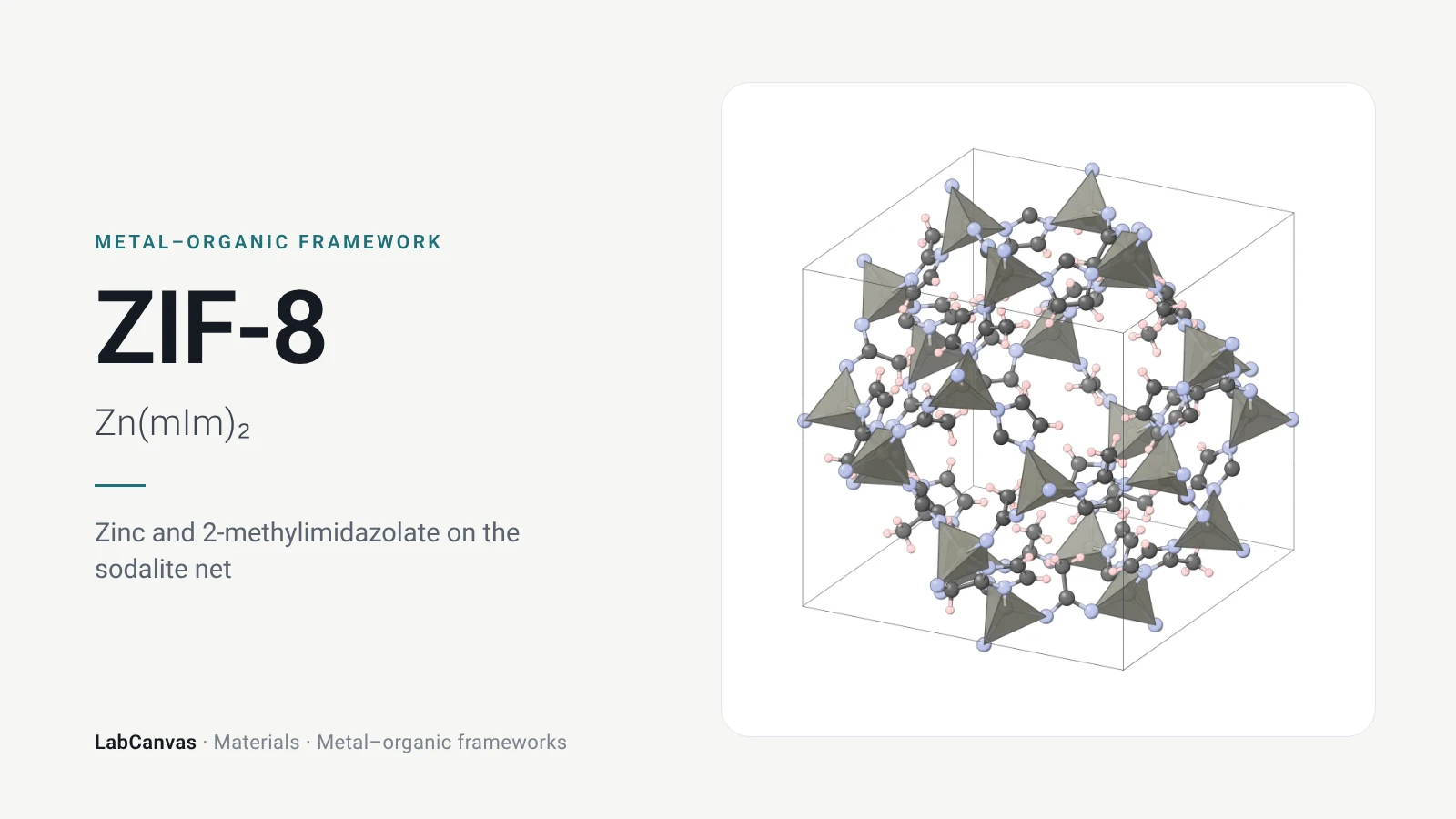
ZIF-8
ZIF-8, Zn(mIm)₂: its sodalite structure in 2D and 3D, how it is made, pore size, surface area and stability, with the original papers. Edit the figures free.
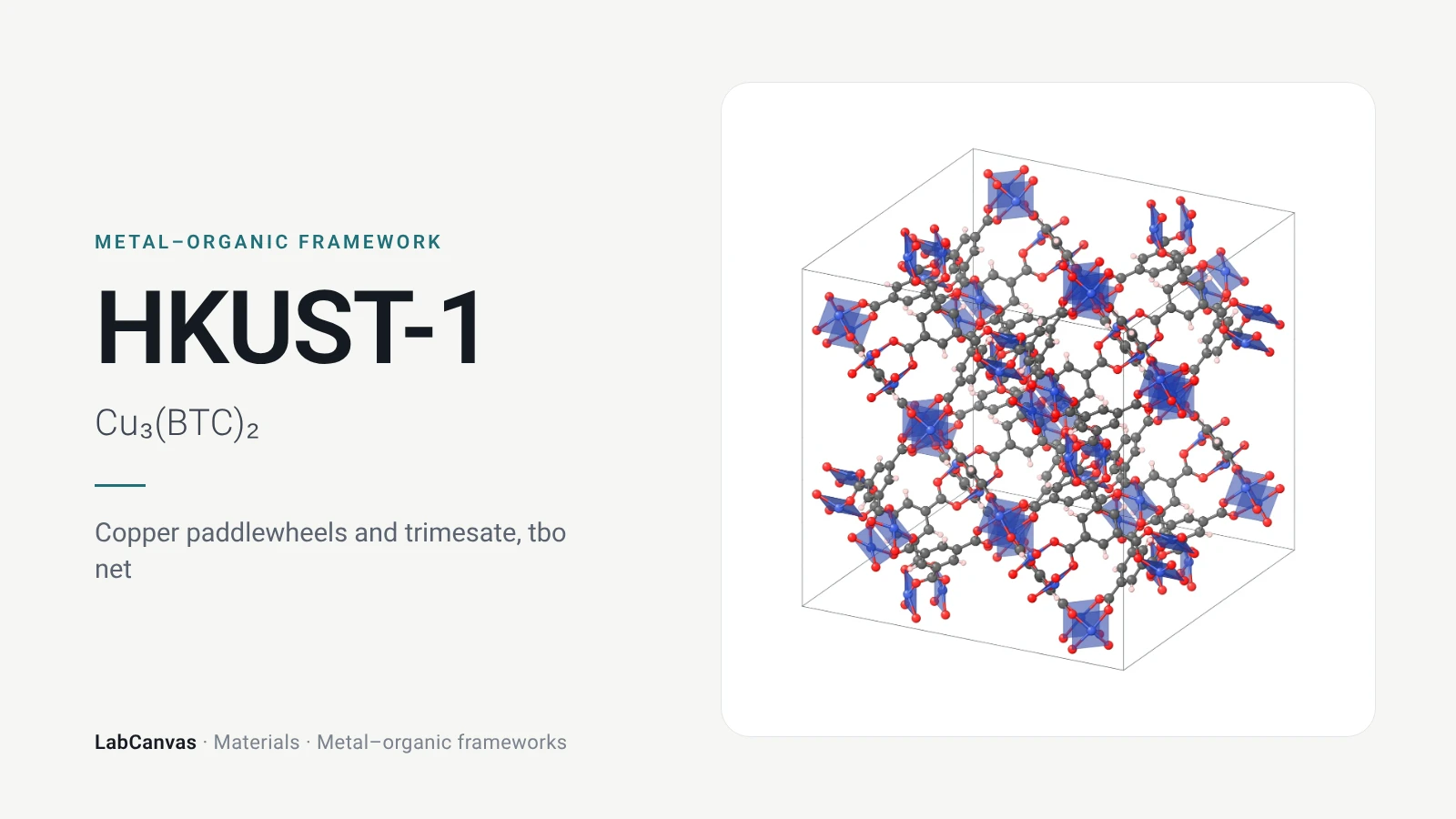
HKUST-1
HKUST-1 (Cu-BTC), Cu₃(BTC)₂: its paddlewheel structure in 2D and 3D, how it is made, pore size, open copper sites and stability, with the original papers.
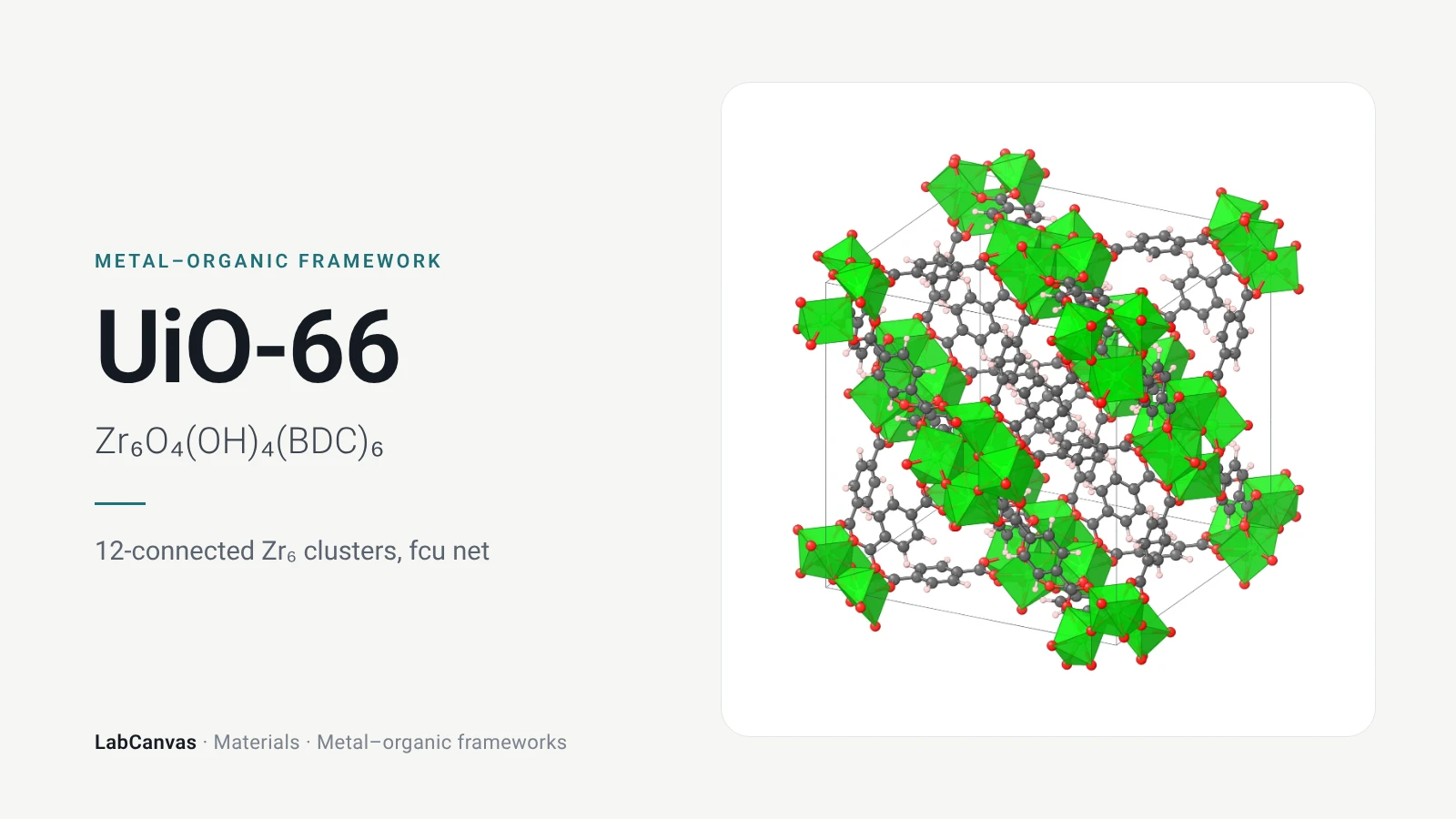
UiO-66
UiO-66, Zr₆O₄(OH)₄(BDC)₆: its fcu structure in 2D and 3D, how it is made, missing-linker defects, pore size, surface area and stability, with the papers.
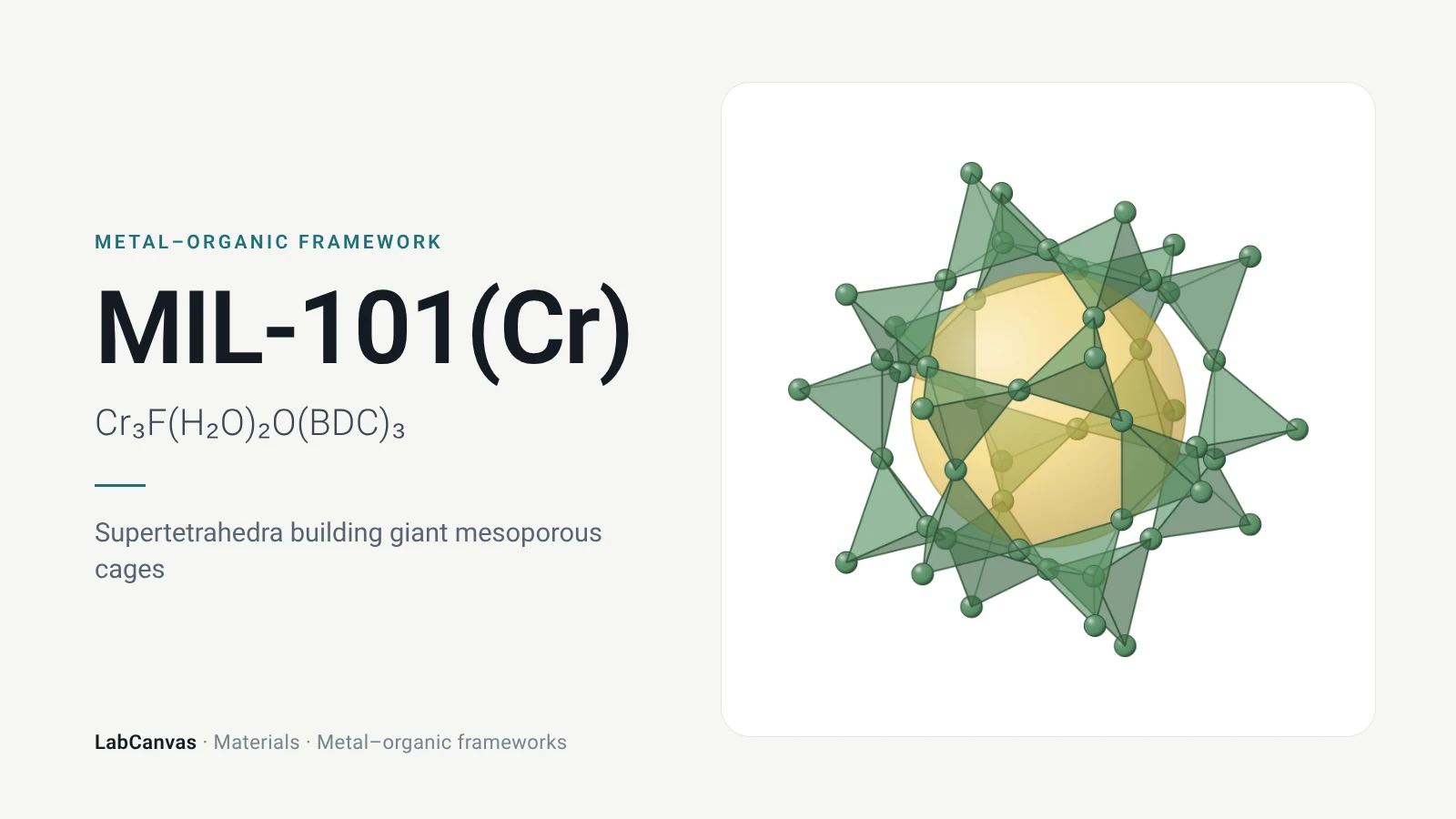
MIL-101(Cr)
MIL-101(Cr), a chromium terephthalate MOF: its giant 30–34 Å cages, MTN structure, synthesis, surface area, water stability and uses, with the original papers.
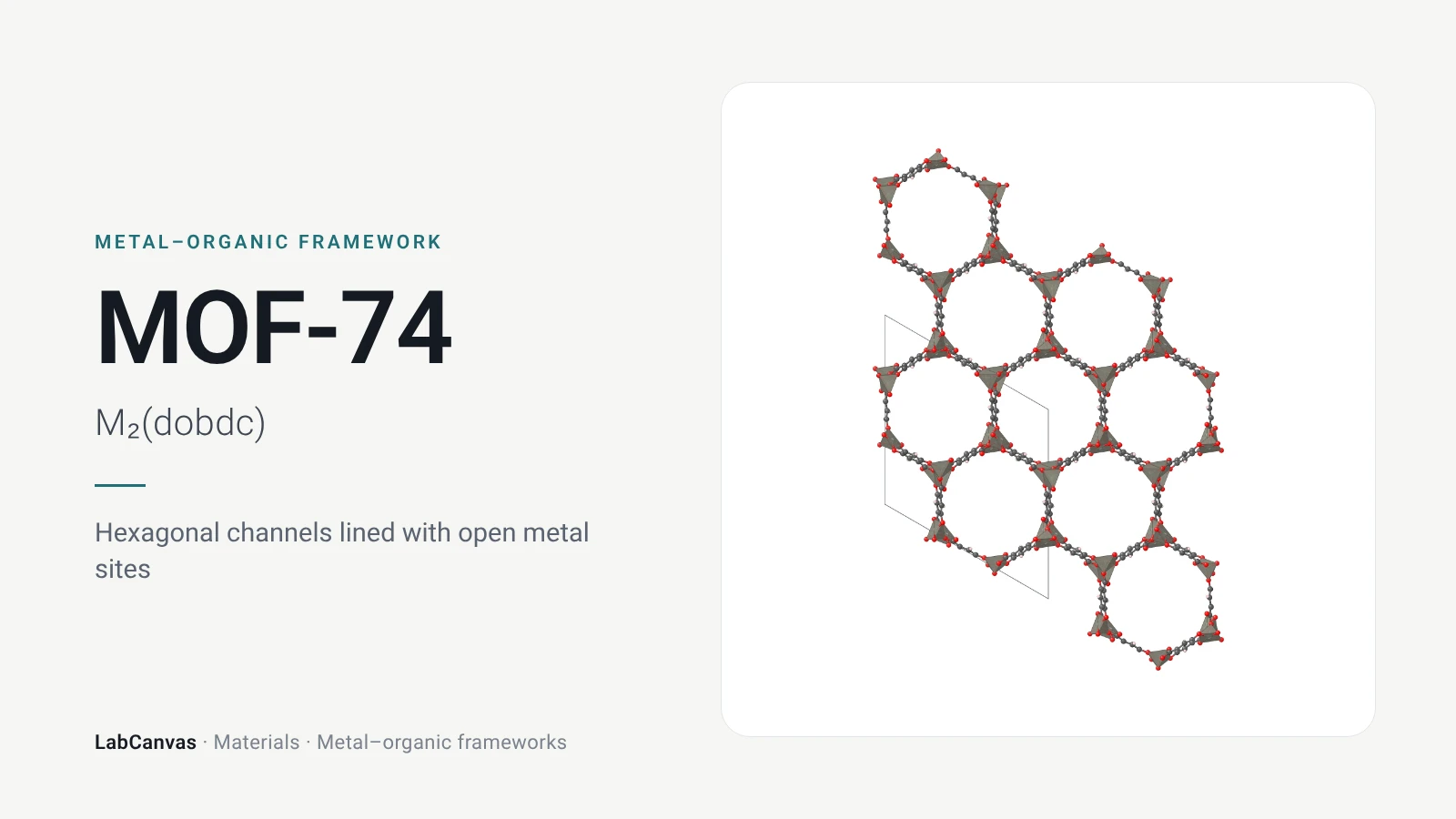
MOF-74
MOF-74 (CPO-27), M₂(dobdc): its honeycomb channels and open metal sites, Mg-MOF-74 for CO₂ capture, Zn-MOF-74, synthesis and pore size, with the papers.
Covalent organic frameworks (COFs)
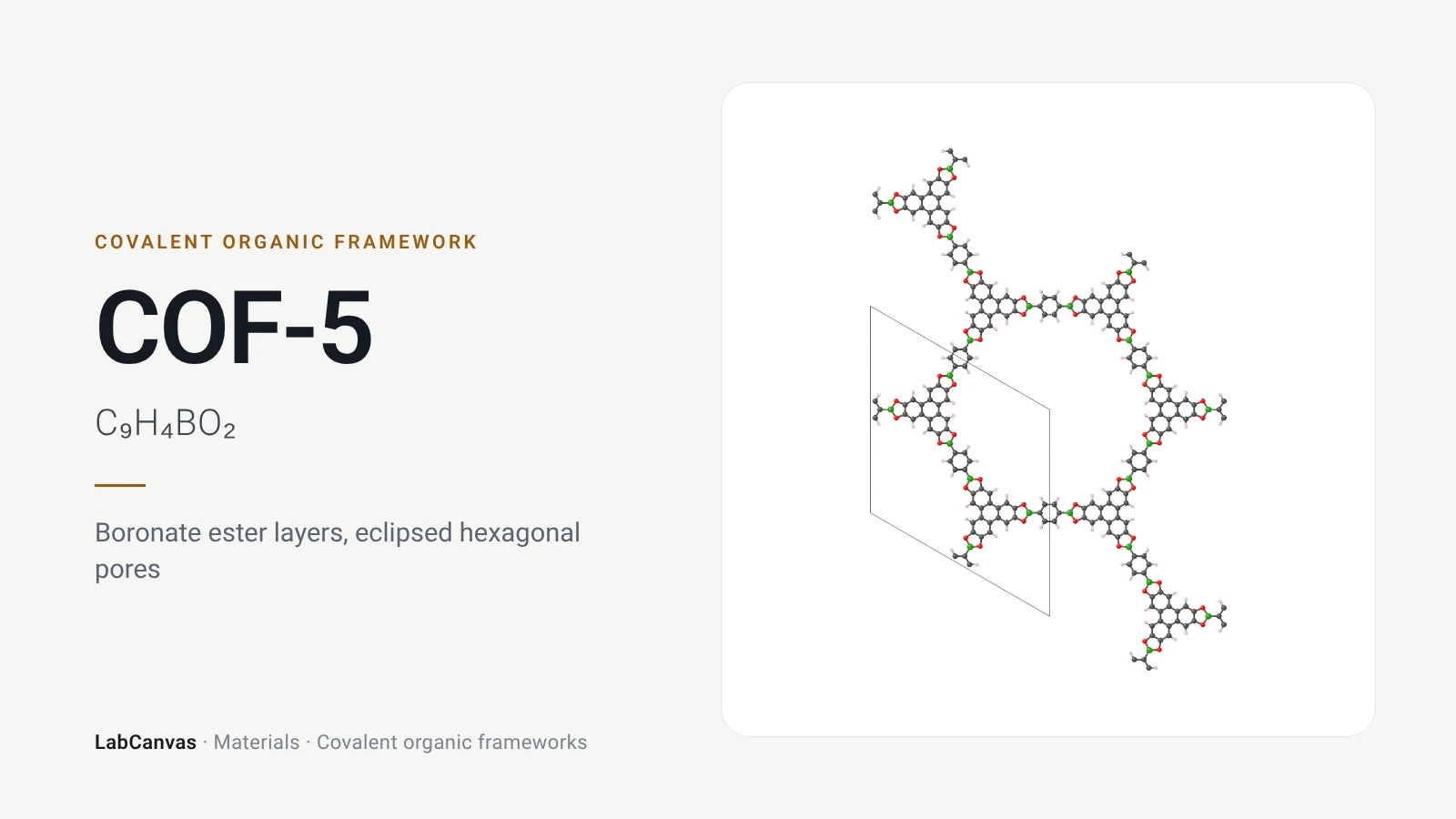
COF-5
COF-5, the boronate ester COF from HHTP and BDBA: eclipsed layers, 27 Å channels, 1,590 m² g⁻¹, synthesis and stability, with 2D and 3D figures to edit.
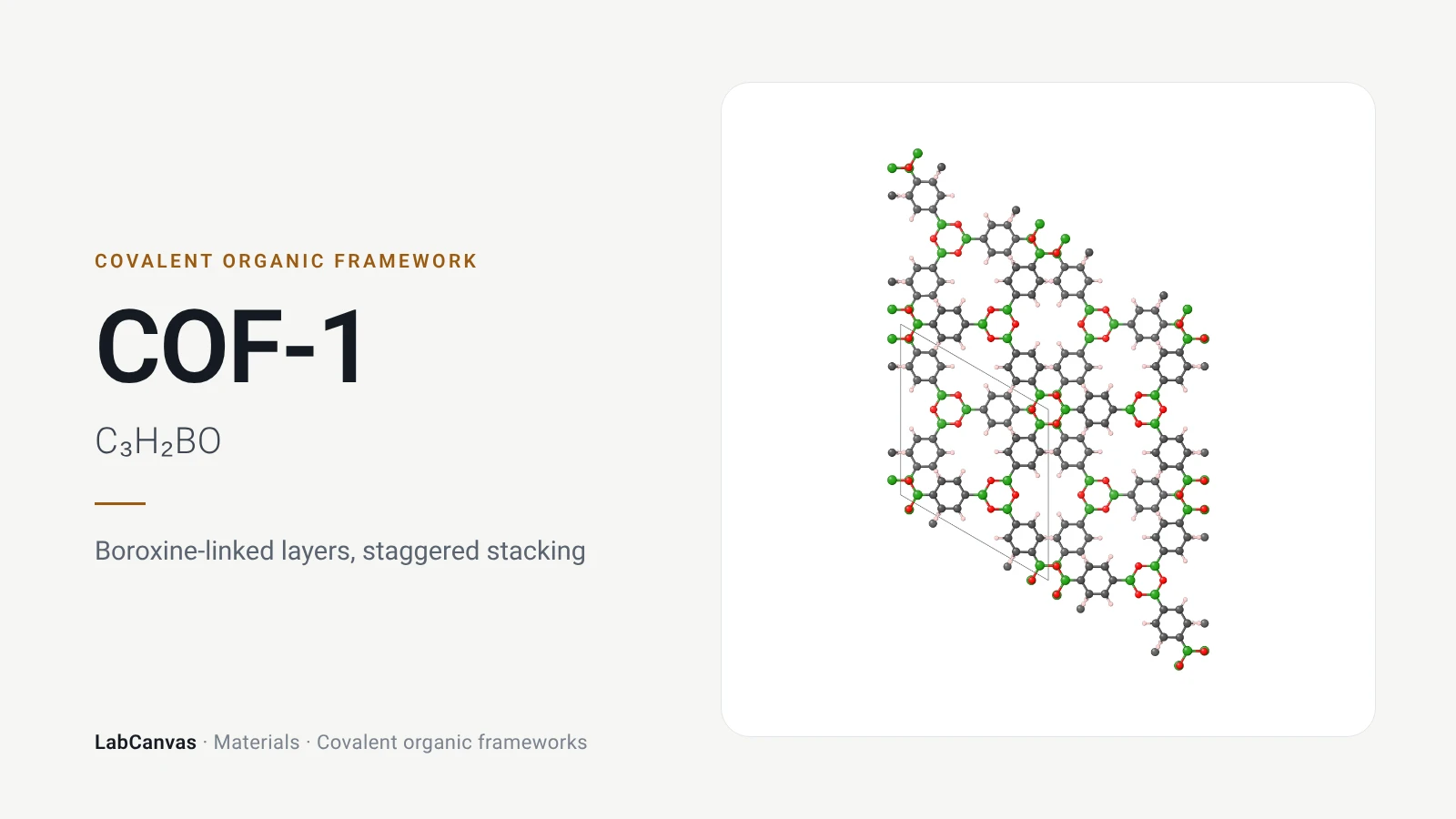
COF-1
COF-1, the first covalent organic framework: boroxine-linked layers from one boronic acid, staggered stacking, 711 m² g⁻¹, synthesis and stability, cited.
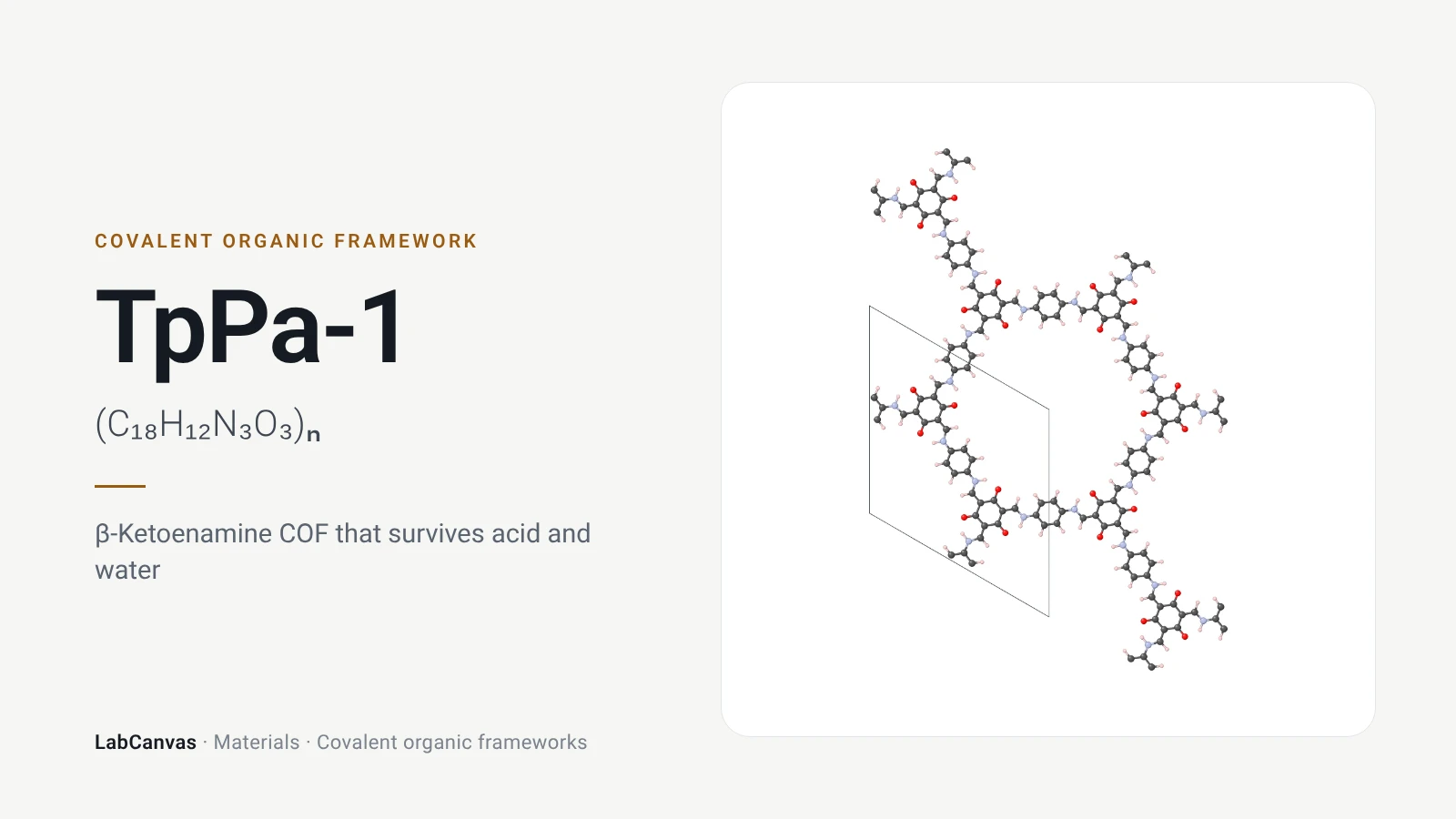
TpPa-1
TpPa-1, the β-ketoenamine COF from Tp and p-phenylenediamine: why it survives acid and boiling water, its structure, synthesis and surface area, cited.
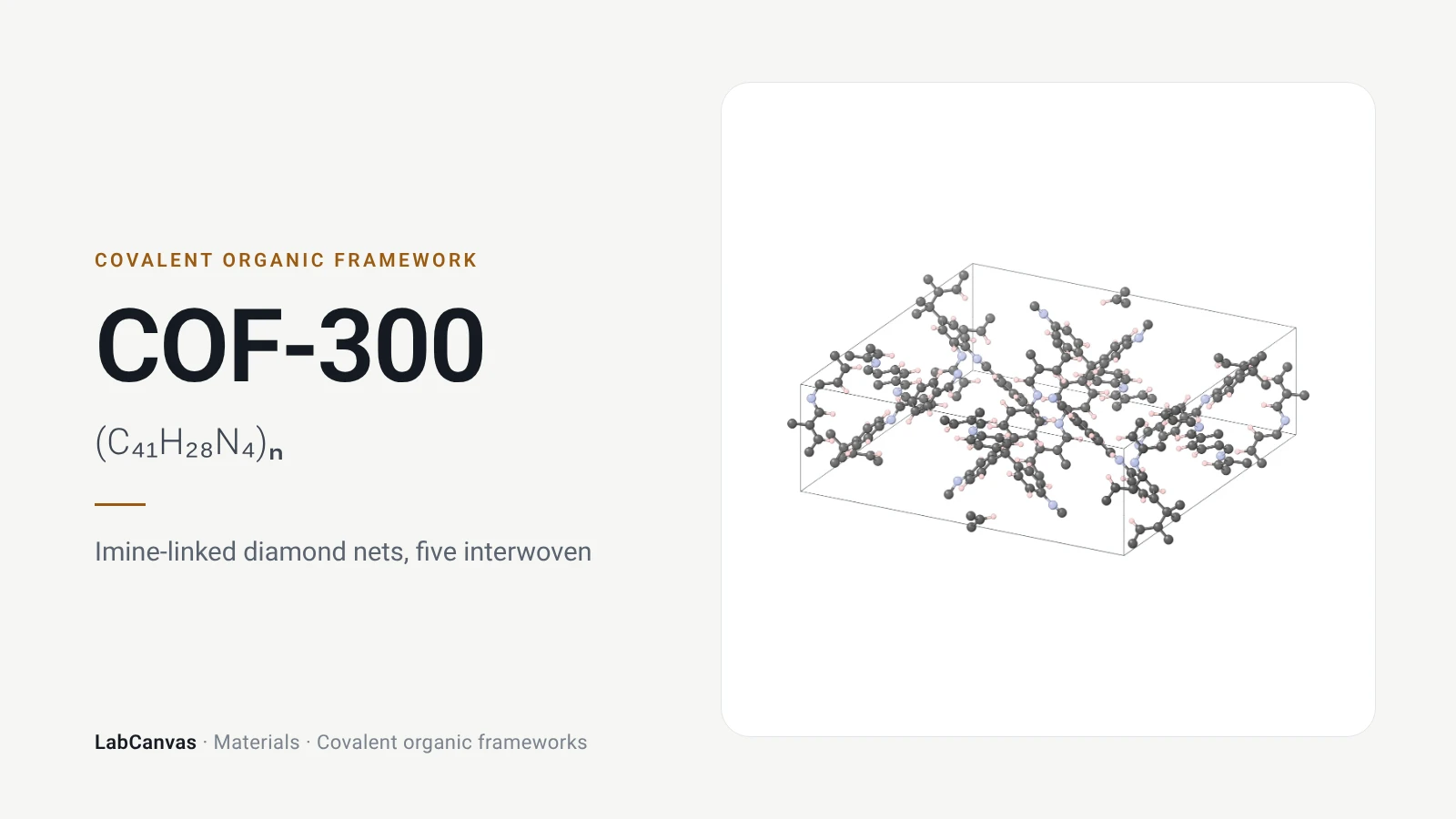
COF-300
COF-300, the first imine-linked 3D COF: five interwoven diamond nets, 7.2 Å pores, 1,360 m² g⁻¹, stable to 490 °C. Structure, synthesis and papers.
2D materials
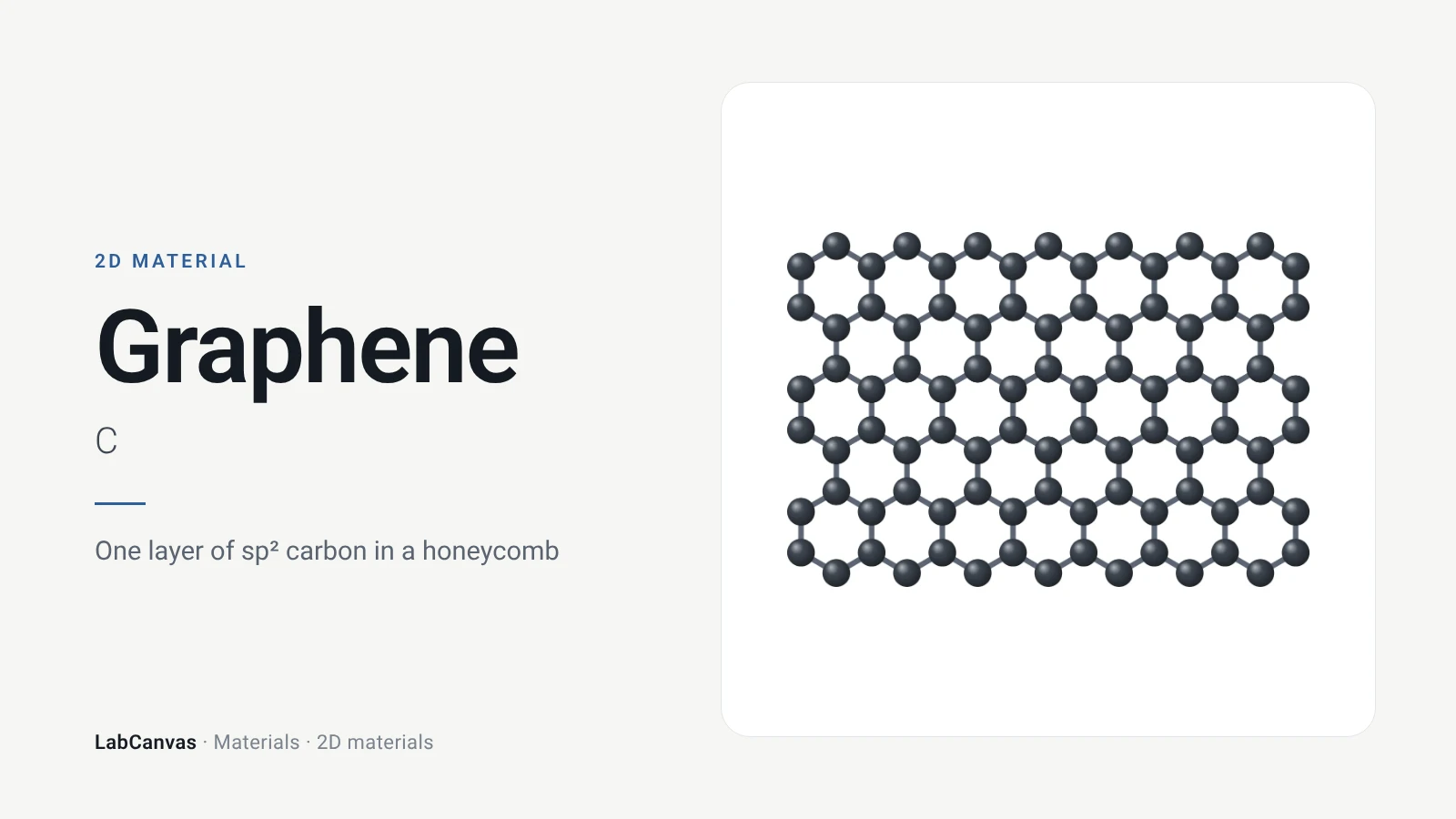
Graphene
Graphene structure explained: the one-atom-thick honeycomb of sp² carbon, its Dirac bands, strength and conductivity, how it is made and used. Cited facts.
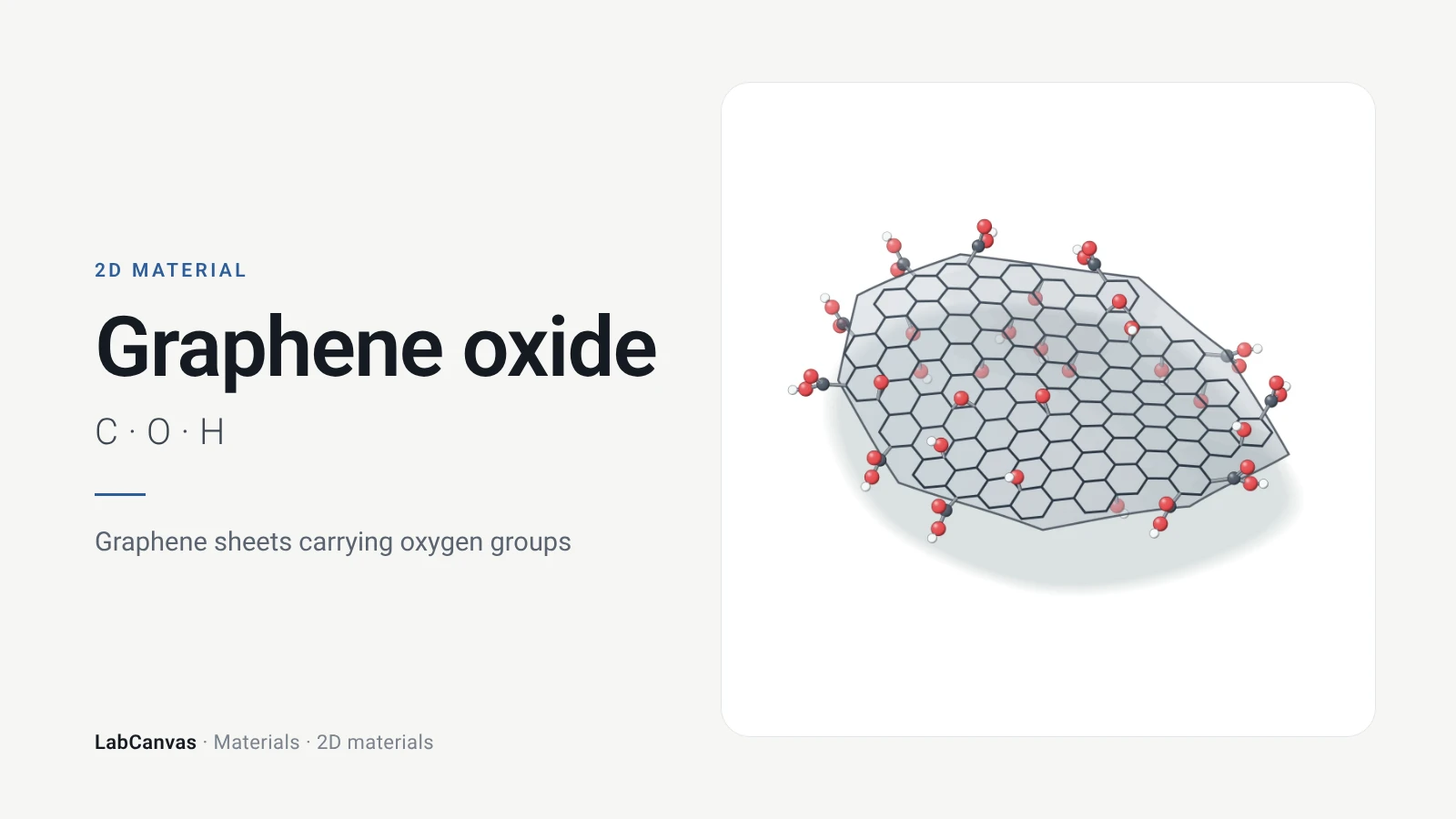
Graphene oxide
Graphene oxide structure explained: graphene with epoxide, hydroxyl and carboxyl groups, made by the Hummers method and reduced to rGO. Cited facts, figures.
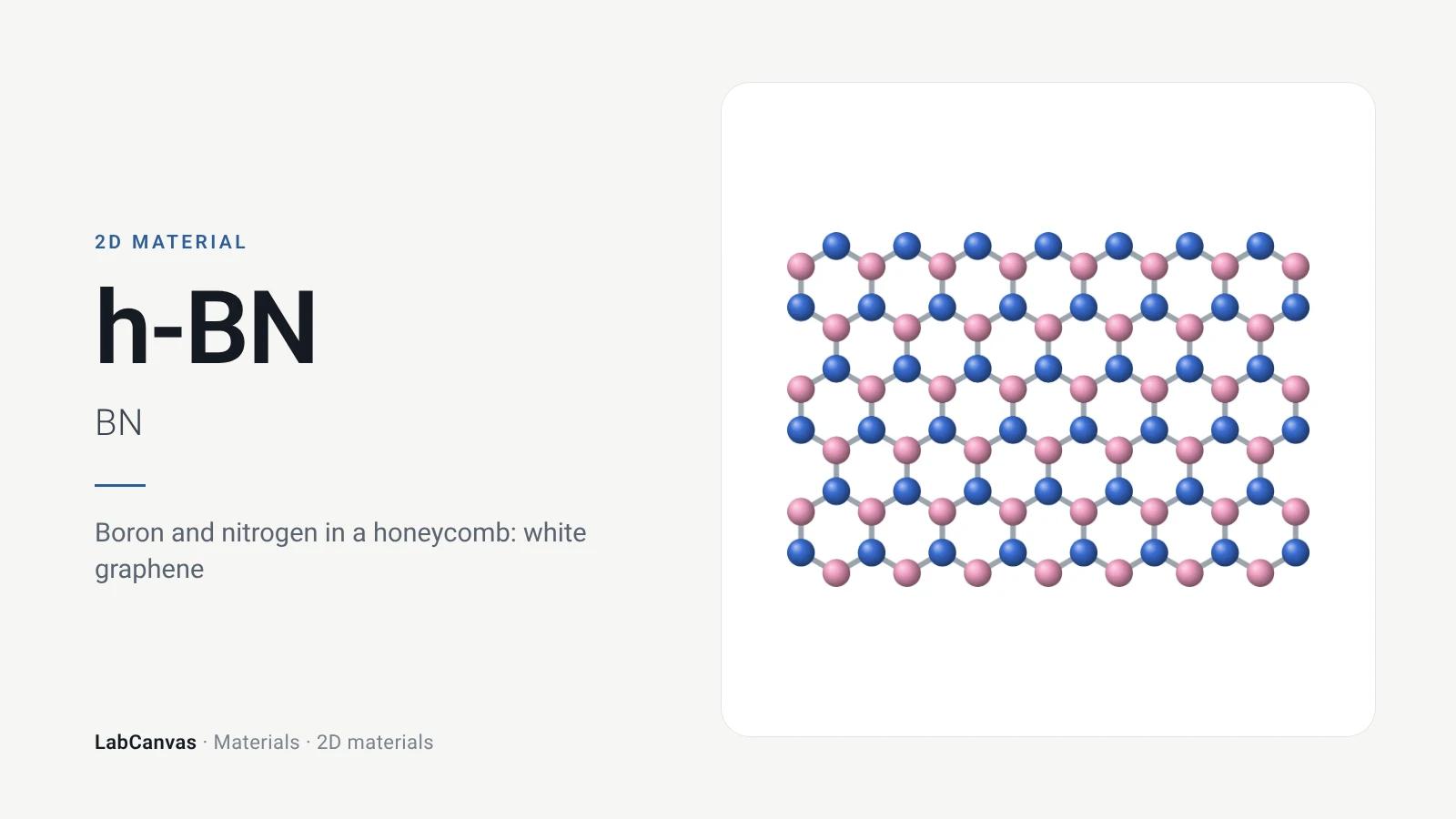
Hexagonal boron nitride (h-BN)
Hexagonal boron nitride (h-BN), “white graphene”: its B–N honeycomb structure, ~6 eV band gap, how it is made and why 2D devices sit on it. Editable figures.
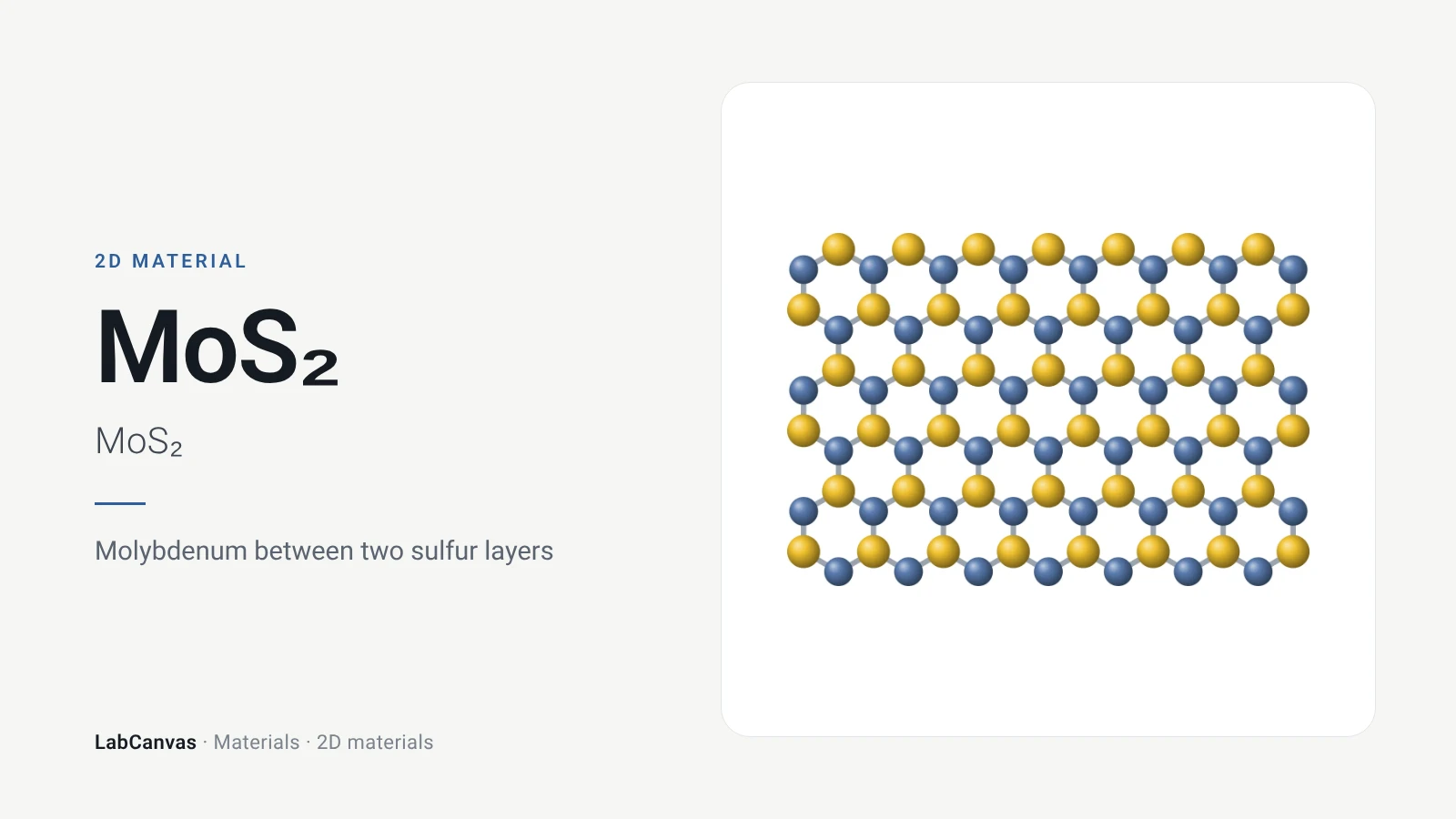
MoS₂ (molybdenum disulfide)
MoS₂ structure and band gap: the S–Mo–S layer, 2H and 1T phases, the 1.8 eV direct gap of monolayer MoS₂, transistors and HER catalysis. Editable figures.
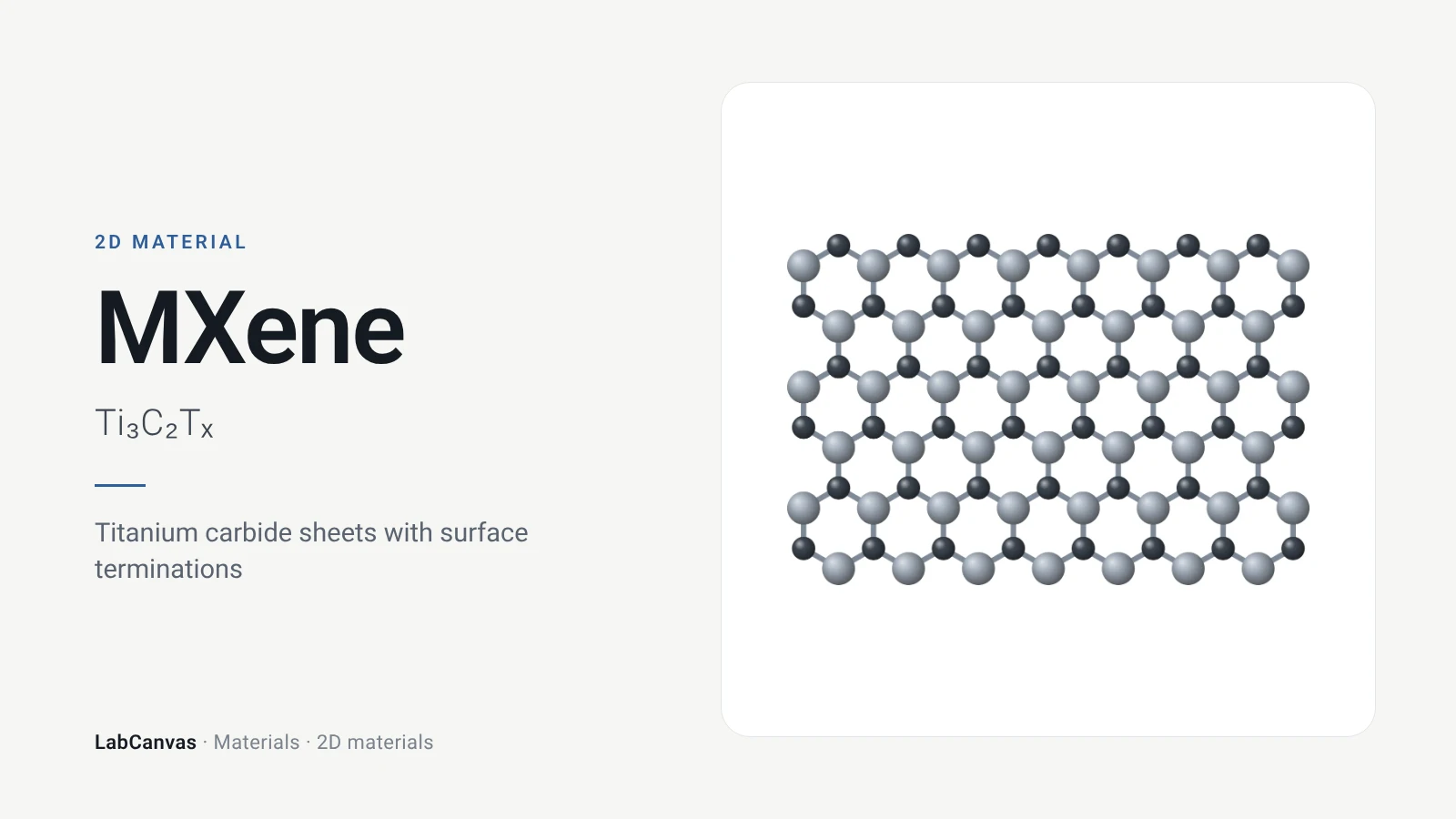
MXene (Ti₃C₂Tₓ)
MXene Ti₃C₂Tₓ explained: 2D titanium carbide etched from the MAX phase Ti₃AlC₂, its surface terminations, synthesis, conductivity and uses. Editable figures.
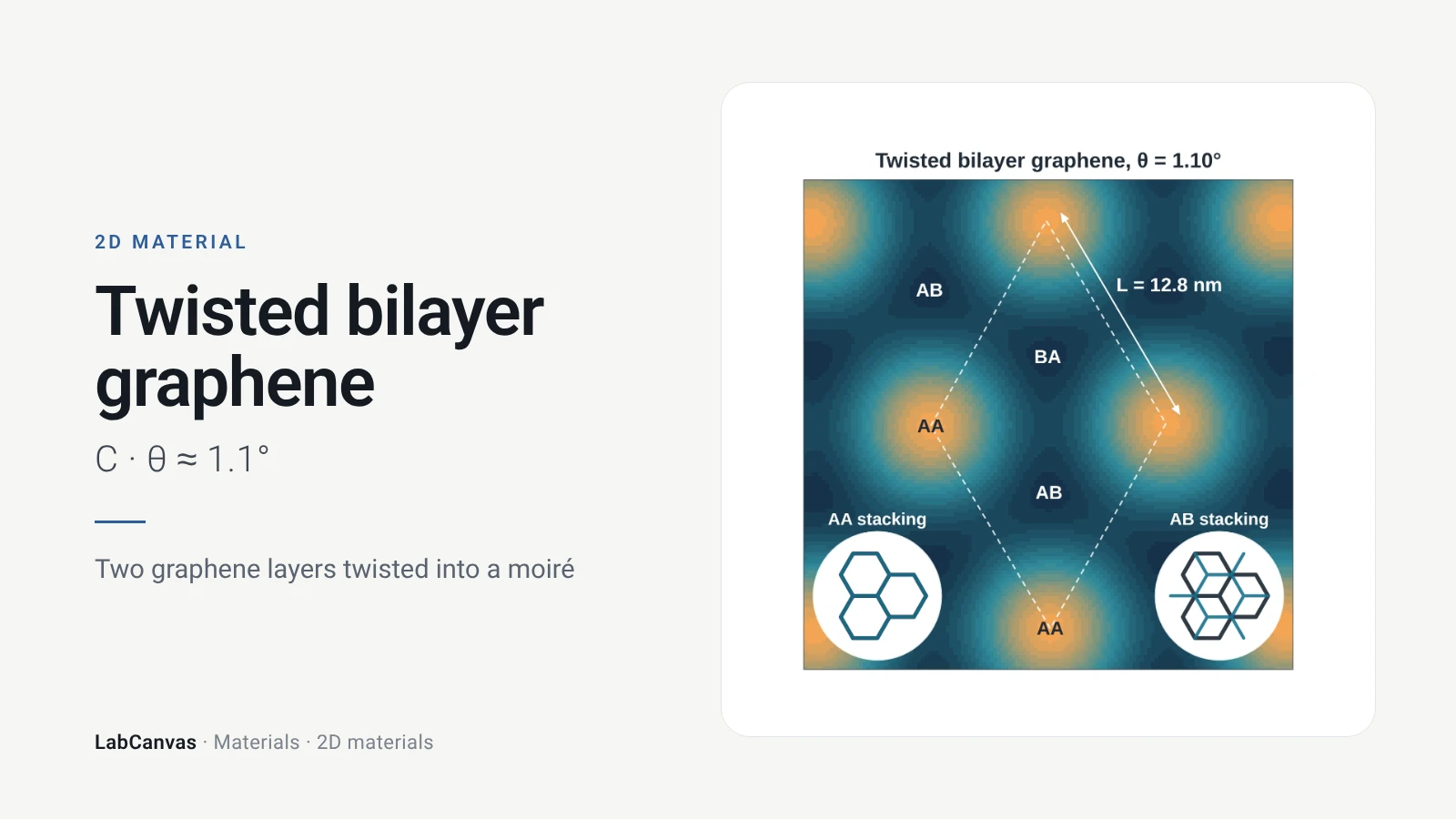
Twisted bilayer graphene
Twisted bilayer graphene explained: two layers turned by a small angle, the moiré, the 1.1° magic angle, flat bands and superconductivity. Cited papers.
Perovskites
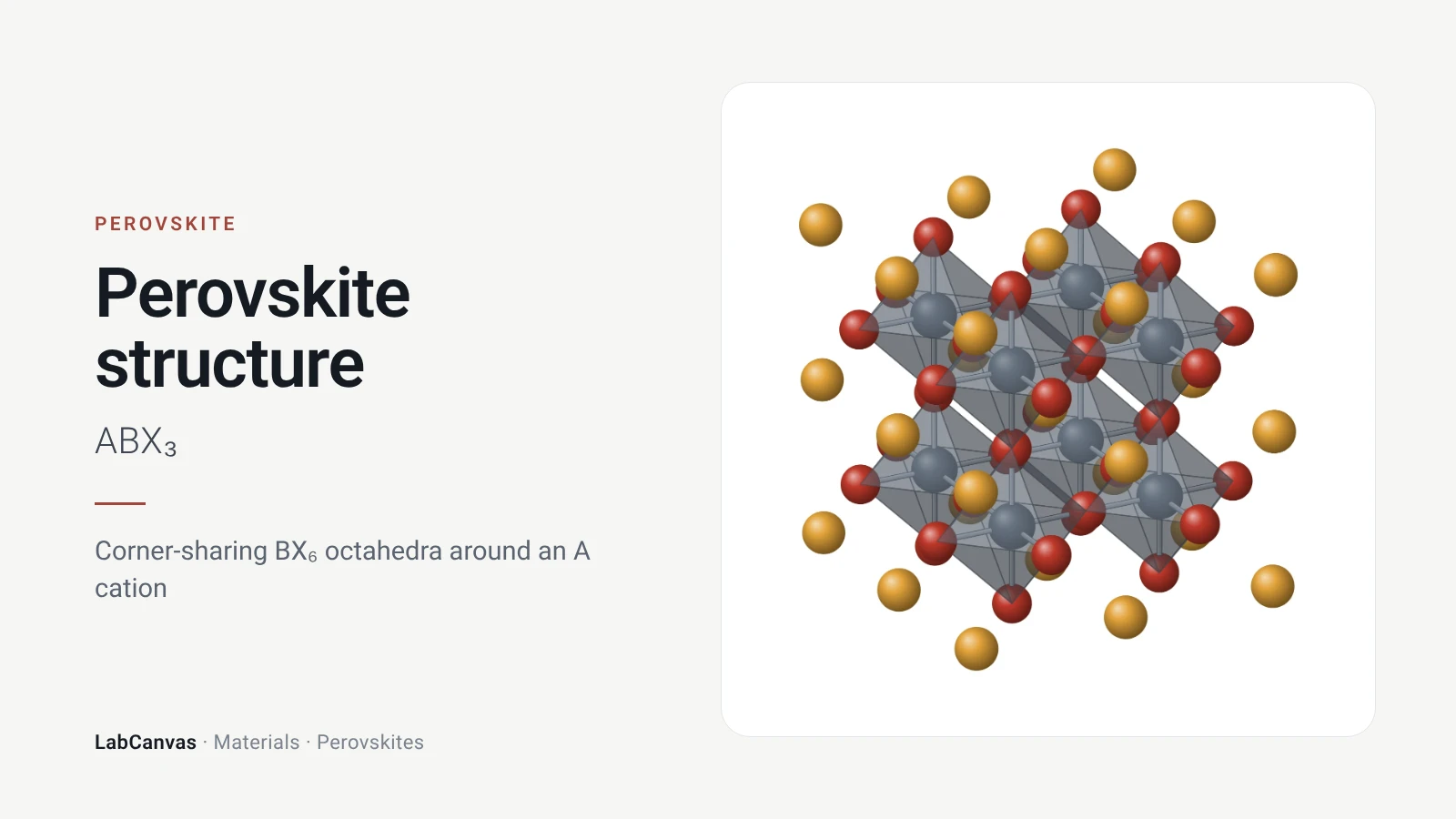
Perovskite structure
The perovskite structure explained: ABX₃ with corner-sharing BX₆ octahedra, the tolerance factor, octahedral tilts, and oxide vs halide perovskites.
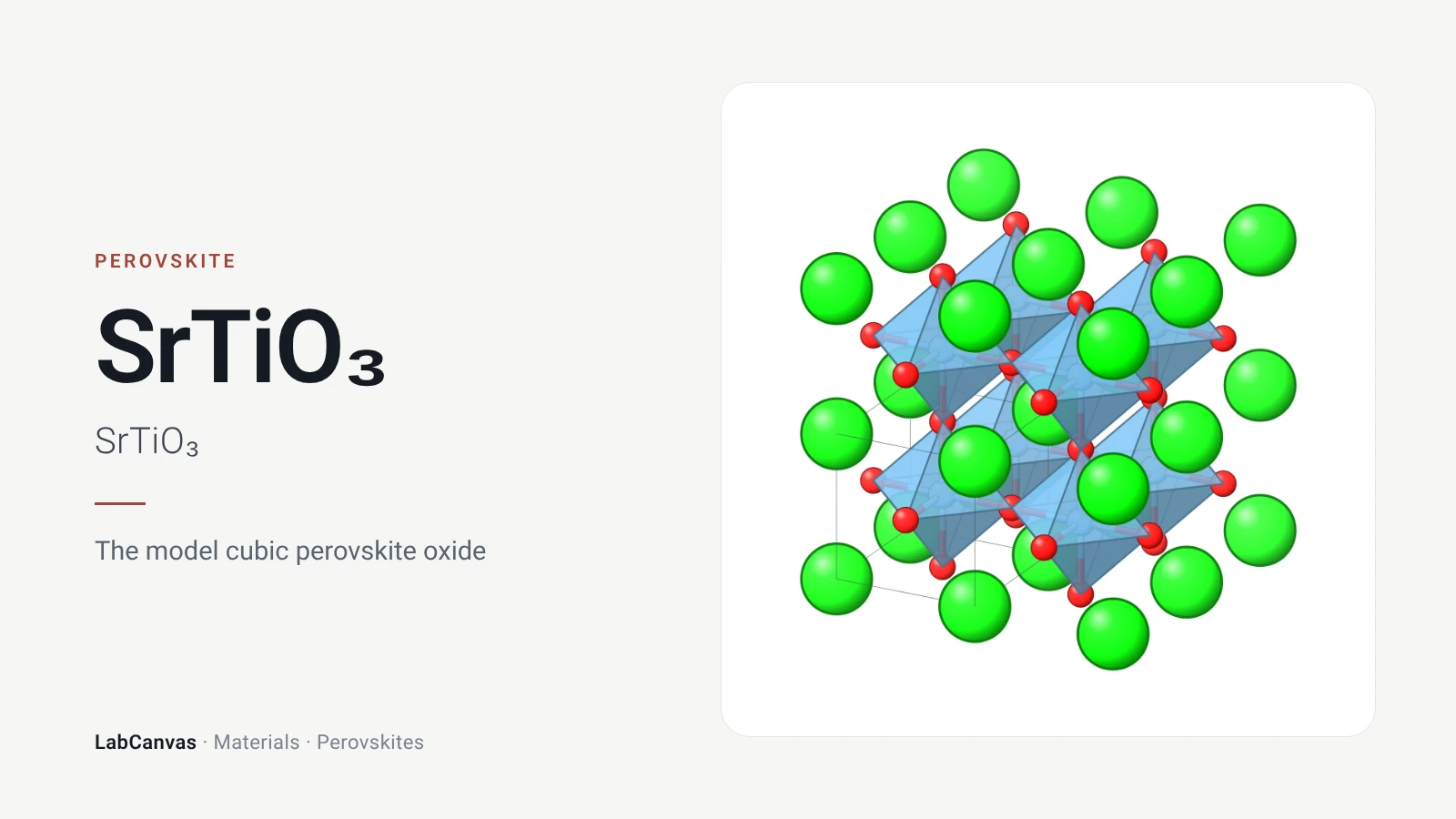
SrTiO₃ (strontium titanate)
SrTiO₃ structure and properties: cubic perovskite (a = 3.905 Å), the 105 K transition, quantum paraelectricity, LaAlO₃/SrTiO₃ interfaces and water splitting.
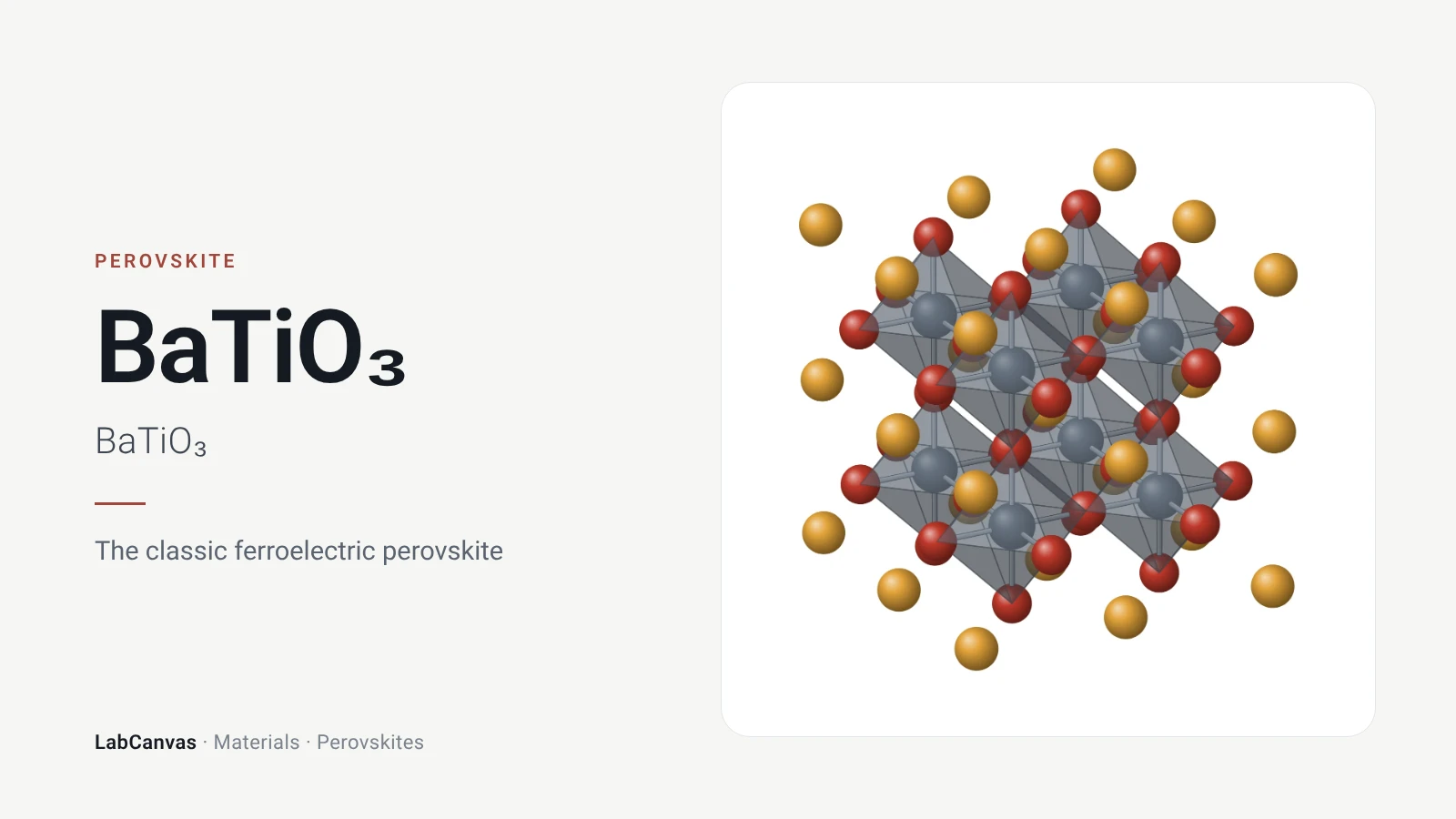
BaTiO₃ (barium titanate)
BaTiO₃, the classic ferroelectric perovskite: its ~120 °C Curie point, tetragonal, orthorhombic and rhombohedral phases, capacitors and piezoelectrics.
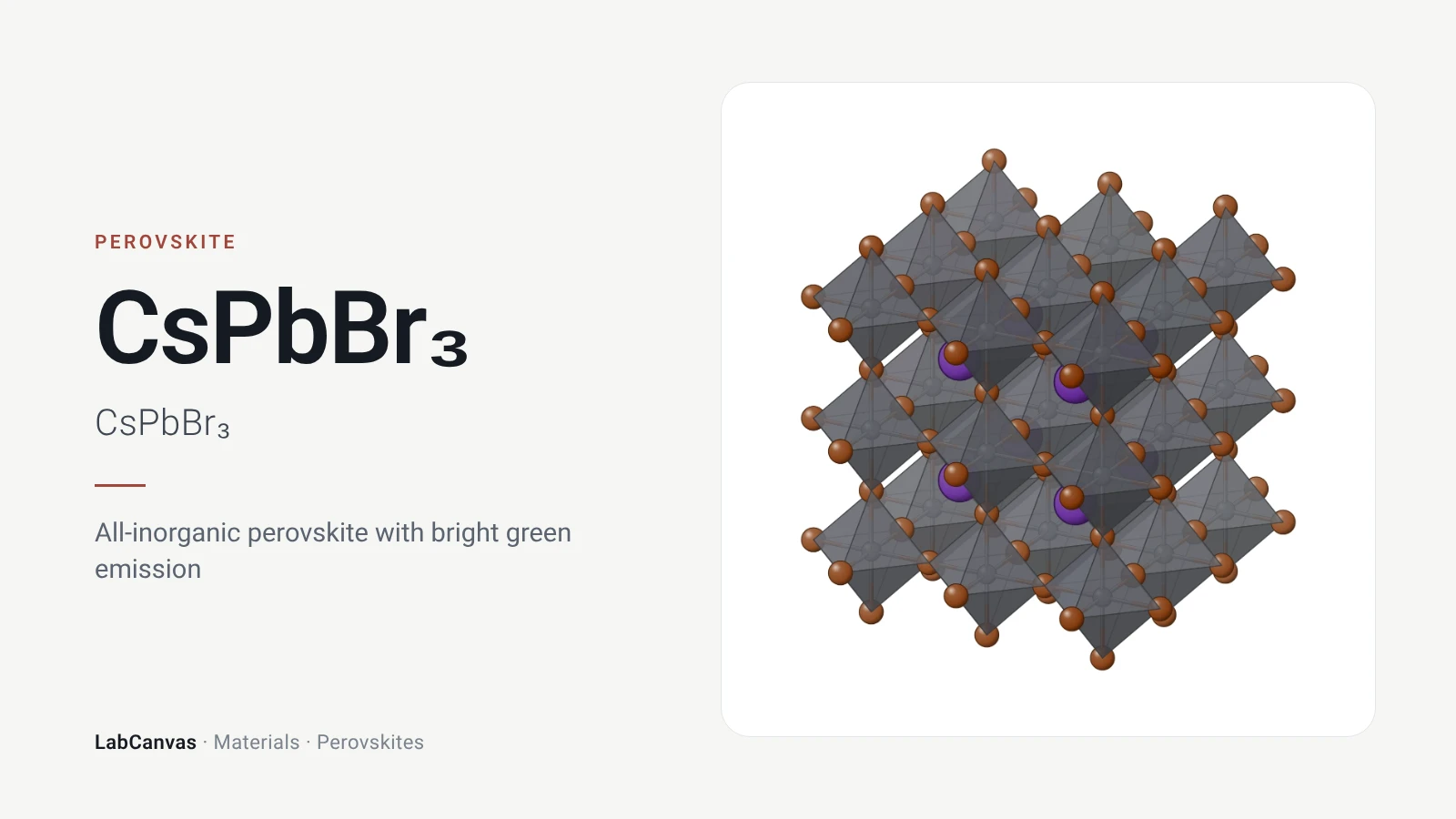
CsPbBr₃
CsPbBr₃ and CsPbX₃ perovskite quantum dots: orthorhombic structure, hot-injection synthesis, emission tunable over 410–700 nm, anion exchange and uses.
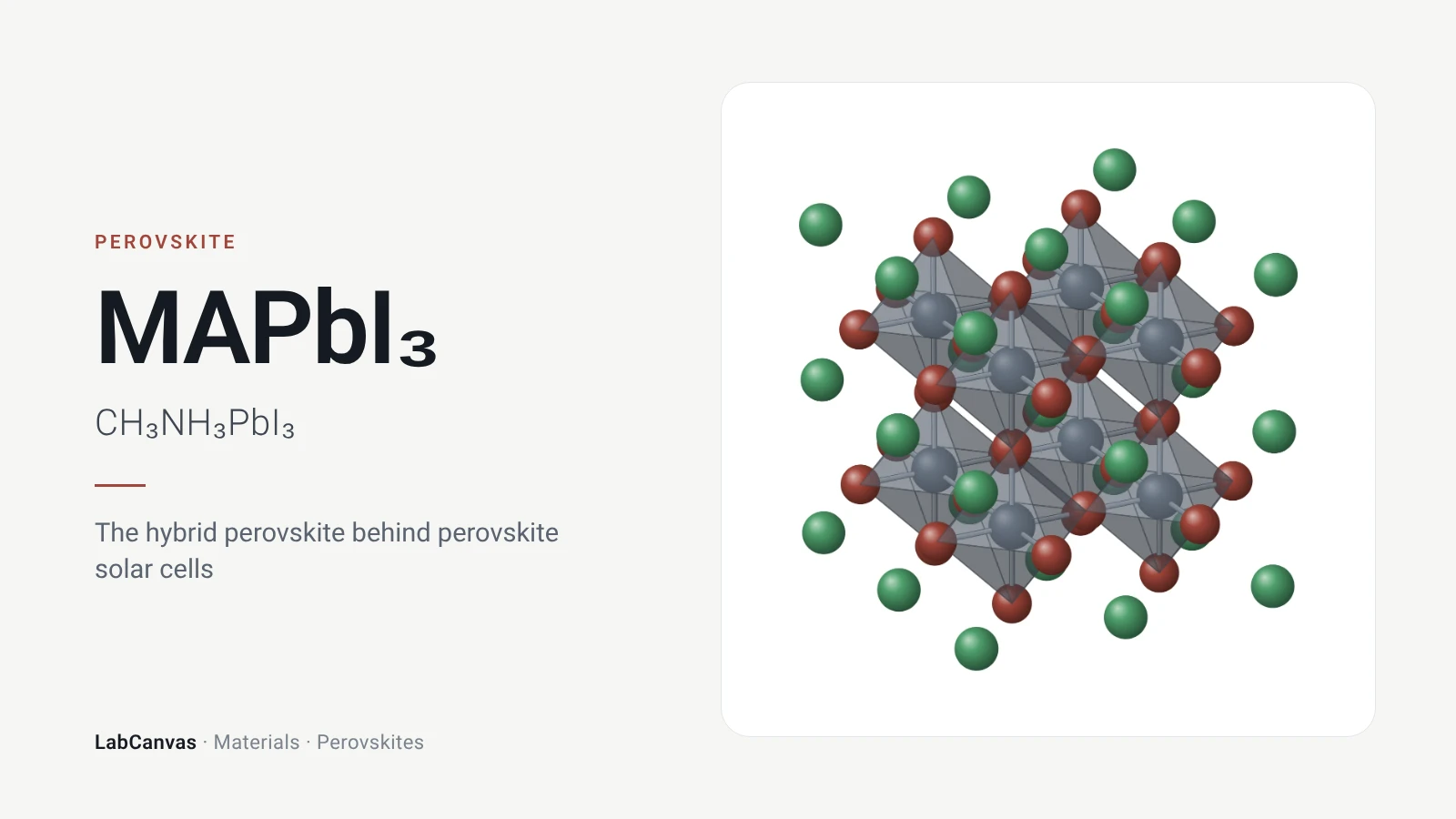
MAPbI₃
MAPbI₃ (CH₃NH₃PbI₃): tetragonal and cubic phases, 1.5 eV band gap, the first perovskite solar cells, long diffusion lengths, instability and lead toxicity.
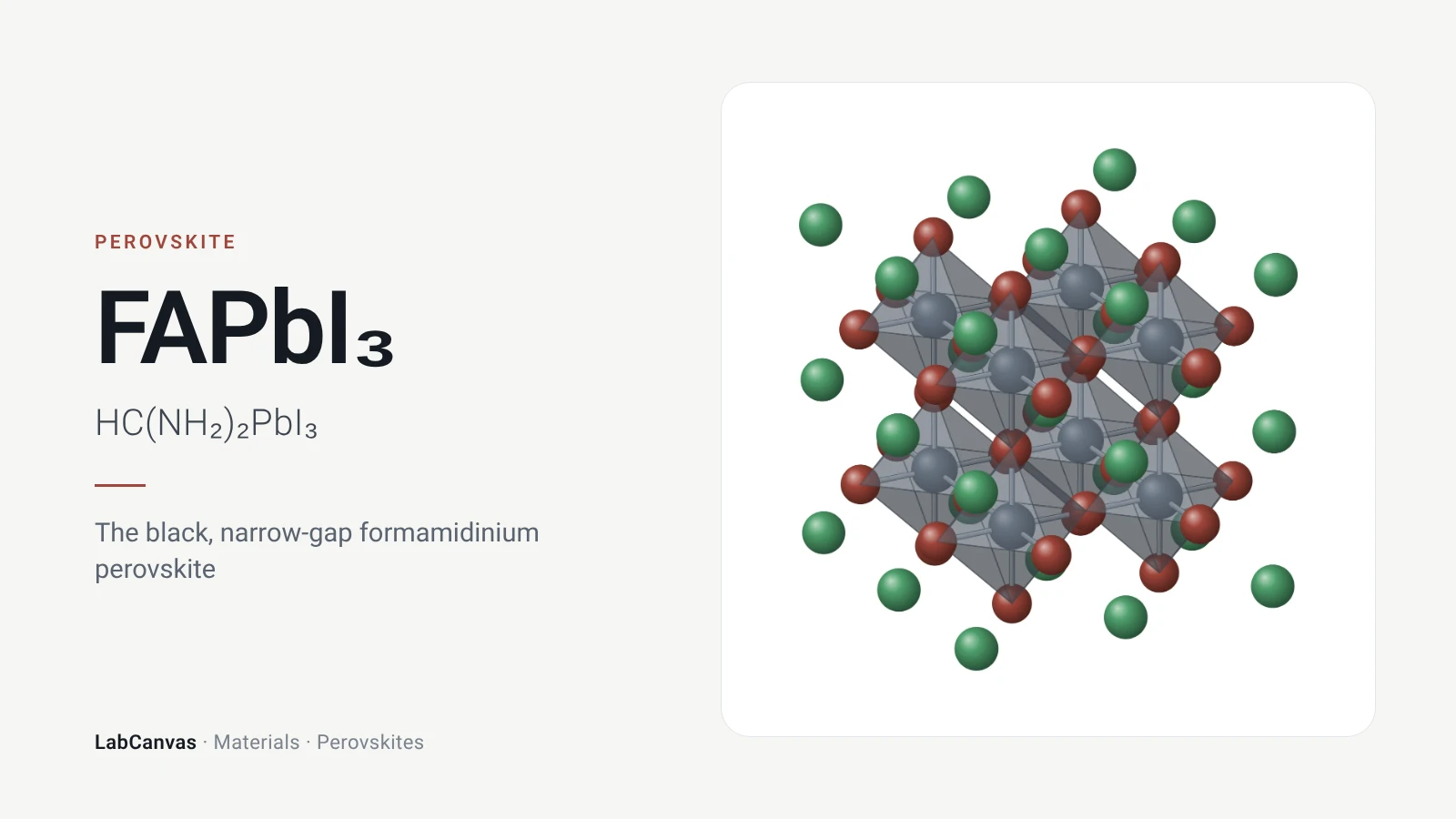
FAPbI₃
FAPbI₃ explained: the black cubic α-phase and yellow hexagonal δ-phase, its 1.48 eV band gap, how mixed cations stabilise it and its role in solar cells.
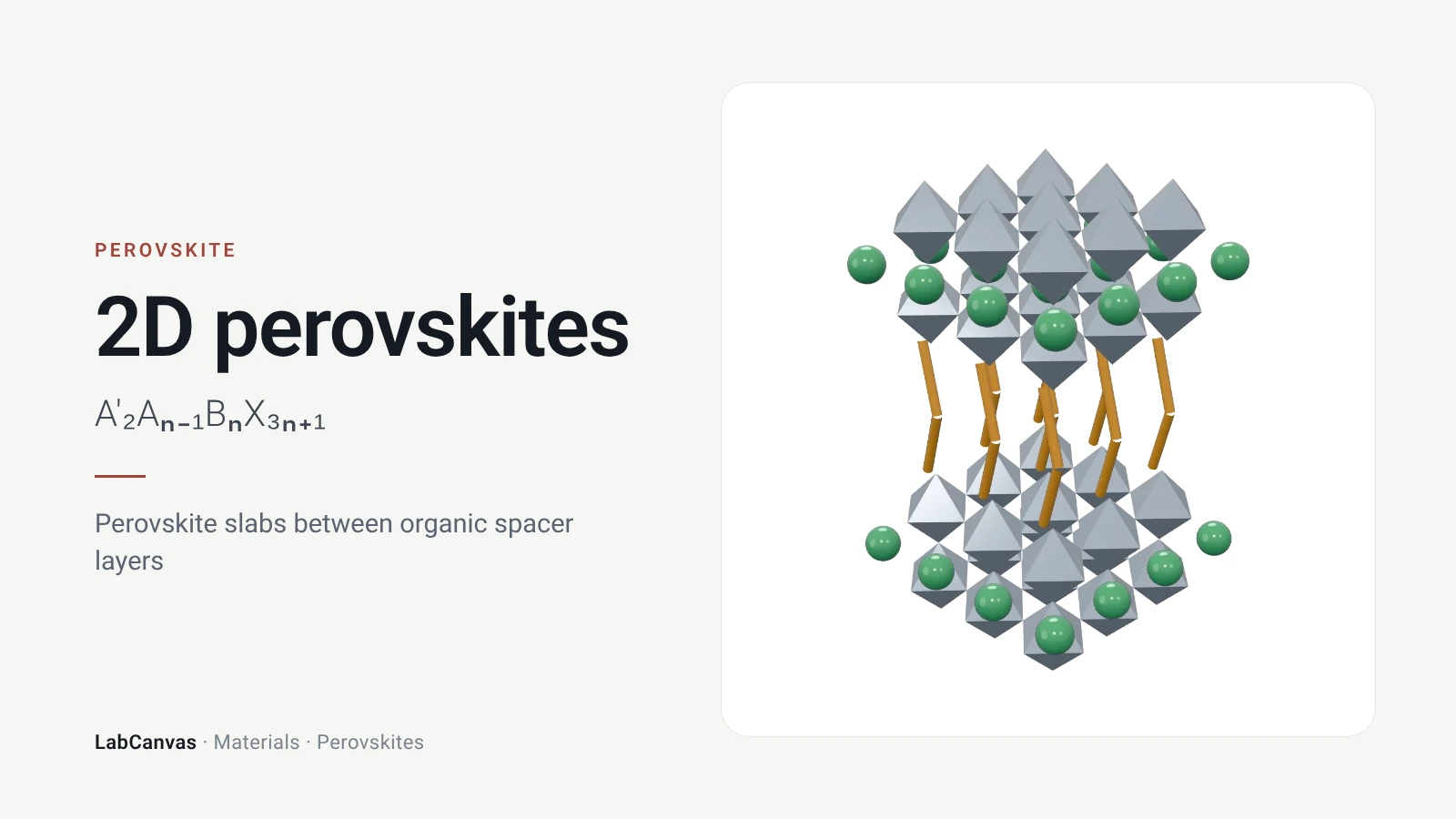
2D perovskites
Layered 2D halide perovskites explained: Ruddlesden–Popper and Dion–Jacobson phases, the n value, quantum wells, spacers, stability, solar cells and LEDs.
Battery materials
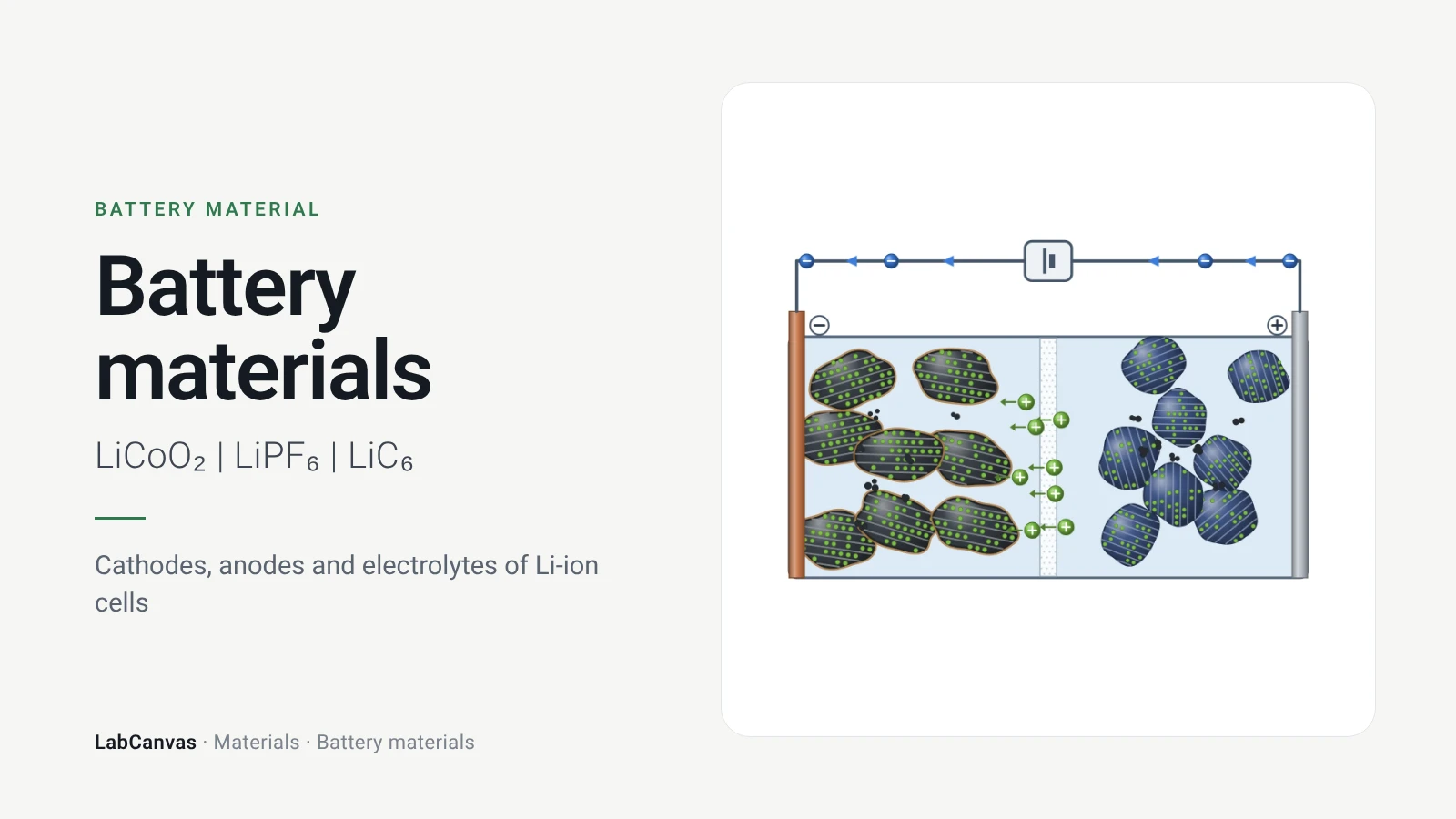
Battery materials
How a lithium-ion cell works and what is inside it: layered, spinel and olivine cathodes, graphite, silicon and lithium anodes, liquid and solid electrolytes.
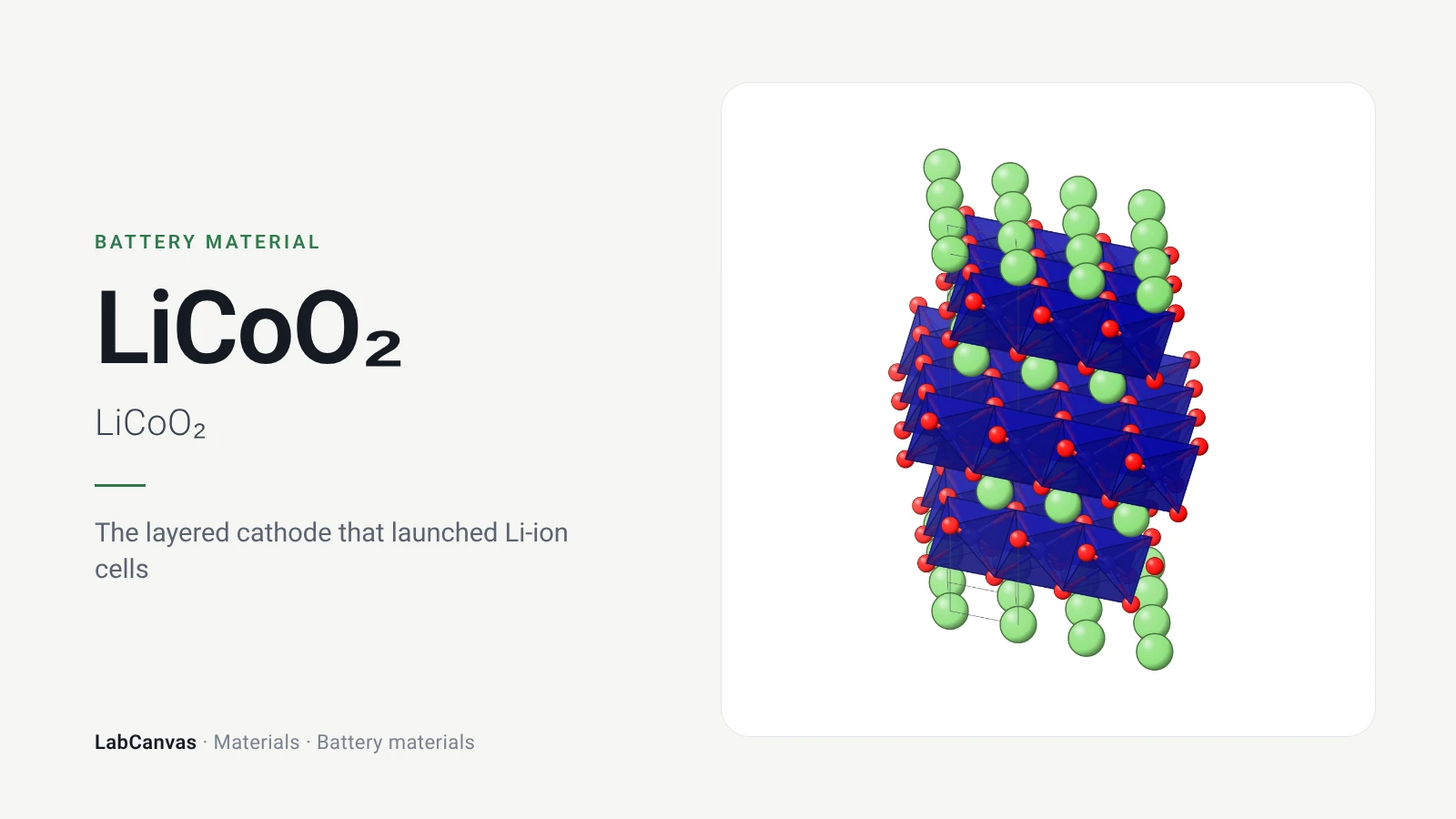
LiCoO₂
LiCoO₂ structure and properties: the layered O3 (α-NaFeO₂-type) cathode, why only half its lithium is used, ~4 V vs Li, phones and laptops, high-voltage LCO.
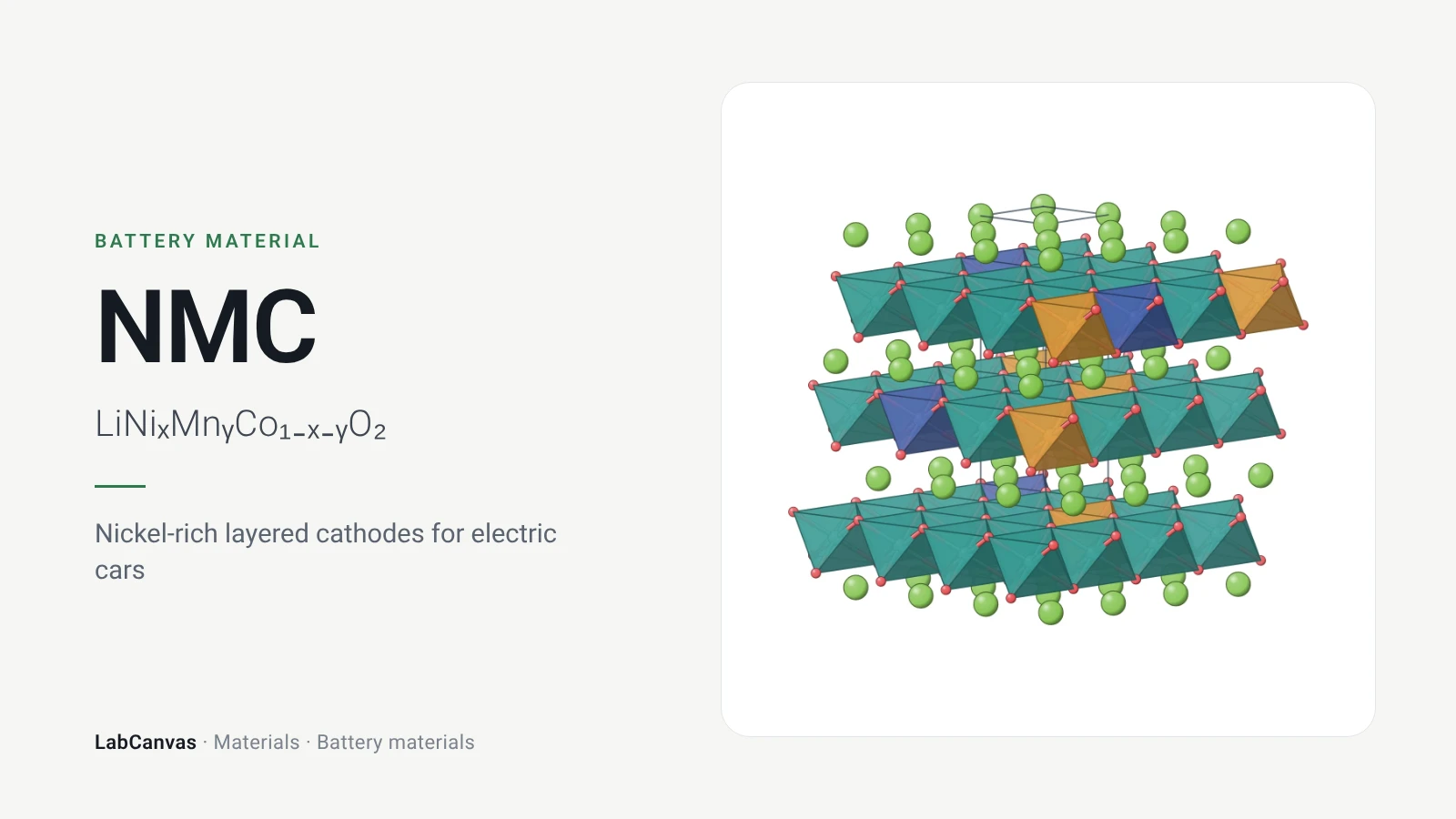
NMC (LiNiₓMnᵧCo₁₋ₓ₋ᵧO₂)
NMC cathodes (LiNiₓMnᵧCo₁₋ₓ₋ᵧO₂): layered structure, NMC111 to 811, why more nickel means more capacity but less stability, and the fixes.
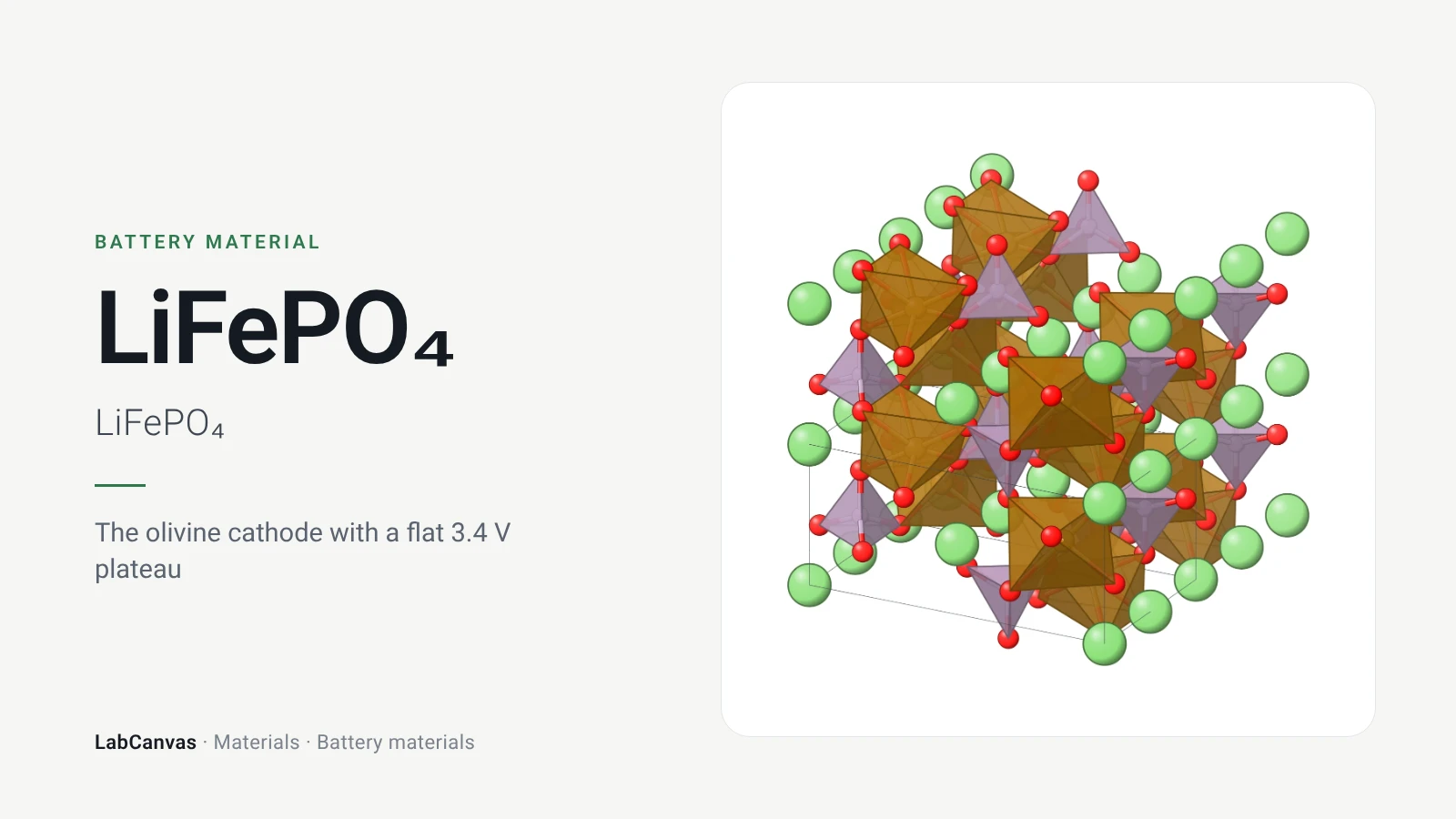
LiFePO₄ (LFP)
LiFePO₄ (LFP) cathode: olivine structure (Pnma), 1D lithium channels, the flat 3.4 V two-phase plateau, 170 mAh/g, carbon coating and why LFP is safe.
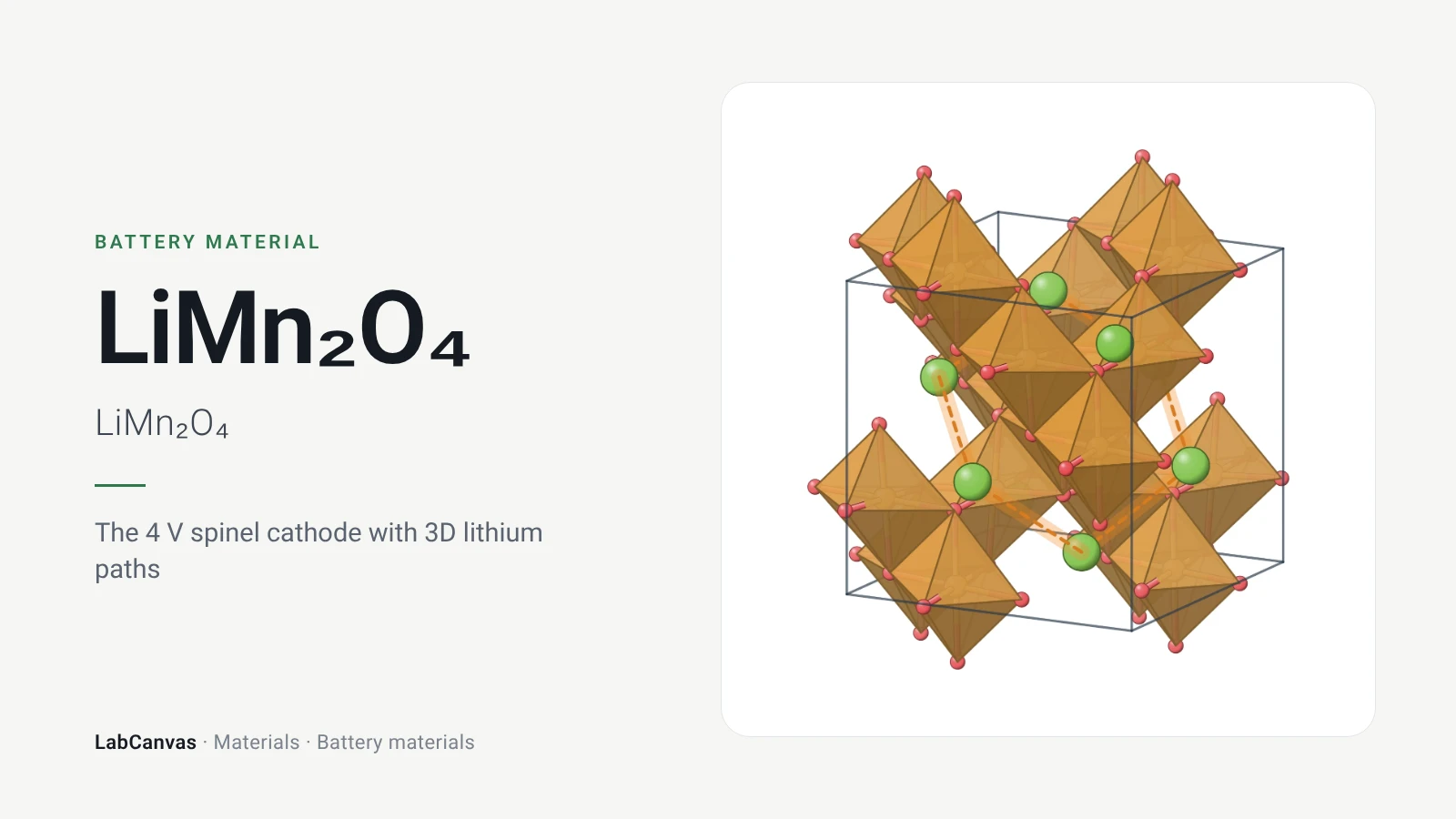
LiMn₂O₄ (spinel)
LiMn₂O₄ (LMO) spinel cathode: cubic Fd-3m structure, 3D lithium diffusion, 4.1 V plateaus, 148 mAh/g, Mn dissolution, Jahn–Teller fade and LiNi₀.₅Mn₁.₅O₄.
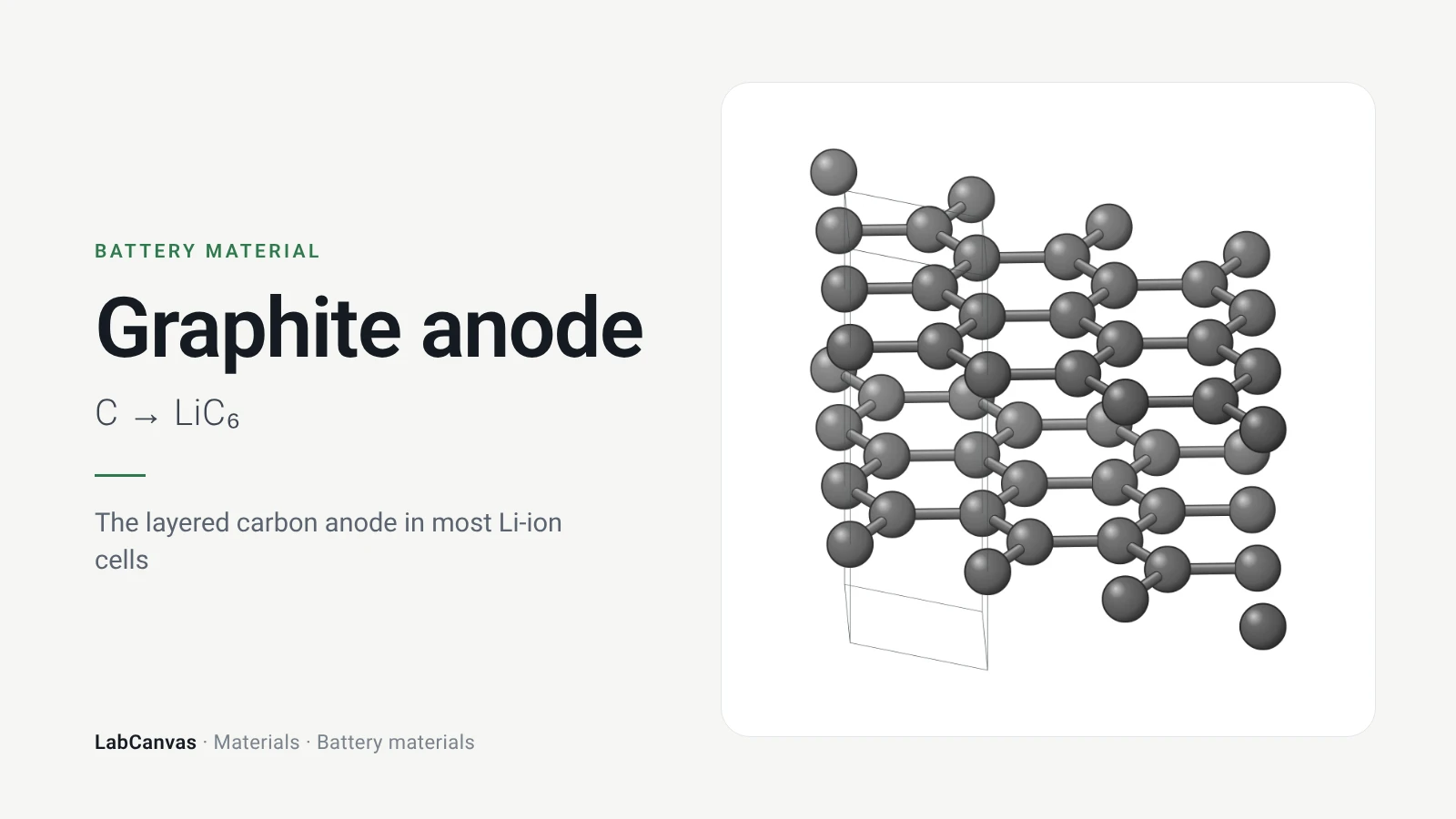
Graphite anode
Graphite anode in lithium-ion batteries: LiC₆ and 372 mAh/g, staging, intercalation near 0.1 V, the SEI from ethylene carbonate and lithium plating.
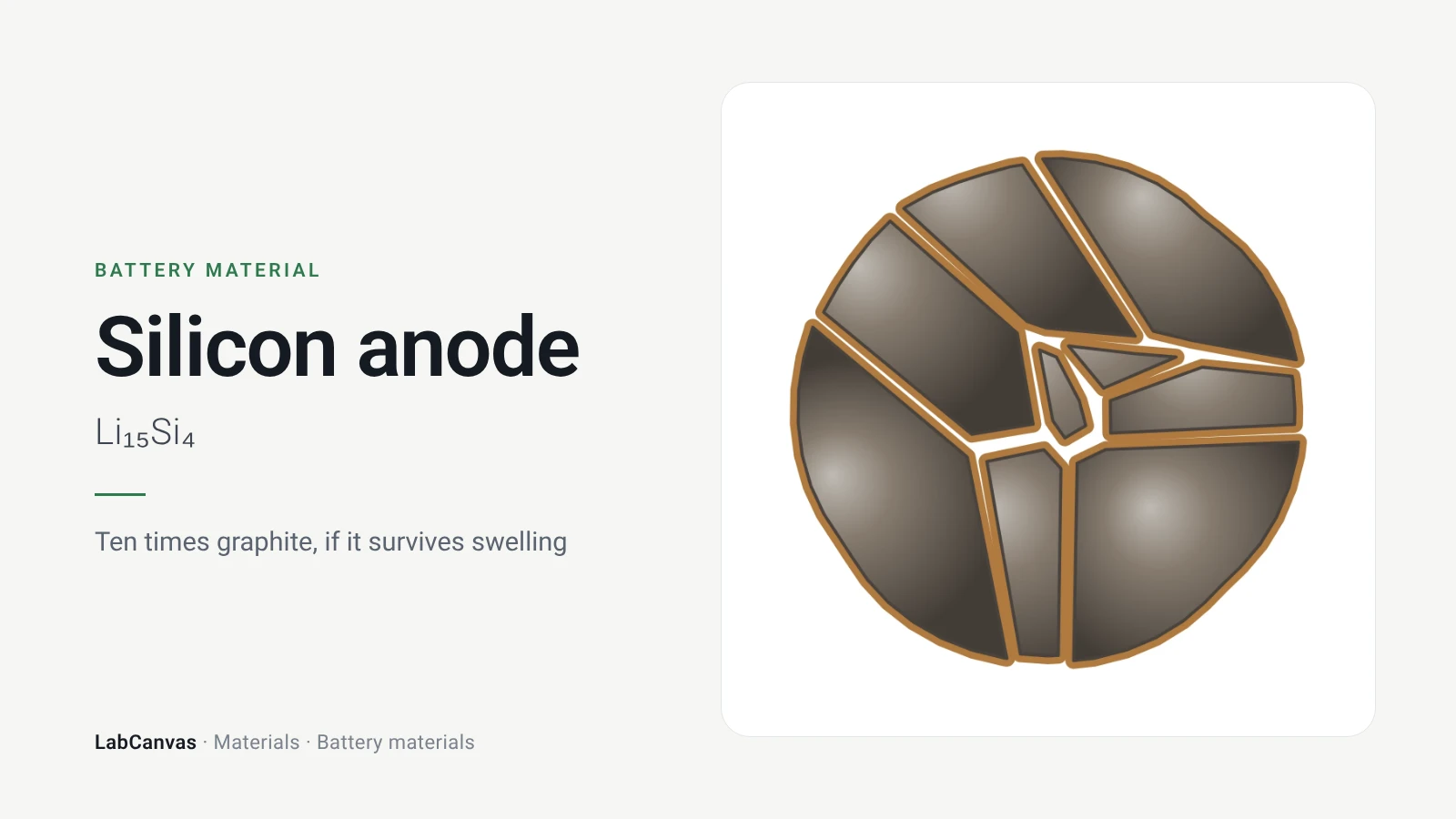
Silicon anode
Silicon anodes for Li-ion batteries: 3,579 mAh/g as Li₁₅Si₄, ~300% volume expansion, cracking and SEI, nanowires, yolk–shell, SiOx, Si–graphite, binders.
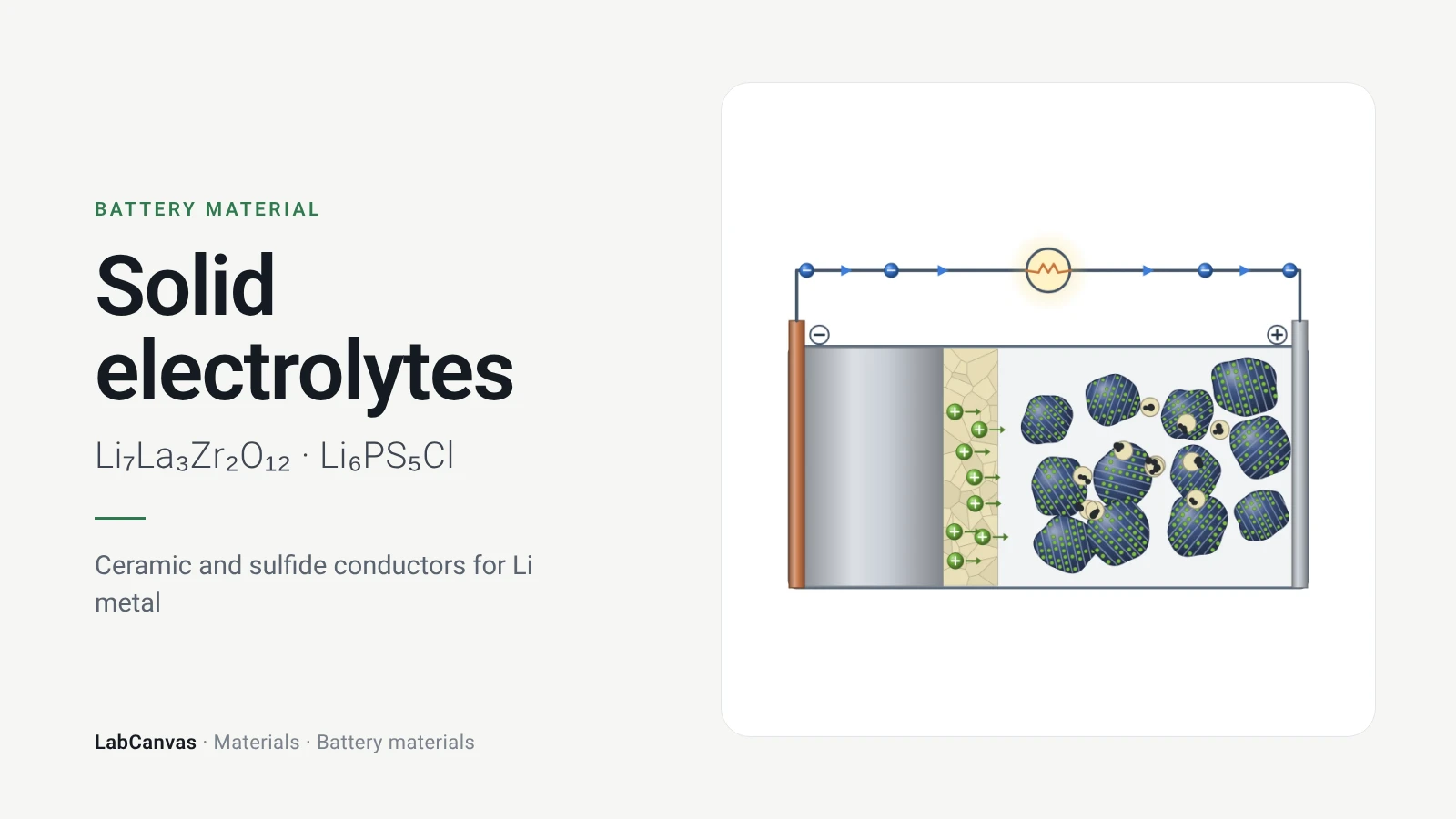
Solid electrolytes (LLZO, argyrodite)
Solid electrolytes for solid-state batteries: garnet LLZO (cubic vs tetragonal, Al/Ga/Ta doping), argyrodite Li₆PS₅Cl, LGPS, PEO, dendrites and Li metal.
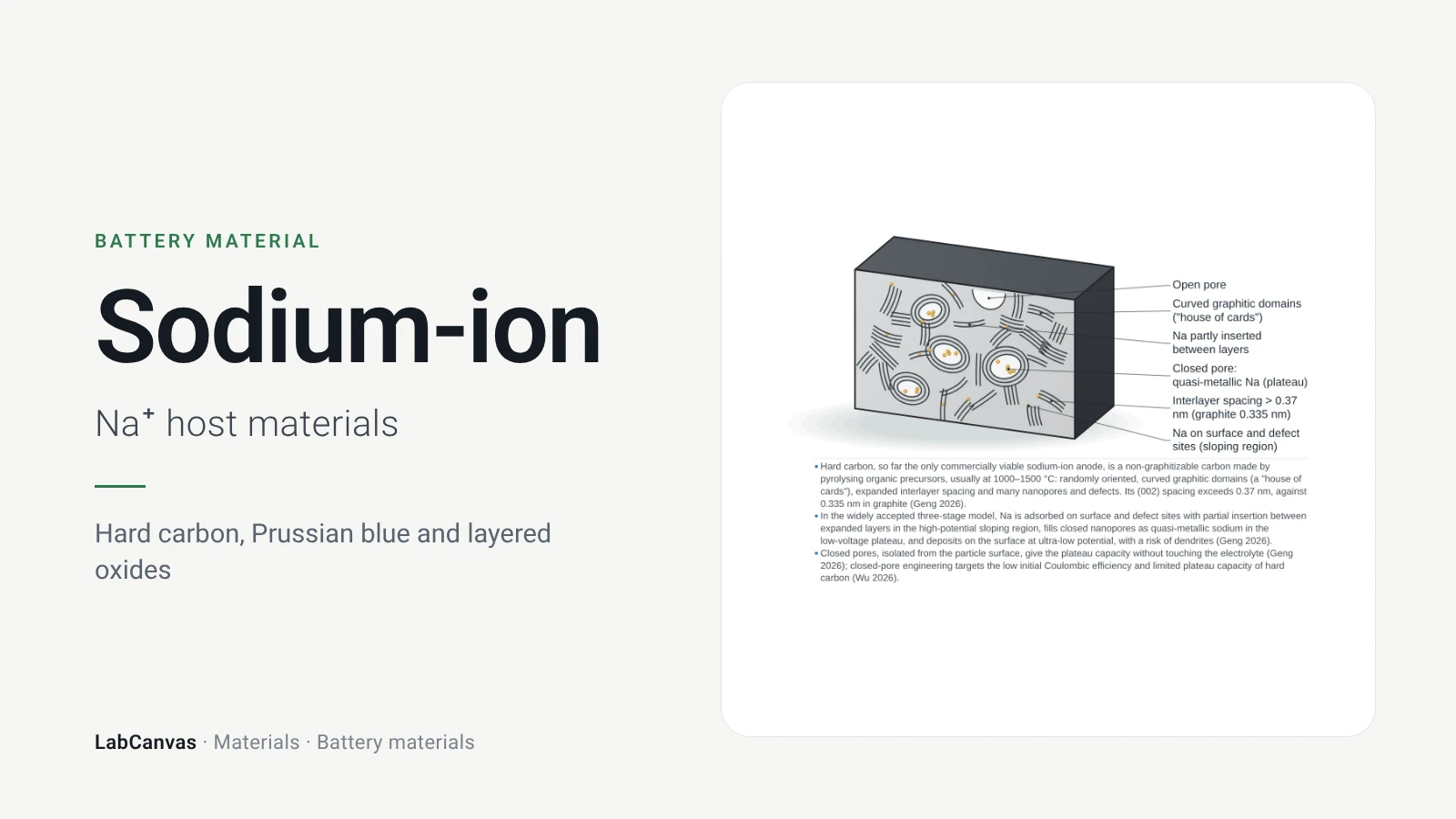
Sodium-ion battery materials
Sodium-ion battery materials: why sodium, hard carbon anodes (graphite stores little Na), Prussian blue, layered oxide and polyanion cathodes compared.
Zeolites
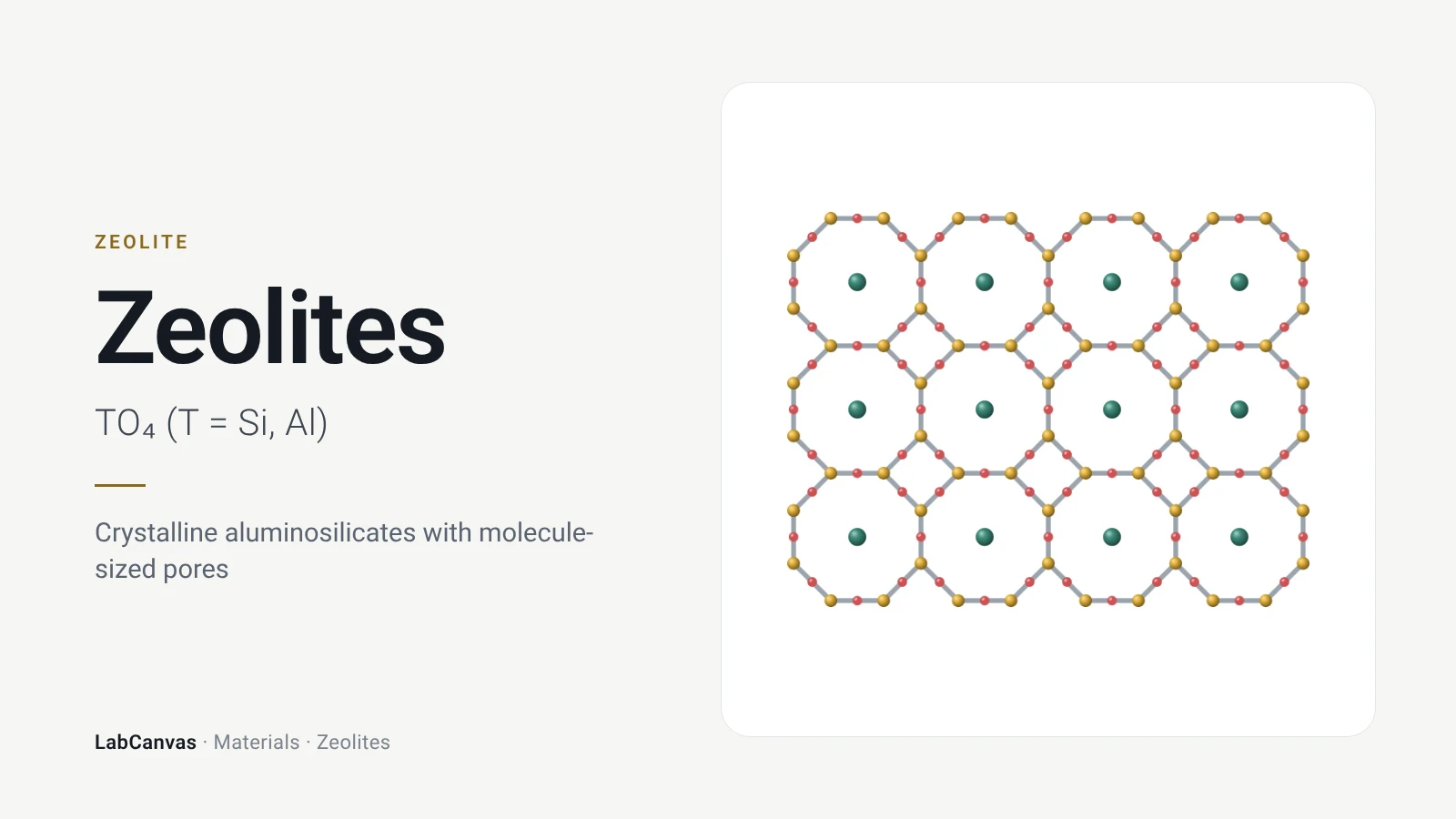
Zeolites
What zeolites are: TO₄ frameworks, 8-, 10- and 12-ring pores, IZA codes (MFI, FAU, LTA, CHA), Si/Al ratio, acid sites, synthesis and uses, with sources.
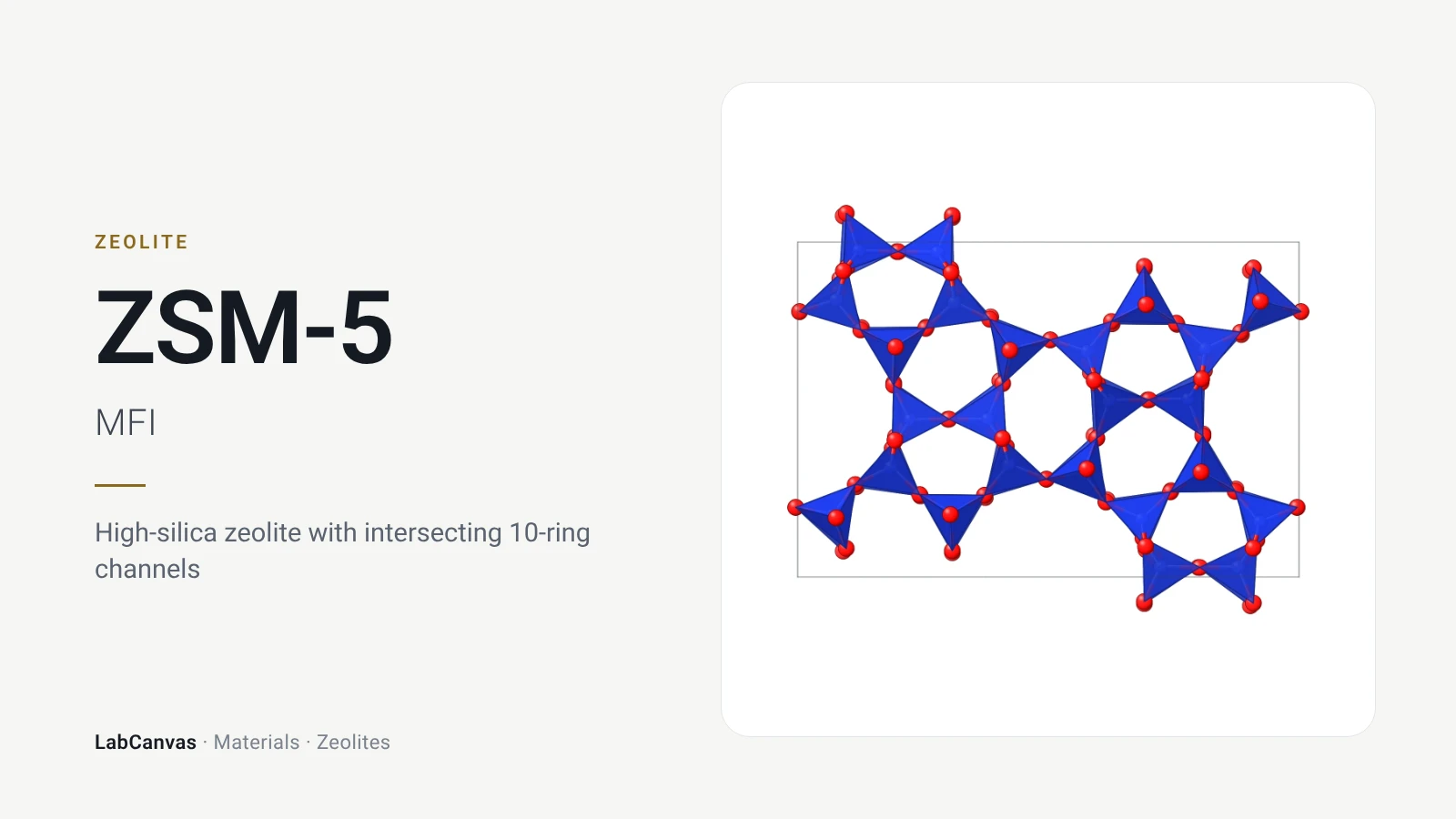
ZSM-5 (MFI)
ZSM-5 zeolite (MFI): 10-ring straight and sinusoidal channels of 5.1–5.6 Å, Si/Al, silicalite-1, FCC additives, methanol to gasoline and xylene isomerisation.
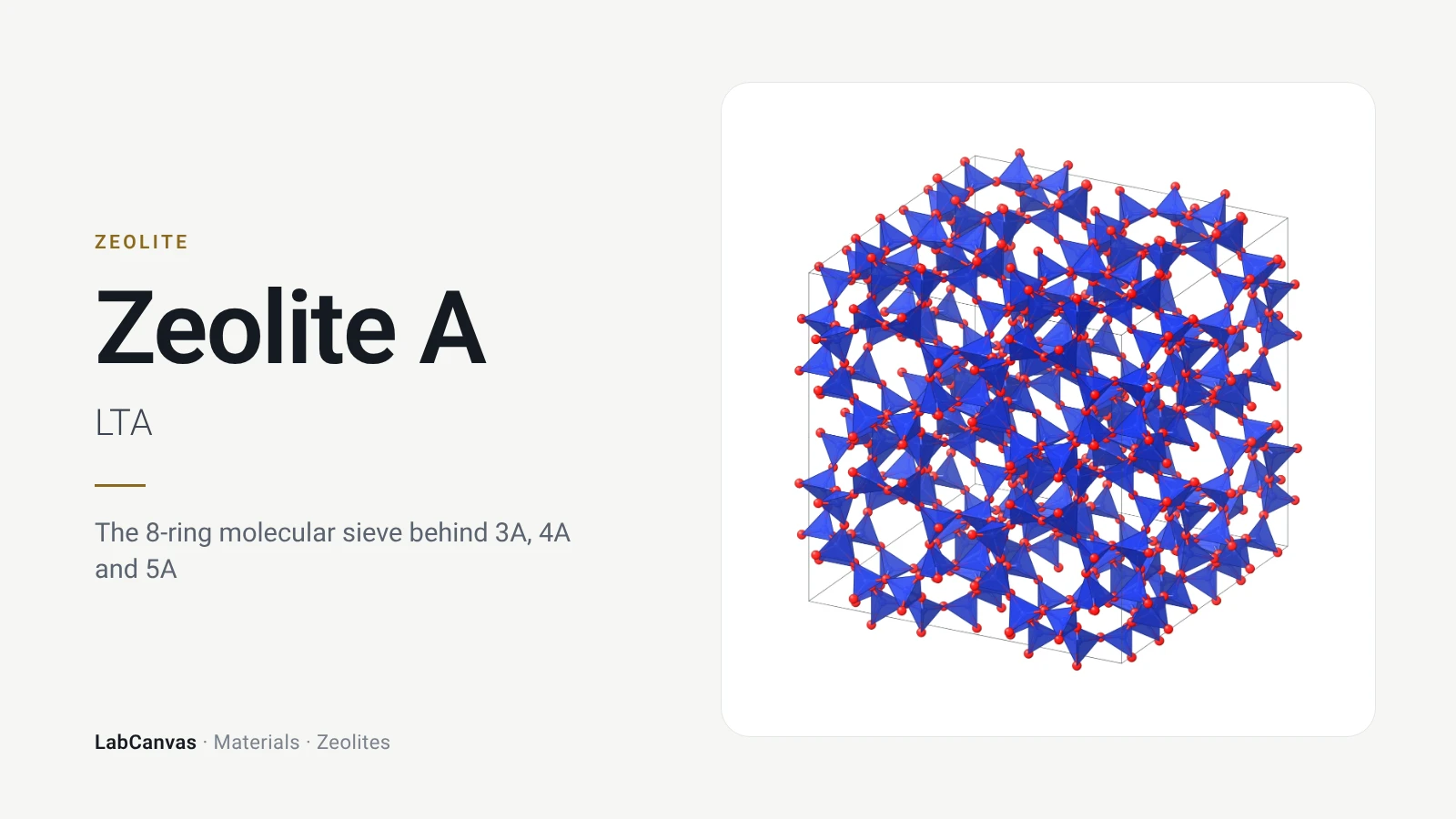
Zeolite A (LTA)
Zeolite A (LTA) structure: sodalite and α cages, 4.1 Å 8-ring windows, Si/Al = 1, the 3A, 4A and 5A molecular sieves, detergents and drying, with sources.
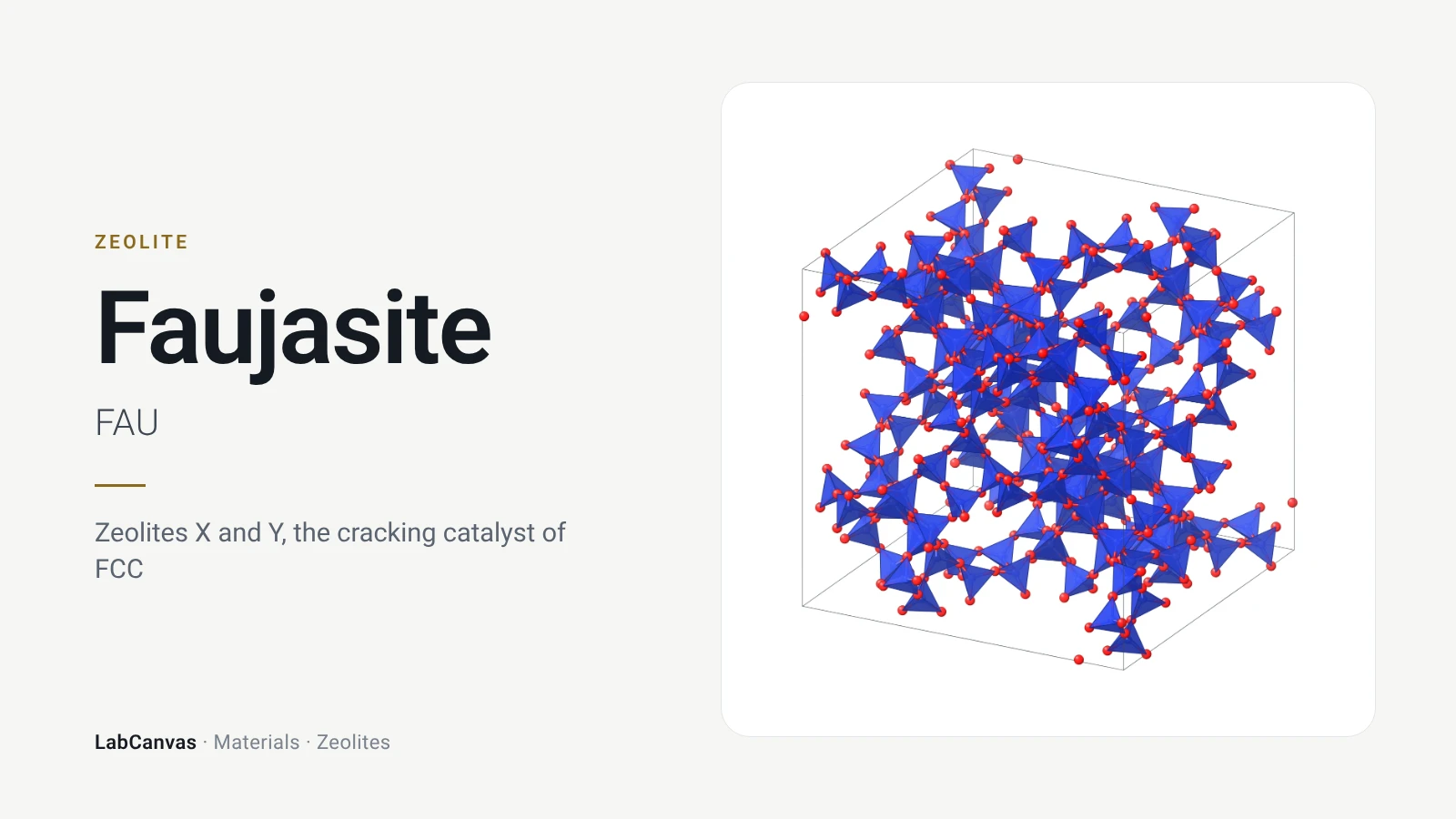
Faujasite (zeolite X and Y)
Faujasite (FAU): sodalite cages, double 6-rings and 12-ring supercages; zeolite X vs Y by Si/Al; ultrastable Y and why zeolite Y is the FCC catalyst.
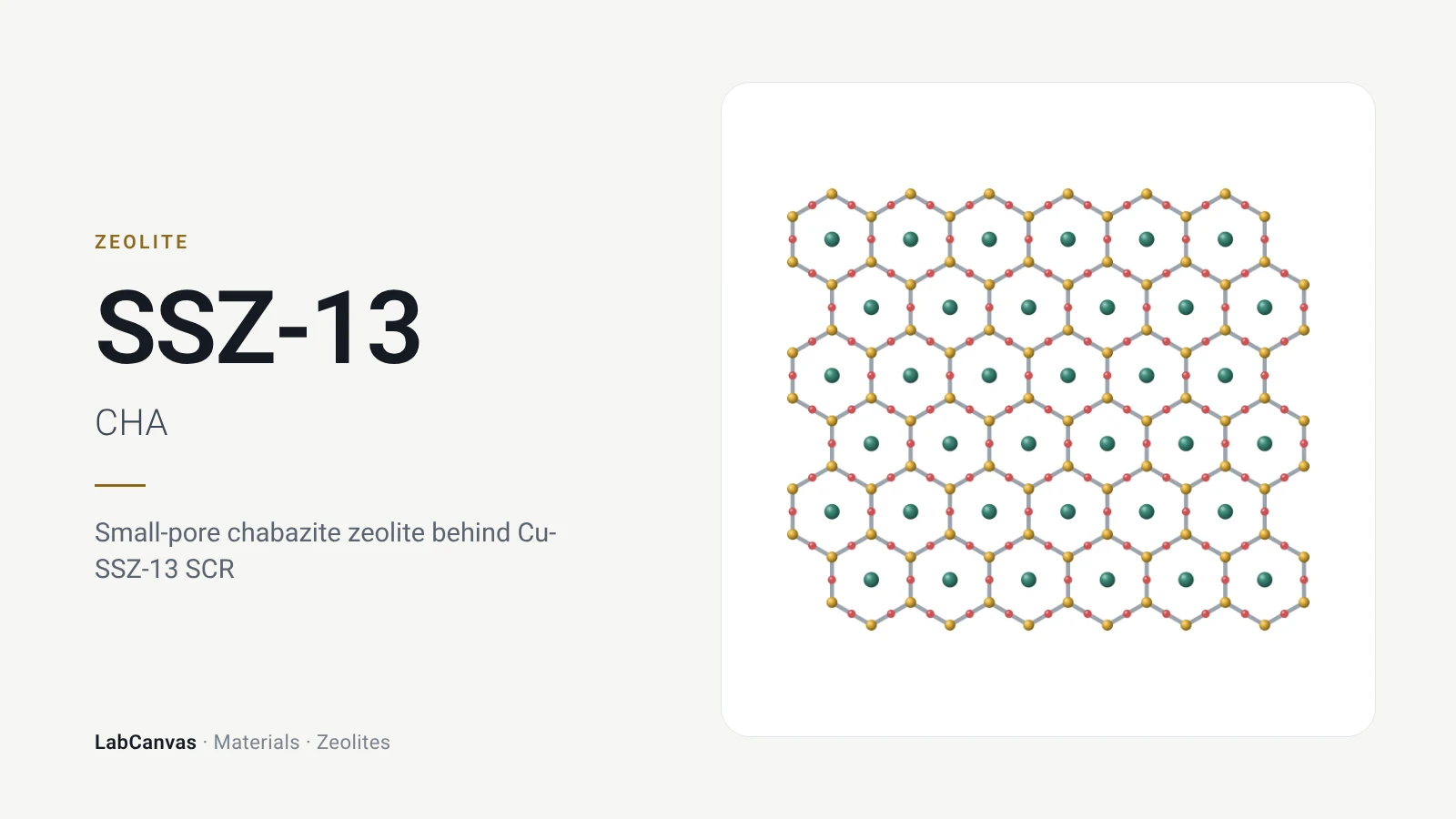
SSZ-13 (CHA)
SSZ-13, the chabazite (CHA) zeolite: 8-ring windows of 3.8 Å and CHA cages, TMAda⁺ synthesis, Cu-SSZ-13 for NH₃-SCR of diesel NOₓ, and SAPO-34 for MTO.